

After 10 years and millions of players, 99% of No Man's Sky has never been seen
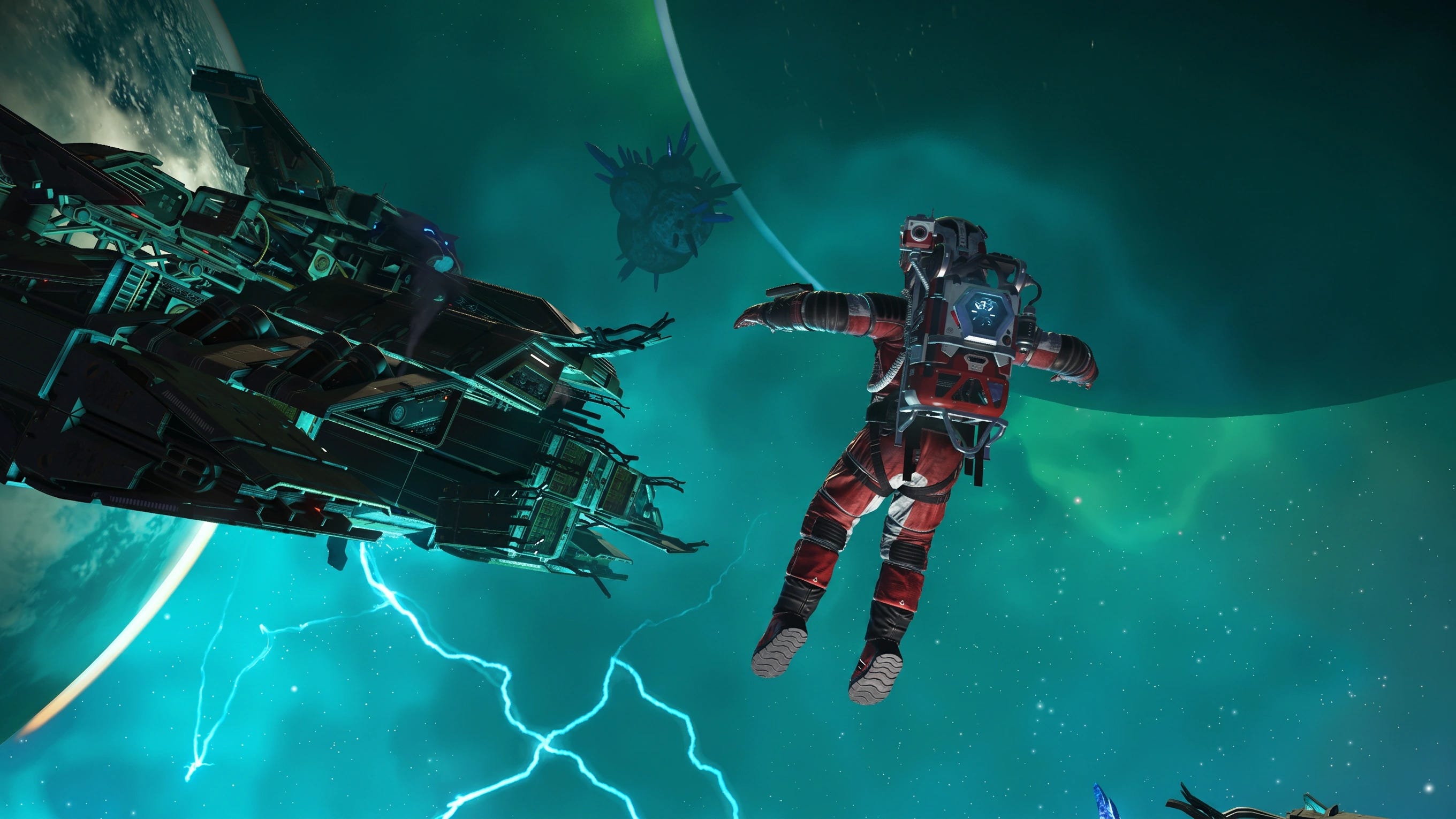
In his 10th-anniversary letter, Sean Murray revealed that after a decade and tens of millions of players, less than 1% of No Man’s Sky’s 18.4 quintillion planets have been explored. He also named the next free update: Cosmos.
Eighteen quintillion planets. After ten years, tens of millions of players, and hundreds of millions of hours logged, they have collectively explored less than one percent of them.
That figure comes from Sean Murray‘s open letter marking No Man’s Sky‘s 10th anniversary, and it reframes the entire decade. All those players. All those hours. All the record-setting numbers from last year’s Voyagers update.
And more than 99 percent of the universe has never had a human set foot on it, and mathematically, essentially never will.
The exact planet count is a number the human brain can’t really hold: 18,446,744,073,709,551,616.
Why “less than 1%” is literally true
The stat sounds like hyperbole. It isn’t, and the reason is the game’s core trick.
No Man’s Sky‘s universe isn’t hand-built and waiting to be found. It’s generated by an algorithm the instant a player arrives. Every one of those quintillions of planets exists only as mathematical potential until someone warps in and collapses it into a real place, with real terrain, real creatures, a real sky.
Murray noted at launch that if players discovered one planet per second, it would take 585 billion years to see them all. Ten years in, the explored fraction has barely moved off zero, because it can’t.
There are worlds in this game that no human, and no one at Hello Games, will ever see. Not because they’re hidden. Because there are simply too many of them for a species with a finite lifespan to reach.
The actual news in the letter
Buried alongside the philosophy was a genuine announcement.
Murray named the game’s next major free update: Cosmos. He shared almost nothing about what’s in it and confirmed it isn’t expected in 2026, but it continues the studio’s decade-long pattern of substantial, no-charge additions.
He also noted that most of the small team who shipped the game in 2016 are still at Hello Games, now building both No Man’s Sky‘s future and the studio’s next game, Light No Fire.
The quiet flex underneath
Strip it back, and the planet stat is really a statement about what a tiny team pulled off.
A studio of a few dozen people built a universe so vast that a decade of the entire player base exploring it, enthusiastically, constantly, obsessively, made a rounding error’s worth of dent.
The game’s central mystery has always circled the nature of the simulation containing everything. Turns out the most mind-bending thing about No Man’s Sky isn’t the question at its center.
It’s that after ten years, we’ve seen less than one percent of the places it’s willing to show us. And Hello Games, apparently, is just getting started.
Article compiled and edited by Derek Gibbs (entertainment editor) and the Clownfish TV newsroom.
D/REZZED is part of Clownfish TV. For more news, views, and rants on gaming, tech, and pop culture, visit clownfishtv.com. Watch the show on YouTube at @ClownfishTV where new episodes drop daily. Subscribe to the Clownfish TV podcast on Apple Podcasts, Spotify, iHeart, and wherever else you get your podcasts. Sign up for the free newsletter at more.clownfishtv.com.
Hat Tips:
Kotaku (August 2026), verified for the less-than-1%-explored figure from Murray’s anniversary letter, the 18 quintillion planet count, the 500+ billion years-to-explore estimate, the team-mostly-intact detail, and the Light No Fire mention
Nintendo Life (August 2026), verified for Murray’s open letter, the “tens of millions of travellers” and hundreds-of-millions-of-hours figures, the 40 major free updates, and the “less than 1%” confirmation
TechTimes (August 2026), verified for the exact 18,446,744,073,709,551,616 planet figure, the procedural-generation explanation for why “less than 1% explored” is mathematically genuine, the Cosmos update name, and the not-in-2026 timing
Reuters (2016, historical) (August 2016), verified for Murray’s original “584 billion years to discover them all at one per second” quote