

Apple’s Rumored AI Pin Reminds Us of Star Trek: The Next Generation's Communicator Badges IRL
Apple is developing an AI-powered wearable pin that echoes the communicator badges from Star Trek: The Next Generation, potentially blending voice-activated tech with everyday clothing for hands-free interactions. This early-stage project aims to leverage Apple Intelligence in a compact form, signaling the company’s push into new wearable frontiers beyond watches and earbuds.
Here’s the TL;DR...
Apple is in the early phases of creating an AI pin about the size of an AirTag, powered by its Apple Intelligence system.
The device could arrive as soon as 2027, though it’s not guaranteed to launch.
It draws clear inspiration from Star Trek‘s comm badges, tapping into voice commands without needing a screen.
Previous attempts like Humane’s AI Pin flopped, but Apple believes its ecosystem gives it an edge.
Star Trek has nailed predictions on tech like cell phones, tablets, and voice assistants that shape our world today.
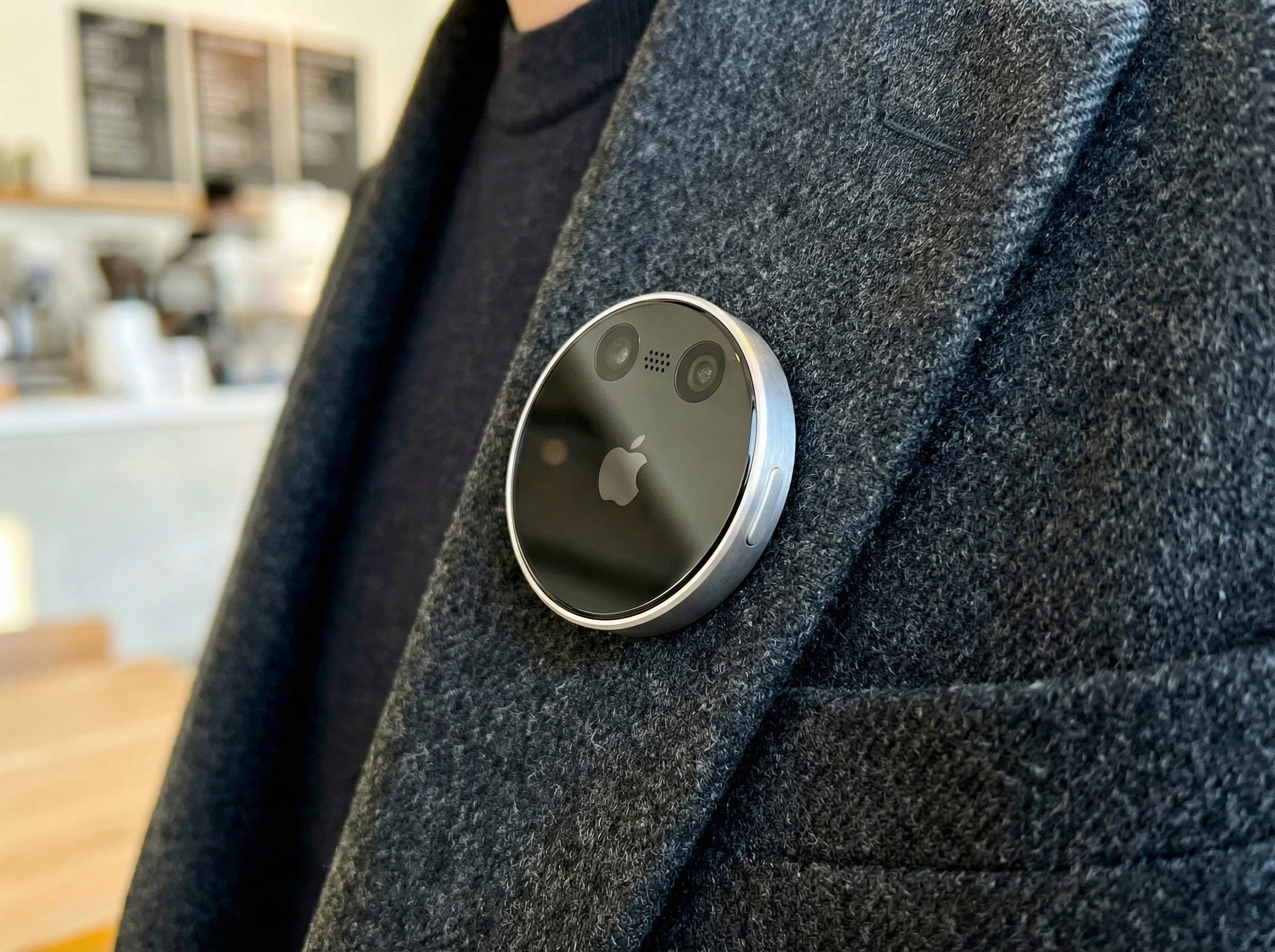
What Exactly Is Apple’s Rumored AI Pin Device?
Reports indicate Apple has kicked off work on a small wearable designed to clip onto clothing, much like a badge. Sources describe it as roughly the size of an AirTag, making it discreet enough for daily use without screaming “gadget.” The pin would run on Apple Intelligence, the company’s AI suite introduced in 2024, handling tasks through voice or gestures.
Development remains in prototype stages, with no firm details on battery life or exact capabilities. Insiders say Apple wants to accelerate this project compared to longer-gestating efforts like its canceled car initiative.
How Does Apple’s AI Pin Stack Up Against Past Wearable Flops Like Humane’s?
Humane’s AI Pin, launched in 2023 by former Apple executives, promised a screenless future with voice commands and a projector for displaying info on your hand. It tanked by early 2025 due to buggy software, poor battery, and a $699 price tag plus subscriptions. HP acquired parts of Humane later that year, but the hardware became obsolete.
Apple‘s version could avoid those pitfalls by tying into its vast ecosystem of iPhones and services. Unlike Humane‘s standalone approach, this pin might act as an extension, syncing seamlessly with existing devices. Still, challenges like privacy concerns and power efficiency loom large in such a tiny form.
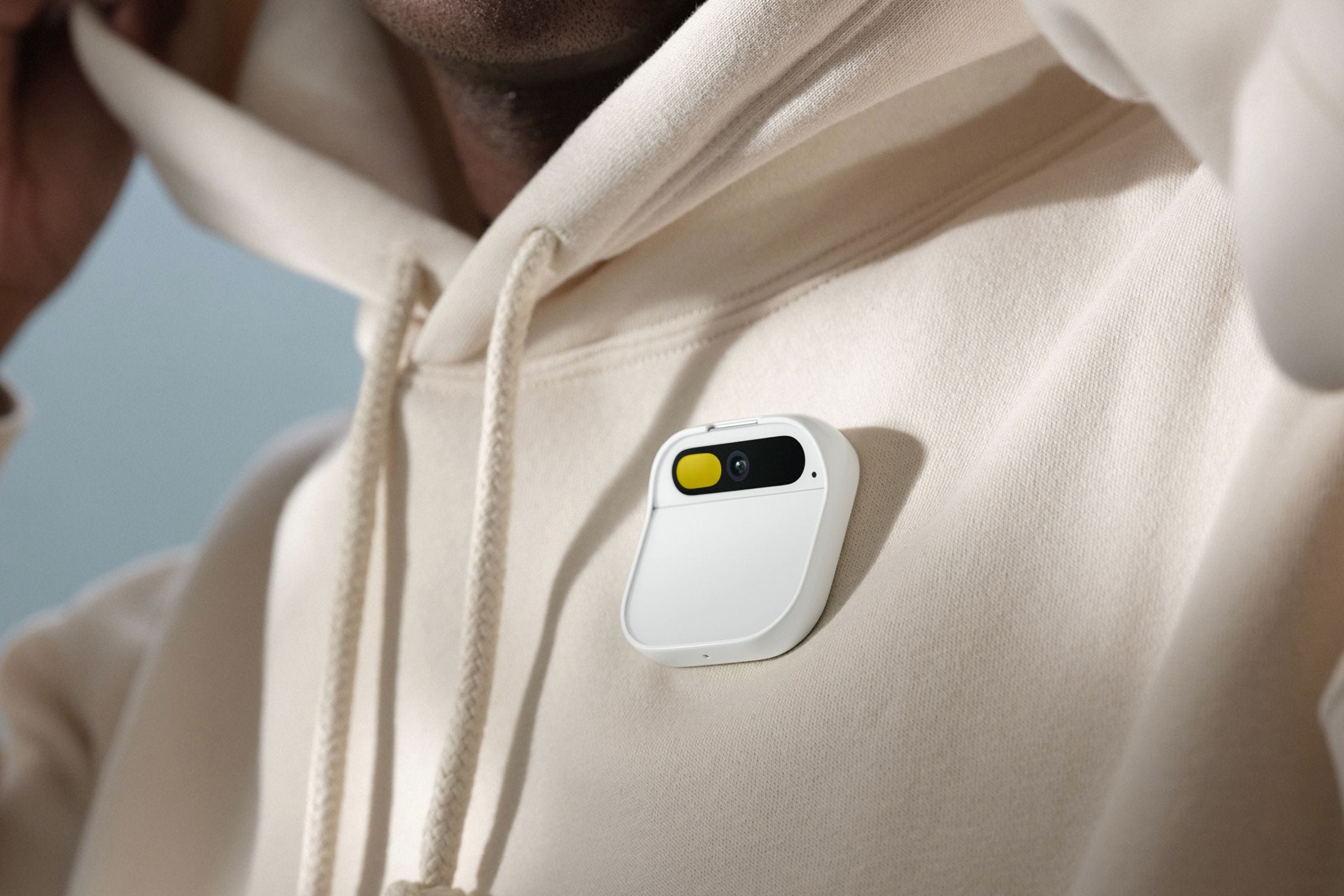
Why Is Apple Betting on a Star Trek-Style Communicator in 2026?
The push comes amid a wearable market hungry for innovation after mixed results from AR glasses and smart rings. Apple sees opportunity in AI-driven accessories that reduce screen time, aligning with health-focused features in its Watch line. By integrating Apple Intelligence, the pin could handle queries, calls, or notifications via simple taps, much like how Captain Picard summoned his crew.
This isn’t Apple‘s first flirtation with futuristic wearables; the Vision Pro headset from 2024 already nods to sci-fi immersion. But a pin offers portability without bulk, potentially appealing to users tired of pulling out phones for quick tasks.
What Tech Powers Apple’s AI Pin and How Might It Function Daily?
At its core, the device would rely on Apple Intelligence for natural language processing, similar to Siri‘s evolution. Imagine clipping it to your shirt, tapping once, and asking for directions or weather updates spoken aloud. Early rumors suggest no built-in screen, favoring audio feedback or projections, though that’s speculative.
Size-wise, matching an AirTag means fitting advanced chips, microphones, and speakers into a coin-like space. Apple has experience miniaturizing tech, as seen in AirPods, so overheating or short battery life will be key hurdles to watch.
How Closely Does Apple’s Pin Mirror Star Trek‘s Iconic Comm Badge?
In Star Trek: The Next Generation, crew members tapped gold delta badges to communicate instantly across vast distances. Apple‘s pin evokes that simplicity, focusing on voice activation without fumbling for a device. No beaming up yet, but it could enable hands-free calls or AI assistance in scenarios like workouts or driving.
The resemblance isn’t coincidental; sci-fi has long inspired tech giants. Humane explicitly channeled Star Trek, and Apple‘s design team, known for sleek aesthetics, might refine it into something more polished than predecessors.

What Other Technologies Did Star Trek Predict That Are Now Everyday Reality?
Star Trek didn’t just entertain; it foreshadowed inventions that transformed society. The original series and its spin-offs showcased gadgets that engineers later brought to life, proving fiction can spark innovation.
For instance, the flip-open communicators from the 1960s directly influenced the first cell phones. Motorola‘s Martin Cooper cited Captain Kirk‘s device as inspiration for his 1973 prototype, leading to the mobiles we carry today.
Tablets owe a debt to Star Trek‘s Personal Access Display Devices (PADDs), flat screens used for reading reports or charts. Apple‘s iPad, launched in 2010, mirrored this portability, revolutionizing computing on the go.
Voice-activated computers, like the Enterprise‘s responsive system, prefigured assistants such as Siri and Alexa. Gene Roddenberry‘s vision of speaking to machines became standard after Apple‘s 2011 Siri debut, now handling billions of queries daily.
Medical tricorders scanned patients without invasion, akin to modern handheld ultrasounds or apps that detect heart irregularities via phone cameras. Qualcomm‘s Tricorder XPRIZE in 2017 awarded devices that diagnose conditions remotely, echoing Dr. McCoy‘s tool.
Universal translators broke language barriers instantly, much like Google‘s real-time translation earbuds or apps that convert speech on the fly. These tools, powered by AI, make global communication feasible without fluency.
Hyposprays delivered meds needle-free, inspiring jet injectors used in vaccinations since the 1960s. PharmaJet‘s devices propel drugs through skin at high speed, reducing pain and waste.
Finally, transparent aluminum from Star Trek IV protected whale tanks but became real as ALON, a ceramic armor tougher than glass. Used in military vehicles, it blends strength with clarity, just as Scotty predicted.

Could Apple’s AI Pin Revolutionize Wearables or Fade Like Previous Hype?
If launched, the pin might bridge gaps in Apple‘s lineup, offering AI smarts in a form that’s always accessible. Privacy features, a Apple hallmark, could set it apart in an era of data concerns.
Yet success hinges on execution; Humane‘s quick demise reminds us that cool concepts need reliable tech. Pricing under $200, based on AirTag costs, would help adoption.
Wrapping It Up: From Sci-Fi Dreams to Pocket Reality
Apple‘s AI pin project underscores how Star Trek‘s imaginative tech continues influencing modern innovation, from communicators to AI assistants. If it materializes by 2027, it could shift how we interact with devices, prioritizing voice over screens for a more intuitive experience. Regardless, this development highlights the blurring line between fiction and fact, promising exciting advances in wearables while reminding us to temper expectations with practical realities. In the end, it’s a step toward a future where tech feels less intrusive and more like an extension of ourselves.
Hat Tips
The Information, “Apple Developing AI Wearable Pin,” January 21, 2026
AppleInsider, “This time it’ll work: Apple rumored to be developing a wearable AI pin,” January 21, 2026
9to5Mac, “Apple is working on an AI-powered wearable pin,” January 21, 2026
Sideshow Collectibles, “Trek Tech: 10 Star Trek Gadgets That Beamed Into Reality,” November 27, 2024
Quartz, “Here are all the technologies Star Trek accurately predicted”
Ex Astris Scientia, “10 Most Realistic Star Trek Technologies,” January 2, 2023
StarTrek.com, “#TrekTech: 10 Cutting Edge Real World ‘Star Trek’ Inventions,” May 31, 2019
Article Compiled and Edited by Derek Gibbs on January 21, 2026 for Clownfish TV D/REZZED.