

Are comic book shops cooked in 2026? The state of the direct market
Dark Horse just closed the retail chain that launched it 40 years ago, Diamond Comics collapsed, and Marvel’s in a leadership shakeup. It sounds like the end for comic shops. But the numbers tell a more complicated, and more hopeful, story than the headlines suggest.
Dark Horse Comics just closed the last of its physical retail stores, the very chain that helped launch the publisher 40 years ago, and the move feels like a bellwether for an entire industry under pressure.
Things From Another World, the Oregon-based retailer founded by Dark Horse’s Mike Richardson, closed its Milwaukie and Beaverton locations on June 30, 2026, with the California store at Universal CityWalk set to follow on September 30, 2026.
The closures come as the direct market, the network of independent comic shops that has sustained the industry for decades, navigates its most disrupted period in memory. Distribution chaos, publisher shakeups, and a fragmented sales picture have many wondering whether traditional comic book stores can survive in their current form. And yet, retailers report that 2025 was actually a stronger year than the doom-laden headlines suggested. Let’s separate the panic from the reality.
Mike Richardson’s old retail chain shut down after 40 years
Dark Horse’s decision to close Things From Another World is especially symbolic.
The stores weren’t just retail outlets. They were the original foundation of the company. Richardson opened his first store, Pegasus Fantasy Books, as a 400-square-foot shop in Bend, Oregon in 1980. That store became Things From Another World, which grew into a chain of eleven locations at its peak, and the revenue from that chain funded the launch of Dark Horse Comics in 1986.
The closures are part of a broader restructuring under new ownership. Richardson was fired from the company he founded in early March 2026, just ahead of its 40th anniversary, by new owners Fellowship Entertainment (the entity formerly known as Embracer). Jay Komas, head of The Middle Earth Group, is now running Dark Horse as interim CEO.
In its official statement, Dark Horse called the closures “not an easy decision,” adding that it was “deeply grateful” to the affected employees. The Things From Another World e-commerce site had already gone dark in April 2025 after 25 years of operation. Dark Horse is simultaneously launching Dark Horse Games and refocusing Dark Horse Entertainment on creator-led film and TV, but the loss of its own retail footprint underscores how tough it’s become to sustain physical stores right now.
Diamond Comic Distributors collapsed in December 2025
The direct market’s foundational distributor met its end late last year.
Diamond Comic Distributors ended its 40-year run after filing for Chapter 11 bankruptcy on January 14, 2025. A court order converted it to Chapter 7 liquidation, effective the end of December 29, 2025, after lender JPMorgan Chase declined to keep funding operations.
Diamond founder Steve Geppi‘s equity was cancelled with no recovery. Universal Distribution acquired Diamond’s Alliance Game Distributors business, and Ad Populum (since rebranded Sparkle Pop) took the remaining publishing distribution assets. The transition to new distributors, Lunar, Universal, Ad Populum, and several smaller players, was messy. The Previews catalog is gone, retailers have wrestled with metadata gaps, and the 40-year monopoly that controlled the flow of comics to shops is over.
The surprise is what happened next.
Retailers reported a stronger 2025 than anyone expected
Despite the Diamond collapse and widespread predictions of disaster, 2025 turned out better than expected for the direct market, which racked up roughly $1 billion in sales for the year.
The Comics Journal characterized 2025 as a year when the industry “rebounded from the shock of the bankruptcy, with three big distributors and a handful of smaller ones serving a booming direct market.” Retailers at the ComicsPRO annual meeting in Glendale, California in February 2026 were reportedly “in a good mood after a year of unusually strong sales,” and nearly every retailer that SKTCHD analyst Dave Buesing spoke with reported being up year over year.
That picture isn’t universal. Plenty of individual stores have struggled with delayed shipments, inventory shortages, and higher costs in the post-Diamond transition. But the often-repeated narrative of total collapse doesn’t match what most retailers are actually reporting.
DC’s Absolute line is carrying the industry
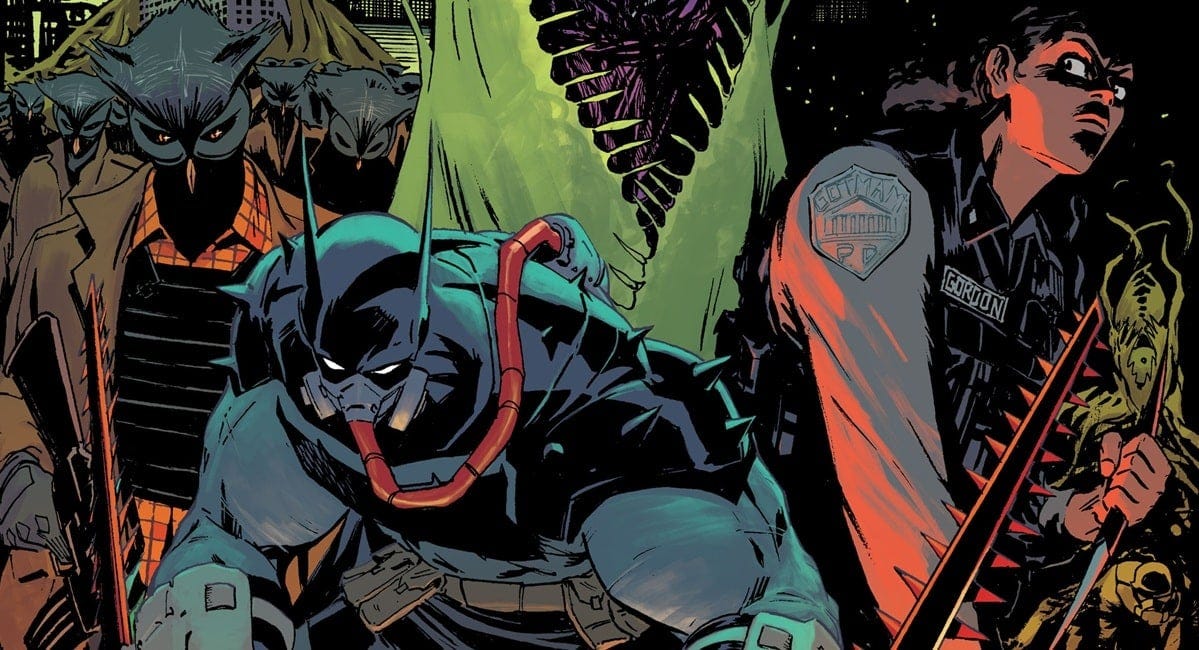
In the middle of the gloom, one bright spot stands out: DC‘s Absolute Universe line.
According to figures DC shared with The Hollywood Reporter, the six monthly Absolute titles sold over 8.2 million units in 2025, not including December. Absolute Batman, the flagship, accounted for roughly 35 percent of that total, close to 3 million copies on its own.
Absolute Batman #1 has gone through 10 printings with an 11th announced, and Absolute Batman #15, which revealed the origin of the Joker, sold over 300,000 copies, a remarkable number for an issue 15 deep into a run.
DC VP of sales and marketing Nancy Spears framed 2025 as a “hell of a year” for DC, crediting the “All In” initiative spearheaded by Scott Snyder and Josh Williamson. The line isn’t uniformly explosive, SKTCHD reports Absolute Batman is far and away the leader, with Wonder Woman, Superman, and Martian Manhunter doing well behind it, and Green Lantern and Flash lagging (though both still outsell their main-line counterparts).
The bigger open question is whether new readers are migrating to other comics on the shelves, and as of mid-2026, that’s happening only slowly. Without Absolute’s momentum, the overall picture for monthly comics in 2025 would look significantly worse.
Marvel’s leadership shakeup adds to the uncertainty
Marvel Comics is also in transition.
In May 2026, longtime president Dan Buckley announced he’d depart after nearly 30 years. He’ll remain through mid-2027 to assist the transition, but Brad Winderbaum (Marvel Studios/Television) and David Abdo (Disney Music) are stepping into expanded roles overseeing comics, franchise, and publishing.
Marvel Studios president Kevin Feige praised Buckley’s contributions, noting “Marvel’s influence on popular culture expanded under Dan’s leadership.” Buckley’s exit follows earlier layoffs and cost-cutting at Marvel and parent company Disney, and the shift toward executives with backgrounds outside traditional publishing has fueled speculation that Marvel is de-emphasizing the direct market in favor of IP development for film, TV, and streaming.
Notably, Marvel’s market share has slid from around 39% to 29.4% over the past two years, a real erosion for the industry’s historic leader.
No one knows exactly how many comics are being sold
One of the industry’s biggest problems is a lack of transparent, comprehensive sales data.
With Diamond gone and multiple distributors now in play, exact industry-wide numbers are harder to track than ever. ICv2 and Comichron provide the best available charts based on point-of-sale data, but they don’t capture the full market, and there are growing complaints about sample size and accuracy. Publishers rarely release official figures, which is why the DC Absolute numbers were notable.
The broader global comics and graphic novel market, including bookstores, digital, and manga, continues to grow overall and is projected to reach roughly $27 billion by the early 2030s. But the direct-market segment of single-issue comics sold through specialty shops faces a different set of pressures.
How many comic shops have closed?
Exact numbers are elusive, but the trend is mixed, and that’s the important part.
Industry estimates put the number of U.S. comic shops at roughly 2,000 to 2,500 before the pandemic. Bleeding Cool publishes regular tallies, and the 2025-2026 pattern has typically been around a dozen shops closing in a given month against five to seven opening or expanding, plus another half-dozen rebranding.
That’s not a one-way decline. It’s churn. Some closures are pandemic-related; others stem from rising rents, owner retirements, competition from online and digital options, and the post-Diamond distribution mess. Many surviving shops have diversified into games, toys, and events to stay afloat. New shops are opening too. Recent high-profile closures and the loss of Dark Horse’s own chain add to the sense that the traditional model is contracting, but the comic shop is not extinct.

Are comic book shops dying? What the direct market really looks like in 2026
So here’s the deal.
The comic book shop as it existed for decades, the weekly Wednesday new-comic release hub, is under real pressure. Diamond’s collapse, Dark Horse’s retail exit, Richardson’s firing, Marvel’s leadership turnover, and opaque sales data have created a perfect storm of uncertainty.
At the same time, the broader comics ecosystem is evolving and, in some ways, thriving. DC’s Absolute success proves there’s still strong demand for high-quality superhero stories. Graphic novels keep growing in bookstores. Manga dominates the sales charts. Digital platforms offer new ways to reach readers. And the direct market itself just posted a $1 billion year, stronger than anyone expected, even as one of its foundational pillars collapsed.
Comic shops aren’t disappearing overnight; their role is changing. Many are becoming hybrid hobby stores and community hubs rather than pure comic retailers. The question for 2026 and beyond is whether enough of them can adapt quickly enough to thrive in the post-Diamond era, or whether consolidation keeps favoring the strongest operators.
For fans who grew up browsing spinner racks and pulling weekly books, this moment feels like the end of an era. The medium isn’t dying, but the traditional comic shop model is being reshaped in real time.
Want More Clownfish TV?
This article was brought to you in part by The Reefers of more.clownfishtv.com. Free subscribers get articles like this one in their inbox. Paid subscribers get the full Clownfish TV podcast feed, livestreams, and members-only episodes that never hit YouTube.
D/REZZED is part of Clownfish TV. For more news, views, and rants on gaming, tech, and pop culture, watch @ClownfishTV on YouTube and find the podcast on Apple Podcasts, Spotify, and iHeart.
Article compiled and edited by Derek Gibbs (entertainment editor) and the Clownfish TV newsroom.
Hat Tips:
Dark Horse Comics official statement, Bleeding Cool, Comic Book Club, and AIPT (May-June 2026), verified for the Things From Another World closures (June 30 Oregon, September 30 California), Mike Richardson’s March 2026 firing, the Fellowship Entertainment/Embracer restructuring, and interim CEO Jay Komas
ICv2, Publishers Weekly, and The Comics Journal (December 2025-March 2026), verified for the Diamond Chapter 7 liquidation (effective December 29, 2025), the JPMorgan funding withdrawal, the Universal/Ad Populum (Sparkle Pop) asset sale, and the direct market’s ~$1 billion 2025 sales and stronger-than-expected retailer reports
The Hollywood Reporter, SKTCHD (Dave Buesing), and Popverse (2026), verified for the DC Absolute figures (8.2 million units, Absolute Batman’s ~3 million and #15’s 300,000+), Nancy Spears’ “All In” remarks, the Absolute line breakdown, and Marvel’s market-share decline and Dan Buckley’s departure