

Can Bricks and Minifigs survive the $200,000 LEGO scandal?
Bricks and Minifigs spent 16 years building a network of more than 300 franchised LEGO resale stores across the U.S. and Canada. In two weeks, it has burned through its brand goodwill.
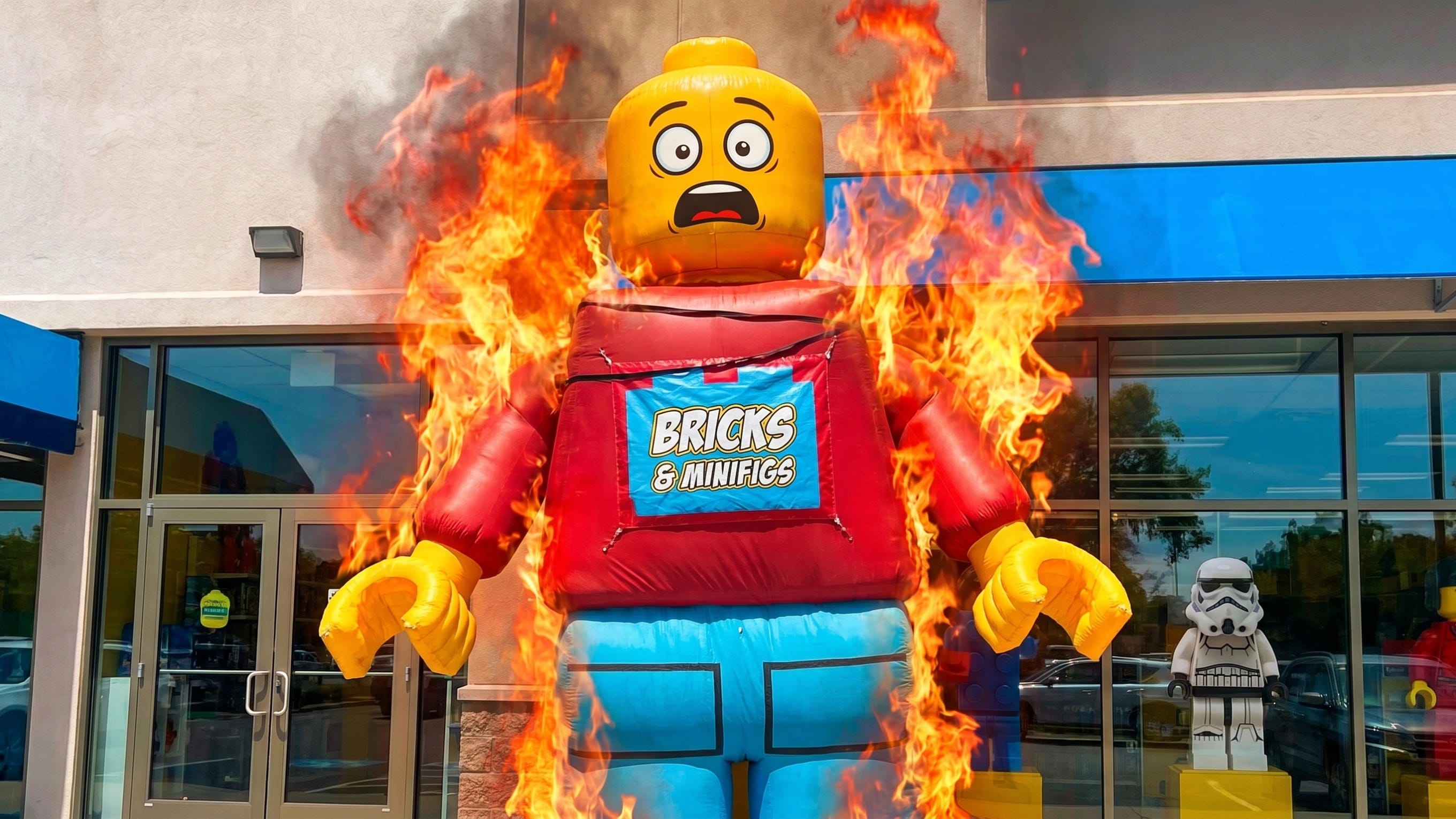
In the spring of 2026, Bricks and Minifigs went from one of the most well-regarded specialty LEGO retailers in North America to the subject of one of the most-watched corporate accountability fights in the creator economy.
In two weeks.
The damage has been brutal. Reckless Ben’s investigation videos have drawn over 5 million combined views. The Mansell family GoFundMe has crossed $200,000. A high-profile lawsuit landed on May 27.
The CEO publicly apologized on a podcast on May 31.
The Patreon CEO publicly refused a takedown request on June 2.
The Salem-Keizer franchise location at the center of the scandal is reportedly closed.
National press from Kotaku, Yahoo, Dexerto, The Hollywood Reporter, UNILAD Tech, and others continues to expand the story.
Whether Bricks and Minifigs the company survives the next 12 months is the question every observer is now asking.
History suggests the answer is probably yes. History also includes some serious cautionary tales.
What Bricks and Minifigs actually is
Bricks and Minifigs was founded in 2010 by David Ortiz and John Masek in Vancouver, Washington. The original concept was simple. Buy, sell, and trade new and used LEGO products in a dedicated retail space, with an emphasis on the secondary collector market for sets that had been retired or were no longer available at retail.
It worked. The format scaled. By the late 2010s, Bricks and Minifigs had become one of the largest LEGO-focused retail concepts in North America, with locations in dozens of states and Canadian provinces.
In 2018, brothers Ammon McNeff and Matthew McNeff acquired the company. Ammon became CEO and remains in that role today. Under the McNeffs, the company expanded aggressively. As of 2026, Bricks and Minifigs operates more than 300 franchised locations across the United States and Canada.
The chain is built on the franchise model. This is the most important structural fact for understanding the current scandal.
How franchising works (and why it matters)
In a franchise business, the corporate office (the franchisor) does not directly own or operate the individual store locations. Each store is owned by an independent business operator (the franchisee) who pays the franchisor for the right to use the brand, the systems, and the supplier relationships.
The franchisor sets brand standards, supplies inventory, and provides training and operational support. The franchisee handles day-to-day operations, hires staff, manages inventory locally, and is generally responsible for what happens inside their specific store.
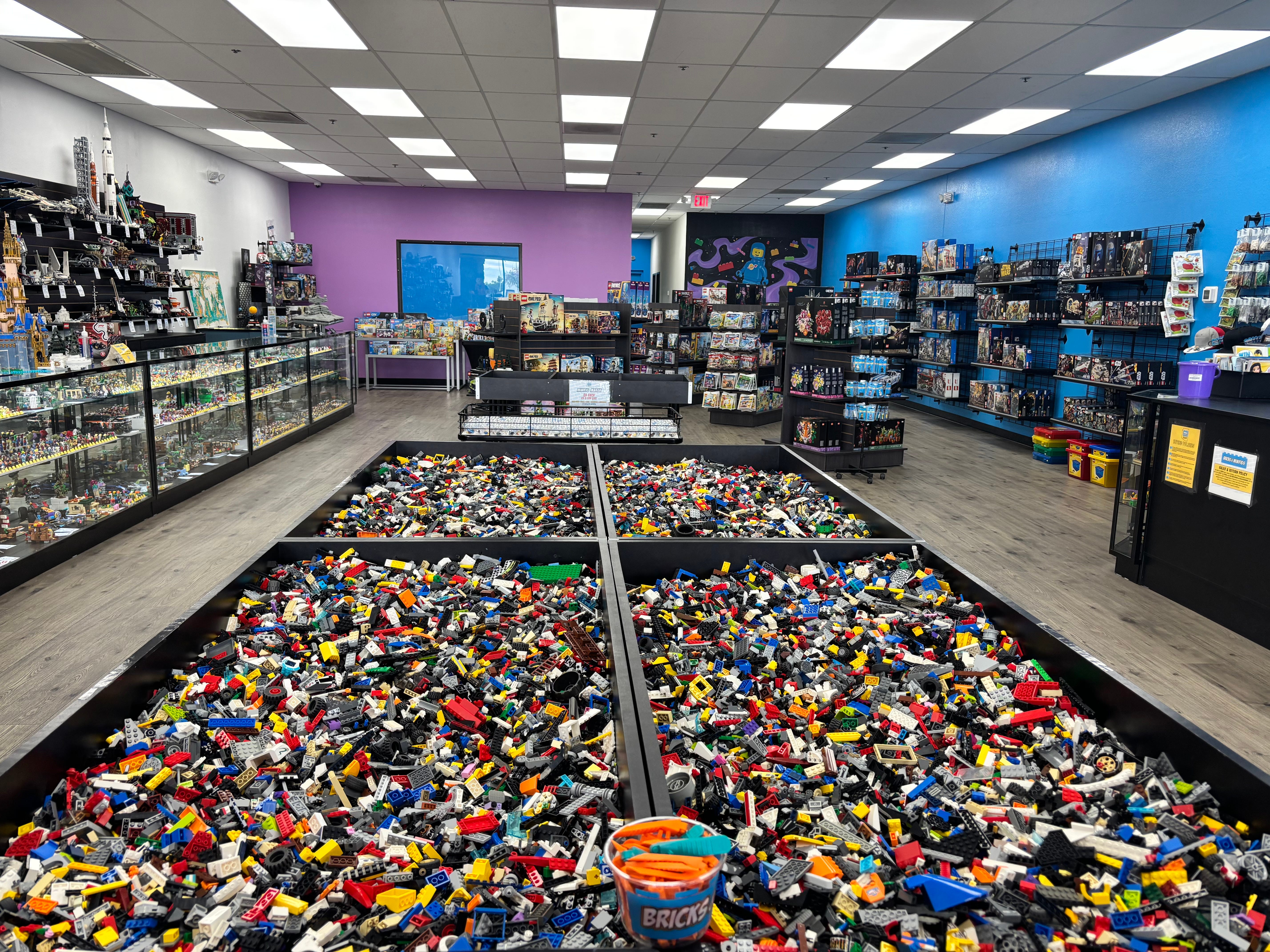
This structure matters legally because the franchisor is not automatically responsible for the actions of an individual franchisee. If a single store operator makes a bad deal, a corporate office can credibly argue it had no role in or knowledge of the transaction. That is exactly what BAM Franchising is arguing in its lawsuit against Reckless Ben and the Mansell family. The consignment was made with a former franchisee. Corporate was not a party. Corporate did not know.
The same structure matters publicly because the consumer does not see the franchise distinction. From the customer’s perspective, “Bricks and Minifigs” is one brand. The sign over the door says Bricks and Minifigs. The website says Bricks and Minifigs. The corporate marketing says Bricks and Minifigs. When something goes wrong at one Bricks and Minifigs location, the customer experiences it as a Bricks and Minifigs problem, regardless of which legal entity actually made the mistake.
This is the gap that has been killing the company for the past two weeks.
The timeline that broke the brand
For readers who have not followed our previous coverage, here is the compressed version.
November 2023: Bryan Mansell and his 83-year-old father consign a $200,000 Star Wars LEGO collection (later disputed by BAM as actually worth $60,000 to $80,000) to a Bricks and Minifigs store in Salem-Keizer, Oregon, then owned by franchisee Chrystal Law-Gorman.
November 2024: BAM corporate repossesses the store from Law-Gorman over alleged unpaid franchise obligations. New franchisees Josh Johnson and Brandon Best take over. The Mansell collection is largely gone.
Throughout 2025: The Mansell family pursues recovery through civil channels. Mainstream press attention is minimal.
March 2026: YouTuber Reckless Ben (Benjamin Schneider) takes up the story. He travels to Utah, confronts the new franchisees, and is arrested twice on misdemeanor charges including stalking and criminal trespass.
Late May 2026: Reckless Ben’s investigation videos go viral, drawing millions of views.
May 27: BAM Franchising sues Schneider, Mansell, and others in Utah for “viral extortion.”
May 28: An internal corporate memo leaks, revealing a “from defense to offense” communications strategy.
May 29: American Fork Police Chief Cameron Paul releases a 26-minute statement defending the arrests.
May 31: CEO Ammon McNeff publicly apologizes to the Mansell family on the ACOB podcast and offers professional mediation.
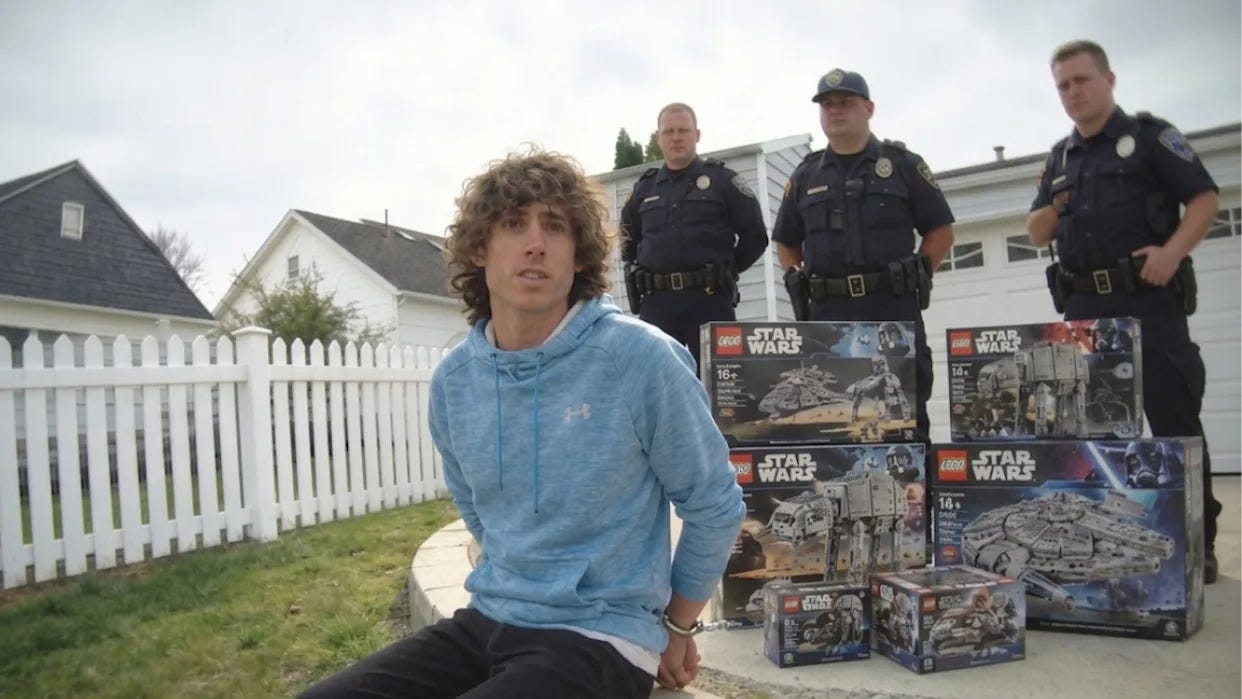
June 1: Reckless Ben announces he has fled to Mexico. The Mansell GoFundMe crosses $200,000.
June 2: Patreon CEO Jack Conte publicly refuses a BAM takedown request.
June 3 (today): The lawsuit, the apology, the leaked memo, and the Patreon refusal are all simultaneously in active news cycles.
That is roughly 17 days of escalating brand damage.
The actual damage so far
The financial damage to BAM has not been publicly disclosed. The reputational damage is everywhere.
Search engine results for “Bricks and Minifigs” now return scandal coverage on the first page above the company’s own website on Google, Bing, and DuckDuckGo. New customers researching the brand encounter the controversy before they encounter the products.
Social media has piled on. Reddit threads on r/Lego, r/lawschool, r/legaladvice, and consumer protection subreddits have made the case a major topic. X is saturated with criticism. The hashtag activity around the case has been continuous for over two weeks.
Mainstream press coverage has expanded from niche LEGO blogs to Kotaku, Yahoo, Dexerto, The Hollywood Reporter, UNILAD Tech, and primary trade press. Coverage has continued daily for over a week.
The Patreon refusal is the most damaging individual moment. When the CEO of a major creator-economy platform publicly endorses the position of a creator under corporate legal pressure, the message to other platforms is that BAM’s legal arguments are not strong enough to be acted on. YouTube has not removed Reckless Ben’s videos. Substack has not removed coverage. The wave of platform support against the corporate position is going to be hard to reverse.
Franchise relations are also reportedly tense. The internal “from defense to offense” memo to the franchise network suggests corporate is aware that individual store operators are nervous about the brand association.
The companies that survived
History has plenty of examples of consumer brands that survived major online controversy. The pattern usually involves a fast apology, real material change, and patience.
Bud Light lost roughly 25 percent of its U.S. market share after a 2023 social media controversy involving influencer Dylan Mulvaney. The parent company Anheuser-Busch stumbled through the first months of the response, but a sustained pivot back to its core marketing and significant promotional spending eventually stabilized the brand. It has not fully recovered to pre-2023 levels but it is also still one of the largest beer brands in the United States.
Cracker Barrel survived a controversial 2025 logo and decor rebrand that caused significant social media backlash. The company responded by partially reversing the rebrand within weeks. Same-store sales recovered within a quarter.
Wizards of the Coast survived the 2023 Open Game License controversy that briefly turned the entire Dungeons & Dragons community against the company. The parent company Hasbro rolled back the proposed changes within weeks and worked to repair the relationship with creators. Three years later, D&D is still the dominant tabletop RPG and Hasbro stock has recovered most of the loss.
The Pokemon Company has survived multiple consumer-controversy cycles over the past decade and remains one of the most valuable entertainment brands in the world.
Goya Foods survived a political controversy in 2020 by leaning into a different segment of its customer base. The brand is still healthy.
The pattern in each of these cases is similar. Real damage at the moment of controversy. Material corporate response. Time. Recovery to a slightly diminished but still functioning position.
The companies that did not survive
The list of brands that did not survive online controversy is shorter but real.
The Try Guys survived as a company after the 2022 Ned Fulmer scandal, but the entity was significantly diminished. The remaining members rebuilt under a new structure and a smaller audience.
Sweet Baby Inc, a video game narrative consulting company, has survived a 2024 controversy but at a significantly reduced commercial profile. The company is still operating but with fewer high-profile contracts.
MyPillow is technically still operating but has been heavily damaged by political controversy and major retailer rejections, as well as legal action.
Aunt Jemima the brand was retired entirely in 2020 and rebranded as Pearl Milling Company. The corporate parent PepsiCo survived. The brand did not.
Helldivers 2 survived a 2024 Sony PSN controversy but only after a massive public reversal. Sony Interactive Entertainment had to publicly reverse its own announced policy within days because the customer revolt was strong enough that other games in the publisher’s lineup were being review-bombed in solidarity.
The pattern across the failures is also clear. The companies that did not survive either failed to apologize, apologized too late, or fundamentally misread which segment of their customer base they could afford to lose.
So can Bricks and Minifigs survive?
Probably yes, but the next 90 days matter a lot.
The factors working in BAM’s favor:
The franchise model gives the company structural legal defense for the original Mansell consignment. If BAM corporate genuinely had no role in the original deal, the underlying legal exposure is limited.
The McNeff apology happened relatively early in the controversy cycle, before the brand damage became permanent.
The company has 300+ locations representing 300+ small-business owners who depend on the brand continuing to operate. There is significant internal pressure to find a resolution.
LEGO collecting is a hobby with significant audience inertia. Customers may be angry now, but they will not stop collecting LEGO. Whether they continue shopping at Bricks and Minifigs specifically is a more open question.
The mediation offer to the Mansells, if accepted and successfully completed, would be the best possible path to resolution.
The factors working against BAM:
The lawsuit landed before the apology. The order of operations was wrong. Mansell-supportive consumers see the apology as forced, not genuine.
The “from defense to offense” memo gives critics a literal playbook to point at when describing corporate strategy.
Patreon’s public refusal of the takedown request is going to be cited by other platforms as precedent.
The lawsuit names both McNeff brothers personally, which means future settlement decisions are tied to their personal legal exposure.
Other franchisees may begin to publicly distance themselves from corporate, which would fracture the network and weaken the brand internally.
The original consignor was an 83-year-old father. Sympathy framing favors the Mansells in a way that is hard to overcome with corporate messaging.
The single biggest factor is whether the Marion County District Attorney’s Office files criminal charges against the company or any of its officers over the original Oregon consignment dispute. The file has reportedly grown from two pages to thirty. If criminal charges land, the brand damage moves from reputational to structural, and the survival question becomes much harder to answer.
If no criminal charges land and the Mansell mediation proceeds, BAM probably stabilizes at a diminished but still operational position within 12 to 18 months. Same-store sales will probably take a hit. Some franchisees may exit. New customer acquisition will be slower. But the brand survives, and the corporate office continues to operate.
If criminal charges do land, the company faces a much more existential question, and the McNeff brothers face personal legal exposure that could change the situation entirely.
The next 90 days will tell us which path Bricks and Minifigs is actually on. Until then, the lawsuit is active, the apology is on the record, the GoFundMe is climbing, the Patreon page is still up, the YouTuber is somewhere south of the border, and the audience is watching everything.
History says this kind of story usually ends with a settlement, a quiet rebrand, and a slow recovery. History also says it occasionally ends with a brand name retired into the corporate history books.
Bricks and Minifigs gets to find out which version is theirs.
Article compiled and edited by Derek Gibbs (entertainment editor) and the Clownfish TV newsroom.
Watch Clownfish TV on YouTube at @ClownfishTV where new episodes drop daily. Subscribe to the Clownfish TV podcast on Apple Podcasts, Spotify, iHeart, and wherever else you get your podcasts. Sign up for the free newsletter at more.clownfishtv.com.
Hat Tips:
Wikipedia, Bricks & Minifigs company history including the 2010 David Ortiz and John Masek founding, the 2018 McNeff brothers acquisition, the 300+ franchise locations footprint, and the broader controversy timeline
Salem Business Journal, Statesman Journal, Brick Fanatics (May 2026), original Oregon reporting on the Mansell consignment agreement
Dexerto (June 2, 2026), comprehensive reporting on the verified Utah complaint and the BAM substantive defense
Kotaku (June 1, 2026), Lewis Parker’s primary reporting on Reckless Ben fleeing to Mexico
American Fork Police Department (May 29, 2026), official news release stating no active warrants for Schneider in Utah
ACOB podcast (May 31, 2026), CEO Ammon McNeff’s verified apology to the Mansell family
JackConteExtras YouTube channel (June 2, 2026), Patreon CEO Jack Conte’s verified refusal of the takedown request
Anheuser-Busch corporate communications and trade press (2023-2025), Bud Light market share recovery context
Cracker Barrel corporate communications (2025), brand rebrand reversal context
Hasbro / Wizards of the Coast corporate communications (2023), Open Game License reversal context
PepsiCo corporate communications (2020), Aunt Jemima retirement and Pearl Milling Company rebrand
Sony Interactive Entertainment corporate communications (2024), Helldivers 2 PSN policy reversal
Forbes, Bloomberg, and The Wall Street Journal, broader brand recovery case study reporting on Bud Light, Cracker Barrel, Hasbro, and Goya Foods (2020-2025)
Bricks and Minifigs corporate (May 21, May 28, and May 31, 2026), official statements and the verified “viral extortion campaign” lawsuit framing
Mansell family GoFundMe (current totals as of June 2, 2026)