

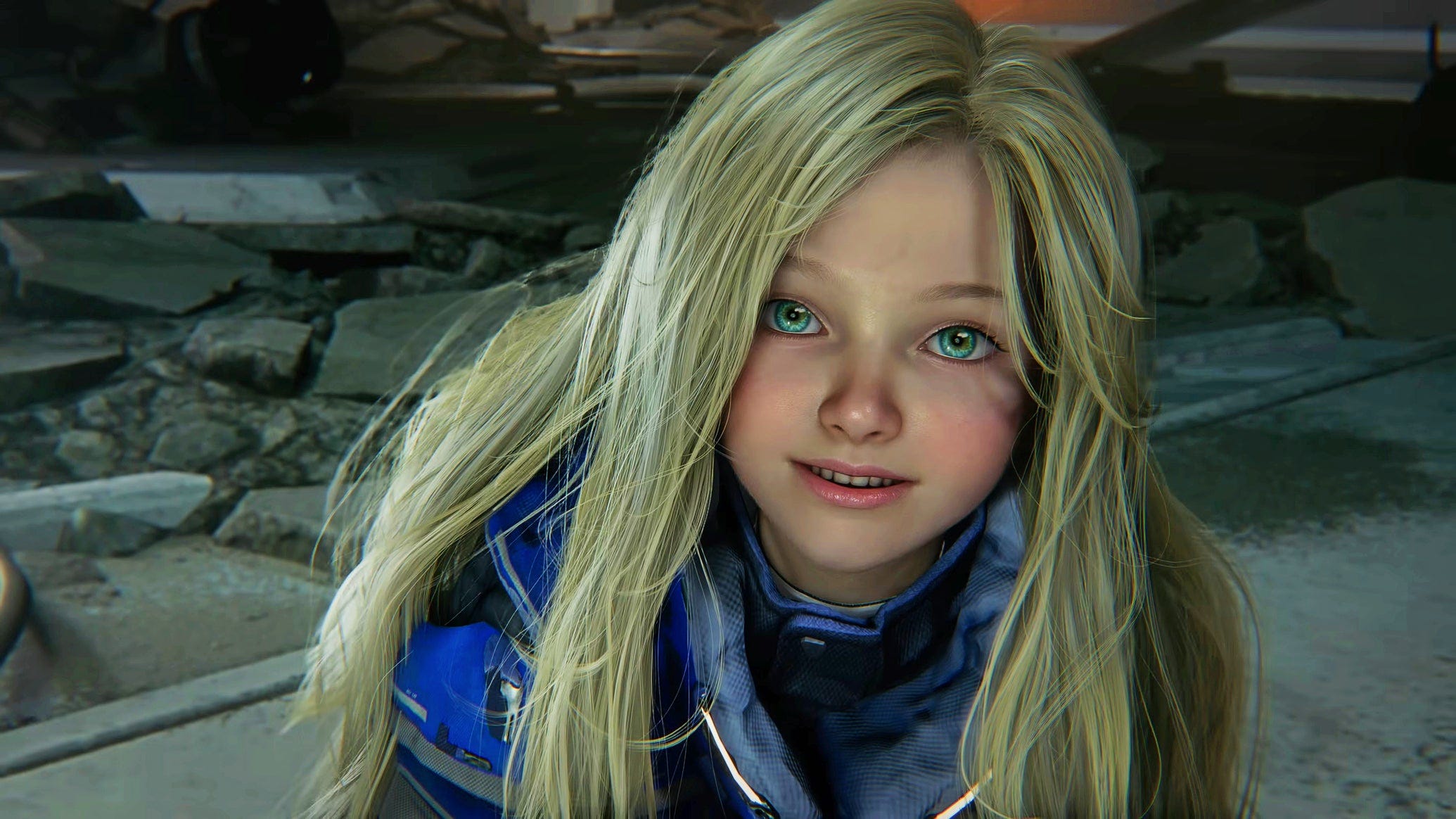
Before Pragmata became a 2-million-selling hit, Capcom’s own internal reviewers savaged it, calling early builds “boring,” “deeply disappointing,” and the team “incompetent at level design.” The developers just shared the brutal feedback themselves. Here’s the wild redemption story.
Here’s a story every creative person will appreciate. Before Pragmata became one of Capcom‘s biggest new hits of 2026, it was very nearly canceled, after the company’s own internal reviewers absolutely tore it apart, calling early versions “boring” and “deeply disappointing.”
And the best part? The developers shared this brutal feedback themselves, proudly, after the game became a success. It’s a fascinating, refreshingly honest look at how a hit game almost didn’t happen. Here’s the story.
First, the happy ending
Pragmata, Capcom’s ambitious new sci-fi action game set in space, launched in 2026 to strong reviews and even stronger sales, moving over 2 million copies in roughly three weeks. It was a genuine success for a brand-new original IP, something increasingly rare in an industry dominated by sequels and remakes, and Capcom is already reportedly considering turning it into a full-blown series.
So keep that in mind as we get into the rough stuff: this story has a happy ending. Which is exactly why the developers felt comfortable sharing just how ugly it got.
The brutal internal reviews
Here’s the feedback that nearly sank the ship.
During a celebratory livestream marking the game’s success, Pragmata’s developers pulled back the curtain on their troubled development, and shared the savage internal criticism they’d received along the way. It does not hold back.
The project began in 2019, when Capcom veteran Jun Takeuchi challenged a team of young developers to make “a game on the Moon.” But after the game’s 2020 reveal, the team’s early test stages kept getting rejected. Internal feedback reportedly told them they were “unable to make compelling puzzles,” “unable to make compelling action,” and, brutally, “incompetent at level design.”
It got even harsher
Here’s where it really stings.
Eventually, the team developed the game’s now-signature hacking system, the mechanic that would help define the final product. And at first? The internal reviews hated that too. Among the comments the developers shared:
“This has fundamentally worsened the game, I am deeply disappointed.”
“Feels like you’re just aimlessly moving forward, so boring.”
“The game logic we worked so hard on building is completely broken.”
And the gut-punch: “Give me back the two months I lost working alongside the team.”
Ouch. That’s the kind of feedback that could end careers, or an entire project. And it very nearly did.
The make-or-break moment
The relentless criticism brought Pragmata to a genuine crossroads. The team was told to rush together a revised build to present to Capcom’s upper management, and that presentation would decide whether the project lived or died. Cancellation was very much on the table.
Fortunately, the revised prototype clicked. Management liked what they saw, greenlit the game to continue, and gave the young team the chance to restart development and get it right. Several delays later (the 2022 target slipped repeatedly), Pragmata finally launched, and vindicated everyone who stuck with it.
Why this story is actually great
It would be easy to read “Capcom’s own reviewers called the game boring” as a knock on Capcom. It’s really the opposite. That brutal internal review process, however painful, is arguably why Pragmata turned out so well. The harsh feedback forced the team to keep iterating until they found what worked. The system worked, even if it hurt.
More than that, it’s a rare and honest window into how games actually get made. Behind nearly every beloved title is a mountain of scrapped ideas, harsh critiques, and moments where the whole thing almost fell apart. The fact that Pragmata’s developers were willing to share their lowest moments, after proving the doubters wrong, earned them a wave of sympathy and respect from fellow developers and fans alike.
As one dev put it in a follow-up message: making games means facing “unfair things and problems” that leave you “beat down and exhausted”, but if you push through honestly, you get to share something people love. “We are all the next Pragmata,” he wrote.
Pragmata’s rocky road: what it comes down to
The story of Pragmata is a perfect reminder that the path from concept to hit game is rarely smooth. A title now selling millions and eyeing a sequel was, just a few years ago, so poorly received internally that Capcom nearly pulled the plug. “Boring,” “disappointing,” “incompetent”, that’s what the people making it were hearing.
And yet, here it is, a success story, precisely because the team endured that criticism and kept going. It’s proof that harsh feedback isn’t the enemy of good work; sometimes it’s the thing that forces it into existence. The next time you love a game, remember: it might have survived a review process brutal enough to make its own creators wince.
Turns out “almost canceled” and “future franchise” are sometimes just a few rewrites apart.
Want More Clownfish TV?
This article was brought to you in part by The Reefers of more.clownfishtv.com. Free subscribers get articles like this one in their inbox. Paid subscribers get the full Clownfish TV podcast feed, livestreams, and members-only episodes that never hit YouTube.
D/REZZED is part of Clownfish TV. For more news, views, and rants on gaming, tech, and pop culture, watch @ClownfishTV on YouTube and find the podcast on Apple Podcasts, Spotify, and iHeart.
Article compiled and edited by Derek Gibbs (entertainment editor) and the Clownfish TV newsroom.
Hat Tips:
Automaton (translating Capcom’s livestream) and GamesRadar (June-July 2026), verified for the internal feedback (the developers themselves sharing early criticism on a celebratory livestream, the quotes “unable to make compelling puzzles,” “unable to make compelling action,” and “incompetent at level design,” and the harsher hacking-system feedback including “This has fundamentally worsened the game, I am deeply disappointed,” “so boring,” and “Give me back the two months I lost”)
GamingBolt and Tech4Gamers (July 2026), verified for the development history and outcome (the 2019 start under Jun Takeuchi’s “game on the Moon” directive, the 2020 reveal, the repeated delays from a 2022 target, the make-or-break management presentation that nearly resulted in cancellation, the greenlight and development restart, Pragmata selling over 2 million copies in about three weeks, and Capcom considering a sequel/series)
Automaton and GamesRadar (June 2026), verified for the developers’ reflections (director Yonghee Cho’s regret at revealing the game so early in 2020, and developer Akihiro Togawa’s follow-up message about game development involving “unfair things and problems” that leave you “beat down and exhausted” but ultimately rewarding, ending with “We are all the next Pragmata”)