


A Chinese company just revealed an ultra-realistic humanoid robot designed to be an AI companion for lonely and elderly people, and it’s already taken over 13,000 orders. Here’s what the UWORLD U1 can do, what it costs, and why it’s sparking both excitement and unease.
A Chinese robotics company has unveiled a strikingly human-like robot built for a very specific purpose: keeping people company. And it’s not a far-off concept, it’s shipping this year, and thousands have already ordered one.
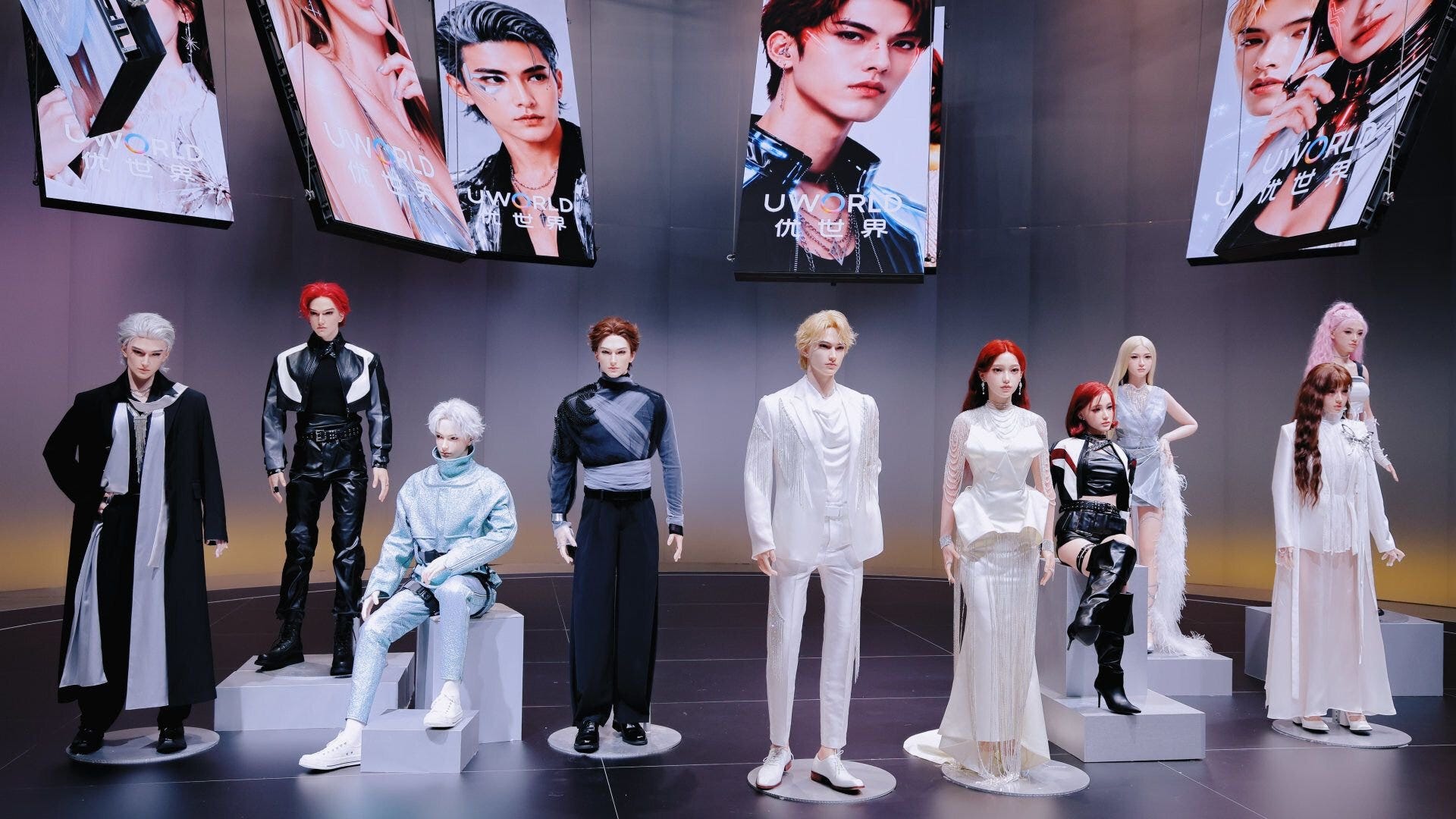
Meet the UWORLD U1 from UBTECH, an ultra-realistic humanoid robot that the company bills as an AI companion for the lonely and the elderly. Here’s what it can do, how much it costs, and why it’s stirring up equal parts amazement and unease.
What is the UWORLD U1?
Let’s start with what the company is actually claiming.
UBTECH, a Shenzhen-based robotics firm, revealed the U1 at a June 30 launch event, describing it as “the world’s first full-size, mass-produced ultra-bionic humanoid robot.” (That’s UBTECH’s own billing, but the product is undeniably striking.)
The U1 is designed to look and feel human. It has soft silicone skin, detailed down to pores, veins, and fingerprints, along with real hair, eyelashes, and even manicured nails. Under the hood, it packs 88 degrees of freedom (essentially, points of movement) and a “biomimetic spine” the company says reproduces up to 90% of basic human motion. In demos, it blinks, holds eye contact, and turns its head with unsettling smoothness.
What can it actually do?
Here’s the pitch, and it’s squarely aimed at companionship.
UBTECH designed the U1 primarily as an AI companion, mainly for single people and older adults. According to the company, it can:
Hold natural conversations and remember previous interactions across months (it uses what UBTECH calls an “Agent Memory OS”).
Read emotions, recognizing more than 20 emotional states from your expressions and tone.
Give medication reminders and detect signs of stress or tiredness.
Speak first, there’s no wake word; it watches the room, reads the situation, and initiates conversation on its own.
One notable limitation: despite the human looks, it’s not a household helper. UBTECH has been upfront that the U1 can’t cook, clean, or do chores. It’s built for connection, not labor.
How much does it cost?
Here’s the price breakdown, and it spans a huge range.
The U1 comes in three tiers:
U1 Lite (a semi-torso, upper-body-only model): about $16,500
U1 Pro (full-body): roughly $23,400
U1 Ultra (the high-end, fully customizable flagship): up to about $138,000
So this ranges from “expensive gadget” to “costs as much as a house down payment,” depending on how lifelike and capable you want it. UBTECH says it’s already logged more than 13,000 orders, with the first deliveries expected around September 2026.

The privacy question
Here’s a detail that matters a lot for a robot watching you at home.
Given that the U1 has cameras in its eyes and is constantly reading its environment, privacy is an obvious concern. UBTECH’s answer: the robot uses a local-first approach, storing your conversations and personal data on the device itself, encrypted, rather than uploading everything to the cloud by default.
That’s a genuinely important design choice. If it works as described, it means your private moments with the robot stay with the robot, a meaningful safeguard for a device this intimate. Of course, “as described” is doing some work there; independent testing will tell the real story.
Why it’s sparking unease
Here’s the other side, because the reaction hasn’t been all positive.
For all the impressive engineering, a lot of people find the U1 more unsettling than heartwarming, and the concerns are worth taking seriously:
The uncanny valley. A robot that almost looks human can feel eerie rather than comforting, and critics say the U1 lands squarely in that unsettling zone.
A band-aid on a real problem. UBTECH itself cited the statistics driving demand: China has over 90 million adults living alone and 118 million “empty-nest” seniors. Critics argue that selling robots to lonely people treats the symptom of a societal loneliness crisis, not the cause. As one commenter put it, the robot “isn’t the disease, it’s the thermometer.”
Recreating the dead. The most emotionally fraught feature: UBTECH’s companion initiative includes technology to recreate the face and voice of specific individuals, including deceased loved ones, for grieving families. To some that’s a profound comfort; to others, it’s a deeply uncomfortable idea.
The bigger picture
Here’s what this really represents.
Whatever you think of it, the U1 is a milestone. It marks a genuine shift in robotics, from machines built for factories and warehouses toward robots designed for emotional connection in the home. And the 13,000-plus orders prove the demand is real, whether that’s exciting or troubling.
UBTECH is betting that companion robots become a whole new consumer category, and given aging populations and rising loneliness worldwide, they may well be right. The technology will only get cheaper, smoother, and more convincing from here. The real question isn’t whether these robots will sell, that’s already answered. It’s how we, as a society, feel about turning to silicone and software to solve something as human as loneliness.
The UWORLD U1 robot companion: is this the future we want?
UBTECH’s UWORLD U1 is a genuinely remarkable piece of engineering, a lifelike, emotion-reading, memory-keeping humanoid companion that starts at $16,500 and is already headed to thousands of homes. On a technical level, it’s an impressive leap toward the sci-fi robots we’ve imagined for decades.
But it also lands right in the middle of a hard conversation. Is a robot companion a compassionate lifeline for isolated elderly people and the chronically lonely, or a dystopian shortcut that lets society off the hook for caring for each other? Honestly, it can be both at once. The engineering is real, the demand is real, and the discomfort is real too.
What’s certain is that these robots are coming, and fast. Whether we greet them as a comfort or a warning may say more about us than about the machines.
Either way, the age of the humanoid companion just stopped being science fiction.
Want More Clownfish TV?
This article was brought to you in part by The Reefers of more.clownfishtv.com. Free subscribers get articles like this one in their inbox. Paid subscribers get the full Clownfish TV podcast feed, livestreams, and members-only episodes that never hit YouTube.
D/REZZED is part of Clownfish TV. For more news, views, and rants on gaming, tech, and pop culture, watch @ClownfishTV on YouTube and find the podcast on Apple Podcasts, Spotify, and iHeart.
Article compiled and edited by Derek Gibbs (entertainment editor) and the Clownfish TV newsroom.
Hat Tips:
UBTECH press release (via PRNewswire) and Interesting Engineering (June-July 2026), verified for the UWORLD U1 launch details (the June 30 Shenzhen event, the “world’s first full-size mass-produced ultra-bionic humanoid robot” company claim, the three-model lineup, the 88 degrees of freedom and biomimetic spine, the emotion-recognition and Agent Memory OS features, the 13,361 orders, and the China loneliness statistics of 90M+ adults living alone and 118M empty-nest seniors)
TechEBlog and South China Morning Post (July 2026), verified for the pricing tiers (U1 Lite ~$16,500, U1 Pro ~$23,400, U1 Ultra up to ~$138,000), the silicone-skin construction details, the September 2026 shipping window, the local encrypted data storage, and the fact that the robot cannot perform household chores
ShinyShiny and additional tech coverage (July 2026), verified for the mixed public reaction (the “creepy”/uncanny-valley concerns), the customization and celebrity/loved-one appearance options, the deceased-loved-one recreation technology in the companionship initiative, and the “symptom of loneliness” critique