

Christopher Nolan’s The Odyssey faces call for a boycott from film festival
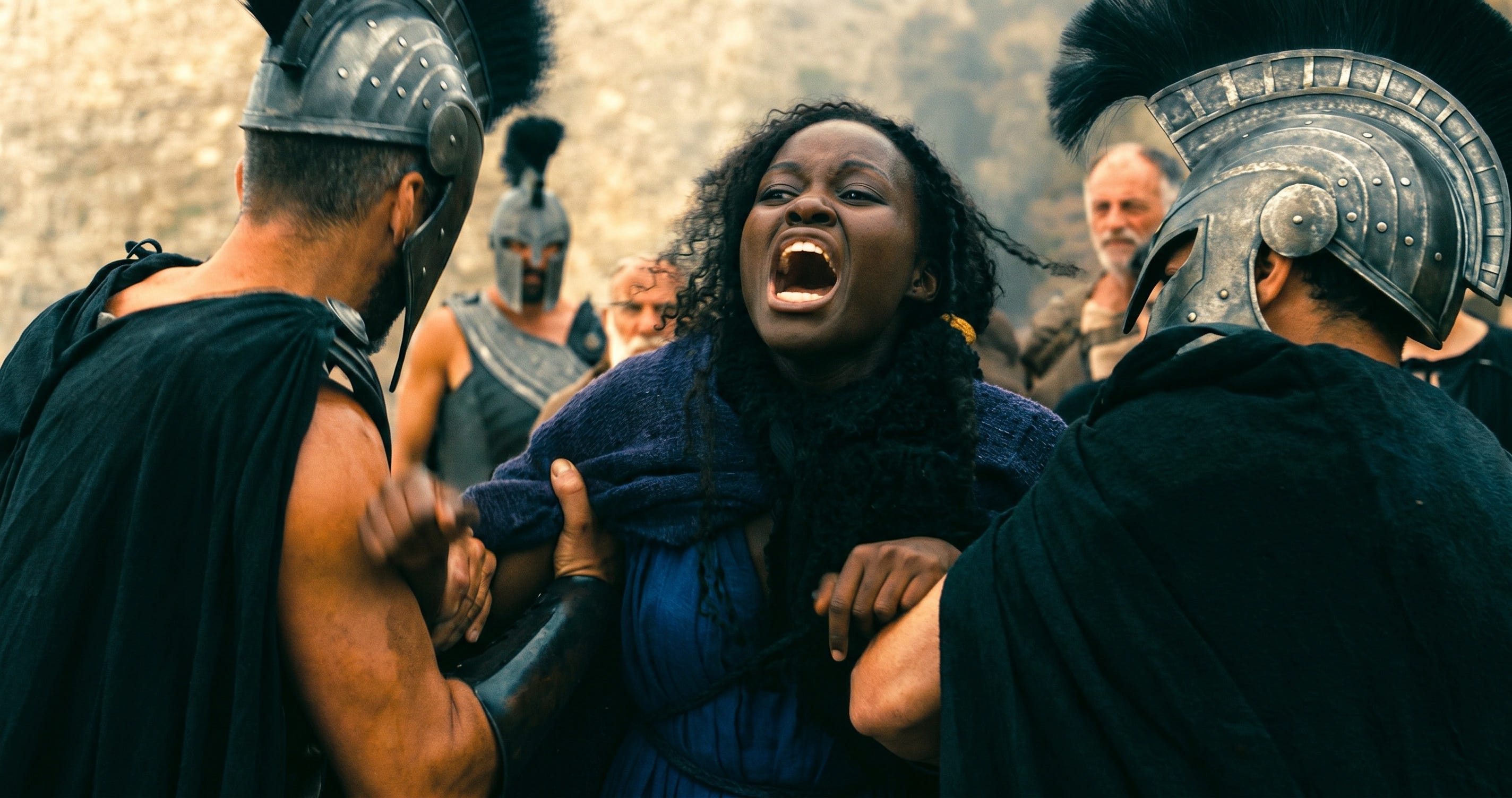
A film festival is calling for a boycott of Christopher Nolan’s The Odyssey, saying its filming in Western Sahara legitimizes Morocco’s control of the disputed territory. Here’s what the controversy is actually about, and why it’s more complicated than either side suggests.
Just before its highly anticipated release, Christopher Nolan‘s The Odyssey has run into an unexpected controversy, a boycott call, over where part of it was filmed.
A film festival is urging the public to skip the movie because Nolan shot scenes in Western Sahara, a long-disputed territory. It’s a genuinely complicated story that sits at the intersection of Hollywood and one of the world’s longest-running geopolitical conflicts. Here’s what’s actually going on.
What’s the controversy?
Let’s start with the boycott itself.
The Western Sahara International Film Festival (known as FiSahara) has called for a general public boycott of The Odyssey. The reason: Nolan filmed part of his epic near the coastal city of Dakhla, which sits in Western Sahara, a territory largely controlled by Morocco but claimed by the indigenous Sahrawi people.
The festival argues that by shooting there, the production effectively “normalizes” and legitimizes Morocco’s presence in the territory. As FiSahara executive director María Carrión put it, the decision to film in the region “legitimizes the occupation and furthers colonialism.” Spanish actor Javier Bardem, a longtime supporter of the Sahrawi cause, added his voice, urging Nolan to “understand the history of the Moroccan regime’s repression against the Sahrawi people.”
Wait, what’s the deal with Western Sahara?
Here’s the essential background, because the whole controversy hinges on it.
Western Sahara is one of the world’s most enduring territorial disputes. A former Spanish colony, it has been largely controlled by Morocco since 1975, and Morocco considers it an integral part of the kingdom, proposing a plan for it to become a semi-autonomous Moroccan territory.
But that claim is contested. The Polisario Front, an independence movement backed by neighboring Algeria, seeks self-determination for the Sahrawi people and wants a referendum on independence. The United Nations doesn’t recognize it as part of Morocco, instead listing it as a “non-self-governing territory.” In short: two sides, each with a serious claim, and no resolution after 50 years. It’s precisely the kind of unresolved conflict where a Hollywood production becomes an unexpected flashpoint.
The festival’s case
Here’s the argument for the boycott, stated fairly.
FiSahara, which is itself held in Sahrawi refugee camps in Algeria, makes a human-rights-based argument. It describes Dakhla as “an occupied, militarized city whose indigenous Sahrawi population is subject to brutal repression by occupying Moroccan forces.” The group points out that Reporters Without Borders has called the territory a “news black hole” for press access, and that organizations like Amnesty International have raised concerns about the region.
Their view is that high-profile visitors like Nolan, whether they intend to or not, help Morocco present Western Sahara as a normal, welcoming tourist destination, which the festival says obscures the reality on the ground for Sahrawis. It’s a serious argument rooted in genuine human-rights concerns, and it’s backed by more than 100 artists and activists who signed an earlier statement.
The other side of the story
Here’s the crucial context that complicates the picture.
While FiSahara’s concerns are real, the situation is more legally and politically ambiguous than “Nolan filmed in an occupied country.” A few key facts cut the other way:
Major Western governments recognize the territory as Moroccan. The United States, United Kingdom, France, Germany, and the Netherlands all consider Western Sahara to be Moroccan territory. That means filming there was consistent with, not a violation of, the foreign policy of Nolan’s own country and its closest allies.
The dispute is genuinely unsettled. Calling it “occupied” reflects one side of a live international disagreement. Morocco, and much of the Western world, sees it differently.
The timing matters. According to a studio source who spoke to TheWrap, the festival’s plea to halt filming only came after Nolan’s team had already completed its four days of shooting in the area. There was no ongoing production to stop.
None of this erases the Sahrawi people’s grievances. But it does show that Nolan wasn’t defying international consensus, he was operating within the same framework his government and allies officially endorse.
How Nolan and Universal have responded
Here’s where things stand on the production’s side.
So far: silence. Neither Christopher Nolan nor Universal Pictures has publicly commented on the boycott call. Given that filming wrapped long ago and the movie is days from its premiere, the scenes in question are already in the finished film, so there’s little the production could change even if it wanted to.
The Odyssey, a star-studded adaptation of Homer’s epic featuring Matt Damon, Anne Hathaway, Zendaya, Tom Holland, and more, was filmed across six countries and remains one of the most anticipated releases of the year. Whether this boycott call gains real traction, or fades before the film’s massive opening, remains to be seen.
Nolan’s Odyssey boycott: what it comes down to
The call to boycott The Odyssey over its Western Sahara filming is a real controversy that reflects a real, decades-old conflict, and the Sahrawi advocates raising it have genuine, seriously-held human-rights concerns that deserve to be heard.
At the same time, it lands in genuinely contested territory, both literally and politically. Nolan filmed in a place that major Western governments recognize as Moroccan, in a dispute the wider world hasn’t resolved, and after production there had already concluded. Reasonable people can, and clearly do, land on very different sides of whether filming there was wrong.
What’s certain is that a movie about an ancient journey has become entangled in a very modern one, a reminder that even a Homer adaptation can’t fully escape the politics of the real-world map. Where you come down on the boycott likely depends on where you already stand on Western Sahara itself.
Want More Clownfish TV?
This article was brought to you in part by The Reefers of more.clownfishtv.com. Free subscribers get articles like this one in their inbox. Paid subscribers get the full Clownfish TV podcast feed, livestreams, and members-only episodes that never hit YouTube.
D/REZZED is part of Clownfish TV. For more news, views, and rants on gaming, tech, and pop culture, watch @ClownfishTV on YouTube and find the podcast on Apple Podcasts, Spotify, and iHeart.
Article compiled and edited by Derek Gibbs (entertainment editor) and the Clownfish TV newsroom.
Hat Tips:
Agence France-Presse (via Macau Business and Malay Mail) (July 2026), verified for the boycott call specifics (FiSahara’s Friday statement, the “stepping on international law” and “legitimizes the occupation” quotes from María Carrión, Javier Bardem’s statement, the Dakhla/White Dune filming location, and the background on Morocco’s control since 1975 and the Polisario Front’s independence demands)
TheWrap and Wikipedia (2025-2026), verified for the timeline (the four days of filming July 17-22, 2025 at the White Dune near Dakhla, the festival’s plea coming after filming had concluded), the studio-source context, the recognition of Western Sahara as Moroccan territory by the US, UK, France, Germany, and the Netherlands, the 100-plus signatories of the 2025 statement, and the film’s cast, six-country shoot, and July 2026 release dates
Daily Sabah and the FiSahara statement (2025-2026), verified for the festival’s human-rights framing (the “occupied, militarized city” and “brutal repression” language, the Reporters Without Borders “news black hole” characterization, the UN “non-self-governing territory” designation, and the festival being held in Sahrawi refugee camps in Algeria)