

Christopher Nolan’s The Odyssey race-swap backlash explained
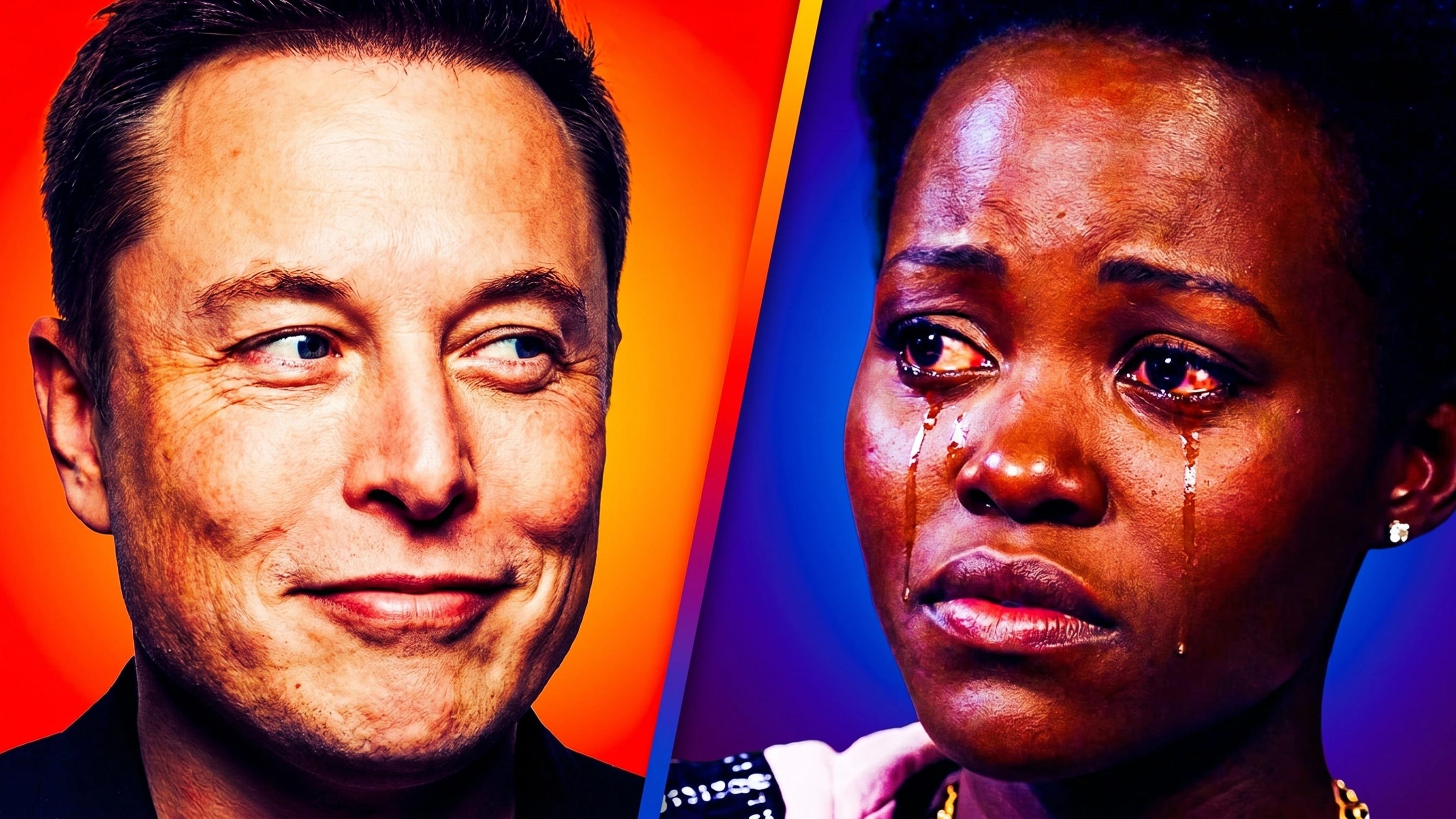
Lupita Nyong’o as Helen of Troy has fueled criticism from Elon Musk and others, but does the Oscar-chasing theory actually hold up?
Christopher Nolan‘s upcoming adaptation of Homer‘s The Odyssey has become one of the most polarizing films of 2026, even months before its release. While the movie is expected to be a major box office event, it has drawn significant criticism over its casting choices, particularly the decision to cast Black actress Lupita Nyong’o as Helen of Troy.
The backlash has been amplified online, with Elon Musk weighing in repeatedly. One recurring claim from Musk and others is that Nolan is making these casting choices to chase an Oscar. Here is a look at whether that theory holds up.
How Homer actually described Helen of Troy
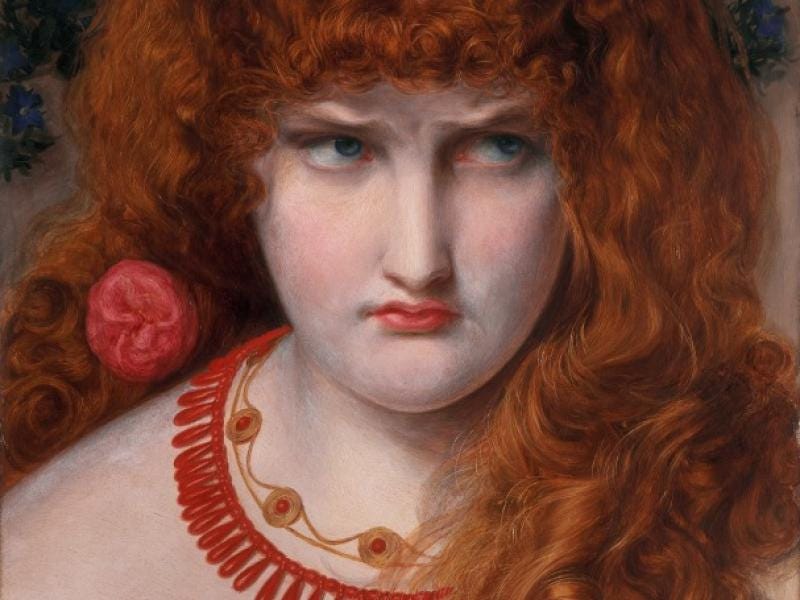
In Homer’s Iliad, Helen is not given an extremely detailed physical description, but she is repeatedly referred to with specific epithets.
She is most commonly called “white-armed Helen” (λευκώλενος Ἑλένη). This formulaic epithet appears multiple times. She is also frequently called “Argive Helen” or “Helen of Argos.”
The repeated use of “white-armed” is significant in the current debate. In ancient Greek literature, pale skin was often associated with beauty and nobility. While Homer does not provide a full modern-style breakdown, this is the most consistent physical descriptor he gives.
The casting controversies
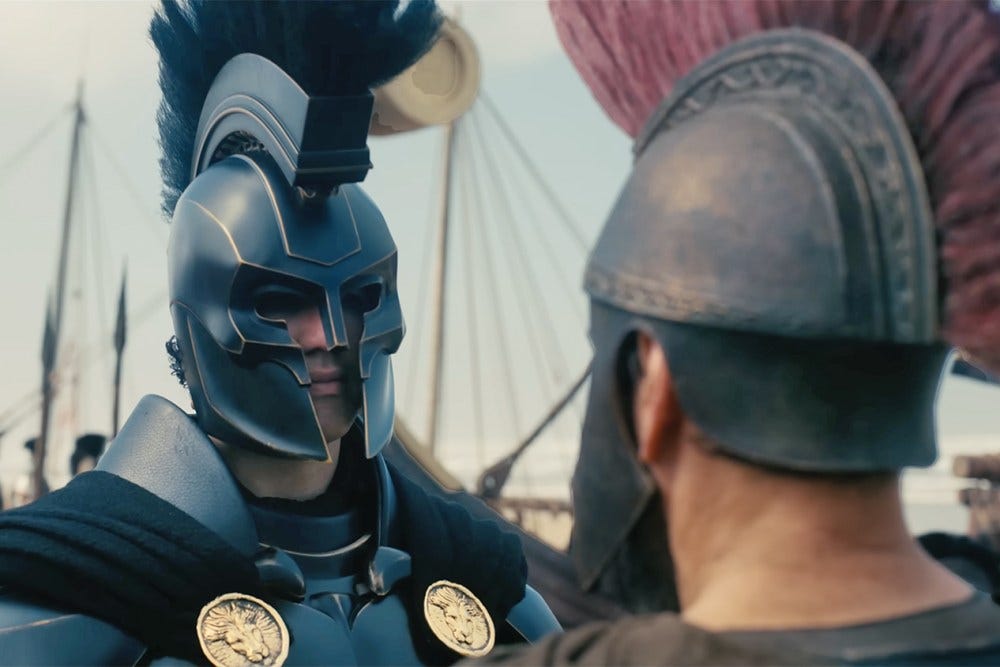
The biggest flashpoint is Lupita Nyong’o being cast as Helen of Troy. Critics argue this clashes with Homer’s descriptions.
Zendaya has also been linked to the project, reportedly as Athena. She is no stranger to race-swapping controversy, having previously faced backlash for being cast as Mary Jane Watson in the Marvel Spider-Man films.
There have also been unconfirmed rumors that Elliot Page is playing Achilles. As of now, this has not been officially confirmed.
Nolan has addressed some of his choices. In a Time magazine interview, he explained casting rapper Travis Scott in a small role.
“I cast him because I wanted to nod towards the idea that this story has been handed down as oral poetry, which is analogous to rap,” Nolan said.
Does Musk’s theory about Nolan chasing an Oscar have merit?
Musk has suggested that Nolan is making diverse casting choices to pander for awards or avoid being labeled racist. This theory deserves examination.
The Academy introduced Representation and Inclusion Standards for Best Picture eligibility starting with the 96th Oscars in 2024. These standards require films to meet criteria in areas such as on-screen representation of underrepresented groups, creative leadership and project team, and audience development and industry access.
However, these standards are not as strict or punitive as some online discourse claims. Big studio films can generally meet the requirements without fundamentally changing their storytelling or casting. Many films, including historically set stories, have still been eligible and won awards.
Oppenheimer won Best Picture with a mostly white cast
Nolan’s previous film, Oppenheimer (2023), won Best Picture at the 96th Academy Awards. The cast and creative team were overwhelmingly white and male, which aligned with the historical reality of the Manhattan Project in the 1940s. The film succeeded on the strength of its direction, performances, screenplay, and technical achievements.
Oppenheimer proved that Nolan can win major awards, including Best Picture, without relying on diverse casting to meet modern standards. This undercuts the idea that he needs to race-swap characters in The Odyssey to have a shot at Oscars.
The Oscar-chasing theory does have some merit
Musk’s theory has some surface-level logic in today’s cultural climate. There is genuine fatigue among parts of the audience regarding race-swapping in adaptations, and some filmmakers have made casting choices that appear designed to signal progressive values.
However, the theory has limited merit when applied to Nolan specifically.
Nolan has built his career on films with mostly white casts, including Inception, Interstellar, Dunkirk, and Oppenheimer, and has still been critically acclaimed and awarded. Oppenheimer showed he can win Best Picture without diversity-driven casting. Nolan has a long track record of prioritizing story, visuals, and technical craft over awards pandering.
While it is possible some producers or studios push for diverse casting to protect against criticism or improve awards chances, there is little evidence that Nolan himself is primarily motivated by Oscar chasing in this project.
Elon Musk’s criticism
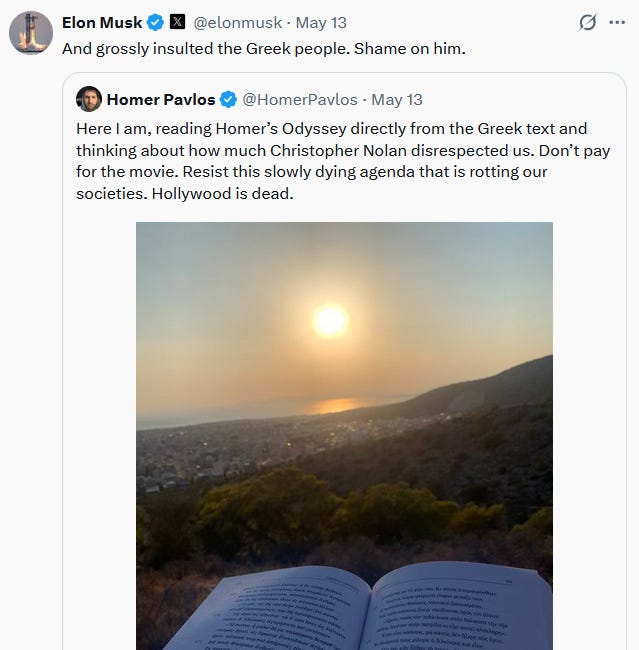
Musk has been one of the most vocal critics on X. He has amplified posts accusing Nolan of race-swapping and suggested the decisions were made to chase awards.
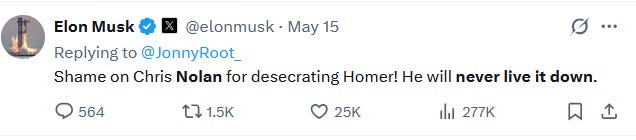
“Shame on Chris Nolan for desecrating Homer! He will never live it down,” Musk wrote in one post.
Mainstream media coverage
A noticeable pattern has emerged in mainstream coverage. Outlets have published multiple articles framing the story around “race swap backlash.” Variety in particular has run several pieces on the controversy, often highlighting social media reactions and Musk’s comments. Some coverage has framed the story in ways that tie it directly to Musk, using the moment to criticize his views on culture and Hollywood.
Box office outlook and Nolan’s track record
Despite the online noise, The Odyssey is still widely expected to be one of the biggest films of 2026. Early tracking suggests it could become Nolan’s highest-grossing movie. The film is being shot entirely on IMAX 70mm film, which has generated significant excitement.
Nolan has one of the strongest box office records of any modern director. His films have rarely underperformed, even when facing cultural pushback.
Musk’s theory that Nolan is race-swapping characters in The Odyssey primarily to chase an Oscar has limited merit. Nolan’s track record, including Oppenheimer‘s Best Picture win with a historically accurate, mostly white cast, suggests he does not need to rely on diversity casting to win major awards.
While audience fatigue with race-swapping is real, and some media coverage has been opportunistic, the evidence points more toward Nolan following his own creative instincts rather than awards pandering.
Article compiled and edited by Derek Gibbs (entertainment editor) and the Clownfish TV newsroom.
D/REZZED is part of Clownfish TV. For more news, views, and rants on gaming and tech, visit clownfishtv.com. Watch the show on YouTube at @ClownfishTV where new episodes drop daily. Subscribe to the Clownfish TV podcast on Apple Podcasts, Spotify, iHeart, and wherever else you get your podcasts. Sign up for the free newsletter at more.clownfishtv.com.
Hat Tips:
Homer’s Iliad (various translations), descriptions of Helen
Academy of Motion Picture Arts and Sciences, Representation and Inclusion Standards
Time magazine interview with Christopher Nolan
Early box office analysis from industry outlets