

Could Disney end Marvel Comics and outsource to Webtoon? Deadpool creator says "believe it."
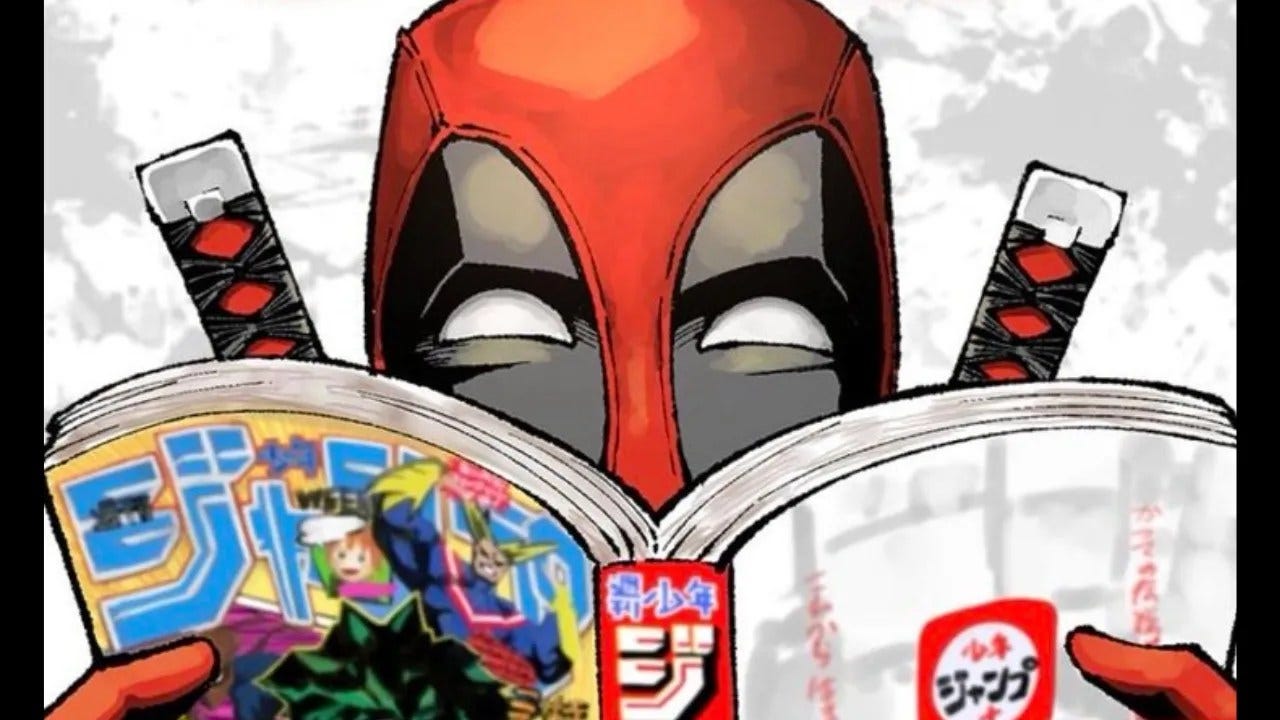
A rumor claims Disney plans to phase out Marvel’s in-house comics publishing and move the line to Webtoon by 2030, and Deadpool co-creator Rob Liefeld says “believe it,” adding pointed context about how Disney treats its comics division. It’s unconfirmed. But the pile of real evidence behind it is hard to dismiss. Here’s the honest breakdown.
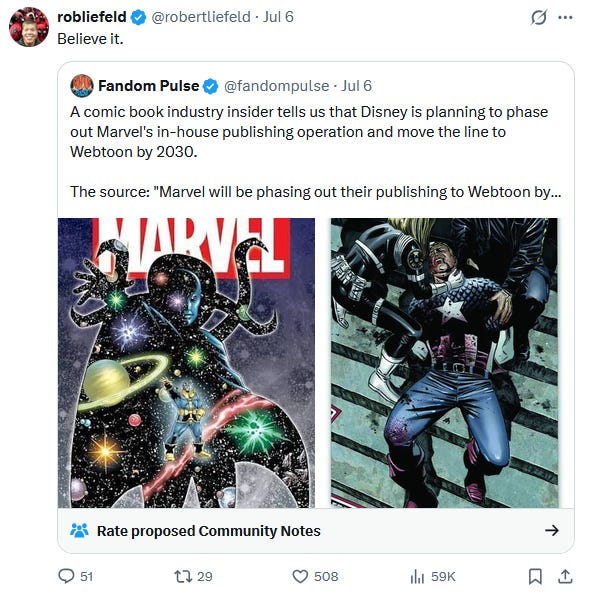
A wild rumor is rippling through the comics world: that Disney plans to phase out Marvel‘s traditional, in-house comic book publishing and shift the whole line over to the digital platform Webtoon by 2030. And it got a jolt of attention when Deadpool co-creator Rob Liefeld reacted to the claim with two simple words: “Believe it.”
Now, let’s be crystal clear up front: this is a rumor, unconfirmed. So take it with a big grain of salt. But here’s what makes it interesting: the real, verifiable evidence stacking up behind it is a lot harder to wave away than the rumor itself. Here’s the honest breakdown.
Where the rumor comes from
Let’s start with the source, and its limits.
The claim originated with a report from the outlet Fandom Pulse, citing an unnamed “comic book industry insider” who says Disney intends to move Marvel’s publishing to Webtoon by 2030.
What gave it legs was Liefeld, a genuine comics legend, amplifying it with “Believe it.” Worth noting: Liefeld isn’t a current Marvel insider, so his reaction is an endorsement of the theory’s plausibility, not confirmation from inside the building.
Still, when a creator of his stature says a rumor sounds right, people listen. So is it plausible? That’s where it gets interesting.
Liefeld’s take: publishing is “lowest on the org chart”
Here’s the context Liefeld added, and it’s the crux of why he buys it.
In follow-up posts, Liefeld painted a blunt picture of how he believes Disney views Marvel’s comics division. He noted that Marvel’s tight-knit publishing leadership has run the show for nearly two decades, and pointed out that a couple of them were already “sent to pasture” earlier in 2026, a shakeup he says they “didn’t see coming.”
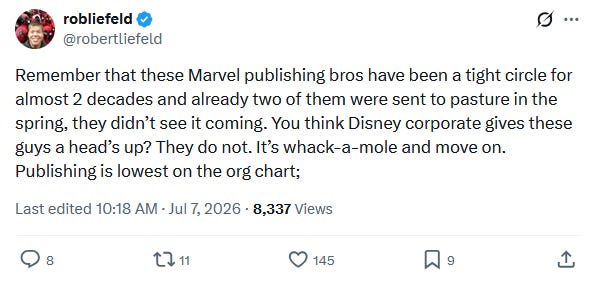
His larger point: he doesn’t believe Disney corporate gives its comics division much warning or priority. “Publishing is lowest on the org chart,” Liefeld argued, characterizing the company’s approach to it as “whack-a-mole and move on.”
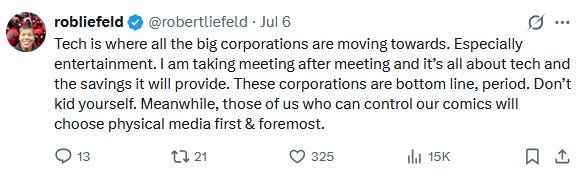
It’s important to frame this as Liefeld’s opinion and read on the situation, not confirmed inside information. But it captures why a comics veteran finds the outsourcing rumor believable: if you see comics publishing as a small, low-priority piece of a media empire, moving it to a partner platform starts to look less shocking.
The evidence that’s hard to ignore
Here’s why this rumor isn’t as crazy as it sounds, because the groundwork is real, and it’s on the record.
Unlike most “insider says” gossip, this one sits on top of a genuine pile of verifiable facts:
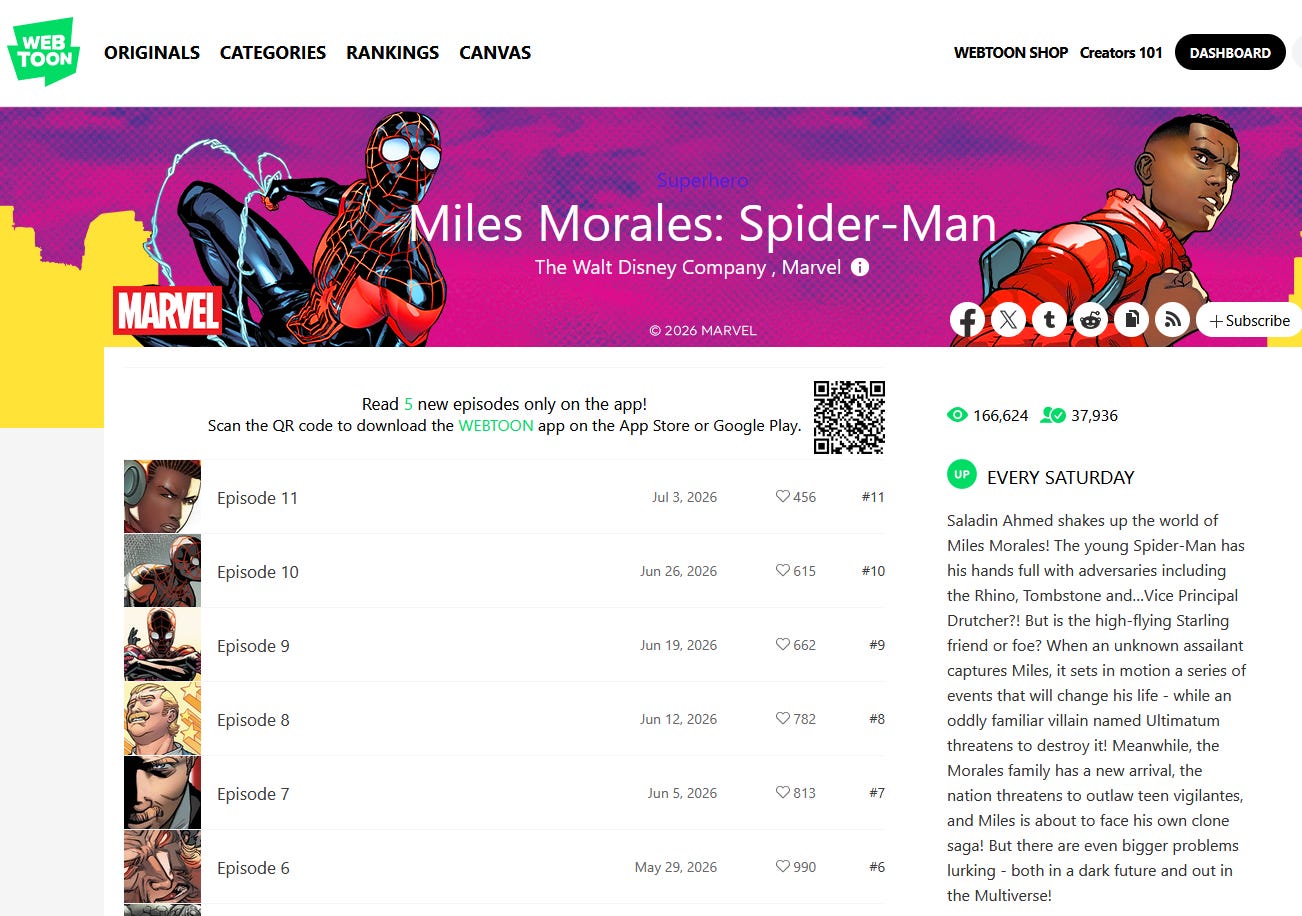
The Disney-Webtoon deal already exists, and it’s massive. In 2025, Disney and Webtoon announced a major partnership to build a new joint digital comics platform hosting a staggering 35,000-plus comics from Marvel, Star Wars, Disney, Pixar, and 20th Century Studios. Disney even acquired a roughly 2% stake in Webtoon. The platform was explicitly described as “an expansion upon Marvel Unlimited,” Marvel’s own digital service. In other words, the infrastructure to host Marvel’s line on Webtoon is already being built.
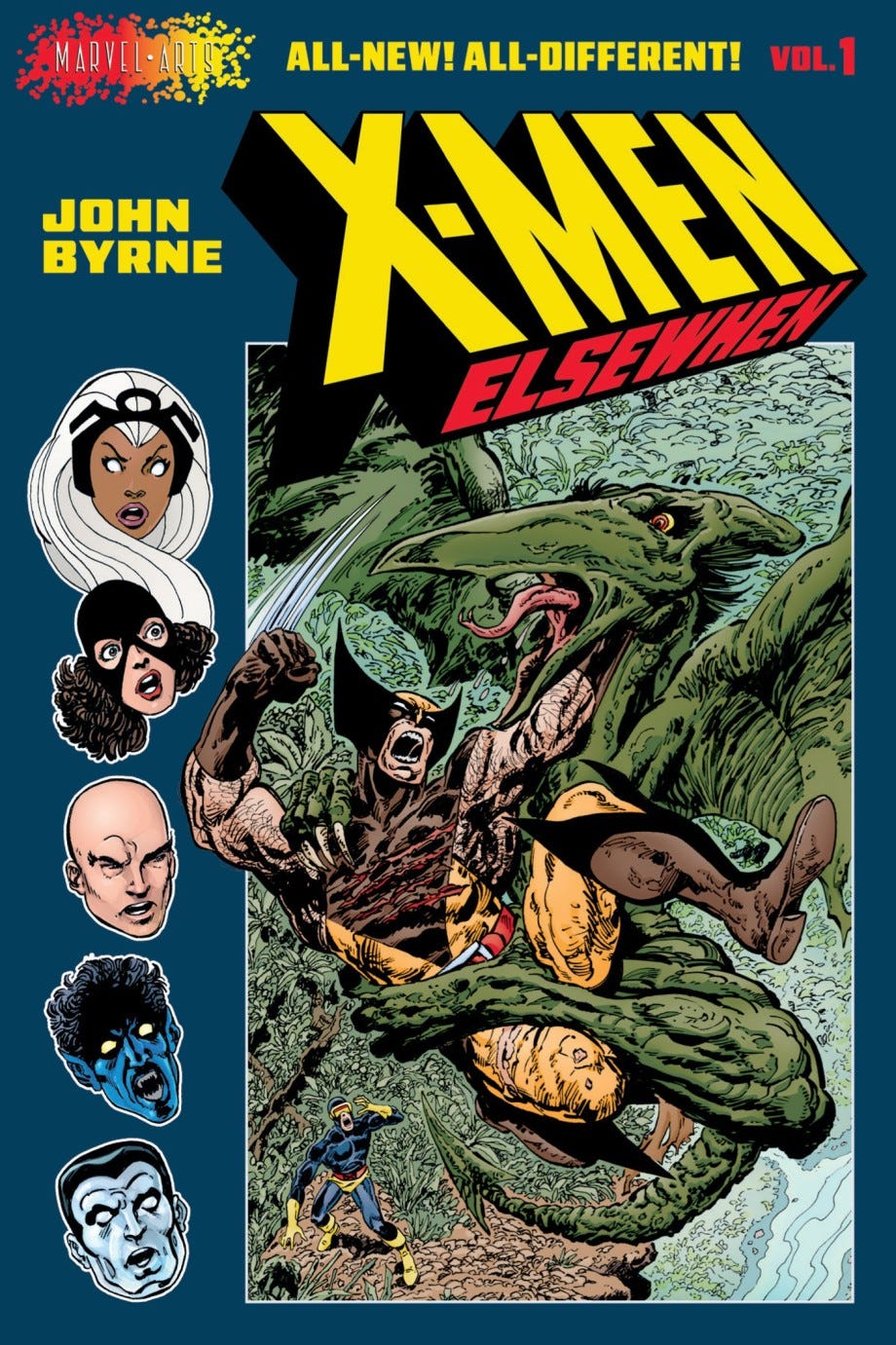
Marvel already outsources. The idea of a Marvel comic being made by someone other than Marvel’s in-house team isn’t hypothetical. Marvel has licensed titles to outside publishers before (IDW handled Marvel kids’ books for years), and just recently, John Byrne’s new X-Men: Elsewhen is being published through Abrams ComicArts, not Marvel proper. Disney also routinely licenses its other comic properties to outside publishers. Outsourcing is already normal.
The direct market is in chaos. The traditional system for getting comics into shops was thrown into turmoil when Diamond Comic Distributors, the industry’s distribution backbone for 40 years, collapsed into bankruptcy and shut down for good at the end of 2025. With the old physical-distribution model badly disrupted, the logic of pivoting harder toward digital gets more compelling.
The business math is ugly. Print comics are a shrinking, expensive business, and Marvel has been navigating a leadership shakeup. For a company Disney’s size, running a full traditional publishing operation, editors, printing, distribution, for a niche market may increasingly look like a cost center compared to licensing the characters onto a digital platform with 155 million users.
Put those together, and you can see why the rumor resonates: every piece of the puzzle it describes is already partly in place.
The most important part: what this would (and wouldn’t) mean
Here’s the crucial clarification, because it’s where panic and reality part ways.
If this rumor were true, it would not mean the end of Spider-Man, the X-Men, or Marvel comics as stories. There will still be Marvel comics. Kids and adults will still be able to read new Spider-Man adventures.
What it would mean is a change in who makes and distributes them. Instead of coming from “Marvel Comics,” the traditional in-house publisher with its own bullpen of editors and creators, the comics might be produced and distributed through a licensed, Webtoon-based operation.
The characters and stories continue; the corporate structure behind them changes.
It’s the difference between “Marvel the characters” and “Marvel the publisher”, and only the publisher would be on the chopping block.
For readers, the biggest visible change might simply be reading more of their comics by scrolling on a phone rather than flipping a floppy.
The case for skepticism
For all the supporting evidence, some real reasons for doubt remain. The core claim still rests on a single anonymous source, and “by 2030” is a long, vague runway that’s easy to assert and impossible to verify now.
Companies float and quietly abandon digital-pivot plans all the time. Marvel’s print comics, while a small business, also serve as the vital research-and-development lab for the multi-billion-dollar movies and shows, a role Disney has real incentive to preserve, and shutting down the in-house operation could risk that pipeline.
It’s also worth remembering that despite the doom, physical comics haven’t completely died, plenty of shops and publishers adapted and survived even after the Diamond collapse.
Marvel and Webtoon: what it comes down to
So, is Marvel Comics moving to Webtoon? Nobody outside Disney actually knows, and anyone claiming certainty is getting ahead of the facts. The specific “phased out by 2030” claim is a rumor, and it should be treated as one.
But it’s a rumor with unusually strong bones. The Disney-Webtoon platform is real and already being built, Marvel already outsources, the direct market is in genuine upheaval, and the financial incentives point toward digital.
That combination is exactly why a comics veteran like Liefeld found it easy to “believe it,” and why it’s worth watching, not as confirmed news, but as a very plausible direction.
If it happens, Spider-Man won’t disappear. He’ll just swing onto your phone screen instead of a comic-shop shelf.
Sometimes the rumor is wrong but the trend it’s pointing at is very, very real.
Want More Clownfish TV?
This article was brought to you in part by The Reefers of more.clownfishtv.com. Free subscribers get articles like this one in their inbox. Paid subscribers get the full Clownfish TV podcast feed, livestreams, and members-only episodes that never hit YouTube.
D/REZZED is part of Clownfish TV. For more news, views, and rants on gaming, tech, and pop culture, watch @ClownfishTV on YouTube and find the podcast on Apple Podcasts, Spotify, and iHeart.
Article compiled and edited by Derek Gibbs (entertainment editor) and the Clownfish TV newsroom.
Hat Tips:
Forbes, The Hollywood Reporter, and Variety (August-September 2025), verified for the Disney-Webtoon partnership (the multiyear deal bringing ~100 titles and then a joint digital platform with 35,000-plus Marvel, Star Wars, Disney, Pixar, and 20th Century Studios comics, the platform described as an expansion upon Marvel Unlimited, Disney’s ~2% stake in Webtoon, Webtoon’s ~155 million monthly active users, and the Amazing Spider-Man launch on the platform)
Wikipedia and Bleeding Cool (2025-2026), verified for the Diamond Comic Distributors collapse (the January 2025 Chapter 11 filing, the conversion to Chapter 7 and shutdown at the end of December 2025, Marvel/DC/Image having already left, and the resulting disruption to the direct market and Previews catalog), and Marvel’s leadership shakeup
Rob Liefeld (via X) and Cosmic Book News (reporting on the rumor) (July 2026), noted for Liefeld’s “Believe it” reaction and his follow-up characterization of Marvel’s publishing division as low-priority within Disney (”lowest on the org chart,” “whack-a-mole”), framed as his personal opinion rather than confirmed information, and the Marvel outsourcing precedents (IDW’s past Marvel kids’ titles and John Byrne’s X-Men: Elsewhen via Abrams ComicArts) verified through prior reporting