

Disney's Star Wars problem isn't toxic fans. It's telling fans they're the problem.
The Mandalorian body actor called part of the fanbase “toxic” while defending the Mandalorian and Grogu box office. Unwise.
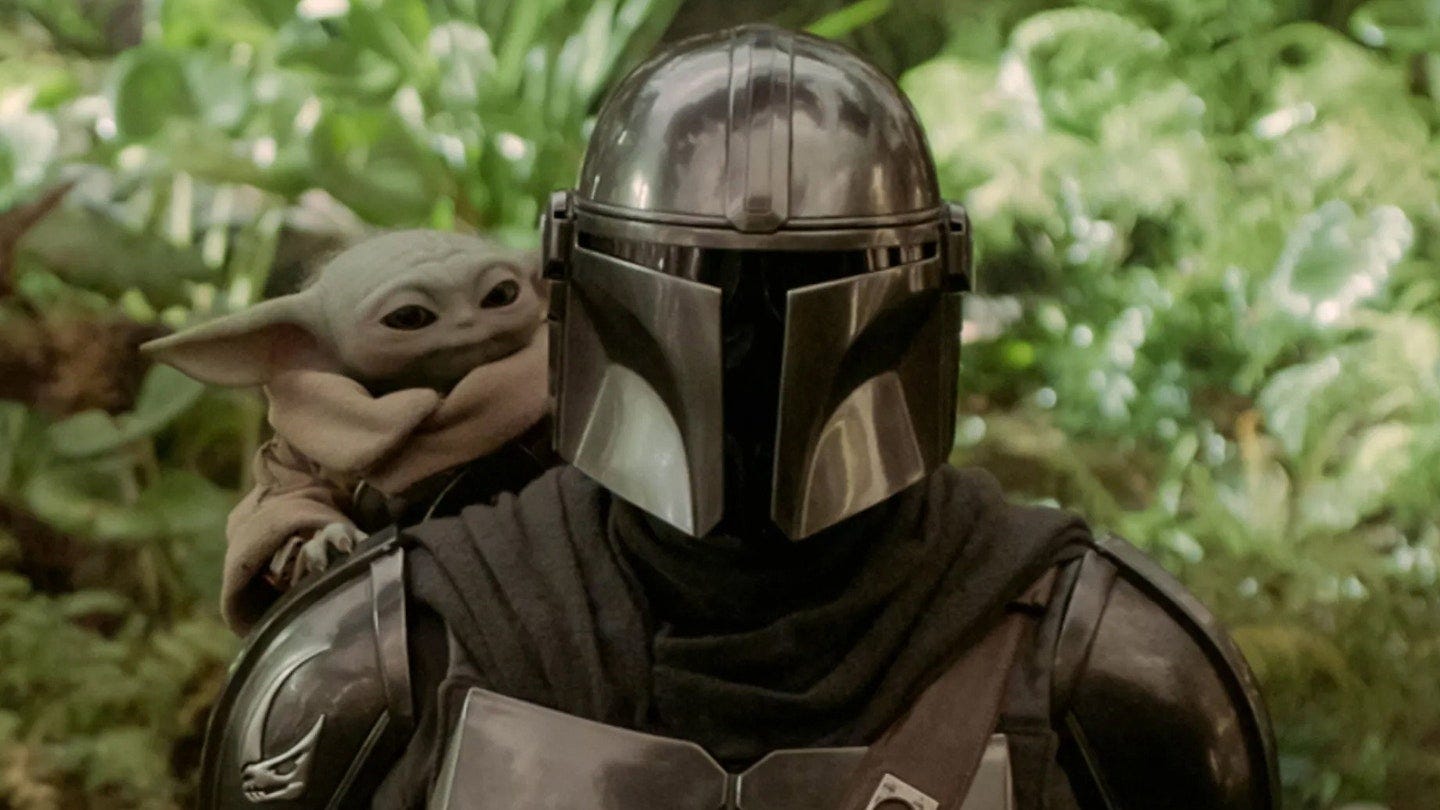
Brendan Wayne, by most accounts, seems like a decent guy. He’s a genuine Star Wars fan who’s spent years sweating inside a 62-pound suit to physically bring Din Djarin to life, and he’s John Wayne’s grandson carrying a cowboy code into a galaxy far, far away. When he speaks about Ahmed Best, the warmth is real.
Which is exactly why the rest of what he said is worth examining, not as a pile-on, but as a case study in the thing that keeps hurting Star Wars. Because a likable guy with good intentions just made an argument that Disney cannot afford to have its people making right now.
What he actually said
In an interview with MovieWeb, Wayne was discussing Ahmed Best’s redemptive return to the franchise, and he was lovely about it. Best, who performed Jar Jar Binks, came back in The Mandalorian as the heroic Jedi Master Kelleran Beq, the Jedi who rescues a young Grogu. Wayne called that return “payback for something that was owed to him.”
That part’s hard to argue with. The casting was a genuinely beautiful gesture, and Best earned it.
But Wayne extended the thought to the fanbase. “It’s interesting to see people who are pulling against the franchise they love, just because of their ownership,” he said. “That can be 100% toxic in the Star Wars world.” And the line now ricocheting around the internet: “They didn’t ruin your Star Wars. It’s our Star Wars.”
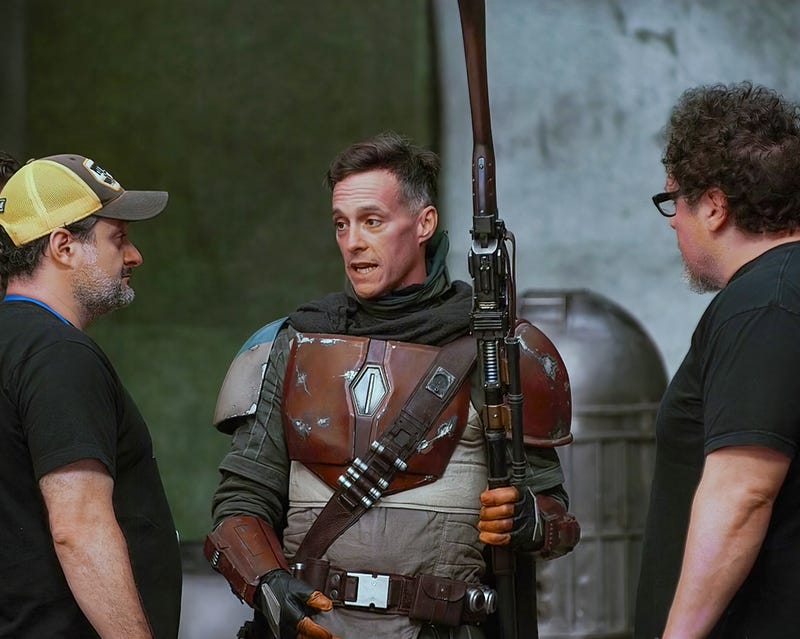
Those remarks came while he was also defending the soft box office of The Mandalorian and Grogu. That pairing, scolding the fanbase in the same breath as defending an underperforming movie, is where good intentions turn into a real liability.
The Ahmed Best history doesn’t say what it’s being used to say
The Best story has hardened into a myth, and the myth is now being wielded as a blanket indictment of fans. The actual history is more complicated.
Ahmed Best was treated badly, and he’s been candid about how dark it got. That deserves real sympathy. But the popular telling, a mob of Star Wars fans hating Jar Jar and bullying the actor, leaves out the parts that matter.
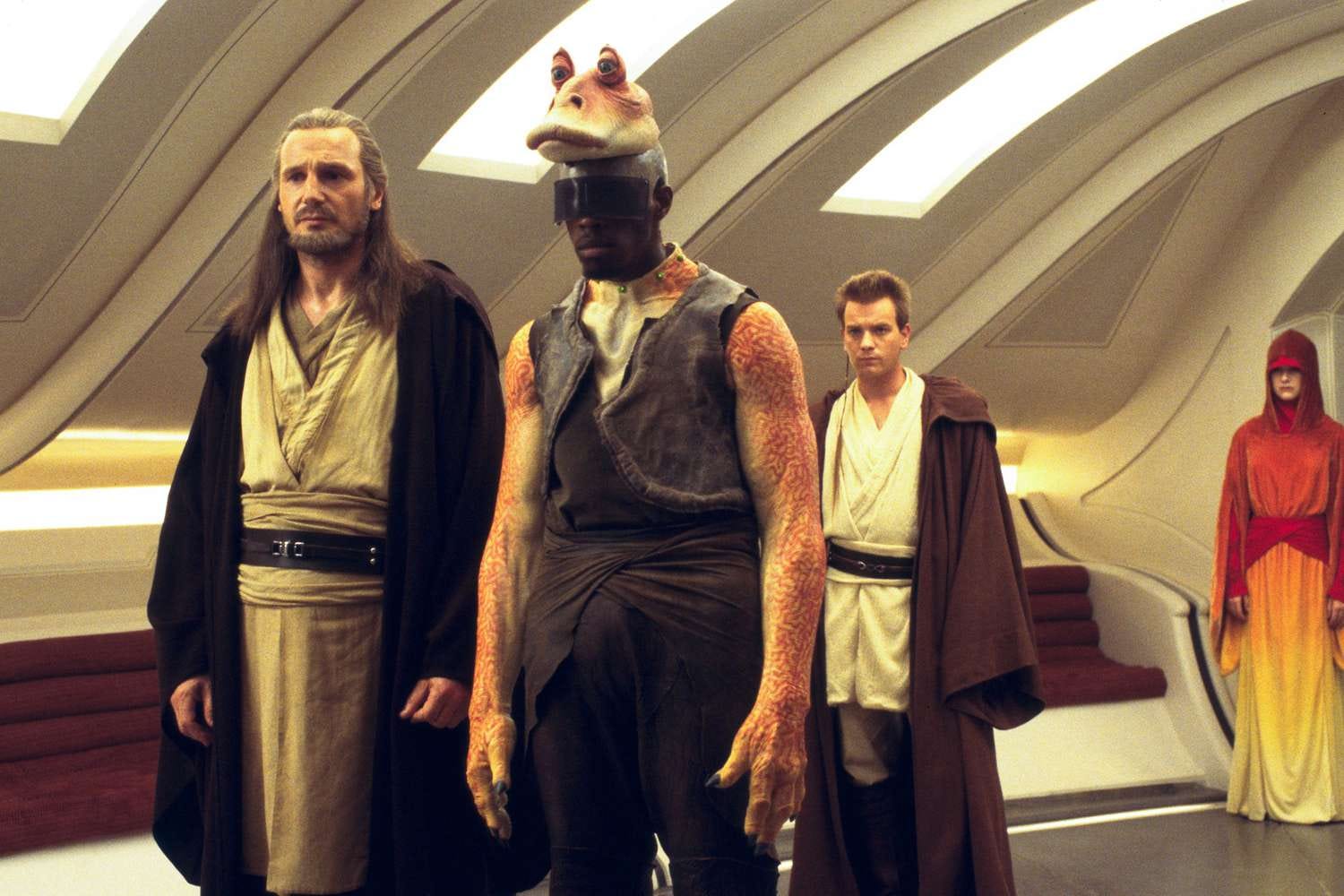
Jar Jar Binks was 100% CGI. Best was the performer behind the character, but he was largely invisible to the general public in 1999. Most people groaning at Jar Jar had no idea who Ahmed Best even was, because they were reacting to a digital cartoon, not a man. The complaint wasn’t “we hate this actor.” It was “this character is grating and there’s far too much of him,” and that was a creative call that came straight from George Lucas.
The “racist caricature” angle gets folded in as though fans invented it. They didn’t. That reading of Jar Jar, Watto, and the Neimoidians was driven hard by the mainstream press in 1999, not by the average moviegoer who simply found the comic relief annoying. Compressing all of that into “toxic fans hurt Ahmed Best, so don’t criticize Star Wars“ rewrites what happened and aims the blame at the wrong people.
“It’s our Star Wars” is precisely the wrong message at the worst time
Read generously, “it’s our Star Wars” is meant to sound inclusive: this belongs to everyone, quit gatekeeping. Read in context, next to a defense of a movie that didn’t perform, it lands very differently. It lands as: the fans who didn’t show up are the problem, not the product.
Consider what that says to a paying customer. Didn’t connect with the new thing? You’re not a real fan, you’re a toxic gatekeeper “pulling against the franchise.” Your criticism isn’t feedback, it’s an attack. Your decision to keep your money in your pocket isn’t a market signal, it’s a character flaw.
No company has ever recovered by telling the people who used to buy its product that declining to buy it makes them bad people.
Star Wars is already the poster child for this fight
Here’s the context that makes Wayne’s comment genuinely costly rather than just clumsy. Star Wars has become the single most recognizable symbol of the “woke ruined Hollywood” narrative, fair or not.
When South Park wanted to skewer the entire phenomenon in its 2023 “Joining the Panderverse” special, it didn’t pick a random studio. It picked Lucasfilm, turning Kathleen Kennedy into a Cartman-in-a-wig figure whose only creative note was “put a chick in it, make her lame and gay.”
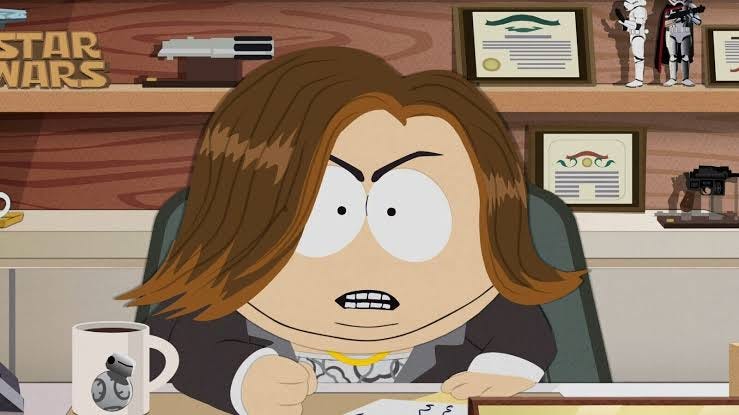
That bit became a cultural catchphrase. When the most popular satire show on the planet reaches for shorthand to mock corporate pandering, Star Wars is the example it knows the whole audience will recognize.
That’s the hole the franchise is already in. And notably, that same South Park episode cut both ways, it mocked Disney’s pandering and the trolls who harass Kennedy with hate mail. Even the satire understood that both the studio’s defensiveness and the ugliest fan behavior are part of the same destructive loop.
So when a Star Wars actor steps out and frames disappointed fans as “toxic,” it doesn’t read as a brave stand against cruelty. It reads as one more data point confirming the exact narrative that’s already bleeding the brand: that the people running and representing Star Wars think their own lapsed audience is the enemy.
The math is brutal, and division makes it worse
The fanbase is shrinking. That’s not an opinion, it’s a box-office chart. The Mandalorian and Grogu was supposed to be the triumphant theatrical return and it landed soft. A dwindling audience is the entire problem Disney is trying to solve.
You do not solve a shrinking-audience problem by giving the remaining audience reasons to feel unwelcome. Every “toxic fans” comment, every “it’s ours, not yours,” every implication that not liking the product is a moral failing, peels off a few more of the people still hanging on.
They don’t rage-quit with a hashtag. They just stop pre-ordering, stop showing up opening weekend, let the subscription lapse, and disappear quietly.
The silent majority doesn’t argue. It exits.
And then the underperformance gets blamed on toxic fans, which alienates more of them, which shrinks the audience further. Blame the fans, the fans leave, blame the fans for leaving. It’s a doom loop, and comments like Wayne’s, however well-meant, are fuel for it.
The job is to win them back, not sort them out
Real harassment of actors exists and it’s vile. Anyone sending threats to performers over creative choices is a disgrace, and “criticism is fine, cruelty isn’t” is a line worth holding. If that were the whole of Wayne’s point, there’d be nothing to push back on.
But blurring that line, treating disagreement with a movie as itself “toxic,” treating the audience as something that needs reminding it doesn’t “own” Star Wars, is the opposite of what a franchise in this position needs. Disney’s task right now is to win back alienated customers, not to keep sorting the dwindling fanbase into good fans and bad fans.
The disappointed fan is not the enemy. The disappointed fan is the most valuable person Lucasfilm has, because they still care enough to be let down. The moment they stop caring, there’s no one left to blame. Just empty theaters.
It really is everyone’s Star Wars. That’s the precise reason “it’s ours, not yours” is the worst thing anyone speaking for the franchise can say to the customers it’s trying to win back. The blame game helps no one, least of all Star Wars.
This op-ed reflects the views of the author.
ClownfishTV.com strives to be an apolitical, balanced and based pop culture news outlet. However, our contributors are entitled to their individual opinions. Author opinions expressed in this article do not necessarily reflect the views of our video hosts, other site contributors, site editors, affiliates, sponsors or advertisers.
Hat Tips:
MovieWeb (June 13, 2026), the originating interview, verified for Wayne’s exact quotes on toxic fandom, the “it’s our Star Wars” line, and the Ahmed Best “payback” comments
AOL and ComicBasics (June 13, 2026), verified for the interview context, the Kelleran Beq casting background, and the box-office-defense framing
Variety (May 2026), verified for Brendan Wayne being John Wayne’s grandson, his role as Pedro Pascal’s primary body double, and his casting history
The Hollywood Reporter and TVLine (October 2023), verified for the South Park “Joining the Panderverse” special, the Kennedy parody, and the episode’s dual mockery of both Disney and the trolls
IndieWire via Yahoo (2023), verified for Ahmed Best’s return as Kelleran Beq and his reflections on his Star Wars history
Wikipedia and StarWars.com archival (1999-2023), research starting points for Jar Jar Binks being a fully CGI character performed by Best, traced to original production sources