

Doctor Who is in real trouble. Can a comic book legend save it?
The BBC just put Doctor Who out to tender after record-low ratings, a collapsed Disney deal, and a canceled Christmas special. Now legendary comics writer Grant Morrison has floated a plan to fix it. Here’s how bad things got, and what Morrison would do.
Doctor Who is in the worst shape it’s been in for decades. Record-low ratings, a collapsed Disney deal, a departing showrunner, and a canceled special have left the world’s longest-running sci-fi show in limbo.
Into that mess steps an unlikely volunteer: acclaimed comic book writer Grant Morrison, who’s published a plan to save it. Here’s how Doctor Who fell this far, and whether Morrison’s pitch could actually work.
Just how bad did it get?
Let’s start with the grim state of things, because the numbers and the headlines are both rough.
The show’s most recent season, which aired in 2025 with Ncuti Gatwa as the Doctor, hit some of the lowest ratings in the series’ modern history. In the US, it failed to crack the streaming charts at all. Whatever you think of the creative direction, that’s a brutal place to be.
Then the dominoes fell. Disney+, which had co-funded the show for two seasons, walked away. Gatwa exited the role. And in June 2026, the BBC canceled the planned 2026 Christmas special and parted ways with showrunner Russell T Davies and his production company, Bad Wolf. The show is now effectively on an indefinite hiatus, with no Doctor, no showrunner, and no air date.
The BBC can’t really afford it anymore
Here’s the financial reality underneath all of it, and it’s the key to everything.
Those recent seasons were among the most expensive in the show’s history, and they largely only happened because of Disney’s money. When that partnership dissolved, the BBC was left with an increasingly pricey sci-fi series it can’t comfortably fund on its own.
That’s why the BBC has now put Doctor Who out to competitive tender, basically, inviting outside production companies to bid for the right to make it. The BBC keeps ownership of the show, but it’s openly looking for an external partner to actually produce it. In plain terms: the BBC needs someone else to help carry the load, because going it alone is too costly.
A bitter goodbye that didn’t help
The exit hasn’t been smooth, and that’s added fuel to the fire.
When the special was canceled, Davies revealed that it had never really been in development, saying the team “only cooked that up to guarantee a future when no one knew what would happen.” He insisted there was “no script” and that no actor had been approached.
That candor rubbed some fans the wrong way. On social media, plenty read his comments as a dismissive, prickly send-off, with some calling it a “petty” goodbye. After several divisive seasons, the relationship between parts of the fanbase and the show’s recent leadership had already frayed, and the rocky exit didn’t help repair it. Critics and frustrated fans have pointed to heavy-handed storytelling in the recent era as a factor in the audience drop-off, though others argue it simply came down to uneven writing.
It’s worth being clear about what’s actually known: the ratings fell, the partner left, the budget didn’t add up. Why viewers drifted is hotly debated, and depends a lot on who you ask.
Enter Grant Morrison
This is where our would-be savior shows up, and he’s a genuine heavyweight.
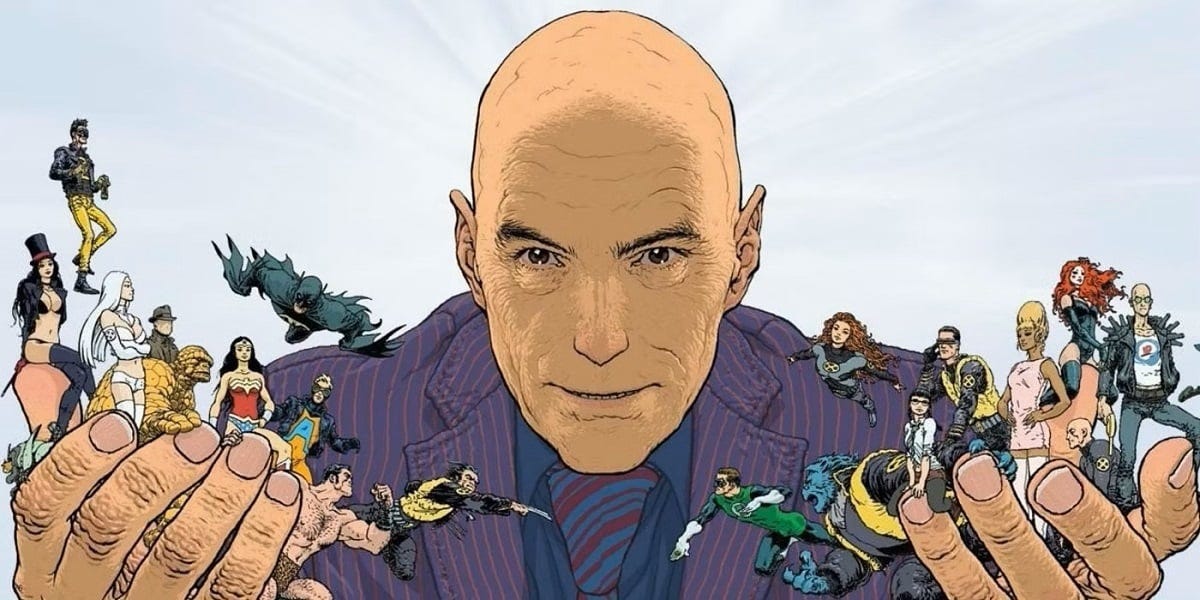
Grant Morrison is one of the most acclaimed comic book writers ever, the mind behind landmark runs like All-Star Superman, New X-Men, Batman, and The Invisibles. They’ve also moved into TV, and they actually have history here: Morrison wrote Doctor Who comic strips decades ago and has pitched the BBC on the show before, without success.
Now, in a post on their Substack newsletter, Morrison has floated the idea of taking another swing. “I’ve thought about approaching the BBC again about Doctor Who,” they wrote, “but they’ve never taken me seriously before, so I’m not convinced they’ll start. It’s probably worth a try.” Self-deprecating, but the ideas attached are serious.
Morrison’s plan, part one: clean up the mess
The pitch comes in two halves. First, untangle the knot the last season left behind.
Season 15 ended on a confusing cliffhanger: Gatwa’s Doctor appeared to regenerate into the face of former companion Billie Piper, with no clear explanation. Morrison’s fix is to explain Gatwa’s whole run as an “unstable bi-regeneration,” a bit of in-universe logic that accounts for the era feeling so different and short-lived.
Crucially, Morrison says you wouldn’t even need to film the cleanup. Bring back Piper and David Tennant to tie off the loose threads in expanded media, like audio dramas (the kind Big Finish already makes), and clear the stage that way. “You don’t even need to show any of that,” Morrison wrote. It’s a clever, cheap way to wipe the slate without burning a whole TV season on damage control.
Morrison’s plan, part two: start fresh, but don’t reboot
The second half is the more interesting argument, and it’s a real point of view.
Morrison thinks the BBC will probably go for a full reboot built around a young Doctor, and they say that “would be a mistake.” Their reasoning: “You have a universe. You have lore in the bank. That’s good to have as long as you don’t rely on it. In fact, barely even mention it.”
Instead, Morrison pitches a stripped-down reintroduction, open the new series cold, as if the show is brand new. Picture a “strange and eccentric young inventor,” an amnesiac with a mysterious machine that’s bigger on the inside, found in a field by some kids who think he’s a miracle. New viewers get a clean entry point, while longtime fans get the thrill of knowing there’s decades of history waiting to be rediscovered. Accessible to newcomers, but not throwing away what makes Doctor Who special.
Would it actually work?
So is Morrison the savior the show needs? There’s a real case, and some caveats.
On the plus side, the core instinct is sound, and lots of fans agree with it: make the show easy for new people to jump into without nuking 60 years of history. That’s a genuinely smart needle to thread, and Morrison clearly understands the franchise deeply. It’s also just encouraging, as one writer put it, that there are still big creative minds with real ideas for making Doctor Who feel new again.
The caveats are real, though. Morrison admits the BBC has never bitten before, so this may stay a fan-fiction-grade thought experiment. Their read on the Gatwa era is also pointed, they memorably called it a “Barbie Doctor” phase, which won’t win over everyone. And no pitch fixes the underlying money problem: whoever wins the tender still has to fund an expensive show in a tough market.
Still, here’s the deal: Doctor Who has died before, in 1989, and clawed its way back. The show is built to regenerate, that’s literally its premise. Whether the savior is Grant Morrison, the winner of the BBC’s tender, or someone nobody’s named yet, the Doctor has cheated death plenty of times. This is just the latest cliffhanger. The only question is who gets to write the next escape, and whether anyone hands the comic book legend the keys to the TARDIS to try.
Want More Clownfish TV?
This article was brought to you in part by The Reefers of more.clownfishtv.com. Free subscribers get articles like this one in their inbox. Paid subscribers get the full Clownfish TV podcast feed, livestreams, and members-only episodes that never hit YouTube.
D/REZZED is part of Clownfish TV. For more news, views, and rants on gaming, tech, and pop culture, watch @ClownfishTV on YouTube and find the podcast on Apple Podcasts, Spotify, and iHeart.
Article compiled and edited by Derek Gibbs (entertainment editor) and the Clownfish TV newsroom.
Hat Tips:
Grant Morrison’s Substack (Xanaduum), via ComicBook.com and Yahoo News UK (June 2026), verified for Morrison’s full plan, the “they’ve never taken me seriously” quote, the bi-regeneration/expanded-media cleanup, the “you don’t even need to show any of that” line, the anti-reboot “lore in the bank” argument, the amnesiac-inventor pitch, and the “Barbie Doctor” characterization
Deadline and Wikipedia (2025-2026), verified for the Season 15 record-low ratings, the failure to chart in the US, the Disney+ exit after two seasons, Gatwa’s departure, and the June 2026 Christmas-special cancellation
ComicBook.com and TellyVisions (June 2026), verified for the competitive-tender decision, the BBC retaining the IP, the funding reality (Disney money enabling recent seasons), and Davies/Bad Wolf exiting the show
FanBolt (June 2026), verified for Davies’ “we only cooked that up” Instagram comments, the “no script, no actor approached” detail, the BBC’s “long-term investment” framing, and the fan backlash to the exit