

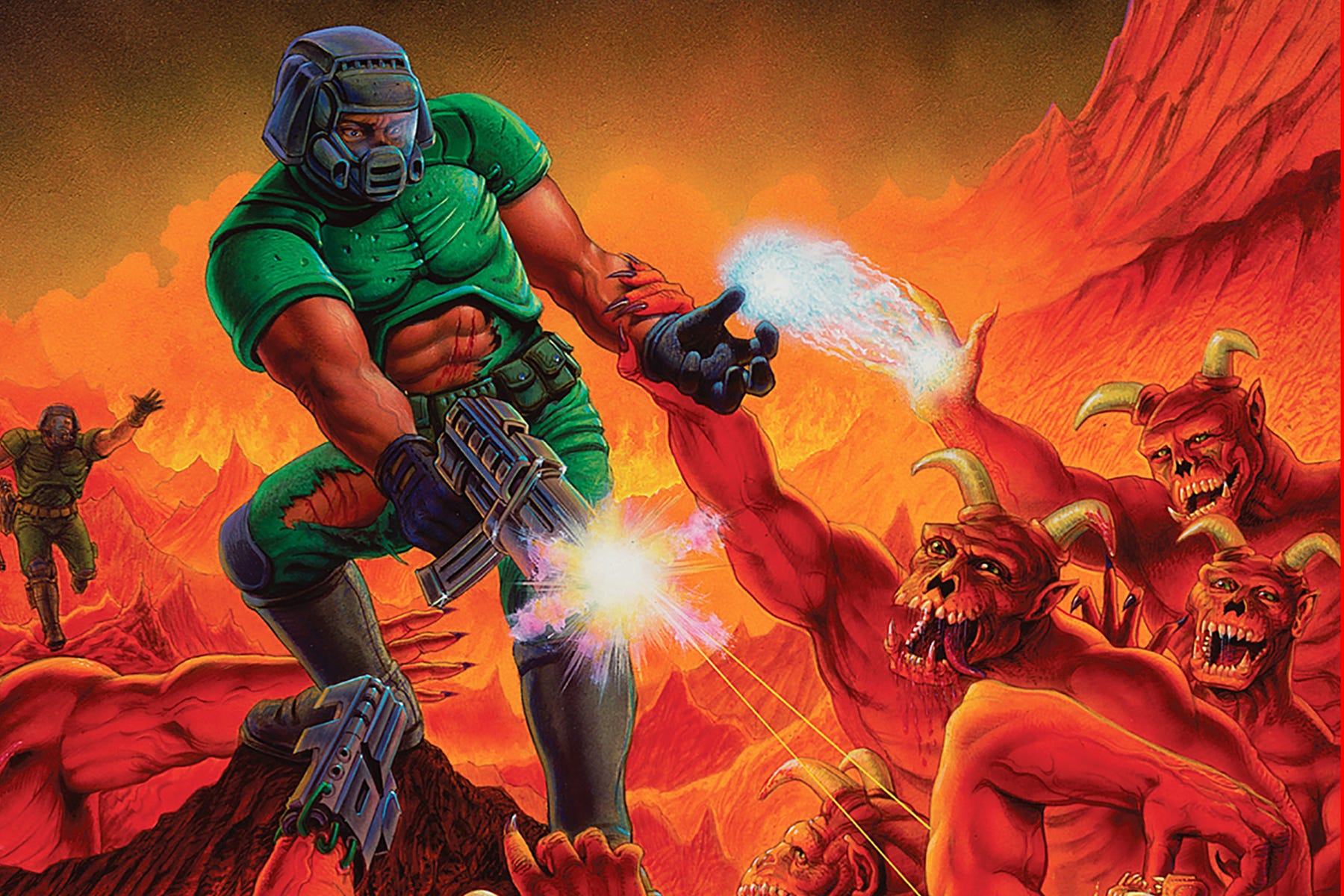
Around half of id Software, the legendary studio behind Doom, Quake, and the entire first-person shooter genre, was laid off in Microsoft’s latest Xbox cuts. Doom: The Dark Ages reviewed well, so what happened? Here’s the history, the hard economics, and why this one stings.
The latest round of Microsoft layoffs has struck one of the most legendary names in gaming history. id Software, the studio that essentially invented the first-person shooter and gave the world Doom and Quake, has reportedly lost around half of its entire team.
For a studio this foundational, it’s a genuinely stunning blow. And the story of how it got here, despite making critically praised games, says a lot about where the industry is heading. Here’s the full picture.
What happened
Let’s start with the cuts.
According to reports from Game Developer and GamesBeat, roughly 50% of id Software’s staff were laid off this week as part of the massive, roughly 3,200-person Xbox purge. That reportedly translates to at least 90-plus of the studio’s roughly 185 employees, with some tallies of the broader Texas cuts running higher.
What made it especially brutal is that, unlike five other Xbox studios marked for closure or sale, id wasn’t flagged for either, so the depth of the cuts blindsided the team. Studio head Marty Stratton reportedly got choked up delivering the news over a Teams call, telling staff it wasn’t a reflection of their skill or impact. And the timing stung: the layoffs landed just as id shipped the Revelations DLC for its latest game, the last piece of work many of these developers will ever ship there.
Who id Software is, and why this matters
Here’s the history, because it’s impossible to overstate this studio’s importance.
Founded in 1991 in the Dallas area by four young developers, John Carmack, John Romero, Adrian Carmack, and Tom Hall, id Software didn’t just make influential games. It arguably created the modern first-person shooter. Wolfenstein 3D popularized the format, Doom (1993) turned it into a cultural phenomenon, and Quake pushed 3D graphics and online multiplayer into the mainstream. Nearly every shooter you’ve ever played owes something to id.
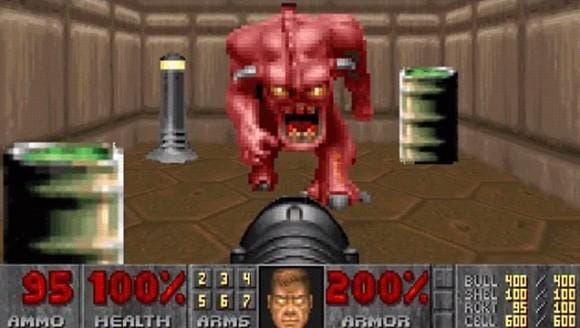
Just as importantly, id built id Tech, a series of in-house game engines renowned for their technical brilliance and blazing performance. The studio’s programmers are considered some of the best engine and rendering minds in the entire industry.
That’s a huge part of why these particular layoffs have hit fans and developers so hard, this isn’t a random studio, it’s a foundational pillar of gaming, and irreplaceable expertise may be walking out the door.
But wait, wasn’t Doom doing well?
Here’s the part that makes this confusing, and it’s the real story.
Here’s what’s genuinely puzzling: id wasn’t struggling creatively. Its most recent game, Doom: The Dark Ages, launched in 2025 to strong reviews (a solid 83 on Metacritic) and was played by millions. The modern Doom revival, from the acclaimed 2016 reboot through Doom Eternal, has been one of Xbox’s genuine creative success stories. So why gut the team behind it?
The answer appears to come down to a single, increasingly familiar word: Game Pass. According to GamesBeat, while Doom: The Dark Ages was played by huge numbers of people, many of them played it for free through Xbox’s subscription service on day one. That reportedly meant its standalone retail sales, the kind that generate real revenue and profit, were relatively weak. A beloved, widely-played game that didn’t sell enough copies became, in a spreadsheet’s cold logic, a target.
The engine question
Many of the id staffers let go were reportedly engineers working on the id Tech engine. That’s fueled speculation about Microsoft’s real motive: consolidation.
Xbox currently maintains multiple separate game engines across its studios, including id Tech (for Doom) and the IW engine (for Call of Duty), which, ironically, is itself descended from an old version of id Tech.
The fear among developers is that Microsoft may want to eventually standardize its studios onto fewer shared engines to cut costs, making a dedicated id Tech team look, to management, like a redundancy. If that’s the case, it would mean sacrificing one of the last great proprietary game engines in triple-A development for the sake of efficiency, a trade many developers find alarming.
The human cost
Behind the numbers are people, many of them veterans who gave decades to the craft. Michael Maynard, a programmer who spent over 20 years at id (and more than 40 in the industry), spoke for many when he reacted publicly to the news. He celebrated his team’s work, “arguably THE BEST first person action games in the entire industry”, while lamenting that such achievements seemed to count for little.
His frustration cut deep: that id Software, “the PIONEER/INNOVATOR of FPS action games,” could be reduced to “just another ‘reorganization’ of assets.” It’s a sentiment echoing across an industry where, increasingly, even wild success and legendary status offer no protection when the spreadsheets demand cuts.
The fair counterpoint
Microsoft’s position isn’t purely villainous. The company is losing money on the economics of giving away big games for free on Game Pass, and that’s a genuine, structural problem, not imaginary.
From a pure cost-management view, consolidating engines and trimming a studio whose games are played more than they’re bought has a certain brutal rationality. Companies aren’t charities, and the Game Pass math genuinely doesn’t work the way Microsoft hoped.
Specialized engine talent, decades of institutional knowledge, and the creative independence that made id id aren’t line items you can easily rebuild once they’re gone. There’s a real argument that some things are worth more than their immediate spreadsheet value, and a studio that helped invent an entire genre might be one of them.
id Software’s layoffs: what it comes down to
The gutting of id Software is one of the most symbolically painful moments in a brutal stretch for the game industry. This is the studio that gave us Doom, Quake, and the first-person shooter itself, cut in half not because it failed, but because its excellent games were played for free faster than they were bought, and because its world-class engineers may have become an efficiency target.
It’s a stark illustration of the modern industry’s cold calculus: critical acclaim and historic legacy mean little against quarterly math. Doom will almost certainly continue in some form, Microsoft has named it a priority franchise. But the team that made it what it is has been diminished, and something irreplaceable may have been lost along the way.
There’s a grim irony in it. The studio that taught games how to rip and tear just got torn apart by a spreadsheet.
Want More Clownfish TV?
This article was brought to you in part by The Reefers of more.clownfishtv.com. Free subscribers get articles like this one in their inbox. Paid subscribers get the full Clownfish TV podcast feed, livestreams, and members-only episodes that never hit YouTube.
D/REZZED is part of Clownfish TV. For more news, views, and rants on gaming, tech, and pop culture, watch @ClownfishTV on YouTube and find the podcast on Apple Podcasts, Spotify, and iHeart.
Article compiled and edited by Derek Gibbs (entertainment editor) and the Clownfish TV newsroom.
Hat Tips:
Game Developer and GamesBeat (July 2026), verified for the layoff details (roughly 50% of id Software’s approximately 185 staff cut as part of the ~3,200-person Xbox layoffs, at least 90-plus jobs with broader Texas tallies running higher, the studio not having been flagged for closure or sale, studio head Marty Stratton delivering the news emotionally over Teams, the hardest-hit departments including the id Tech engine team, rendering, level and combat design, and QA, and the cuts coinciding with the Doom: The Dark Ages “Revelations” DLC launch)
GamesBeat and Engadget (July 2026), verified for the context and the Doom economics (Doom: The Dark Ages launching in 2025 to an 83 Metacritic score and being played by millions but posting weak standalone sales due to day-one Xbox Game Pass availability, Bloomberg’s reporting that ZeniMax/Bethesda will focus on its biggest franchises including Doom, Elder Scrolls, Fallout, and Wolfenstein, and the speculation about Microsoft consolidating game engines given that Call of Duty’s IW engine descends from id Tech)
Nintendo Life, Pure Xbox, and Michael Maynard (public statement) (July 2026), verified for id’s history and the human reaction (the studio’s 1991 founding in Dallas by John Carmack, John Romero, Adrian Carmack, and Tom Hall, its creation of Wolfenstein 3D, Doom, and Quake, its 2009 sale to ZeniMax, the reputation of the id Tech engine, and 20-year id veteran Michael Maynard’s public criticism describing the studio being reduced to “just another ‘reorganization’ of assets”)