

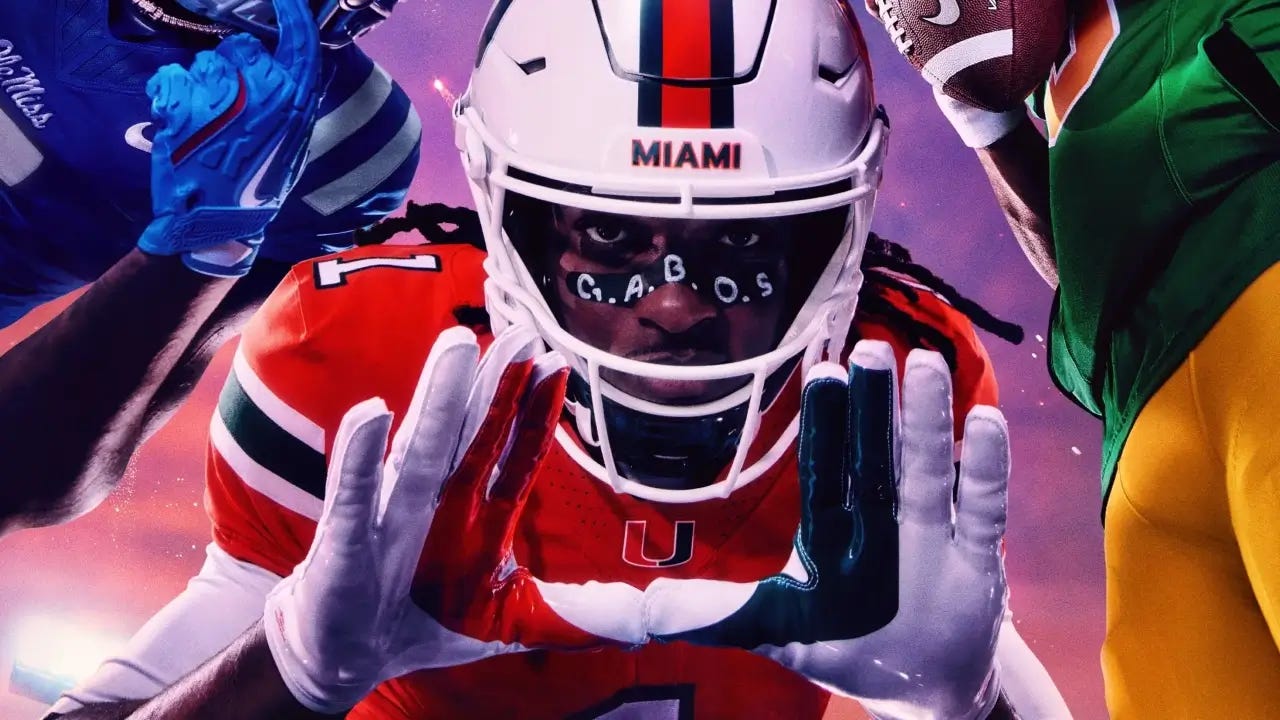
EA Sports College Football 27 added real-money microtransactions to its single-player modes, and reportedly gutted the free way to level up to push them. Even EA’s own creators are in revolt. Here’s what’s actually happening, and the $20 billion reason behind it.
Electronic Arts is facing a fierce backlash, and this time, it’s not over a multiplayer cash grab. The company has added real-money microtransactions to the single-player modes of EA Sports College Football 27, and players, including EA’s own partnered creators, are furious.
It’s reignited one of gaming’s oldest fights, over how far publishers should push monetization, with a twist that struck a particular nerve. Here’s a clear breakdown of what’s going on.
What EA actually did
Let’s start with the facts, because the details matter.
To be precise: EA didn’t lock College Football 27’s single-player modes behind a paywall, you can still play them with just the base game (which runs about $70). What EA did was introduce real-money purchases, called College Football Points, to speed up character progression in the game’s beloved solo career modes, Dynasty (where you build a program as a coach) and Road to Glory (where you play as an individual athlete).
In other words, you can now spend real cash to level up your coach or player faster. And that, in a single-player game, is what set off the firestorm.
The part that really upset people
Here’s the detail that turned frustration into fury.
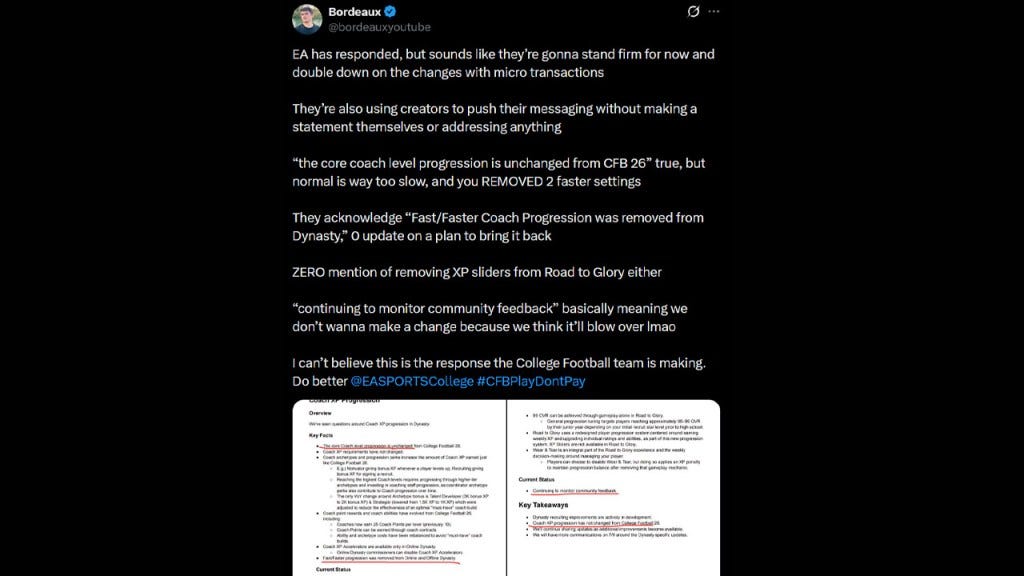
Optional shortcuts might have been tolerable on their own. But according to players and creators, EA also removed the “XP sliders”, a settings option in previous games that let players freely adjust how fast they leveled up, no payment required. On top of that, the default progression was reportedly made punishingly slow. Community members claim it would take an absurd number of seasons to fully level up a coach through normal play.
Put those two things together, remove the free way to speed up progression, then sell a paid way to speed up progression, and it looks less like an optional convenience and more like a deliberately engineered grind designed to push players toward their wallets. That’s the accusation, and it’s why people are calling it a betrayal rather than just a nuisance.
Why single-player makes this different
Here’s the key to understanding the anger.
Gamers have, somewhat grudgingly, come to accept microtransactions in modes like Ultimate Team, EA’s wildly profitable online card-collecting mode, where competitive, online spending has long been the norm. Love it or hate it, players expect it there.
Single-player career modes have traditionally been a safe haven from that, a place where your progress is earned through play, not purchases. As one prominent creator put it, if EA wants to load up Ultimate Team with microtransactions, fine, but leave the solo modes alone. By crossing into single-player, EA broke an unwritten rule, and that’s why even longtime fans feel this one went too far.
The backlash is real, and loud
Here’s how big the reaction has gotten.
This hasn’t been a quiet grumble. The hashtag #CFBPlayDontPay took off on social media, at one point cracking the top 10 trending topics in the US. Popular sports-gaming creators, some with hundreds of thousands of followers, have posted blistering takedowns and even called for boycotts.
Most notably, some of the loudest critics are members of EA’s own Creator Network, the very people EA partners with to promote its games. When your hand-picked ambassadors are publicly slamming your monetization, you have a genuine problem. Adding to the frustration, EA reportedly left it to those creators to break the news just before launch, rather than clearly disclosing it themselves.
The real reason: a $20 billion debt
So why would EA risk this much goodwill? The answer likely lies in a massive business deal. Last year, EA was taken private in a roughly $55 billion buyout led by Saudi Arabia’s Public Investment Fund, along with Affinity Partners and Silver Lake. That deal reportedly saddled the company with around $20 billion in new debt.
When a company takes on that much debt, it needs to generate a lot of cash to pay it back, and aggressive monetization is one of the fastest ways to do it. Many analysts and players see the College Football 27 microtransactions as an early sign of what’s to come: a newly private EA squeezing its games harder to service its debt. Viewed that way, this isn’t a one-off, it may be the shape of things to come.
The other side: EA’s likely defense
In fairness, EA’s position, though it hasn’t issued a full formal statement as of this writing, will likely be that the purchases are entirely optional. Technically, that’s true: you don’t have to buy anything to play and complete the single-player modes. Microtransactions you can ignore are less predatory than a hard paywall, and this practice isn’t unprecedented, rival NBA 2K has monetized single-player career progression for years.
The problem is that “you don’t have to pay” rings hollow when the free alternative, those XP sliders, was seemingly removed specifically to make the grind worse. Optional purchases feel a lot less optional when the game has been redesigned to make not paying miserable. That’s the needle EA failed to thread, and why the “it’s optional” defense isn’t calming anyone down.
EA’s single-player microtransactions: what it comes down to
The College Football 27 controversy isn’t really about whether microtransactions exist, it’s about where they’ve spread. By pushing paid progression into single-player modes, and allegedly kneecapping the free alternative to do it, EA crossed a line many players considered sacred, and did it in one of its most beloved franchises.
With a reported $20 billion debt to service, it’s easy to see why EA is reaching deeper into players’ pockets. But the ferocity of the response, especially from EA’s own creators, suggests the company may have badly misjudged how much goodwill it was willing to burn. EA is reportedly planning to address the backlash. Whether it offers real change or just waits for the storm to pass, as it’s done before, will tell players everything they need to know.
Because the fastest way to make people stop trusting a game is to make them feel like a spreadsheet.
Want More Clownfish TV?
This article was brought to you in part by The Reefers of more.clownfishtv.com. Free subscribers get articles like this one in their inbox. Paid subscribers get the full Clownfish TV podcast feed, livestreams, and members-only episodes that never hit YouTube.
D/REZZED is part of Clownfish TV. For more news, views, and rants on gaming, tech, and pop culture, watch @ClownfishTV on YouTube and find the podcast on Apple Podcasts, Spotify, and iHeart.
Article compiled and edited by Derek Gibbs (entertainment editor) and the Clownfish TV newsroom.
Hat Tips:
GamesHub and Operation Sports (July 2026), verified for the core controversy (EA Sports College Football 27 adding real-money microtransactions, via College Football Points, to single-player progression in the Dynasty and Road to Glory modes rather than only online modes, the base game’s ~$70 price, and the comparison to NBA 2K’s long-monetized single-player career progression)
The Mirror and Insider Gaming (via community reporting) (July 2026), verified for the backlash (the #CFBPlayDontPay hashtag trending in the US top 10, prominent sports-gaming creators including members of EA’s own Creator Network publicly criticizing the move and calling for boycotts, the complaint that microtransactions belong in Ultimate Team rather than single-player modes, and the reported removal of the XP sliders that previously allowed free progression adjustment)
Insider Gaming and general coverage (2025-2026), verified for the business context (EA being taken private in a roughly $55 billion buyout by Saudi Arabia’s Public Investment Fund, Affinity Partners, and Silver Lake, the reported ~$20 billion in resulting debt, analysis linking the aggressive monetization to servicing that debt, and EA not having issued a full formal statement with a developer response expected around the game’s July 9 launch)