

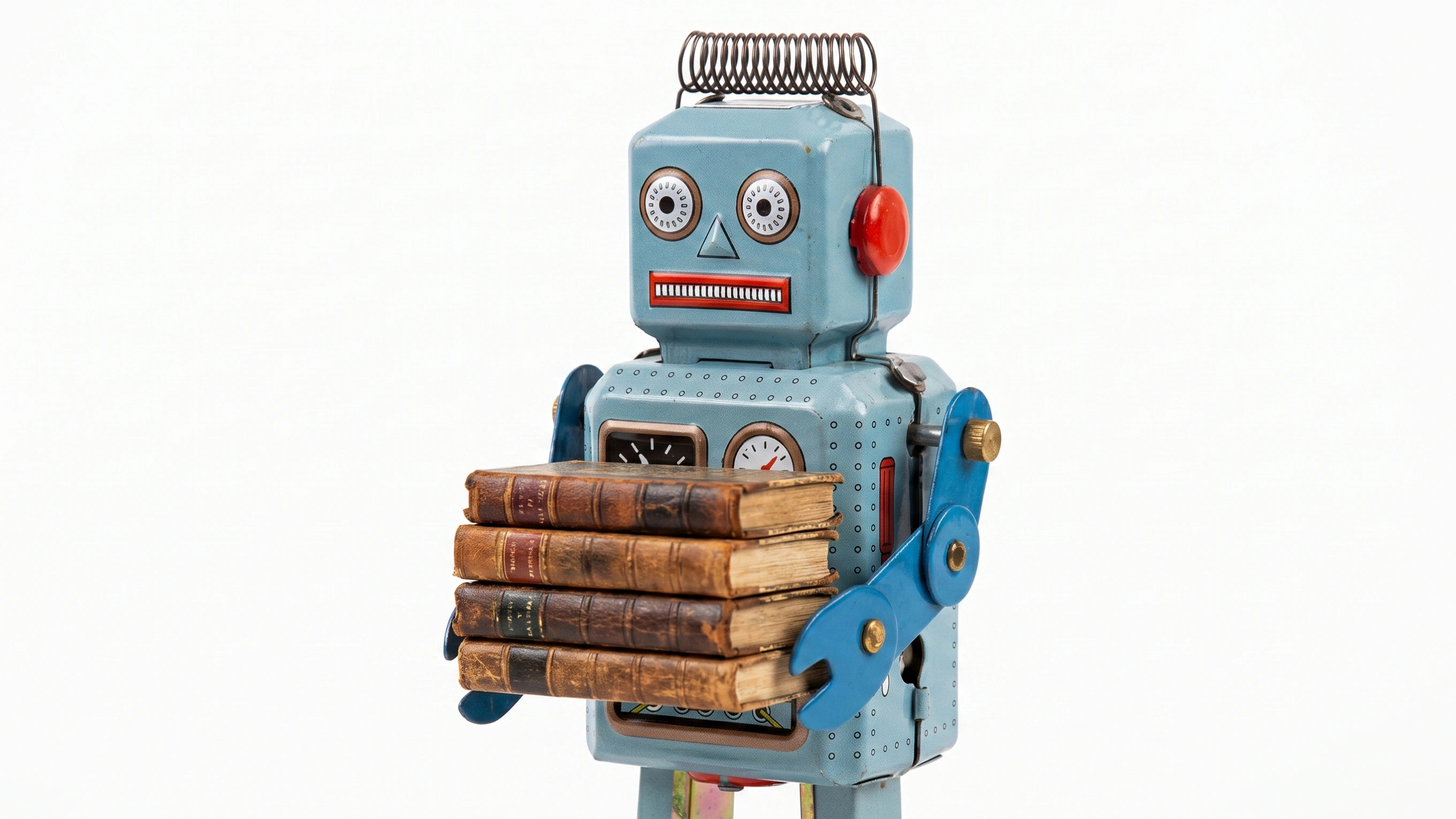
Independent booksellers across Europe are receiving anonymous orders for thousands of unrelated titles, including obscure and out-of-print books. They suspect AI companies are buying them to scan and destroy. The suspicion is widespread, though the buyers stay anonymous.
An independent bookshop in Galway, Ireland received an online order for roughly 5,000 books. For most shops that would be a very good day.
What unsettled them was the list. It mixed serious regional non-fiction with obscure, unrelated, long-tail titles, the kind of assortment no human reader or normal retailer would assemble.
Similar orders have hit booksellers in Germany, the Netherlands, Switzerland, Spain, and elsewhere, some worth between €10,000 and €50,000.
The buyers are anonymous.
Why booksellers think it’s AI
The pattern points somewhere specific, according to the sellers seeing it.
Booksellers believe the orders are generated by bots working through ISBNs, the unique identifier assigned to every published title, systematically requesting books a database doesn’t already have. A Berlin buyer told German outlet Welt that the ISBN system now lets bots log which books they’ve yet to scan.
There’s a business built around this. ISBNdb, which bills itself as the world’s largest book database, openly markets bulk-acquisition services to AI teams, advertising access to older, rare, and specialist volumes, with orders reportedly ranging from 1,000 books to a million.
The reason old print books are valuable is simple: anything published before 2022 is reliably free of AI-generated text.
The part that worries them
The fear isn’t that books are being sold. It’s what happens next.
The technique in question is called destructive scanning. Spines are sliced off, pages are fed through high-speed scanners, and the physical book is disposed of afterward. Footage of the process at a Canadian digitization company circulated earlier this year.
That’s confirmed to have happened at scale in at least one case. Court documents unsealed in a copyright lawsuit showed Anthropic, the company behind the Claude AI models, bought millions of books in bulk with a focus on less common titles and destructively scanned them, under an internal effort called Project Panama. A US federal judge ruled that buying and destructively scanning books for training qualifies as fair use.
Booksellers worry that rare or out-of-print books, sometimes among the last surviving copies, are quietly disappearing into that pipeline.
What’s proven and what isn’t
This is where the story needs care, because the two halves aren’t equally established.
Snopes examined the broader claim and found the Anthropic case documented through unsealed filings, but could not confirm that other AI companies are running similar programs. And the European bulk orders are, so far, suspicion rather than proof.
The purchasers are anonymous by design, and booksellers are inferring intent from the shape of the orders.
The legal geography adds to the unease. Sellers note that orders ship to European collection points and are believed to move on to the US, where fair use applies, while German and EU copyright law would likely make the same scanning illegal on European soil.
So booksellers are left with a genuinely hard choice. The orders are real money at a time when independent shops need it, and the buyer won’t say what the books are for. Some are filling them. Some aren’t. Nobody selling knows which shelf a book is headed to, or whether it’s headed to a shelf at all.
Article compiled and edited by Derek Gibbs (entertainment editor) and the Clownfish TV newsroom.
D/REZZED is part of Clownfish TV. For more news, views, and rants on gaming, tech, and pop culture, visit clownfishtv.com. Watch the show on YouTube at @ClownfishTV where new episodes drop daily. Subscribe to the Clownfish TV podcast on Apple Podcasts, Spotify, iHeart, and wherever else you get your podcasts. Sign up for the free newsletter at more.clownfishtv.com.
Hat Tips:
Tom’s Hardware (via The Irish Times) (August 2026), verified for the Galway bookshop’s 5,000-book order, the odd mix of titles, the ISBN-bot theory, the European collection-point suspicion, and the booksellers’ dilemma over filling the orders
Snopes (2026), verified for the unsealed court documents showing Anthropic’s bulk book purchases and destructive scanning under Project Panama, and for the finding that similar programs at other AI companies could not be confirmed
404 Media (via Futurism) (July 2026), verified for the origin of the reporting, the small bookseller’s account of volume jumping from 20 books a week to hundreds, ISBNdb facilitating anonymous bulk orders, and the pre-2022 print preference
TechTimes and RUSSH (August 2026), verified for the spread across at least seven countries, the Welt interview about ISBN-driven bots, the German and EU copyright analysis, the ABTec destructive-scanning footage, and the US fair-use ruling