


A movie went straight to VHS this weekend.
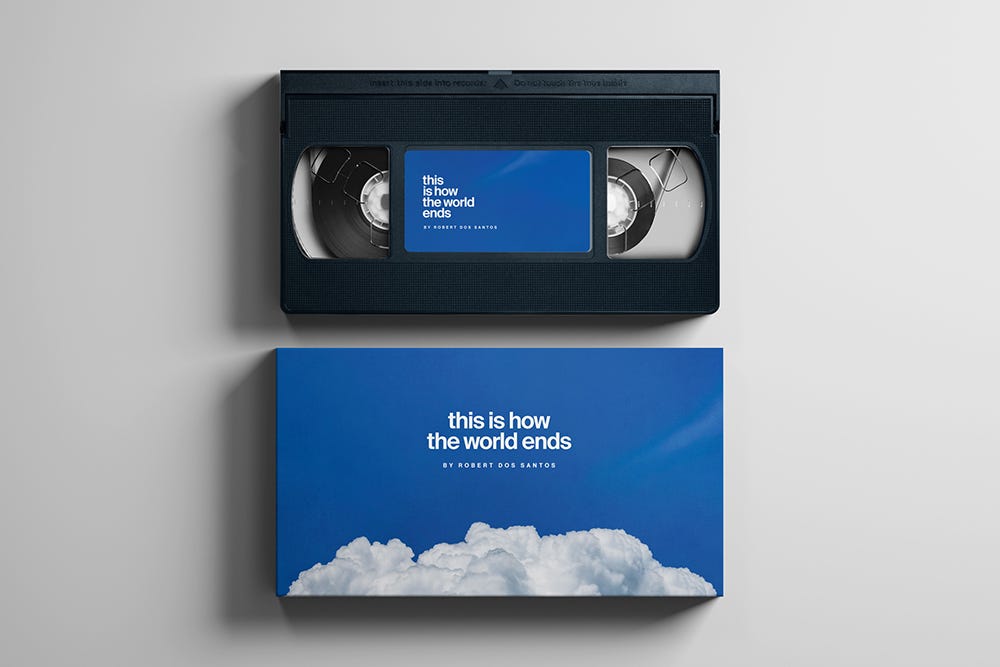
This Is How The World Ends, a sci-fi feature from South African director Robert dos Santos, released on VHS on June 7, 2026 — before any Blu-ray, DVD, theatrical, or streaming release. According to Variety, The Guardian, and the AOL / Yahoo entertainment coverage, it is the first straight-to-VHS movie release in roughly 20 years.
The plot: a brother (Josh Kempen) chases his sister (Frances Sholto-Douglas) through a desert to bring her home from “the last party on earth,” set against a war between humanity and what the film calls the United AI States. The release format is intentional. Dos Santos told Variety he wants viewers to be “part of the club” required to buy a physical tape, find or borrow a VCR, and watch the film the old way.
“It used to be proper slander, if someone said ‘straight-to-VHS,’ it meant terrible,” dos Santos told Variety. “But the whole point of this is to reclaim that and say, look, straight-to-VHS is actually saying that this is a well-made film, made with intention for an audience.”
The whole project is being positioned as what dos Santos calls a “middle finger to AI.” A movie about humanity fighting AI, released through a format that AI cannot touch, cannot stream, cannot serve up via algorithm, and cannot remediate. The physical tape is the medium and the message.
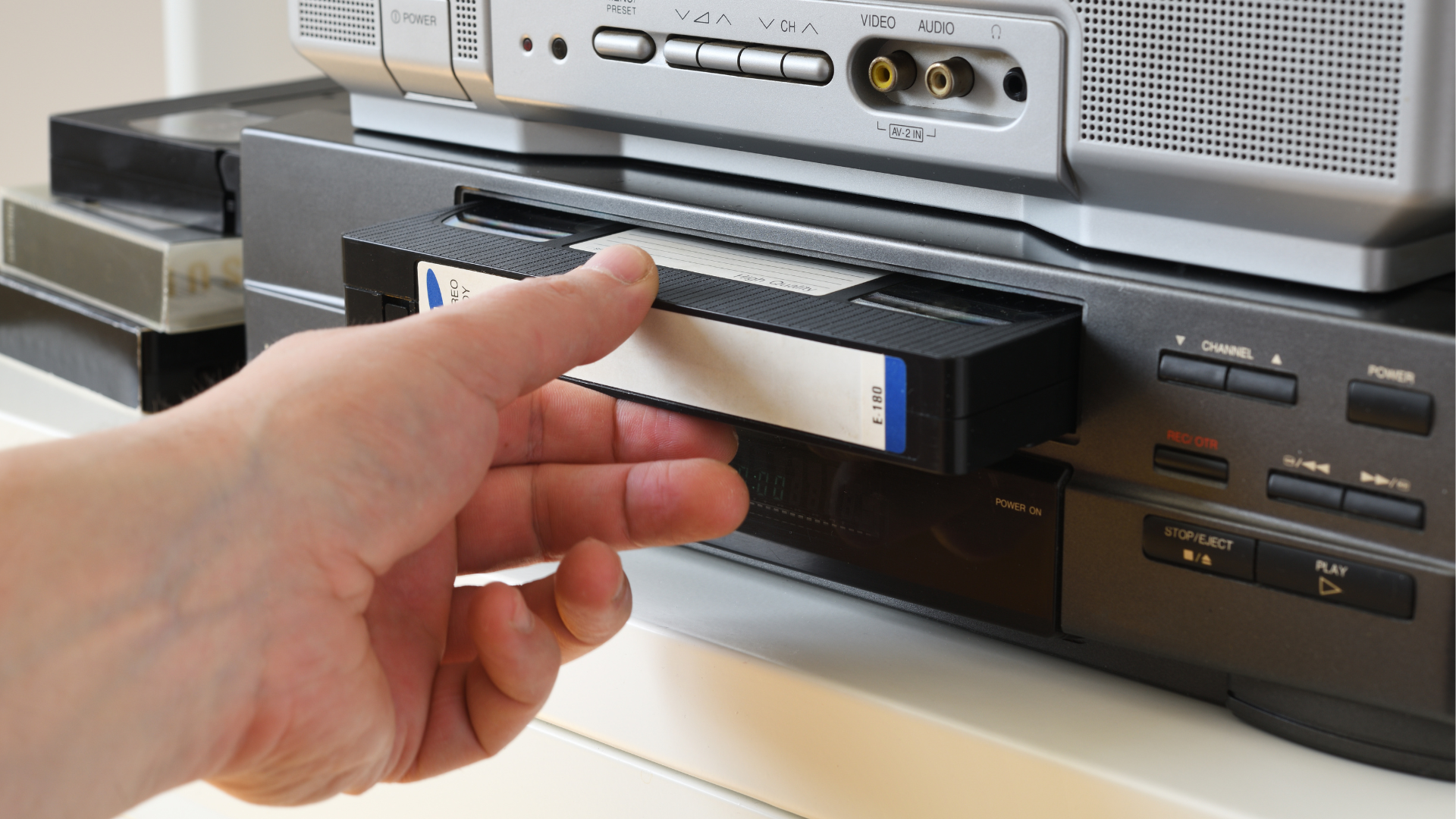
The VCR is also nearly impossible to buy new. Funai Electric, the world’s last VCR manufacturer, stopped producing them in 2016. The release is aimed at collectors, thrift store hunters, physical media obsessives, and the small but growing audience willing to acquire a VCR for one new movie.
Which, as it turns out, is a larger audience than it used to be.
Physical media is in the middle of a real revival
The dos Santos release is a publicity stunt, but it lands in a market where physical media sales are growing across the board.
US vinyl revenue exceeded $1 billion in 2025 for the first time since 1986, per the Recording Industry Association of America. That is 46.8 million units sold, up 7.9 percent year over year. Luminate’s separate tracking puts the number at 47.9 million units in 2025, up 8.6 percent, marking the 19th consecutive year of vinyl sales growth.
The pattern globally is even stronger. The International Federation of the Phonographic Industry reports vinyl grew 13.7 percent globally in 2025 — also the 19th consecutive year of growth.
Cassette tape sales rose 200 percent in 2025, per What Hi-Fi? reporting. Companies like We Are Rewind and Gadhouse are now manufacturing new cassette players with modern features (Bluetooth, USB-C charging).
4K UHD Blu-ray sales rose 12 percent year over year in 2025, per Amy Jo Smith, president of the Digital Entertainment Group. Sales of DVDs and Blu-rays at Barnes & Noble rose “mid-double digits“ in the past year, per Bill Castle, director of B&N’s music and video section.
Video rental stores are reporting record performance. Vidiots in Los Angeles had its biggest month ever in January 2026, renting an average of 170 movies daily and a record 500 movies in a single day. Vidéothèque in Highland Park and Cinefile in West LA both reported record traffic and membership growth.
Gen Z is driving this
The most surprising data point in the physical media revival: it is not driven by Gen X nostalgia. It is driven by Gen Z.
Per the Vinyl Alliance Report and Futuresource Consulting‘s Audio Tech Lifestyles report:
60 percent of Gen Z consumers are buying vinyl records.
76 percent of Gen Z vinyl buyers purchase records at least once a month.
29 percent of Gen Z vinyl buyers describe themselves as hardcore collectors.
30 percent of Gen Z vinyl buyers do not own a turntable. Ownership is the point. Playback is optional.
36 percent of Gen Z buyers discover music on streaming platforms first, then purchase the record.
Barnes & Noble’s physical media demographic continues to skew younger. “We see across all of our platforms, books, vinyl, everything, is way up for us,” Castle told the Jefferson City News-Tribune and LA Times. “People want to own things and build libraries.”
That last sentence is the whole story.
Why this is happening now
The physical media revival is sometimes dismissed as nostalgia. It is not really nostalgia. Gen Z buyers were not alive when vinyl, cassettes, and VHS were the default. They are choosing physical media in 2026 for reasons that have nothing to do with remembering 1985.
Three real drivers behind the trend:
Ownership versus license. Streaming services license content to users on temporary terms. Songs disappear. Movies get pulled. TV episodes get edited or removed for political reasons. Entire libraries vanish when licensing deals expire. Physical media is yours. It cannot be remote-edited, deleted, or downgraded by an algorithm change. In a 2025 environment where corporations regularly remove content viewers paid to access, owning the physical copy is genuine consumer protection.
Screen fatigue. The generation that grew up online is the generation most exhausted by it. Buying a record, putting it on a turntable, and sitting with it for 45 minutes is an intentional act in a way that opening Spotify is not. The friction is the value proposition. Physical media demands attention. Streaming demands nothing.
AI as an active threat. Dos Santos’s framing is not unique. As AI generation gets faster and more pervasive, audiences are seeking out media artifacts that AI cannot produce or alter after the fact. A vinyl pressing, a printed Blu-ray, a manufactured cassette, even a VHS tape — these are objects with verifiable provenance. They exist. They will continue to exist. They were made by humans for humans. The AI dread is real, and physical media is one of the most accessible responses to it.
What this means for the entertainment industry
For mainstream studios, the physical media revival is being treated as a side market — useful at the premium end (4K UHD Blu-ray, Criterion Collection prestige releases) but secondary to streaming and theatrical revenue. The studios are wrong about this. The growth trajectory across every physical format is sustained and clearly accelerating.
For indie filmmakers, the dos Santos release is a proof of concept. A small-budget feature got international press coverage by choosing a release format almost nobody is using. The story is the story. The film itself becomes secondary to the cultural statement the format makes. That is a low-cost marketing strategy that scales for any indie creator willing to commit to the bit.
For the tabletop, vinyl, cassette, and physical book industries, the data confirms what they have been telling each other for years. The physical product is not a nostalgia category. It is a growth category serving an audience that actively chooses physical over digital.
For everyone watching, the takeaway is simple. The smartphone generation is putting the smartphone down — at least for the formats where the experience of putting it down is the point.
VHS in 2026 is silly. It is also a real release strategy that just got Robert dos Santos’s name into Variety, The Guardian, AOL, Yahoo, and now D/REZZED. That is the value of leaning into a format the algorithm cannot touch.
The receipts say physical media is back. The reasons Gen Z gives are about ownership, intentionality, and resistance to algorithmic mediation. The numbers say it is not a fad. It is a market.
The middle finger to AI is real. So is the revenue.
D/REZZED is part of Clownfish TV. For more news, views, and rants on gaming, tech, and pop culture, visit clownfishtv.com. Watch the show on YouTube at @ClownfishTV where new episodes drop daily. Subscribe to the Clownfish TV podcast on Apple Podcasts, Spotify, iHeart, and wherever else you get your podcasts. Sign up for the free newsletter at more.clownfishtv.com.
Hat Tips:
Variety (June 4-5, 2026), primary reporting on the This Is How The World Ends VHS release including the verified Robert dos Santos quotes and the “middle finger to AI” framing
The Guardian (June 2026), verified VHS release details and Funai Electric 2016 production halt context
AOL / Yahoo Entertainment (June 4, 2026), verified plot details including the Josh Kempen and Frances Sholto-Douglas cast and the “United AI States” war premise
Wikipedia, verified This Is How The World Ends production details
Cult Report, verified additional plot synopsis
Recording Industry Association of America (RIAA) (2025 year-end report), verified $1.04 billion US vinyl revenue and 46.8 million units, first time since 1986
Luminate (2025 year-end report), verified 47.9 million US vinyl albums sold, up 8.6% YoY, 19th consecutive year of growth
International Federation of the Phonographic Industry (IFPI) Global Music Report 2026, verified 13.7% global vinyl growth
What Hi-Fi? (June 4, 2026), verified 200% cassette sales increase in 2025 and We Are Rewind / Gadhouse new cassette player manufacturing context
Vinyl Alliance Report, verified 76% Gen Z vinyl monthly purchase rate and 29% hardcore collector demographic
Futuresource Consulting Audio Tech Lifestyles report, verified 60% Gen Z vinyl purchase rate and 30% no-turntable ownership data
LA Times / Jefferson City News-Tribune (March 2026), verified Barnes & Noble Bill Castle “mid-double digits” DVD/Blu-ray growth quotes
Digital Entertainment Group / Amy Jo Smith, verified 12% 4K UHD Blu-ray sales growth YoY
Vidiots, verified January 2026 record month (170 movies/day average, 500 in single day)
Inspired by Beatz / Vinyl Alliance, verified additional Gen Z vinyl consumption statistics
MusicTalkers (February 2026), verified UK vinyl growth context (10.5% growth, 6.7 million discs in 2024)