

How much does it cost to build a gaming PC in 2026?
AI infrastructure has driven RAM and storage prices to historic highs, making even a basic gaming build a serious financial decision.
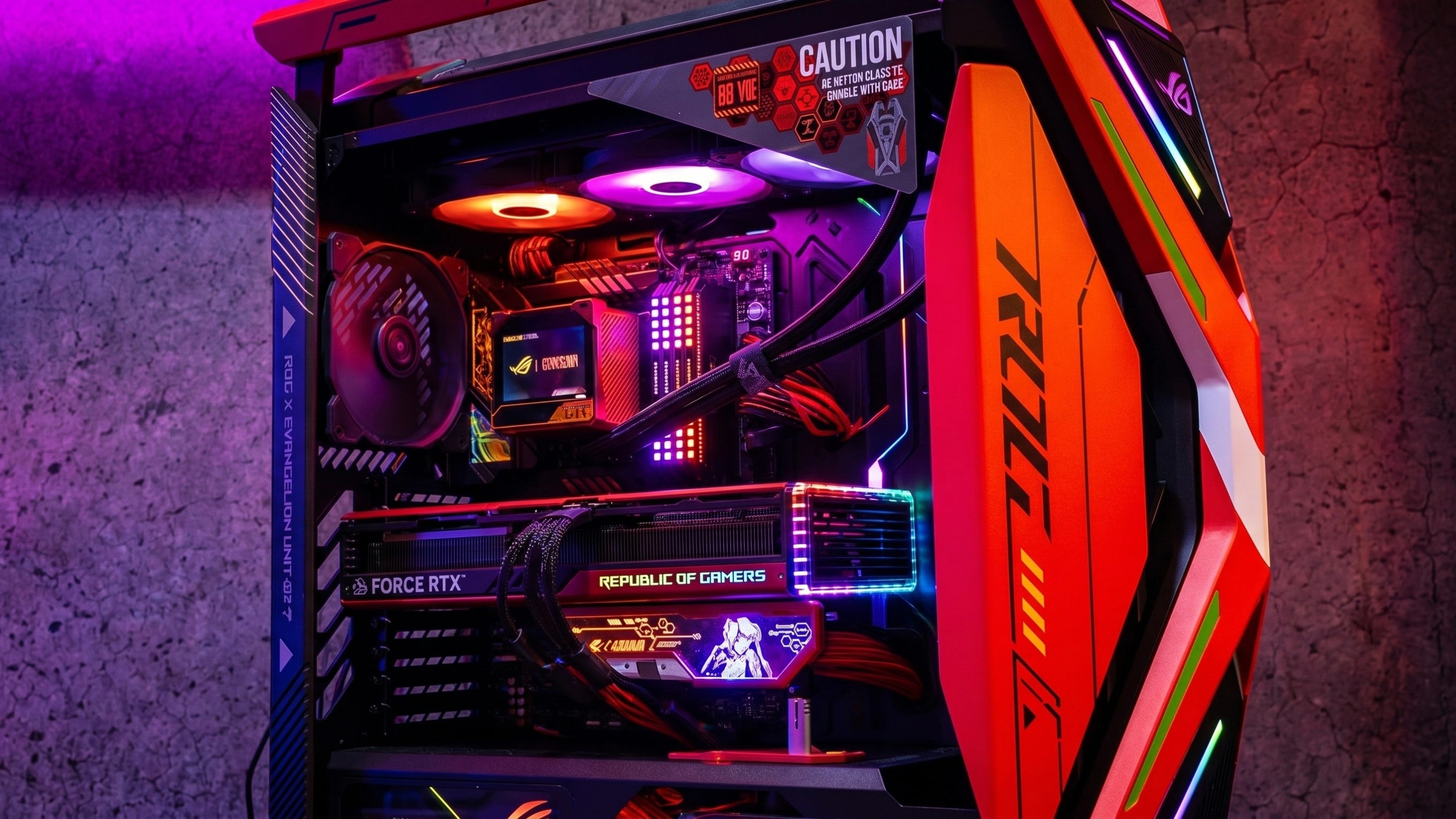
Building a gaming PC in 2026 feels like navigating a perfect storm of technological progress and punishing inflation. Rapid advances in AI-driven hardware, memory shortages, and shifting manufacturing priorities have driven up the price of nearly every major component. What once felt like a straightforward upgrade path now requires careful budgeting and tough trade-offs.
As of May 2026, the average cost to build a capable gaming PC has climbed sharply from 2025 levels, with memory and storage seeing the steepest increases. Whether you are aiming for a budget 1080p machine, a solid 1440p rig, or a no-compromises 4K powerhouse, expect to spend significantly more than you might have anticipated just a year ago.
Why component prices have skyrocketed in 2026
The biggest culprit is the explosive growth of AI infrastructure. Data centers run by hyperscalers like Microsoft, Google, Meta, Amazon, and OpenAI have locked up massive portions of global DRAM and NAND production for high-bandwidth memory and enterprise-grade storage. This has squeezed supply for consumer-grade DDR5 RAM and SSDs.
According to recent industry reports, AI is expected to consume roughly 20% of total DRAM production in 2026, and that figure could climb higher as the buildout continues. TrendForce projected DRAM contract prices to jump 55 to 60% in the first quarter of 2026 alone compared with the previous quarter.
Other contributing factors include the ongoing transition to newer standards like DDR5 and CUDIMM modules, which has temporarily reduced supply of older, more affordable parts. Tariffs and geopolitical supply-chain pressures add additional volatility. Nvidia has also reportedly throttled some consumer GPU shipments to prioritize AI workloads.
The result is that even budget builds feel expensive, and high-end systems have become noticeably pricier.
DDR5 prices have tripled in some cases
RAM has become the single largest driver of price increases this year. A 32GB DDR5-6000 kit that could be found for under $90 in early 2025 now routinely sells for $400 to $530 or more. That is roughly a 4x increase in about 12 months.
DDR4 is no longer a safe haven either. 32GB DDR4 kits that sold for $60 to $90 in October 2025 now sit at $150 to $180, as manufacturers wind down DDR4 production to focus on DDR5 and HBM for AI customers.
Here is how DDR kit pricing has evolved over time.
16GB DDR kits (2x8GB): Around $80 to $120 in 2010 during the DDR3 era. Dropped to $50 to $70 at DDR4 peak affordability in 2020. Now sitting at $120 to $180 in 2026.
32GB DDR kits (2x16GB): Around $200 to $300 in 2010. Fell to $100 to $150 in 2020. Climbed to $150 to $250 in 2025. Now $300 to $530 in 2026.
64GB DDR kits (2x32GB): Largely unavailable in 2010. Settled around $250 to $350 in 2020. Reached $350 to $500 in 2025. Now $600 to $900+ in 2026.
The jump from 2025 to 2026 is dramatic. This single line item can add $200 to $400 to a build compared with 2025 pricing, forcing many builders to either drop down to 16GB, which is increasingly insufficient, or accept a much higher total cost.
Tracking the full component price trend
Here is how key component categories have trended over the years, using approximate street prices for mid-tier parts.
2010: Entry-level GPU $150 to $200, mid-range CPU $150 to $200, 32GB DDR RAM $200 to $300, no NVMe SSDs (HDD era), typical full build $800 to $1,200.
2015: Entry-level GPU $200 to $300, mid-range CPU $200, 32GB DDR RAM $120 to $180, 1TB NVMe SSD $80 to $120, typical full build $700 to $1,000.
2020: Entry-level GPU $300 to $400, mid-range CPU $250 to $350, 32GB DDR RAM $100 to $150, 1TB NVMe SSD $80 to $110, typical full build $900 to $1,500.
2025: Entry-level GPU $350 to $500, mid-range CPU $250 to $400, 32GB DDR RAM $150 to $250, 1TB NVMe SSD $100 to $150, typical full build $1,000 to $1,800.
2026: Entry-level GPU $400 to $600+, mid-range CPU $300 to $450, 32GB DDR RAM $400 to $530+, 1TB NVMe SSD $200 to $350+, typical full build $1,400 to $2,700+.
Low-end, mid-range, and high-end builds in 2026
Low-end 1080p build (around $850 to $1,100): This tier still exists, but it requires compromises. Expect an older-generation or entry-level CPU like an AMD Ryzen 5 7600 or Intel Core Ultra 5 equivalent, 16 to 32GB DDR5 RAM with 32GB strongly recommended, a budget GPU like an RTX 5060 or AMD RX 7600 equivalent, and a 1TB SSD. You can game comfortably at 1080p medium-to-high settings in most titles, but you will feel the limits in demanding new releases. Many builders are stretching older DDR4 platforms or buying used parts to hit this price point.
Mid-range 1440p build (around $1,500 to $2,100): This is currently the sweet spot for most serious gamers. A modern 6 to 8 core CPU, 32GB DDR5, an RTX 5070 or equivalent, and fast 1 to 2TB storage will deliver smooth 1440p performance at high or ultra settings in the vast majority of 2026 games. This range has seen the biggest relative price increase from 2025 due to memory costs.
High-end 4K enthusiast build (around $2,800 to $4,500+): Top-tier systems with flagship CPUs, 64GB+ RAM, RTX 5080 or RTX 5090 class GPUs, and multiple high-speed SSDs can easily exceed $3,500. These machines crush 4K gaming, content creation, and future-proofing, but the premium for top-end components has grown steeper this year.
What you actually need as a baseline in 2026
To run most popular games at playable settings, around 1080p or 1440p at 60+ FPS, here is the practical floor.
A 6-core modern processor like a Ryzen 5 7000 or 8000 series, or an Intel Core Ultra equivalent. RAM at 16GB absolute minimum, but 32GB is now the practical baseline for smooth multitasking and future titles. A GPU with at least 8GB VRAM, such as an RTX 4060, RTX 5060, or AMD equivalent. Storage of at least a 512GB NVMe SSD, with 1TB or more strongly recommended as modern games are huge. And a quality 650W or higher Gold-rated power supply.
Many 2026 games, and upcoming titles, are demanding enough that skimping here leads to stuttering, long load times, or reduced settings.
Gamers are settling for older tech more than ever
With new builds costing significantly more, a growing number of players are simply refusing to upgrade. RTX 30-series GPUs, previous-generation CPUs, and even some older DDR4 systems are seeing extended lifespans. Forums and Reddit threads are full of users reporting that their 2020 to 2022 builds are still handling current games at respectable settings, especially at 1080p or 1440p.
This “hold and cope” strategy is widespread. Pre-built PCs from a few years ago often offer better value than a brand-new DIY system right now. Some enthusiasts are even turning to used-market parts or stretching older platforms to avoid the current memory and storage price spike.
Hoping for a Steam Machine revival and turning to older consoles
Faced with escalating PC prices, many gamers are now pinning their hopes on Valve’s newly announced second-generation Steam Machine. Valve officially revealed the compact, living-room-focused PC and console hybrid in November 2025 alongside a new Steam Controller and Steam Frame VR headset.
The Steam Controller launched on May 4, 2026, but the Steam Machine and Steam Frame have been delayed. Originally targeted for early 2026 shipping, both devices have run directly into the same memory and storage shortages affecting the broader market. Valve has publicly acknowledged the shortages as the reason for the delay and committed to shipping all three products in 2026, though no firm release date or price for the Steam Machine has been announced.
Enthusiasts are openly discussing whether the Steam Machine could finally deliver the affordable, SteamOS-optimized living-room experience the original 2015 Steam Machines never quite achieved. The hope is for a sub-$800 price point, though some analysts have warned it could push into the $1,000+ range depending on how memory pricing shakes out at launch.
In the meantime, a surprising number of PC gamers are quietly migrating back to older consoles. Used or last-generation PlayStation 5 and Xbox Series X/S units have seen demand spike as their street prices have also climbed, often $400 to $550 for a used console plus controller. While consoles avoid the constant upgrade treadmill of PCs, even they are not immune to inflation. Newer models with improved storage or performance are pushing $500 to $700 at retail, and game prices continue to rise with many titles launching at $70 to $80.
This dual pressure, skyrocketing PC component costs and rising console prices, has created a new reality. It is becoming genuinely difficult to be a serious gamer for under $1,000 in 2026. A basic new console plus a couple of games already approaches that threshold, while a minimal viable PC build with monitor, keyboard, and mouse can easily exceed it once you factor in the current RAM and storage premiums.
The bottom line for 2026
Building a gaming PC in 2026 is significantly more expensive than it was in 2025, and the gap is most noticeable in memory and storage. While you can still assemble a perfectly capable machine in every price tier, the value proposition has shifted. Many gamers are choosing to wait, upgrade selectively, or stick with older hardware rather than pay the current premiums.
If you are planning a build, focus on 32GB RAM, fast storage, and a GPU with strong efficiency. Shop sales aggressively, consider used or last-gen parts where sensible, and be prepared for the reality that AI infrastructure is reshaping consumer hardware pricing for the foreseeable future.
Whether you are chasing 1080p esports, 1440p excellence, or 4K glory, or simply hoping the new Steam Machine or an older console can keep costs down, the cost of entry-level gaming has risen sharply. The hobby that once felt accessible is now forcing tougher choices, and 2026 may mark the year when under $1,000 becomes the new benchmark for what counts as budget gaming.
Article compiled and edited by Derek Gibbs (entertainment editor) and the Clownfish TV newsroom.
D/REZZED is part of Clownfish TV. For more news, views, and rants on gaming and tech, visit clownfishtv.com. Watch the show on YouTube at @ClownfishTV where new episodes drop daily. Subscribe to the Clownfish TV podcast on Apple Podcasts, Spotify, iHeart, and wherever else you get your podcasts. Sign up for the free newsletter at more.clownfishtv.com.
Hat Tips:
Tom’s Hardware RAM price tracker, daily lowest prices on DDR5 and DDR4 memory during the AI-driven pricing crisis
TrendForce contract price forecasts for DRAM and NAND through Q1 and Q2 2026
Wccftech and Micron commentary on the AI-driven DRAM shortage
PC Gamer, IGN, and Valve official statements on Steam Machine, Steam Frame, and Steam Controller release timing
PCPartPicker and historical pricing data for year-over-year component comparisons
Industry reporting on consumer GPU supply, NAND flash pricing, and console retail trends