

If Supergirl flops this weekend, is James Gunn's DCU cooked?
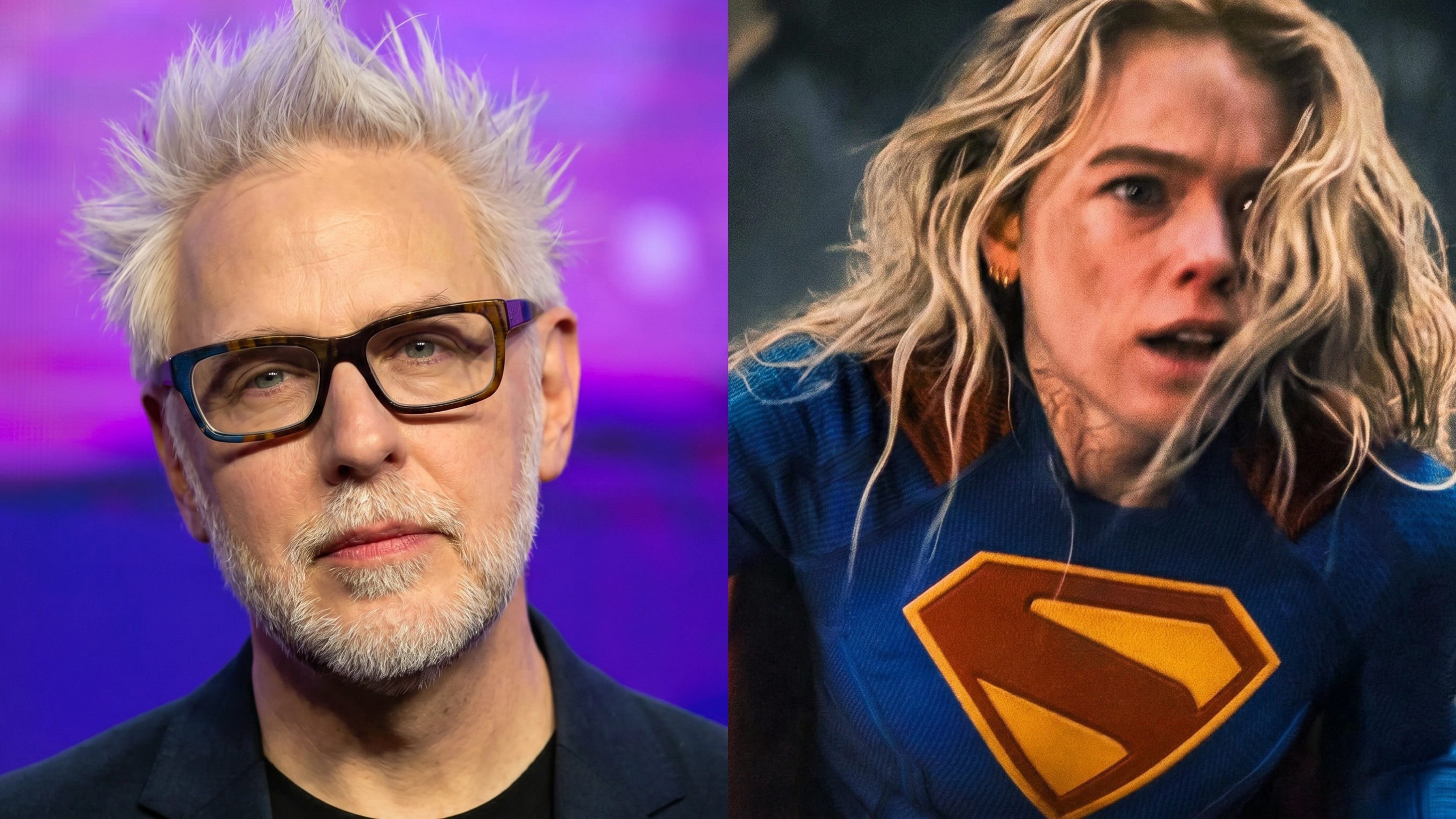
The numbers heading into opening weekend look rough: soft tracking, a Rotten score, and a Toy Story 5 buzzsaw. As the man who promised to fix DC, Gunn owns the results. So how much trouble is he actually in?
Supergirl opens this weekend, and the forecasts are ugly. As the guy running the whole DC operation, James Gunn is the one whose name is on the line.
So here’s the real question: if Supergirl flops, does Gunn end up in the hot seat? The honest answer is more complicated than the doom-posting suggests, but the pressure is absolutely real.
Why the movie looks like it’s in trouble
Let’s start with the bad news, because there’s a pile of it.
Supergirl‘s opening-weekend tracking has slid for weeks. It started near $55-60 million and has dropped to the upper $40 millions, with one June 24 forecast floating a floor as low as $34-43 million. For a movie that cost $175 million to make, that’s a scary start.
The reviews didn’t help. The film landed at a Rotten 56% on Rotten Tomatoes. Critics love Milly Alcock and Jason Momoa, but knocked the villain, the visuals, and a thin story.
And the competition is brutal. Toy Story 5 is on its second weekend and expected to pull $88-96 million, more than double Supergirl‘s projected opening. Supergirl will likely lose the top spot to a cartoon that’s already been out a week.
One box-office analysis even floated a potential $200 million loss for Warner Bros. once you account for marketing and the global run. That’s the kind of number that gets executives’ attention.
Why this lands on Gunn specifically
Here’s why a soft opening becomes a Gunn story, not just a Supergirl story.
Gunn isn’t just a director here. In 2022, he and producer Peter Safran were handed the keys to all of DC Studios, with a mandate to fix a movie operation that had been wildly inconsistent. He’s the architect of the whole rebooted universe.
That means he owns the results, good and bad. His first movie as DC’s boss, last year’s Superman, did okay but underwhelmed, opening to $122 million and drawing some disappointment given the hype. Now Supergirl, the crucial second film meant to prove the new DC is a real “universe” and not a one-hero show, is tracking well below even that.
Two movies into his grand plan, the scoreboard isn’t cooperating. When you’re the guy who promised a turnaround, that’s the definition of the hot seat.
The case that Gunn is genuinely exposed
There’s a real argument that the pressure is mounting.
The whole pitch of the new DC was a connected universe, the Marvel model, where each movie builds excitement for the next. So far, the movies are getting smaller at the box office, not bigger. Superman to Supergirl is a step down, which is the opposite of momentum.
There’s also the looming ownership change. Warner Bros. is being bought by the Ellison family in a deal loaded with around $79 billion in debt. New owners drowning in debt payments tend to scrutinize every expensive bet, and a film division posting losses is exactly what a cost-cutting boss circles in red ink. A flop right before new management takes over is bad timing for everyone, Gunn included.
The case that he’s fine, actually
Now the other side, because the doom crowd skips it.
First, Warner just locked in Supergirl‘s future. Milly Alcock is confirmed to return as Kara in Superman: Man of Tomorrow in 2027. You don’t re-sign your star for the next tentpole if you’re about to torch the plan. That’s a studio betting on the road map, not abandoning it.
Second, the money math is friendlier than it looks. Supergirl‘s break-even is reportedly around $315 million worldwide, lower than the usual blockbuster threshold. A soft opening doesn’t automatically mean a disaster on the books.
Third, Gunn is the guy they hired to fix this, and these things take years. Marvel didn’t become Marvel in two movies. Firing the architect two films into a decade-long plan would be its own kind of chaos, and studios know it. Gunn also has a stacked slate coming, including a huge animation lineup and the next Superman, that he’d presumably get to see through.
So, hot seat or not?
Is the pressure real? Absolutely.
Two underwhelming openings in a row, a Rotten score, a possible nine-figure loss, and a debt-heavy new owner about to walk in. That’s a genuinely tough spot, and Gunn, as the boss, wears it.
Is his job actually on the line this weekend? Probably not. The locked-in sequel, the lower break-even, and the simple reality that you don’t fire the turnaround guy mid-turnaround all point to Gunn getting more rope. Nobody’s reported his seat is hot in any official sense.
But reputations are built on results, and right now Gunn’s DC is producing the wrong ones. A strong hold for Supergirl, or a sequel that finally clicks, and this all blows over. Another flop or two after this, though, and the questions stop being about one movie and start being about the man in charge.
This weekend won’t end the James Gunn era at DC. It’ll just tell us how warm that seat is getting.
Want More Clownfish TV?
This article was brought to you in part by The Reefers of more.clownfishtv.com. Free subscribers get articles like this one in their inbox. Paid subscribers get the full Clownfish TV podcast feed, livestreams, and members-only episodes that never hit YouTube.
D/REZZED is part of Clownfish TV. For more news, views, and rants on gaming, tech, and pop culture, watch @ClownfishTV on YouTube and find the podcast on Apple Podcasts, Spotify, and iHeart.
Article compiled and edited by Derek Gibbs (entertainment editor) and the Clownfish TV newsroom.
Hat Tips:
Deadline and ComingSoon (June 24, 2026), verified for the upper-$40M opening projection, the $34-43M downside forecast, the $175M budget, the $315M break-even, and the Toy Story 5 $88-96M second weekend
Variety (June 2026), verified for Milly Alcock being confirmed to return in Superman: Man of Tomorrow in 2027
Rotten Tomatoes (June 24, 2026), verified for the 56% Rotten score and the critic consensus praising Alcock and Momoa while knocking the villain and story
SEC filings, via prior CNBC reporting (2026), verified for the Ellison/Paramount acquisition of Warner Bros. and the ~$79 billion combined debt