

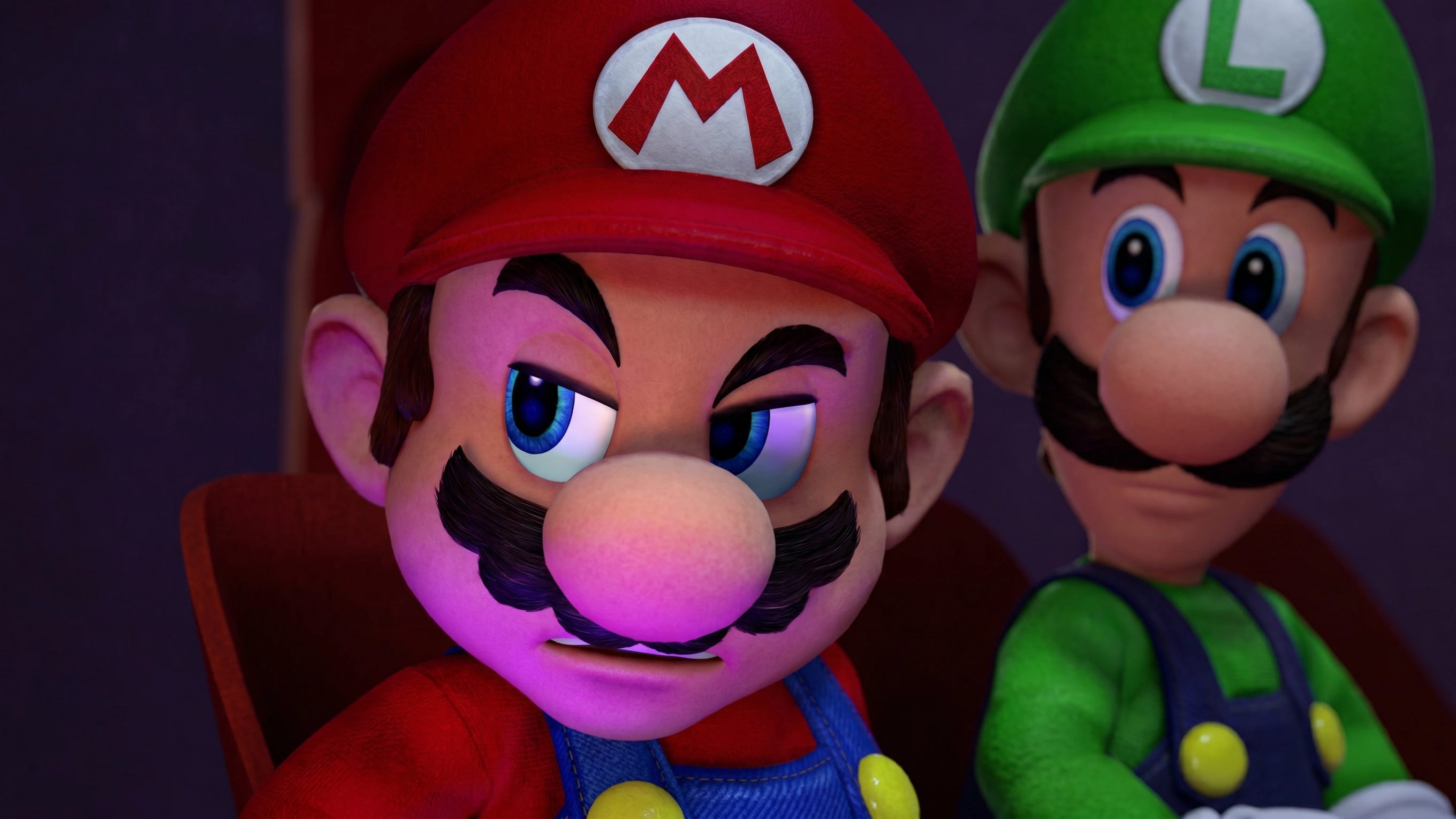
Forty years ago, Nintendo was the little guy Universal tried to crush over a cartoon gorilla. Nintendo won, fair and square. Today it’s the one sending cease-and-desists to robbed card shops and bricking consoles, and the company it once beat is now its theme-park partner.
Nintendo may be in the middle of a villain arc, and the wild part is that the company seems to be the only one who hasn’t noticed.
This is the company that made so many childhoods. Mario, Zelda, the GameBoy under the covers.
But to many, we’re now watching a beloved underdog slowly turn into the exact kind of corporate bully it once beat in court, and wondering when somebody in Kyoto is going to look up and see it.
Let’s walk through how we got here.
How Nintendo became the underdog hero in the Donkey Kong case
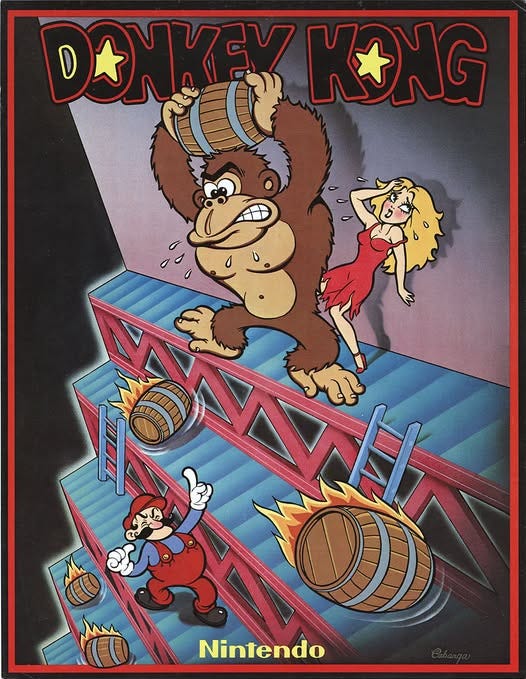
Here’s the origin story a lot of people have forgotten. In 1982, Nintendo was the David, not the Goliath.
Universal City Studios came after Nintendo claiming Donkey Kong infringed on King Kong. Universal didn’t just sue Nintendo, either. It sent cease-and-desist letters to Nintendo’s licensees, companies like Coleco, Tiger Electronics, and Milton Bradley, threatening them and demanding a cut of every sale. Most of them, scared of a long legal fight, just paid up.
Nintendo refused. With attorney John Kirby leading the defense, the company stood its ground and discovered something delicious: Universal had previously argued in court that King Kong was in the public domain, when it suited them. They didn’t even own the thing they were suing over.
Nintendo won. In 1984 the appeals court upheld it, and the judges found Universal had acted in bad faith, bringing the claim just to grab a piece of Donkey Kong’s profits.
Nintendo collected millions in damages. The little Japanese game company had beaten a Hollywood giant that tried to bully it and its partners over IP it didn’t hold.
That makes the next parts of the story even more ironic.
Nintendo’s cease-and-desist over a Pokémon shop that got robbed
Fast forward to 2026. A small Pokémon card shop in New York, then called Poké Court, was held up at gunpoint during a community craft night. Three armed robbers, roughly $100,000 in stolen cards, customers with a gun in their faces.
The community rallied. Support poured in. And that outpouring of attention is, apparently, exactly what put the shop on Nintendo’s radar, because shortly after, Nintendo contacted the owners over the name and the Poké Ball logo, and the shop was forced to rebrand to Trainer Court.
The store got robbed. The community lifted it back up. And the reward for surviving was a trademark notice from the most powerful company in gaming. Whatever the legal merits, the optics are exactly what you’d expect from a cartoon villain, not from Mario’s house.
It’s not an isolated thing, either. It’s a pattern.
Nintendo keeps shutting down its own fan tournaments
Ask the Super Smash Bros. community, who have spent years as collateral damage.
In 2020, Nintendo hit The Big House Online with a cease-and-desist that killed the entire tournament. Its crime? Using a fan-made mod called Slippi that added the online netcode the community needed to compete during a pandemic when meeting in person could get people killed. Nintendo shut it down anyway. The hashtag #FreeMelee trended, and went unanswered.
The next year, Nintendo came for Riptide, forcing it to drop its Project+ event, a tournament that was entirely offline and required legitimate disc copies, so piracy wasn’t even on the table. Then in 2022 it pulled the plug on the Smash World Tour, an entire circuit with a championship finale, leaving organizers blindsided.
These aren’t pirates or counterfeiters. They’re the company’s own most devoted fans, building community around games they bought, and Nintendo keeps treating them like an infestation.
“You don’t own your games”: the Switch 2 bricking clause
Then there’s the ownership question, which might be the one that matters most long-term.
When the Switch 2 launched in 2025, Nintendo updated its user agreement with language giving it the right to render a console “permanently unusable in whole or in part” if it decides you’ve broken the rules. The same agreement spells out that your games are “licensed, not sold,” and that digital purchases can’t be resold or transferred. You’re renting, and the landlord holds a remote kill switch.
The clause drew enough heat that Brazil’s consumer-protection agency, PROCON-SP, formally challenged it as abusive under Brazilian law. Buyers were even warned about used Switch 2 units, since a console could already be bricked before resale.
This is the future a lot of fans see coming: a world where you pay full price and own nothing, where the box on your shelf works only as long as a corporation lets it. And Nintendo is planting the flag.
The fair case for Nintendo, because it exists
Now let me argue the other side honestly, because a villain arc isn’t the same as a one-sided hit job, and Nintendo isn’t cartoonishly wrong about everything.
Trademark law genuinely is use-it-or-lose-it. If Nintendo doesn’t defend the Poké Ball mark, it can weaken its ability to defend it later, so the lawyers have a real, boring reason to send those letters, even the ugly-looking ones. The anti-piracy logic is real too; emulation and ROM piracy do cost the company money, and protecting that isn’t villainy on its face.
And the bricking clause, as much as it stings, isn’t unique. Sony’s PS5 agreement contains similar remedies for hacked hardware, and attorneys say console makers are likely within their legal rights. Nintendo is the loudest and most aggressive about it, but it didn’t invent the practice.
The point isn’t that Nintendo has no reasons. It’s that “technically defensible” and “the behavior of a company people love” have drifted very far apart.
You can be within your rights and still be the bad guy in the story.
Nintendo is now running Universal’s old playbook, with Universal
Which brings us back to 1982, and the irony that ties this whole thing in a bow.
Look at what Universal did to Nintendo back then: targeted the licensees and small partners, leaned on legal threats over contested IP, tried to extract money through intimidation rather than the courtroom. The court called it bad faith. Nintendo was the sympathetic underdog who refused to fold.
Today, Nintendo is the company chasing the small fry, the card shops, the tournament organizers, the modders, over IP claims of wildly varying merit. It’s playing 1982 Universal’s role almost beat for beat.
The Palworld lawsuit, where Nintendo is pursuing patents it filed after the game already existed and has narrowed its own case down to versions of the game that no longer run, is just the highest-profile version of the same instinct.
And here’s the kicker. Nintendo and Universal are now partners. Super Nintendo World is one of the biggest draws at Universal’s theme parks, with Donkey Kong’s own expansion. The gorilla Universal once tried to sue out of existence is now selling Universal park tickets. The two combatants buried the hatchet and went into business, and somewhere along the way, Nintendo picked up its old enemy’s tactics.
The underdog forgot what it was
The thing about a villain arc is that it usually happens to someone who was the hero once. That’s what makes it a tragedy instead of just a story about a jerk.
Nintendo earned a mountain of goodwill over forty years. The games are still, genuinely, among the best in the world. But goodwill is a bank account, and the company has been making withdrawal after withdrawal, suing the robbed, shutting down the faithful, and quietly redefining “owning a game” into “renting one until further notice.”
John Kirby’s Nintendo fought the bully and won because it had the moral high ground and the law on its side. The Nintendo of 2026 still has the law, mostly. The high ground is the part it’s losing, one cease-and-desist at a time. And the company that once beat Goliath should remember how that story is supposed to end, before it finishes turning into him.
This op-ed reflects the views of the author.
ClownfishTV.com strives to be an apolitical, balanced and based pop culture news outlet. However, our contributors are entitled to their individual opinions. Author opinions expressed in this article do not necessarily reflect the views of our video hosts, other site contributors, site editors, affiliates, sponsors or advertisers.
Hat Tips:
Justia and Casemine (court records) (1983-1986), verified for the Universal City Studios v. Nintendo rulings, the public-domain argument, the bad-faith finding, and the damages award
Dexerto, Kotaku, and GameSpot (February 2026), verified for the Poké Court/Trainer Court robbery, the $100,000 figure, and the Nintendo trademark contact following the community support
Kotaku, Game Developer, and TechRaptor (2020-2022), verified for The Big House Online, Riptide, and Smash World Tour shutdowns, the Slippi detail, and the #FreeMelee response
Ars Technica, Game Rant, and Nintendo Wire (May-July 2025), verified for the Switch 2 EULA bricking clause, the “licensed not sold” language, the PROCON-SP legal challenge, and the comparison to Sony’s PS5 agreement
Flickering Myth and Little Big Campus (2024-2026), verified for the Donkey Kong case narrative, the John Kirby defense, and the Universal licensee-pressure campaign
Dexerto and Games Fray (June 2026), verified for the current Palworld lawsuit status and the post-filing patent strategy