

Is there a RAM cartel? The 3 memory giants behind sky-high PC and console prices just got sued
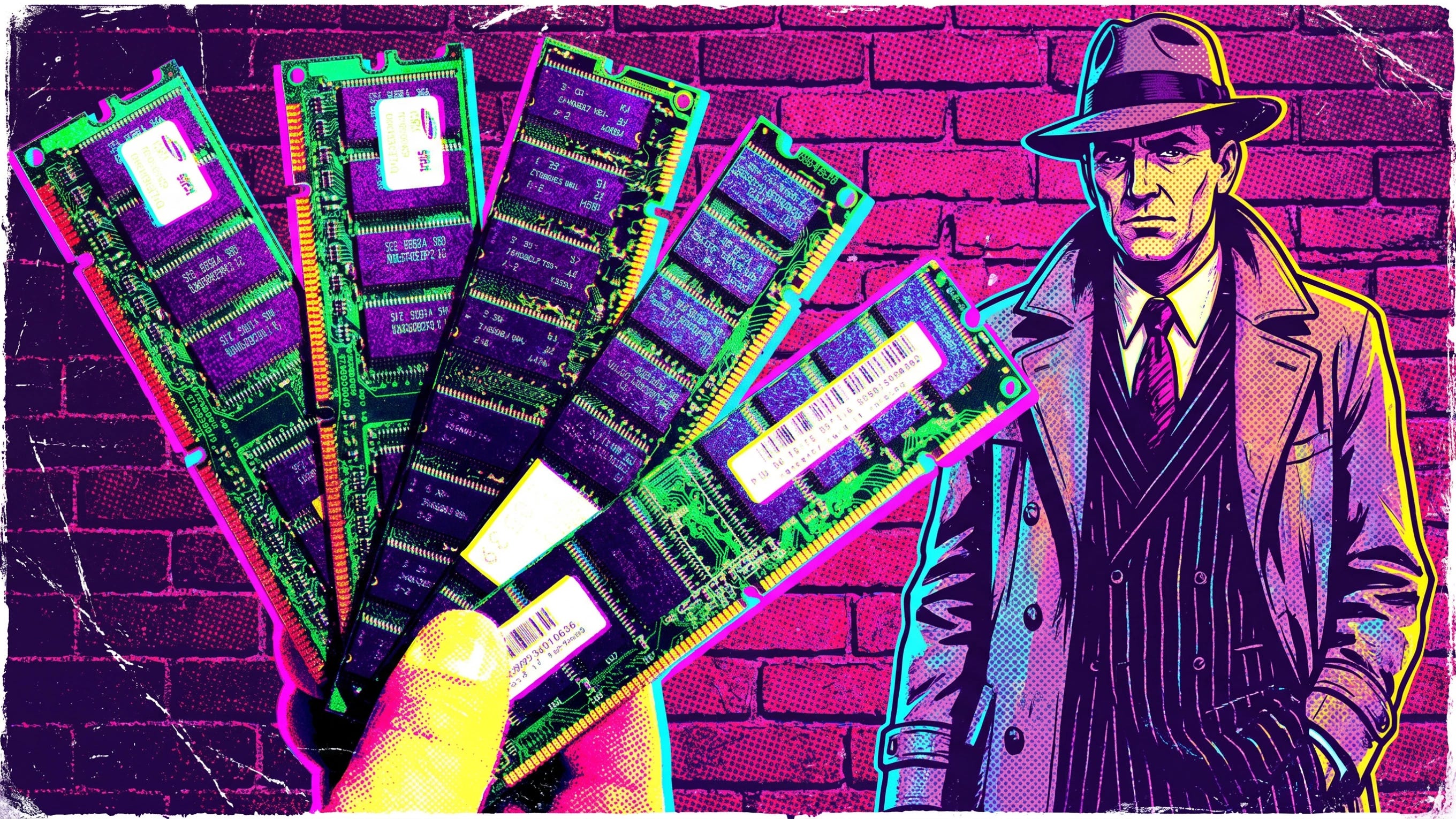
A new class-action lawsuit accuses Samsung, SK Hynix, and Micron, who control 90% of the world’s memory, of colluding to choke supply and jack up RAM prices 700%. Here’s the case, why two of them have pleaded guilty to this exact thing before, and what it means for your next PC or console.
If you’ve tried to buy RAM, a graphics card, a gaming PC, or even a console lately, you’ve felt the pain: memory prices have gone absolutely insane. Now the three companies that make nearly all the world’s memory are being sued for allegedly rigging the game.
A new class-action lawsuit accuses Samsung, SK Hynix, and Micron of colluding to keep memory scarce and prices sky-high. So, is there really a “RAM cartel”? Here’s the case, and why it matters for everything you want to buy.
What the lawsuit says
Let’s start with the actual allegation, because it’s a big one.
On June 25, 2026, a class-action lawsuit (Garciaguirre v. Samsung) was filed in a California federal court by 17 plaintiffs, a mix of regular consumers and small PC-building businesses. It accuses the three biggest memory makers in the world of illegally working together to restrict the supply of DRAM (the memory in basically every computer, phone, and console) and drive up prices.
The headline number: the suit claims these companies have inflated conventional RAM prices by roughly 700% over four years. It argues this is “conduct that makes no economic sense absent collusion”, in plain English, that prices this crazy don’t happen in a truly competitive market without some coordination.
The legal basis is the Sherman Act, America’s main anti-monopoly law, which bans competitors from secretly agreeing to fix prices or supply.
Why three companies have this much power
Here’s the context that makes the accusation plausible, even before you get to the evidence.
Samsung, SK Hynix, and Micron together control around 90% of the entire global DRAM market. Samsung has about 38%, SK Hynix 29%, and Micron 22%. That’s an extraordinarily concentrated market, three players, almost the whole pie.
And here’s why no one can swoop in to undercut them: building a single modern memory factory costs $15 to $20 billion and takes years. The specialized machines required come from just one company in the Netherlands, already booked up by the big three for years. As the lawsuit puts it, “no outsider can expand output to undercut them.” So when these three move in the same direction, there’s no fourth competitor to break ranks and lower prices.
The “AI excuse,” according to the plaintiffs
This is the heart of the case, and it’s clever.
The official explanation for why memory is so expensive is the AI boom. AI data centers devour a special, pricey kind of memory called HBM (high-bandwidth memory), so the manufacturers have shifted huge chunks of their production toward making it for AI companies, who pay top dollar.
The lawsuit doesn’t dispute that AI demand is real. Instead, it argues the three companies used that pivot as a cover. By collectively shifting capacity to HBM and cutting production of regular RAM (like the DDR4 and DDR5 in your PC), they choked the supply of everyday memory, sending prices soaring, while pointing at AI as the scapegoat. The plaintiffs say roughly 80% of manufacturing capacity got redirected, and that the coordinated timing of it all smells like collusion, not coincidence.
The damning part: they’ve done this before
Here’s the fact that gives the whole lawsuit teeth.
This isn’t the first time these exact companies have faced this exact accusation, two of them have already pleaded guilty to it. Back in the mid-2000s, Samsung and SK Hynix (then Hynix) admitted to participating in a DRAM price-fixing conspiracy investigated by the U.S. Department of Justice. The result: over $731 million in combined fines, and actual prison sentences for several executives.
So when plaintiffs argue “these companies coordinated to fix memory prices,” they’re describing something Samsung and Hynix have literally been convicted of doing before. The lawsuit leans hard on that history to argue old habits die hard. (Important caveat: a past conviction doesn’t prove they’re guilty this time, but it’s a strikingly relevant pattern.)
What it has to do with your PC and console
Now let’s connect it to your wallet, because this is the root cause behind a lot of recent sticker shock.
That memory crunch isn’t abstract, it’s why hardware prices have been climbing all year:
Consoles: A recent leak pegged the upcoming PS6 at potentially over $1,000, with the memory shortage cited as a primary reason. The build cost reportedly jumped 31% in three months, largely on memory.
Gaming PCs and GPUs: RAM and graphics cards (which use their own fast memory) have spiked, making a new build or upgrade far pricier than a year ago.
Everything else: Even Apple raised prices across Macs and iPads, explicitly blaming higher memory and storage costs.
In other words, if this alleged “RAM cartel” is real, it’s not just gouging server farms, it’s quietly taxing every gamer, PC builder, and tech buyer on Earth. The memory in your rig got more expensive for reasons the lawsuit says may not be entirely innocent.
The other side: maybe it’s just AI
In fairness, the companies have a real defense, and it’s important.
Their argument: this is genuine supply and demand, not a conspiracy. AI demand for memory is unprecedented and real, and chasing the more profitable HBM market is a legal business decision, companies are allowed to make more money. Antitrust law bans secret agreements between competitors; it does not ban three companies independently looking at the same AI gold rush and reaching the same logical conclusion.
The defendants point to new factories being built (SK Hynix in Korea, Micron in Idaho) as proof they’re trying to expand supply. Micron has denied the allegations and says it will defend itself in court. The catch, even the defense admits: most of that new capacity is already bought up by AI giants like Microsoft, Google, and Amazon, so analysts don’t expect consumer relief until around 2028.
So the core legal question is narrow but huge: did these three coordinate their production cuts, or did they just independently chase the same AI money? That’s what the case will have to prove.
So is it a cartel, or not?
Here’s the honest bottom line.
Right now, these are allegations, not proven facts. The plaintiffs have to show actual coordination, not just similar behavior, and that’s genuinely hard to prove without internal emails or documents (which a court could eventually force the companies to hand over). The companies deny wrongdoing and have a legitimate “it’s just AI demand” argument.
But the circumstances are undeniably suspicious: three companies controlling 90% of a market, prices up 700%, a convenient AI narrative, two prior guilty pleas for this exact crime, and stock prices that have rocketed (Micron’s up over 1,300% in five years). You don’t have to be a conspiracy theorist to look at all that and want a court to take a hard look under the hood.
Whether or not it’s a literal cartel, the result for you is the same painful reality: memory is brutally expensive, your next PC or console will cost more because of it, and the people who make that memory are doing better than ever. This lawsuit is the first real attempt to ask whether that’s just bad luck, or something worse. For everyone who’s stared in disbelief at a RAM price tag this year, it’ll be a very interesting case to watch.
Either way, don’t expect cheaper memory tomorrow, the only thing dropping fast right now is our collective patience.
Want More Clownfish TV?
This article was brought to you in part by The Reefers of more.clownfishtv.com. Free subscribers get articles like this one in their inbox. Paid subscribers get the full Clownfish TV podcast feed, livestreams, and members-only episodes that never hit YouTube.
D/REZZED is part of Clownfish TV. For more news, views, and rants on gaming, tech, and pop culture, watch @ClownfishTV on YouTube and find the podcast on Apple Podcasts, Spotify, and iHeart.
Article compiled and edited by Derek Gibbs (entertainment editor) and the Clownfish TV newsroom.
Hat Tips:
Tom’s Hardware and PC Gamer (June 2026), verified for the June 25 filing in N.D. California, the 17 plaintiffs, the Sherman Act Section 1 basis, the 700%-over-four-years figure, the “no outsider can expand output to undercut them” complaint language, the $15-20B fab cost, and the HBM-as-cover allegation
Kotaku and AppleInsider (June 2026), verified for the Garciaguirre v. Samsung case details, the ~90% market share split (Samsung 38% / SK Hynix 29% / Micron 22%), the small-retailer plaintiffs, Micron’s denial, and the Apple-price-hike connection
Tom’s Guide and Wccftech (June 2026), verified for the 2005 guilty pleas and $731M in fines plus executive prison sentences, the 80%-capacity-shift-to-HBM figure, the Jefferies price-rise projections, and the “no relief until 2028” forecast
Variety/Insider Gaming reporting (prior coverage) (June 2026), verified for the PS6 over-$1,000 leak and the memory-shortage cause, tying the DRAM crisis to console and PC pricing