

Japan will jail you for posting movie summaries online
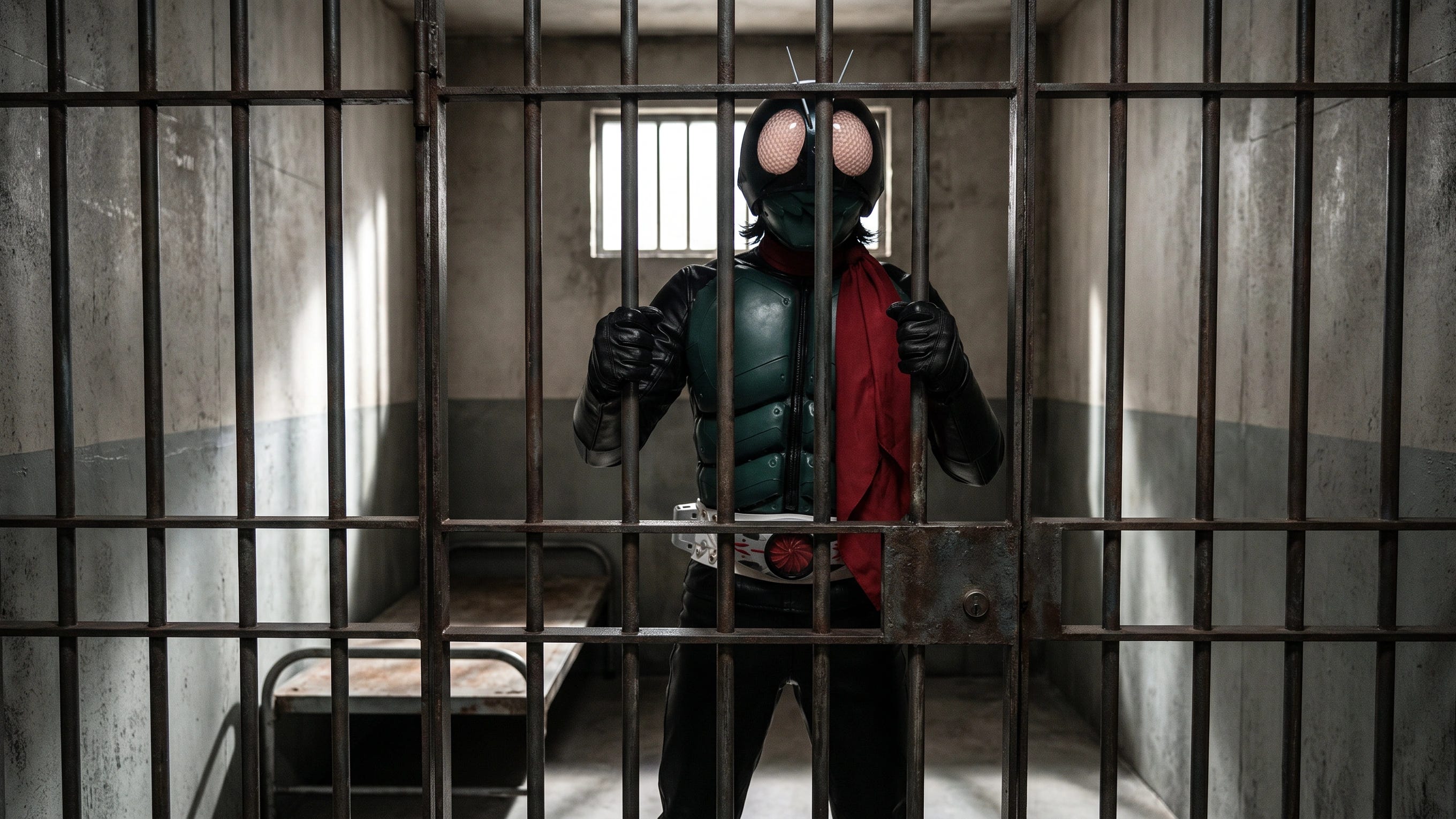
A Tokyo court handed a suspended prison sentence and a ¥1 million fine to the operator of a site that posted detailed plot summaries of 8,000-plus movies, including Godzilla Minus One and Shin Kamen Rider. It’s the second such case this year.
Japanese publishers are escalating a legal crackdown on websites that post detailed written summaries of movies and anime, and people are going to prison over it.
A Tokyo court has sentenced the operator of one such site, which hosted summary articles for more than 8,000 films. The company executive got two years in prison, suspended for three years, plus a ¥1 million fine (about $6,300). An employee got a suspended one-year sentence, two writers were fined, and the operating company was fined ¥1 million.
The works involved include Godzilla Minus One (Toho), Shin Kamen Rider (Toei), the film Kubi (Kadokawa), and Shin Ultraman (Tsuburaya).
What these “spoiler sites” actually did
This isn’t ordinary film criticism, and that distinction is the whole legal argument.
The sites in question didn’t review or analyze movies. They transcribed them, walking readers through the entire plot start to finish, naming characters, quoting dialogue, and often embedding screenshots.
The result is detailed enough that, prosecutors argued, a reader could grasp a film’s full story without ever watching it.
CODA, the Content Overseas Distribution Association representing rights holders like Toho, calls this “beyond the scope of lawful quotation.” Its argument: these summaries reduce a viewer’s reason to pay for the real thing, which “seriously” harms the content industry.

This is the second case this year
The August sentencing follows a nearly identical one in the spring, and together they set a pattern.
Back in April, a Tokyo court convicted Wataru Takeuchi, 39, over detailed summaries of Godzilla Minus One and the anime Overlord III. He got 18 months suspended and a ¥1 million fine, and immediately appealed. That case established the core precedent: a written summary can legally count as an unauthorized “adaptation” if it keeps the “essential characteristics” of the original work.
The money makes clear why it’s worth prosecuting. Takeuchi’s site reportedly pulled in tens of millions of yen a year in ad revenue, hundreds of thousands of dollars, which prosecutors used to frame it as deliberate commercial exploitation rather than fandom.
Why this should give recap channels pause
Here’s the part that reaches beyond Japan.
The defense in these cases argued something reasonable: text alone can’t replicate a film’s visuals, music, and performances, so a written summary shouldn’t count as a substitute for the work. The court disagreed, ruling that enough detail crosses the line regardless of medium.
That’s a genuinely significant legal position. It draws a boundary between a review, which comments on a work, and a summary so complete it replaces the work, and it puts the second category in criminal territory.
This is Japanese law specifically, and it doesn’t automatically apply elsewhere. But recap videos, plot-summary channels, and “movie explained in 10 minutes” content are a massive global category, and Japan just jailed people for the text version of it twice in one year.
Ordinary reviews and critiques remain legal. The line is detail, and where exactly it sits is now something a court, not a creator, decides.
This piece covers a legal case involving copyright and free-expression questions; it’s a report on the ruling, not legal advice.
Article compiled and edited by Derek Gibbs (entertainment editor) and the Clownfish TV newsroom.
D/REZZED is part of Clownfish TV. For more news, views, and rants on gaming, tech, and pop culture, visit clownfishtv.com. Watch the show on YouTube at @ClownfishTV where new episodes drop daily. Subscribe to the Clownfish TV podcast on Apple Podcasts, Spotify, iHeart, and wherever else you get your podcasts. Sign up for the free newsletter at more.clownfishtv.com.
Hat Tips:
Automaton West (August 4, 2026), verified for the August case sentencing breakdown (executive: 2 years suspended 3 years plus ¥1 million; employee: 1 year suspended 2 years; two writer fines; company ¥1 million fine), the 8,000-plus films hosted, and the works involved (Godzilla Minus One, Shin Kamen Rider, Kubi, Shin Ultraman), plus CODA’s “beyond the scope of lawful quotation” framing
Anime News Network (April 16, 2026), verified for the April Takeuchi conviction, the Godzilla Minus One and Overlord III works, the “essential characteristics” adaptation standard, and the prosecution and defense arguments
Dexerto (April 2026), verified for Takeuchi’s 18-month suspended sentence and ¥1 million fine, the articles running 2018-2023, and the Asahi Shimbun report on his ad revenue
Asahi Shimbun (via heise and CP24) (April 2026), verified for Takeuchi’s appeal, the screenshots and dialogue in the articles, and the ad-revenue figures used by prosecutors