

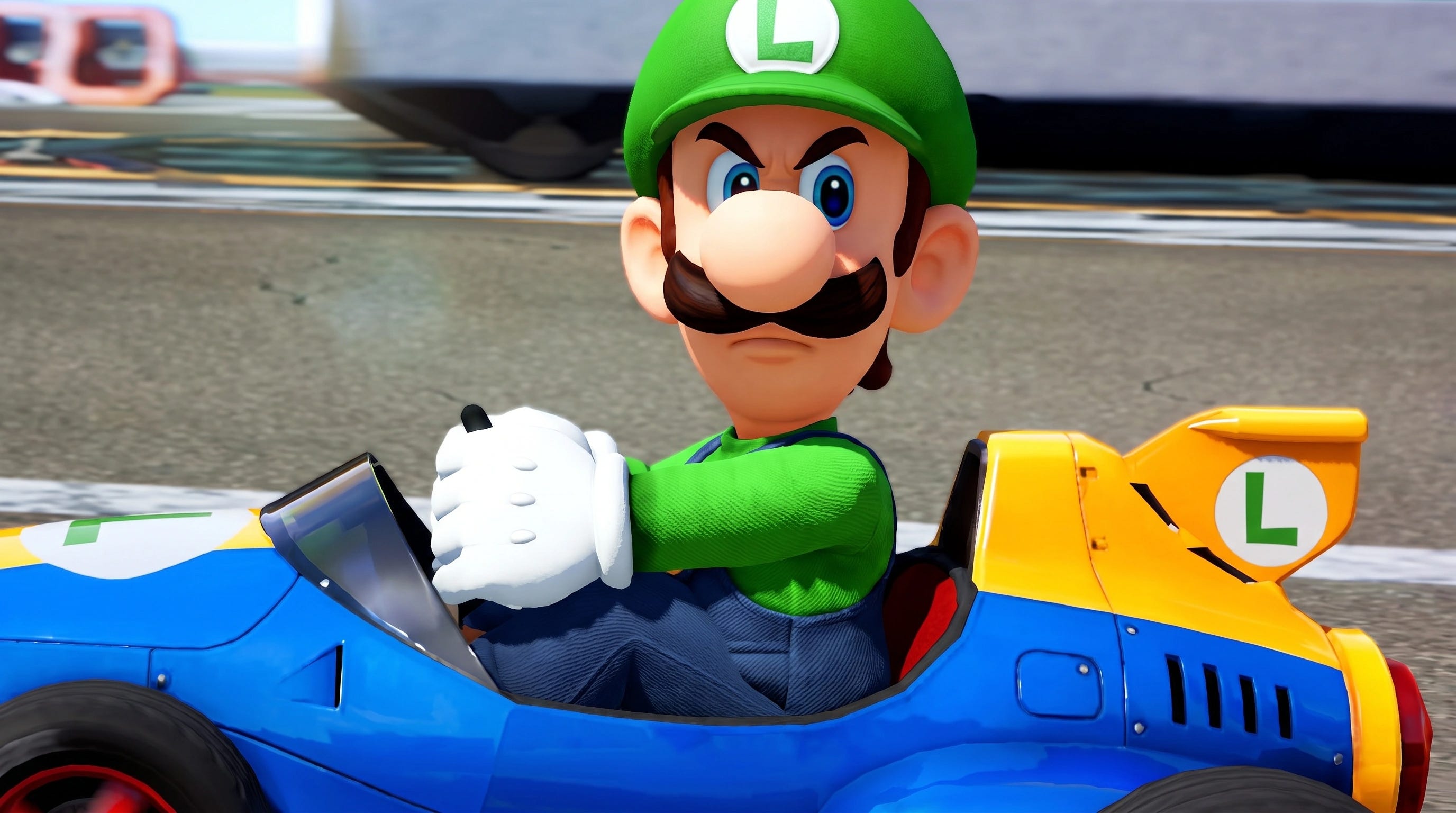
Nintendo is shutting down Mario Kart Tour on September 30, 2026, with no offline version announced, meaning the game will likely be gone forever. It’s a textbook example of the problem the “Stop Killing Games” movement is fighting, especially since Nintendo has offered a preservation option before. Here’s the full story.
Nintendo has announced that Mario Kart Tour, its hugely popular mobile racer, will officially shut down on September 30, 2026. After that date, the game will no longer be playable, at all. Not offline, not in any form. It will simply be gone.
And that’s exactly why this shutdown is bigger than one mobile game. It lands right in the middle of a growing movement, “Stop Killing Games”, that’s fighting this precise scenario. Here’s what’s happening, and why it matters.
What’s happening to Mario Kart Tour
Let’s start with the details.
After nearly seven years, Nintendo is pulling the plug on Mario Kart Tour. The servers go offline on September 29 at 11 p.m. PT (September 30 in many regions), and here’s the key part: there’s no offline version planned. Since the game requires an online connection to function, that means it becomes completely unplayable the moment the servers shut off.
Nintendo is handling the wind-down in an orderly way. Per the announcement:
Ruby sales have ended. The paid premium currency can no longer be purchased.
Existing Rubies still work. Any Rubies you already own can be spent until the servers close, so use them.
Gold Pass is winding down. New purchases and auto-renewals of the subscription have stopped, and Nintendo is actually giving Gold Pass perks to all players for free during the final stretch.
To its credit, Nintendo gave players months of notice and stopped charging money well ahead of time. But when the lights go out in September, everything, your progress, your unlocked characters, the game itself, vanishes for good.
The gut-punch: Nintendo has done better before
What makes this especially frustrating for preservation-minded fans is that Nintendo has literally offered a better solution before. When its mobile game Animal Crossing: Pocket Camp ended its online service, Nintendo released a paid, offline version, “Pocket Camp Complete”, so dedicated players could keep playing forever, no servers required.
That proves the option exists. Nintendo can let a beloved game live on after its online service ends. For Mario Kart Tour, it’s simply choosing not to. And that choice, letting a paid game die completely versus giving it an offline afterlife, is the exact fault line a major consumer movement is now fighting over.
So what is “Stop Killing Games”?
Here’s the movement this shutdown plugs directly into.
Stop Killing Games is a consumer-rights campaign started in 2024 by YouTuber Ross Scott, after the shutdown of Ubisoft’s The Crew left people who’d paid for the game unable to play it at all. The movement’s core demand is simple: when a publisher ends support for a game customers paid for, it should leave that game in a “reasonably functional state”, either patched to work offline, or made playable via private servers, rather than rendering it permanently dead.
The argument at its heart is about ownership. If you bought a game, critics say, a company shouldn’t be able to reach in and make it vanish forever whenever it decides to move on. Mario Kart Tour, a game people spent real money on, about to become totally unplayable with no alternative, is a textbook example of the practice the movement wants to end.
The movement is bigger than you might think
Here’s how much traction this has actually gained.
Stop Killing Games isn’t a fringe petition, it’s become a genuine political force. Its European Citizens’ Initiative gathered nearly 1.3 million verified signatures, clearing the threshold to force the European Commission to formally respond. That’s a rare and significant achievement.
The results, though, have been mixed, and it’s important to be accurate about that. In June 2026, the European Commission declined to propose a new law forcing publishers to keep games playable, citing concerns about copyright, costs, and proportionality. It offered a voluntary industry “code of conduct” instead. So the movement didn’t get the binding law it wanted, at least not yet. But it’s far from over: organizers have pivoted to pushing game-preservation rules into the EU’s Digital Fairness Act (with dozens of Parliament members signing on), a California bill, and new watchdog groups. As Scott put it, they believe they’re “in a position to pass legislation even without the Commission’s blessing.”
The other side: why publishers push back
Publishers and some industry voices have real arguments against mandated preservation, and they’re worth taking seriously. Converting a live-service game to run offline can be genuinely difficult and expensive; some games are built so deeply around server-side systems that making them work without a connection is a major engineering project, not a switch you flip. There are also legitimate concerns about licensing (music, third-party tech, and other rights often expire), and about forcing companies to spend money supporting products they’ve discontinued.
The European Commission essentially sided with these concerns when it declined to legislate, calling a blanket mandate potentially disproportionate. So while “just let people keep the game” sounds simple, the reality can be more complicated, and a fair look at this has to acknowledge that Mario Kart Tour going offline isn’t necessarily as easy to solve as fans would like.
Though the Pocket Camp precedent does suggest that, for Nintendo at least, it’s often more a matter of will than pure possibility.
Mario Kart Tour and Stop Killing Games: what it comes down to
Mario Kart Tour’s shutdown is, on its own, a fairly routine end-of-life for an aging mobile game, and Nintendo is handling the logistics decently, with plenty of warning and no last-minute cash grabs. But the decision to let it die completely, with no offline version, when the company has proven it can do otherwise, is exactly the kind of moment that fuels the Stop Killing Games movement.
It captures the whole debate in miniature: players feel they bought something, publishers treat it as a service they can switch off, and preservation, however technically tricky, keeps losing out to the bottom line. Whether movements like Stop Killing Games can actually change that remains an open, and increasingly political, question. But every time a paid game blinks out of existence for good, the argument for them gets a little louder.
Come September, Mario Kart Tour won’t just stop updating. It’ll stop existing. And a whole lot of people are starting to ask why that has to be the default.
Want More Clownfish TV?
This article was brought to you in part by The Reefers of more.clownfishtv.com. Free subscribers get articles like this one in their inbox. Paid subscribers get the full Clownfish TV podcast feed, livestreams, and members-only episodes that never hit YouTube.
D/REZZED is part of Clownfish TV. For more news, views, and rants on gaming, tech, and pop culture, watch @ClownfishTV on YouTube and find the podcast on Apple Podcasts, Spotify, and iHeart.
Article compiled and edited by Derek Gibbs (entertainment editor) and the Clownfish TV newsroom.
Hat Tips:
GamesRadar, VGC, and Nintendo Everything (July 2026), verified for the Mario Kart Tour shutdown details (the September 29 at 11 p.m. PT / September 30 end of service, no offline version planned, the ended Ruby sales with existing Rubies usable until shutdown, the halted Gold Pass renewals and new subscriptions with perks made free to all players in the final period, the roughly seven-year run since 2019, and development having ended in 2023)
GamesRadar and VGC (2024-2026), verified for the Animal Crossing: Pocket Camp precedent (Nintendo releasing a paid, offline “Pocket Camp Complete” version after that game’s online service ended, in contrast to Mario Kart Tour receiving no such preservation option)
Wikipedia, Dexerto, and Rock Paper Shotgun (2024-2026), verified for the Stop Killing Games movement (founder Ross Scott and the 2024 launch following The Crew’s shutdown, the “reasonably functional state” demand, the European Citizens’ Initiative reaching 1,294,188 verified signatures, the European Commission’s June 16, 2026 decision not to propose legislation in favor of a voluntary code of conduct, and the movement’s pivot toward the Digital Fairness Act, a California bill, and watchdog NGOs)