

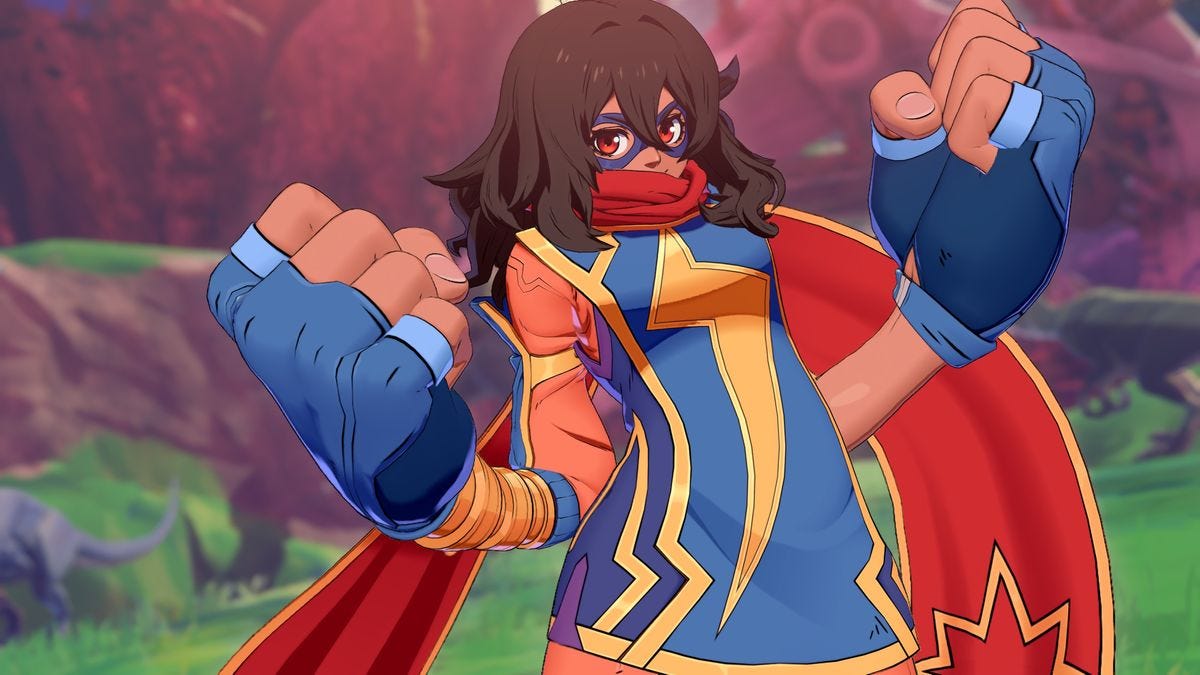
The fighting game’s Steam reviews sit at 47% positive over performance issues. Players comparing builds say the Theia encryption layer is decrypting the game in real time on a single CPU core.
Marvel Tōkon: Fighting Souls launched on August 6 and topped Steam’s best-seller charts. Its user reviews went Mixed almost immediately.
They have stayed there. The game currently sits around 47% positive across roughly 3,500 to 4,200 Steam ratings, on complaints about stuttering, frame drops, and hardware demands.
The PS5 version has largely avoided the same problems, which is what pointed people toward PC-specific software.
What players are reporting
The comparisons are coming from individuals, not from outlets with test benches, and that matters for how much weight any single number carries.
A Reddit user testing on an RTX 4060 Ti, an i7-14700KF, and 32GB of DDR5 said the open beta needed Performance Mode and 40 to 60% CPU utilization to hold 60fps. In a build with the Theia DRM stripped out, they reported a steady 60fps at maximum settings with no manual shader preloading.
A ResetEra member posted on-screen readings from both versions: around 84% CPU at 69C on the retail build against roughly 36% at 53C without Theia, GPU utilization down from 87% to 38%, and memory from 8.56GB to 7.20GB.
A third user on an older i7-6700K reported roughly 34% CPU against just over 57%.
The unofficial builds are not clean. Users report remaining stutters on Level 1 and Level 2 supers and on Tōkon Attacks, heavy frame drops tied to certain UI elements, and no online play at all.
How Theia appears to cost performance
One of those users offered a mechanism, and it is the only explanation in circulation that goes past “DRM is bad.”
Their account is that the retail build is encrypted and decrypts itself in real time, in 64KB chunks, on a single CPU core.
If that description holds, the cost is structural. A single-threaded decryption loop running continuously does not care how many cores a machine has, which would explain why the reported gaps show up on a six-year-old i7 and a current-generation build alike.
Easy Anti-Cheat and PlayStation Network integration have also been named as contributors. Nobody has isolated the three.
What Sony has said
Nothing about Theia.
Sony Interactive Entertainment and Arc System Works have not commented on the DRM claims. The developers have committed to improving PC performance generally, without specifying how.
Piracy-tracking site CrackWatch logged the game as cracked 11 days after release.
That is where this sits: a fighting game people wanted, a port people are refunding, and the clearest technical account of why coming from users the publisher would rather not hear from.
Article compiled and edited by Derek Gibbs (entertainment editor) and the Clownfish TV newsroom.
D/REZZED is part of Clownfish TV. For more news, views, and rants on gaming, tech, and pop culture, subscribe at clownfishtv.com. Watch the show on YouTube at @ClownfishTV where new episodes drop daily. Subscribe to the Clownfish TV podcast on Apple Podcasts, Spotify, iHeart, and wherever else you get your podcasts.
Hat Tips:
TwistedVoxel (August 18, 2026), the ResetEra and Reddit comparison figures and the list of remaining issues
Kotaku (August 18, 2026), Lewis Parker’s reporting including the 64KB single-core decryption explanation
Wccftech (August 19, 2026), the Steam review percentage, rating count, and CrackWatch timing