

Milly Alcock was reportedly paid just $400K to star in Supergirl

The Supergirl lead’s paycheck came out, and $400,000 sounds shockingly low for headlining a $170 million blockbuster. But the number tells a smart business story, not a sob story. Here’s what her deal actually means.
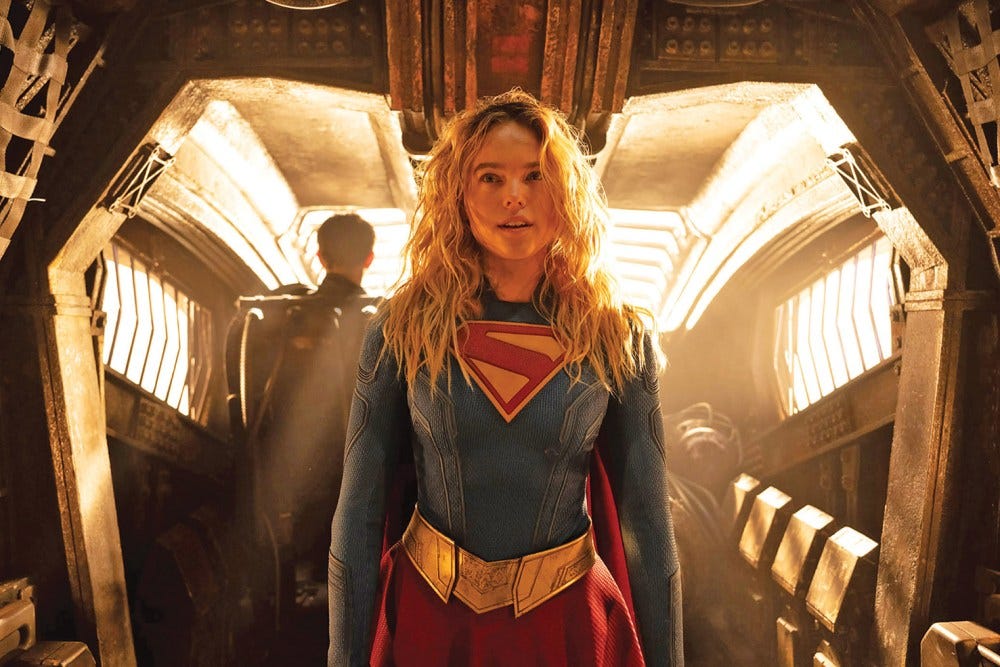
The paycheck for headlining a major superhero movie just got revealed, and the number raised some eyebrows: Milly Alcock was reportedly paid only around $400,000 to star in Supergirl.
For carrying a $170 million blockbuster on your shoulders, that sounds almost insultingly low. But here’s the thing, it’s actually a pretty normal deal, and the math behind it is more interesting than the sticker shock suggests.
What the report says
Let’s start with the number and where it comes from, because the source matters.
According to Variety, the trade that broke it, Alcock earned roughly $400,000 to play Kara Zor-El, her first major movie role. Her deal also included a “small box office bonus”, but only if the film turned into a financial success. Given that Supergirl is now tracking toward a loss of $80 to $120 million, that bonus almost certainly isn’t coming.
Crucially, Alcock had no “backend” deal, no slice of the box office gross. That’s the kind of arrangement A-list stars fight for, where they earn a percentage of ticket sales on top of their salary. As a newcomer leading her first blockbuster, Alcock didn’t have that leverage.
Why $400K is actually pretty standard
Here’s where the “only $400K?!” reaction needs some context, because it’s not the lowball it looks like.
For an actor who isn’t yet a household name leading a major franchise, that figure is right in the normal range. The textbook comparison: Gal Gadot was paid a base of just $300,000 for her first Wonder Woman movie. Nobody remembers that as Gadot getting robbed, because it’s simply how these deals work, the studio takes a chance on a rising star at a modest rate, and the star bets on the role launching them to a much bigger payday later.
That’s the trade. Alcock came up through HBO’s House of the Dragon, but Supergirl was her first time leading a film. Studios don’t hand franchise-lead money to actors who haven’t yet proven they can open a movie. So $400K isn’t a slap in the face, it’s the standard entry ticket.
The A-lister contrast
The number looks even smaller next to her co-stars in the same universe, and that comparison is the fun part.
Look at last year’s Superman: leads David Corenswet and Rachel Brosnahan each reportedly earned $750,000, nearly double Alcock’s pay. And Nicholas Hoult, playing villain Lex Luthor, took home a reported $2 million, five times what the actual title star of Supergirl made.
So the villain of the last movie out-earned the hero of this one by a mile. That’s not a knock on Alcock, it’s a perfect illustration of how Hollywood pay works: it’s about your established box-office value when you sign, not how big your role is. Hoult’s a known quantity. Alcock, for now, isn’t, yet.
The accidental silver lining for Warner Bros.
Now here’s the twist that makes this a business story, not a sad one.
Supergirl is a financial disaster, on track to lose well over $100 million. But Alcock’s modest, backend-free deal is actually one of the few things going right for Warner Bros. in this mess.
Because the cast didn’t negotiate first-dollar gross deals, the studio isn’t on the hook to pay out a percentage of ticket sales on top of a bomb. When a movie flops, the last thing a studio wants is to also owe its stars millions in backend money. By casting a rising star at $400K instead of an A-lister at $20 million-plus-points, Warner Bros. kept its costs down, which softens an already brutal loss. The bet on Alcock didn’t pay off at the box office, but it at least kept the bleeding from being worse.
What it means for Alcock
So is this a bad break for Milly Alcock? Honestly, not really.
Her Supergirl paycheck being low doesn’t reflect her talent, it reflects where she was on the Hollywood ladder when she signed. And here’s the good news for her: a flop this size, with this much “the movie was the problem, not the lead” framing, rarely tanks an actor who’s clearly capable. Most of the post-mortems are blaming the character’s appeal and the film itself, not her performance.
She’s also already locked in to reprise Supergirl in next year’s Man of Tomorrow, the James Gunn-directed Superman sequel. So her DC story isn’t over, and her earning power only goes up from here. The $400K was the cost of admission. The career it could still build is the actual prize.
The bottom line
Let’s land it, because the number deserves the real read, not the outrage read.
$400,000 sounds shocking for a superhero lead, but it’s a normal newcomer deal, right in line with what Gal Gadot made breaking in. It looks tiny next to the Superman cast and downright absurd next to a $2 million villain, but that’s just Hollywood pricing experience over screen time. And in a strange way, that modest, no-backend contract is one of the few smart, cost-controlling moves on a movie that otherwise went very wrong for Warner Bros.
So no, Milly Alcock didn’t get ripped off. She took the standard rising-star deal, bet on herself, and drew a bad film on her first at-bat. The paycheck isn’t the insult. The movie not being good enough to cash in her bonus, y’know, that’s the real shame.
But careers are long, and at her age, on her trajectory, $400K is a starting line, not a ceiling.
Want More Clownfish TV?
This article was brought to you in part by The Reefers of more.clownfishtv.com. Free subscribers get articles like this one in their inbox. Paid subscribers get the full Clownfish TV podcast feed, livestreams, and members-only episodes that never hit YouTube.
D/REZZED is part of Clownfish TV. For more news, views, and rants on gaming, tech, and pop culture, watch @ClownfishTV on YouTube and find the podcast on Apple Podcasts, Spotify, and iHeart.
Article compiled and edited by Derek Gibbs (entertainment editor) and the Clownfish TV newsroom.
Hat Tips:
Variety (June 29, 2026), the original report, verified for Alcock’s ~$400,000 salary, the small-bonus-only-if-successful structure, the no-backend-deal detail, the $170M budget / $120M marketing figures, and the $80-120M projected loss
CBR and ComicBasics (June 29, 2026), verified for the A-lister comparisons (Corenswet and Brosnahan at $750K, Hoult at $2M), the Gal Gadot $300K Wonder Woman parallel, and the first-dollar-gross context
Dark Horizons and ComicBookMovie (June 29, 2026), verified for the no-backend-deals-helped-the-studio angle, the breakeven-around-$300M figure, and the analyst Jeff Bock “not an event-level character” quote