

Pizza Hut got sold, and the retro red roofs are caught in the middle
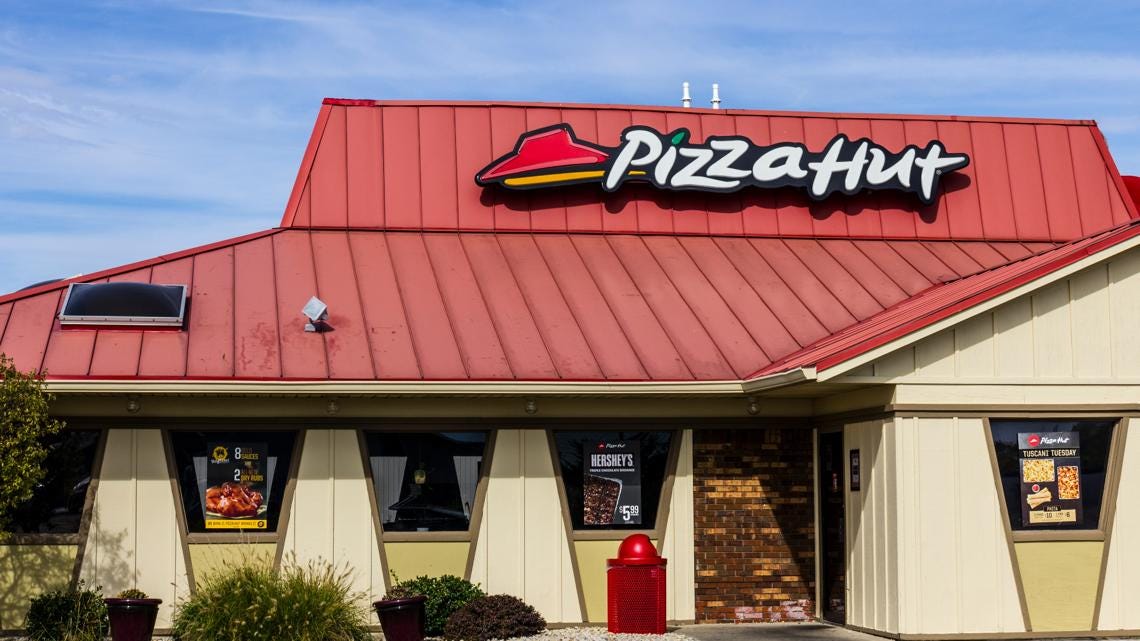
Yum sold Pizza Hut in a $2.7 billion split — China to a Chinese company, and everything else, including the retro Classic red-roof locations, to a US private equity firm that’s never run a restaurant.
If you’ve been making the pilgrimage to one of those gloriously retro red-roof Pizza Huts, you probably saw the headline that Pizza Hut got sold to a Chinese firm and felt a little knot in your stomach.
Good news and complicated news. The Chinese part doesn’t touch your local red roof at all.
Who actually bought Pizza Hut, and who didn’t
On June 16, Yum! Brands announced it’s selling Pizza Hut in two separate deals worth $2.7 billion combined. And the “two separate” part is the whole story.
The mainland China locations are going to Yum China Holdings — a Chinese company — for about $1.2 billion. That’s the deal everyone latched onto.
But every other Pizza Hut on Earth, including all 6,000-ish US restaurants and every retro red roof, is going to a completely different buyer: LongRange Capital, an American private equity firm based in Connecticut, for roughly $1.5 billion.
So the retro Huts aren’t becoming Chinese-owned. They’re becoming private-equity-owned. Whether that’s better is a real question.
The retro red-roof Huts everyone’s been visiting
First, a refresher on what’s actually at stake here, because the timing is almost cruel.
For the past year, Pizza Hut has leaned hard into nostalgia. Yum says retro features have returned to around 155 US locations — branded “Pizza Hut Classic” — bringing back red cups, checkered tablecloths, Tiffany-style lamps, salad bars, arcade games, and the unmistakable red roof.
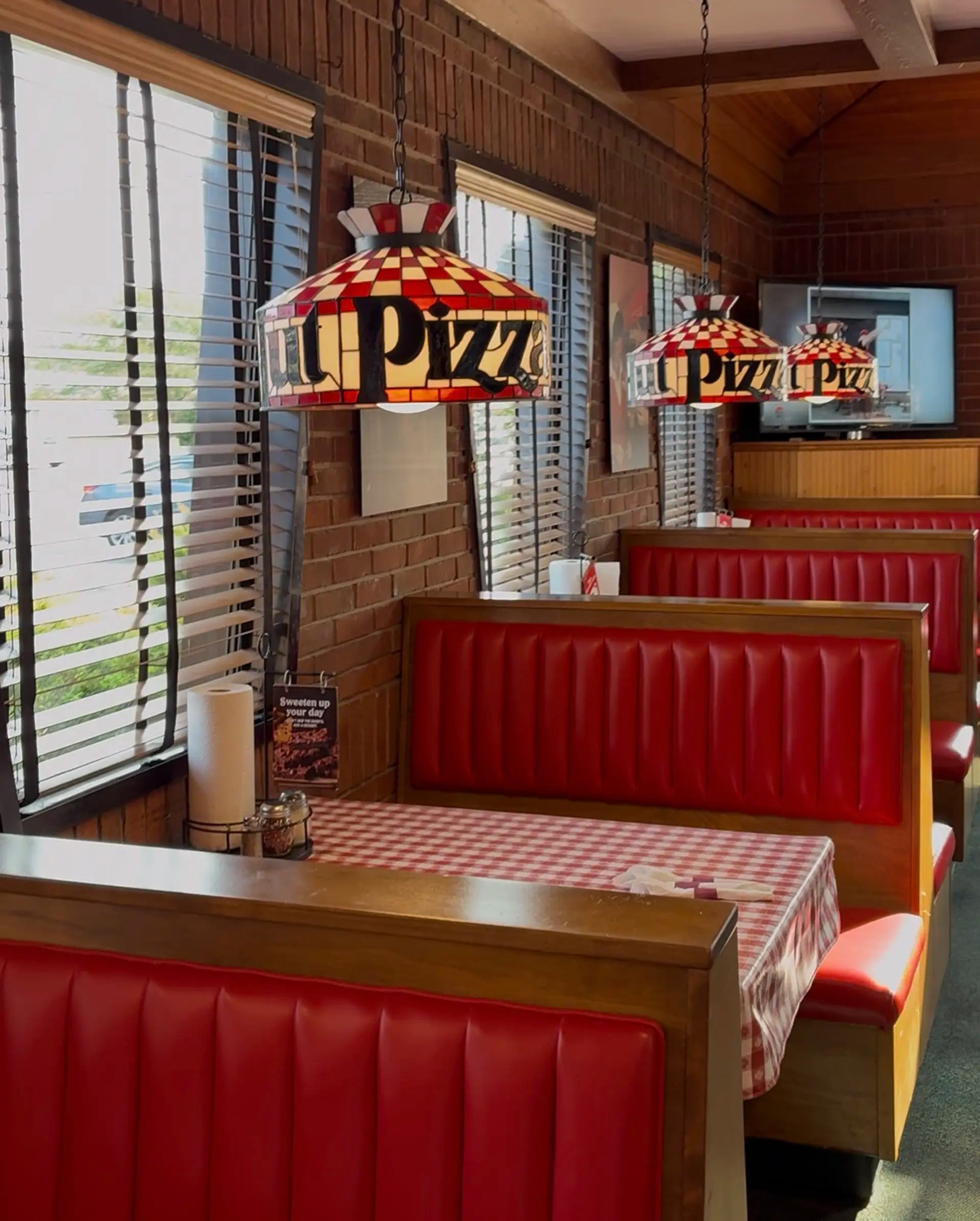
More than 80 of those have been redesigned to fully recreate the ‘80s and ‘90s dine-in format. The revival has been driven in large part by franchisees like Daland Corporation, whose president Tim Sparks runs nearly 100 Pizza Huts.
It worked, too. The Classic locations became TikTok pilgrimage sites, the kind of thing people drive an hour to photograph because it smells exactly like being eight years old.
What private equity ownership could mean
Here’s where the knot in your stomach earns its keep.
LongRange Capital has never owned a restaurant chain. Pizza Hut is its first. Its current portfolio is gyms (24 Hour Fitness), caskets (Batesville), food manufacturing, and industrial materials — a grab bag, not a hospitality résumé.
The firm is saying the right things. Founder Bob Berlin called Pizza Hut “a beloved global brand with a rich heritage” and promised investment in great food and experiences.
But private equity tends to run on one engine: margins. And a retro dine-in restaurant — with a waitstaff, a salad bar, a dining room, and a building shaped like a barn — is one of the most expensive, lowest-margin ways to sell a pizza that exists. The carryout-only model Pizza Hut spent two decades shifting toward exists precisely because it’s cheaper.
Pizza Hut was already closing stores while reviving others
And the company wasn’t exactly healthy walking into this.
Even as it was cutting the ribbon on Classic locations, Yum confirmed it would close roughly 250 underperforming US Pizza Huts in the first half of 2026. US same-store sales fell 3% in the last quarter of 2025 and 5% across the year. Domino’s and the delivery apps have been eating the chain alive.
So Pizza Hut is doing two opposite things at once: pouring money into nostalgic dine-in rooms while shuttering hundreds of locations and, in some markets, testing fast-casual redesigns that look more like Chipotle than 1994.
That’s the contradiction LongRange just bought.
Will the red roofs survive?
So no, a Chinese firm isn’t taking over your childhood Pizza Hut. An American private equity firm is — one with no restaurant experience, inheriting a 68-year-old chain in the middle of betting on its own past.
The retro revival is the best story Pizza Hut has told in years. It’s also a tiny, expensive slice of a struggling chain, and private equity is not historically sentimental about expensive slices.
The red roof is either the brand’s whole future or the first line item somebody circles in a cost review. Which one it turns out to be is now up to people who, until this week, were better known for gyms and caskets.
Hat Tips:
Yum! Brands investor release and CNBC (June 16, 2026), verified for the $2.7 billion total, the LongRange Capital sale of Pizza Hut ex-China for ~$1.5 billion, the Yum China purchase of mainland China locations for ~$1.2 billion, and the Q3 2026 close pending regulatory approval
Fast Company (June 16, 2026), verified for LongRange Capital being Connecticut-based, Pizza Hut being its first restaurant chain, its portfolio (24 Hour Fitness, Batesville, Bakkavor, US Synthetic), and founder Bob Berlin’s statement
Yum.com and Food Network (May–June 2026), verified for the ~155 retro “Pizza Hut Classic” locations and the returning red roofs, red cups, salad bars, Tiffany lamps, and Book It! nostalgia
New York Post (May 17, 2026), verified for the 80-plus redesigned locations and the Daland Corporation / Tim Sparks franchisee-led revival
AOL and Southern Living (2026), verified for the ~250 US closures in the first half of 2026 and the 3% and 5% US same-store sales declines