

The Pokémon Company International has reportedly implemented new rules banning partnered vendors from selling graded slabs at official events. The policy also restricts items priced over $1,000 and most Japanese Pokémon Center products. The changes are already in effect at this weekend’s Indianapolis Regional Championships (May 29-31, 2026) and are expected to apply to bigger tournaments including the North America International Championships and the 2026 Pokémon World Championship in San Francisco in August.
The move is being framed as a major crackdown on scalper and investor culture, with the goal of shifting official events back toward competitive play, families, and regular collectors. It also lines up with a much bigger structural change Pokémon Japan is rolling out at the same time.
What the new rules actually say
According to reporting from PokéBeach, which broke the story on May 29, 2026, TPCi has told partnered vendors that they can no longer sell:
Graded slabs (cards in protective cases from grading companies like PSA, CGC, or BGS)
Individual items priced at $1,000 or more
Most Japanese Pokémon Center products, including plush and TCG items
PokéBeach noted that the restriction means high-end chase cards like the wildly popular Umbreon ex can no longer be sold at events.
The policy took effect at this weekend’s Indianapolis Regionals and will continue through the international circuit. The Pokémon Company is not expected to make an official public announcement. The information has come through internal communications to vendors, with multiple outlets including Kotaku confirming they have reached out to the company for comment.
The restrictions only apply to official partnered vendors at TPCi-sanctioned events. They do not apply to private sales between collectors, unofficial card shows, online marketplaces like eBay and WhatNot, or local game stores.
The Japan side of the story is even bigger
The Japanese Pokémon Center restriction is directly connected to a major policy shift happening in Japan that has not gotten enough mainstream coverage in North America.
In May 2026, Pokémon Japan announced that beginning around August 2026, customers will need to verify their identity using Japan’s government-issued My Number Card in order to enter lotteries or purchase select TCG products from Pokémon Center Online. Verification will use a smartphone’s NFC reader to scan the card via a government-approved external service, linking the user to their Pokémon Player Club account without storing personal data.

The practical effect is that overseas collectors will generally be locked out of buying popular Japanese TCG items from the official Pokémon Center website. The My Number Card is issued primarily to Japanese citizens and long-term foreign residents who have a residency record. The system is expected to roll out before the upcoming Pokémon 30th Anniversary set, one of the most anticipated TCG releases of the year.
That context explains why TPCi is also pulling Japanese Pokémon Center products from its U.S. and international event vendors. It would be a bad look for TPCi to allow partnered vendors at internationally-accessible events to keep selling Japanese-exclusive items at markup when fans in Japan are about to be required to show government ID to buy the same products. PokéBeach made this connection explicit in its reporting.
Why Pokémon is doing this
The Pokémon TCG has been dealing with major scalping and accessibility issues for years. During the pandemic boom and beyond, certain sets became extremely difficult for regular players and kids to find at retail prices. At the same time, the graded card market exploded, with high-end slabs turning parts of the hobby into more of an investment vehicle than a game.
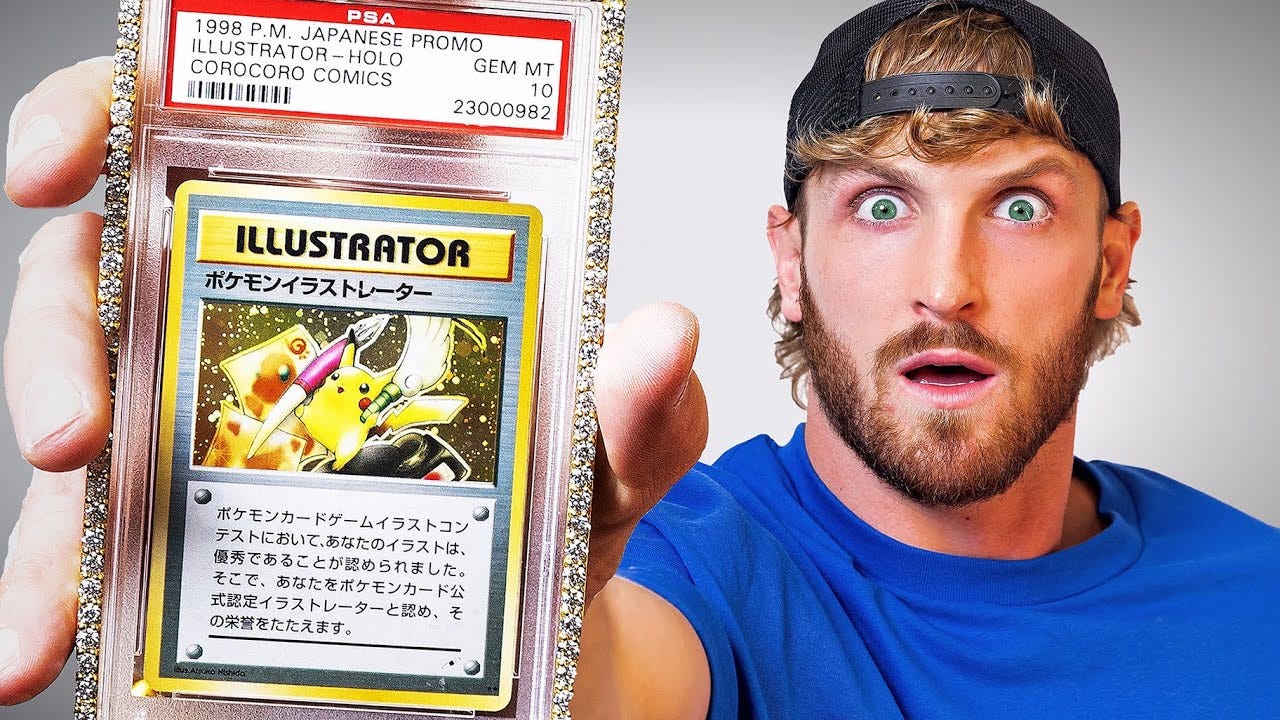
The numbers at the high end tell the story. In February 2026, Logan Paul‘s Pikachu Illustrator card sold at auction for $16.5 million, setting a Guinness World Record for the most expensive trading card ever sold. A PSA 10 1st Edition Shadowless Charizard sold for $550,000 at Heritage Auctions in December 2025. A PSA 10 1st Edition Blastoise Holo sold for $88,000 in July 2025. According to the analytics firm Card Ladder, Pokémon cards have produced a cumulative return of roughly 3,821% between 2004 and August 2025.
Pokémon is no longer just a card game. Parts of it are a fully financialized asset class.
The investor culture has also trickled down to kids. Kotaku‘s Kenneth Shepard ran a piece earlier this month titled “11-Year-Old Pokémon Card Collector Isn’t A Fan: ‘I Just Flip Cards,’” documenting how an 11-year-old at a Pokémon TCG influencer event spoke openly about flipping cards rather than collecting them or playing the game. The article noted how completely the franchise’s audience has shifted from kids and competitive players to investors of all ages, including kids learning the language of speculation before they hit middle school.
Official events had increasingly become places where vendors focused heavily on high-value graded cards and sealed product speculation. Many longtime players and parents have complained that vendor halls at big tournaments felt more like investment conventions than spaces for families and competitive players.
By restricting graded slabs and high-dollar items, TPCi appears to be trying to:
Reduce the incentive for scalpers and investors to dominate vendor space at official events
Make events feel more welcoming to casual players and younger collectors
Push back against the perception that Pokémon is primarily a speculative market
Avoid the optics of partnered vendors selling thousand-dollar cards to children at family-friendly tournaments
How big of a change is this?
For many vendors, this is a significant shift. Graded slabs and high-value sealed product have been major profit drivers at big events. Removing them or heavily restricting them will likely reduce revenue for some vendors and could lead to smaller or less diverse vendor halls at official tournaments.
For competitive players and families, the change is mostly positive in theory. It could make events feel less overwhelming and more focused on the actual game. However, some collectors worry it will make it harder to find certain high-end or Japanese-exclusive items at official events.
The policy does not kill the secondary market. Graded cards can still be bought and sold online, at unofficial card shows, and through private transactions. This affects only what partnered vendors can sell at TPCi events.
This also is not the first time TPCi has issued product prohibitions to its partner network. In 2024, the company warned hobby stores to stop selling Play! Pokémon booster packs and event promo cards, which are provided to organized play stores for free.
Community reaction is mostly supportive but mixed
Reactions on PokéBeach’s forums and other community spaces have been largely supportive from competitive players and parents.
Many see it as a necessary step to push back against scalping culture. Some collectors and vendors are frustrated, arguing it limits what they can sell and could hurt smaller businesses. There is ongoing debate about whether this actually helps kids and casual players, or if it is mostly symbolic and just shifts the slab sales elsewhere.
A common community criticism is that TPCi could do more to address the underlying problem by simply increasing pull rates on rare cards, which would drive down their secondary market value and make speculation less attractive. The counterargument is that better pull rates would reduce sales of additional packs, which is exactly the dynamic the current scarcity model depends on.
Another frequent comment is that TPCi has invested heavily in TikTok and YouTube influencers who primarily talk about card prices and box openings rather than the game itself, sending mixed messages about what the brand actually wants its culture to look like.
The bottom line
Pokémon is cracking down on graded slabs and high-value items at official events. The policy is real, already in effect at the Indianapolis Regional this weekend, and appears designed to shift the focus of sanctioned events away from investment and speculation and back toward playing the game and celebrating the franchise.
Combined with Japan’s incoming My Number Card ID verification system, the broader picture is that The Pokémon Company is taking a coordinated international run at the scalper and investor culture that has dominated parts of the hobby for the last five years. The U.S. event policy is the visible front. The Japan online policy is the structural backbone.
It will not magically fix scalping or make every product easy to find at MSRP. The secondary market is too large, too profitable, and too global for one vendor policy to dismantle. But for the first time in a while, the company appears willing to absorb a real revenue hit at its own events to send a clear signal about what kind of culture it wants around its biggest tournaments. For families and competitive players who have spent the last several years watching the hobby tilt toward speculation, that signal is overdue.
Article compiled and edited by Derek Gibbs (entertainment editor) and the Clownfish TV newsroom.
D/REZZED is part of Clownfish TV. For more news, views, and rants on gaming and tech, visit clownfishtv.com. Watch the show on YouTube at @ClownfishTV where new episodes drop daily. Subscribe to the Clownfish TV podcast on Apple Podcasts, Spotify, iHeart, and wherever else you get your podcasts. Sign up for the free newsletter at more.clownfishtv.com.
Hat Tips:
PokéBeach (May 29, 2026), original exclusive reporting by Water Pokémon Master on the graded slab ban, $1,000 item restriction, and Japanese Pokémon Center product prohibition
Kotaku, Game Rant, and 4GAMER.INFO, follow-up coverage of the new vendor policy and the broader scalper crackdown context
PokéBeach and GamerBraves (May 22, 2026), original reporting on the Pokémon Japan My Number Card ID verification system
Kotaku and Wargamer, additional coverage of the August 2026 Japan ID rollout and its implications for the Pokémon 30th Anniversary set
Kotaku (May 19, 2026), Kenneth Shepard’s “11-Year-Old Pokémon Card Collector Isn’t A Fan: ‘I Just Flip Cards’” article documenting investor culture trickling down to kids
CNBC (May 22, 2026) and Reader’s Digest (April 2026), broader coverage of Logan Paul’s $16.5 million Pikachu Illustrator sale and the financialization of the Pokémon TCG hobby
Business Insider and AOL, Logan Paul’s commentary on young investors and collectibles versus traditional stocks
Card Ladder, cumulative Pokémon card return data showing 3,821% growth between 2004 and August 2025