

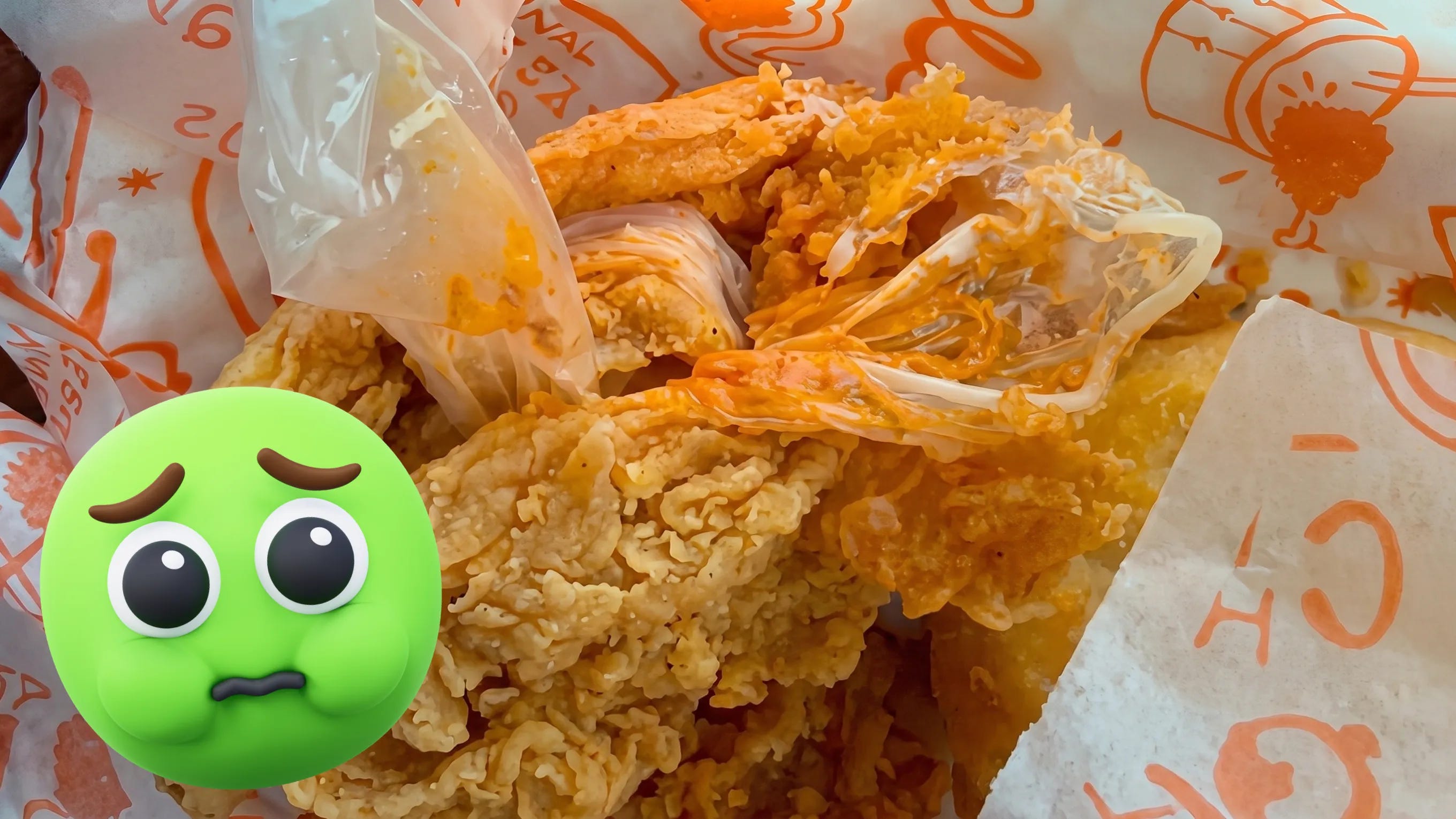
Two Texas customers allege they found a foreign object inside fried chicken from a Houston Popeyes and say staff laughed at them when they complained. They’re seeking over $1.5 million. Popeyes disputes the claim, saying a review of internal footage found no supporting evidence.
Two customers in Texas have filed a lawsuit against Popeyes and parent company Restaurant Brands International seeking more than $1.5 million, alleging they found a foreign object embedded in a piece of fried chicken.
The petition was filed August 3. It concerns a meal the plaintiffs, Justin Howard and Danielle McKinnon, say they bought from a Houston location on July 25.
Popeyes disputes the allegations.
What the lawsuit claims
The petition describes what the plaintiffs say happened after the meal.
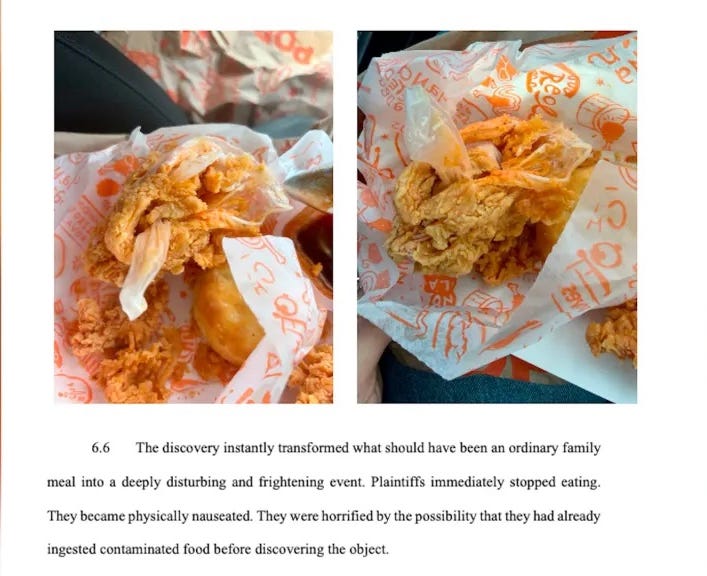
According to the filing, Howard bit into a piece of chicken and discovered what the petition calls a condom-like foreign object inside it. The pair say they stopped eating immediately, became nauseated, and grew worried about possible contamination.
The lawsuit alleges that when they returned to the restaurant to report it, employees “laughed and continuously humiliated” them, and that management repeatedly offered to replace the meal rather than issue a refund or investigate. The petition says they were eventually refunded.
Howard and McKinnon say they continue to experience physical symptoms and emotional distress. Their damages claim covers healthcare costs, pain, lost wages, and mental anguish. They’ve requested a jury trial.
The legal claims
The filing goes beyond the object itself.
It accuses Popeyes of negligence and gross negligence, alleging the chain failed to adequately train staff, enforce quality control, or maintain a safe food-preparation environment. It also claims breach of implied warranty that the food was fit to eat, and violations of Texas consumer-protection law.
A significant portion of the complaint focuses less on the object than on how staff allegedly responded to the complaint.
Popeyes’ response
The company has pushed back on the account.
Popeyes said it reviewed internal footage and found no evidence supporting the claim. Nothing in the case has been tested in court, and the allegations remain allegations, with no findings of fact either way at this stage.
That’s worth holding onto, because filings like this generate headlines long before any evidence is weighed. A petition is one side’s account, written by that side’s lawyers.
Food-contamination suits usually turn on two questions: whether the restaurant followed proper safety procedures, and whether it responded appropriately once a customer raised a concern. This case puts real weight on the second one, and both sides have given very different accounts of it. A jury may end up deciding which version holds up.
Article compiled and edited by Derek Gibbs (entertainment editor) and the Clownfish TV newsroom.
D/REZZED is part of Clownfish TV. For more news, views, and rants on gaming, tech, and pop culture, visit clownfishtv.com. Watch the show on YouTube at @ClownfishTV where new episodes drop daily. Subscribe to the Clownfish TV podcast on Apple Podcasts, Spotify, iHeart, and wherever else you get your podcasts. Sign up for the free newsletter at more.clownfishtv.com.
Hat Tips:
PEOPLE (via AOL) (August 2026), verified for the August 3 petition, plaintiffs Justin Howard and Danielle McKinnon, the July 25 purchase date, the “laughed and continuously humiliated” allegation, the eventual refund, and the damages sought
Dexerto (August 2026), verified for the Houston location, Restaurant Brands International as co-defendant, the plaintiffs’ stated nausea and contamination fears, and the jury-trial request
IBTimes UK (August 2026), verified for Popeyes disputing the allegations and stating it found no supporting evidence after reviewing internal footage, and for the negligence and Texas consumer-protection claims
MSN/reporting (August 2026), verified for the gross-negligence claim, the quality-control and training allegations, and the implied-warranty claim