

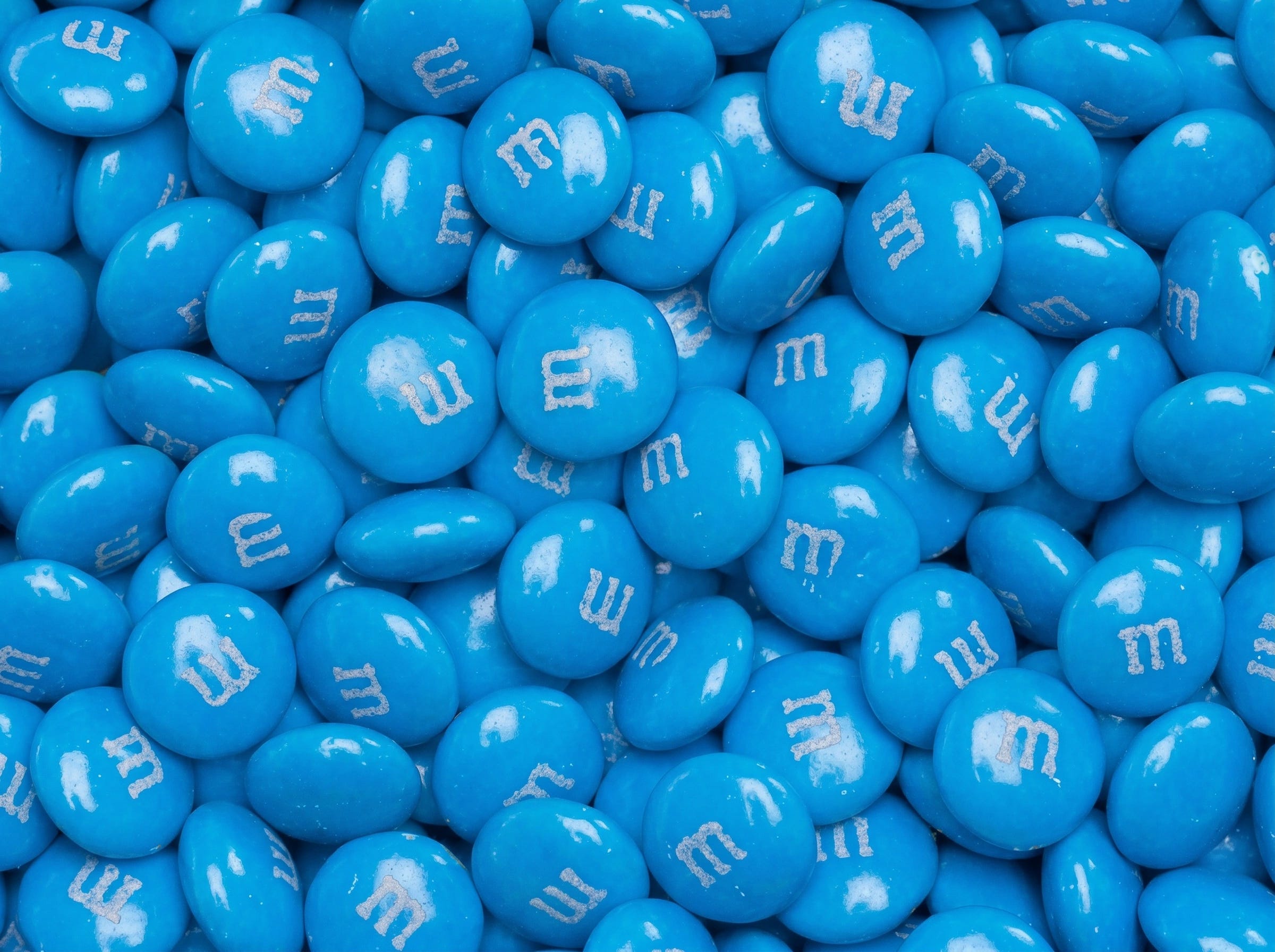
RIP blue M&M’s? Mars to drop blue and brown colors.
Mars is going natural-dye for M&M’s 85th birthday in August, but two colors didn’t survive the switch. The reason is a genuinely fascinating science problem involving blue-green algae, clogged factory nozzles, and the one color that can’t be faked.
M&M’s is dropping two colors, and the reason is way nerdier than “they got rid of blue and brown.” It’s a food-science problem that comes down to algae, money, and one stubborn color that refuses to cooperate.
When the new artificial-dye-free M&M’s launch this August, the bag will have just four colors: red, orange, yellow, and green. Blue and brown didn’t make it. Here’s the actual engineering reason why.
The problem is blue, specifically
Most of the colors were easy to fix. One was a nightmare.
Mars, the company behind M&M’s, is swapping artificial dyes for natural ones. For most colors, that’s straightforward. Red comes from beets, yellow from turmeric, and so on, cheap, plant-based, done.
Blue is the troublemaker. To make a natural blue, Mars has to use spirulina, a blue-green algae powder. And spirulina is a genuine pain to work with on a factory scale.
Why algae breaks the candy machine
This is the genuinely interesting part, the stuff that doesn’t make the usual headlines.
First, the cost. Spirulina runs over $100 a pound. Turmeric, the stuff that makes yellow, costs around $10. So natural blue is roughly ten times more expensive than the other colors before you even start.
Then there’s the machinery. The natural blue coating tends to clog the spray nozzles the factory uses to color the candies. It gums up the equipment, and the buildup can even become a safety issue on the line. So it’s not just pricey, it physically fights the manufacturing process.
For a product made by the millions every day, “it’s expensive and it jams the machines” is a dealbreaker. Blue got benched.
Why brown went down with blue
Here’s the domino nobody expects: brown isn’t really its own color.
To get that classic M&M brown, Mars mixes in a little blue. Brown needs blue in the recipe to look right. So the moment natural blue became a manufacturing headache, brown lost a key ingredient and got cut too.
Two colors, one root problem. Blue was the issue, and brown was collateral damage.
Why Mars is doing this at all
The bigger picture, kept straight.
There’s been a regulatory push to get artificial dyes out of food, citing studies that link some dyes to hyperactivity in certain kids. The FDA still maintains the approved dyes are safe, but the pressure has a lot of major brands switching to natural coloring anyway, and Mars is going along with it.
Funny enough, Mars promised to do exactly this back in 2016, then quietly bailed when it decided customers didn’t actually care. This time it’s following through, sort of. Four out of six colors isn’t all of them.
It’s not permanent
Good news if you’re attached to blue: it’s coming back.
Mars says blue and brown aren’t gone for good, the natural versions just aren’t factory-ready yet. The company’s goal is to have all six colors made with natural dyes by 2028. The four-color bags hit Amazon first this August, then roll out from there.
So for a couple years, the candy bowl looks a little different. The interesting wrinkle isn’t really that two colors vanished. It’s that a bag of M&M’s, one of the most mass-produced products on Earth, got tripped up by the surprisingly hard problem of making the color blue without chemicals.
Sometimes the simplest-looking thing on the shelf is hiding a genuinely tricky bit of science. Even your candy has an engineering story.
Want More Clownfish TV?
This article was brought to you in part by The Reefers of more.clownfishtv.com. Free subscribers get articles like this one in their inbox. Paid subscribers get the full Clownfish TV podcast feed, livestreams, and members-only episodes that never hit YouTube.
D/REZZED is part of Clownfish TV. For more news, views, and rants on gaming, tech, and pop culture, watch @ClownfishTV on YouTube and find the podcast on Apple Podcasts, Spotify, and iHeart.
Article compiled and edited by Derek Gibbs (entertainment editor) and the Clownfish TV newsroom.
Hat Tips:
The Wall Street Journal, via Fox Business and NewsNation (June 2026), verified for the blue-and-brown cut, the August launch, the spirulina cost and factory-clogging problems, and the brown-needs-blue detail
The Daily Beast (June 19, 2026), verified for the four-color launch lineup, the team size on the project, and the 2028 full-color goal
NewsNation and Fox Business (June 2026), verified for the 2016 reversal, the dye-rule regulatory background, and the FDA’s safety position