

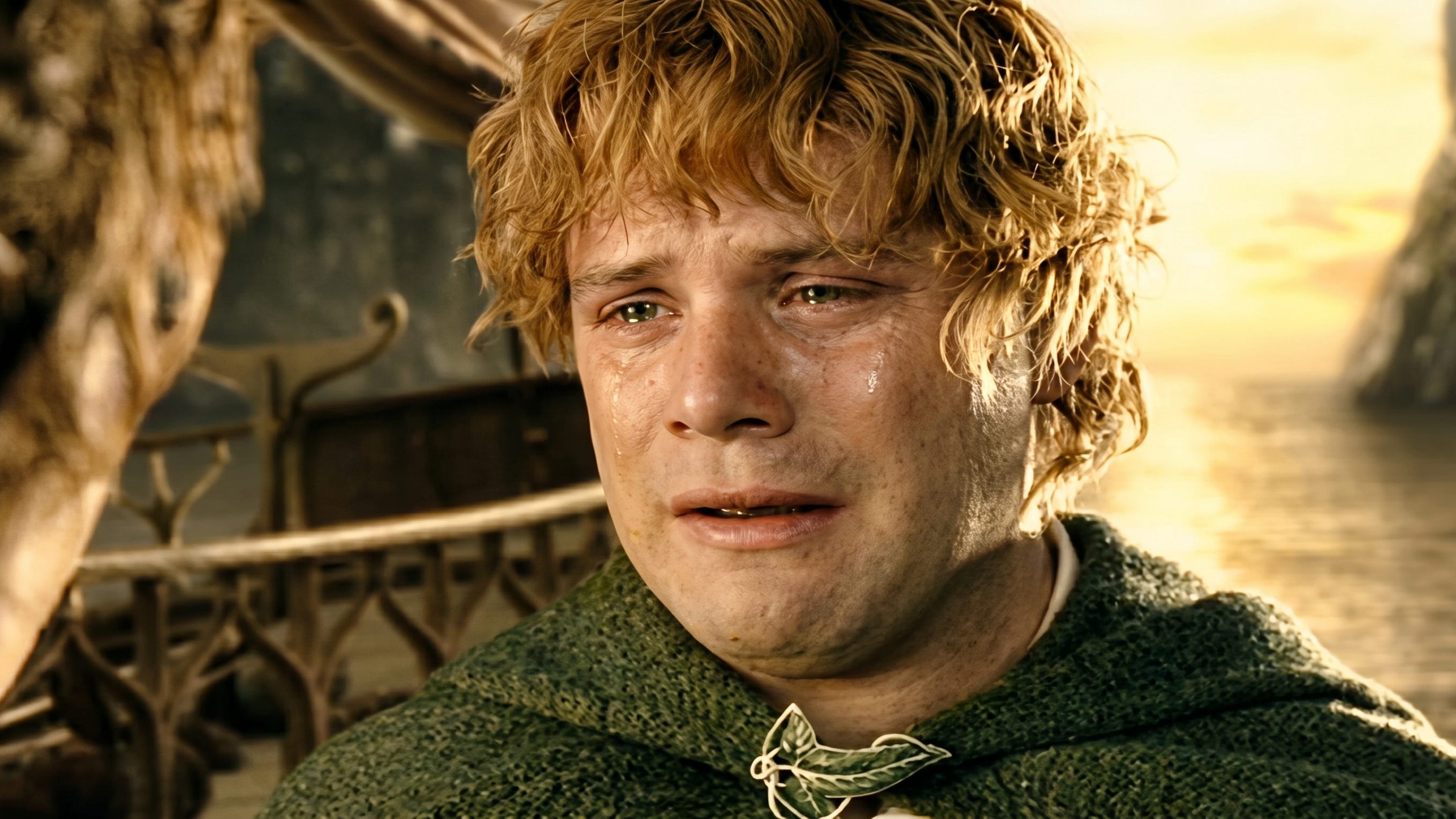
He carried Frodo up a volcano and won the trilogy a shelf of Oscars’ worth of goodwill. He made about $250,000 total, no residuals, and lost the house. Twenty-two years later the paycheck still hasn’t grown.
Sean Astin got $250,000 for The Lord of the Rings.
Not per movie. Total. Three films, eighteen months in New Zealand, the emotional spine of a trilogy that pulled $2.9 billion, and he walked with a quarter million and no piece of anything.
Then the house went too.
He brought it up again this week to the Guardian, the same story he’s been telling for years, and it hasn’t gotten less weird with age. “There was a disconnect between the attention I was getting and how much money we had,” he said. “I had to sell my house because I negotiated such a small amount on the trilogy.”
Roughly seventy-five grand a film. No residuals. Not then, not once since.
The mortgage math
Here’s where it tips from underpaid into almost funny.
Before the films, Astin bought a house. The mortgage ran $250,000 a year. Then the offer landed — Lord of the Rings, $250,000, for a year and a half of work.
Look at those two numbers sitting next to each other. His bill for twelve months was his whole fee for eighteen. He’d signed one piece of paper swearing he’d pay a quarter million a year, and was about to sign another guaranteeing he couldn’t.
So he sold the house. Not because Sam Gamgee was cheap. Because two contracts hit the same desk with the same number on them, pointing opposite ways.
The rest of the cast got the same deal
He wasn’t singled out, though. That’s the part people miss.
New Line shot all three at once, one long gamble on a fantasy epic nobody was sure would land. The cast signed for modest money with no gap between films — and you can’t hold out for a raise on the sequel when there’s no pause before the sequel. Smart, if you’re the studio. Rough, if you’re the hobbit.
Orlando Bloom says he made $175,000 for all three. Elijah Wood was reportedly offered something similar up front, though he’s waved the figure off since as inaccurate and, anyway, not the point. Cate Blanchett has a running joke about how little the whole thing paid.
Everybody took the haircut. Astin’s just the one whose mortgage matched his fee to the dollar.
The residuals never came
Fine, you’d say. Movie’s a risk, studio hedges its bet, actors gamble on themselves. Standard stuff.
Except it stopped being a risk about twenty-three years ago.
Return of the King won eleven Oscars. The trilogy’s been resold on every format invented since — DVD, Blu-ray, the extended cuts, 4K, streaming. There’s a 25th anniversary this year. A Hobbit trilogy. A Gollum movie inbound. Amazon dropped north of a billion on Rings of Power. Middle-earth is about as close to a money-printing machine as film owns.
Astin sees none of it. Flat fee, 2001, thanks for coming.
He’s doing fine, and he’ll be the first to say so — Stranger Things, the Turtles, the convention tables, a book. “Very financially comfortable,” is how he puts it now. Nobody’s passing a hat.
But strip it to the numbers and it just sits there. Nearly three billion made. A quarter million paid. Zero in residuals across twenty-two years and eleven Academy Awards, to the guy whose entire job was making you believe the small, decent one could carry the hero up the mountain when the hero couldn’t walk.
He carried it. He never got a cut of what it hauled.
Article compiled and edited by Derek Gibbs (entertainment editor) and the Clownfish TV newsroom.
D/REZZED is part of Clownfish TV. For more news, views, and rants on gaming, tech, and pop culture, visit clownfishtv.com. Watch the show on YouTube at @ClownfishTV where new episodes drop daily. Subscribe to the Clownfish TV podcast on Apple Podcasts, Spotify, iHeart, and wherever else you get your podcasts. Sign up for the free newsletter at more.clownfishtv.com.
Hat Tips:
The Guardian — Astin’s July 2026 interview and his quotes on the pay gap and selling the house
Jim & Sam Show (2017, via The Independent) — the original $250,000 / $75,000-per-film account, the matching mortgage, and no residuals
The Howard Stern Show (2019, via AOL) — Orlando Bloom’s $175,000 for all three
Business Insider / Variety — the back-to-back production structure and Elijah Wood’s response to the figure
Parade / Independent — Astin’s current “very financially comfortable” status and the trilogy’s $2.9B gross and 11 Oscars