

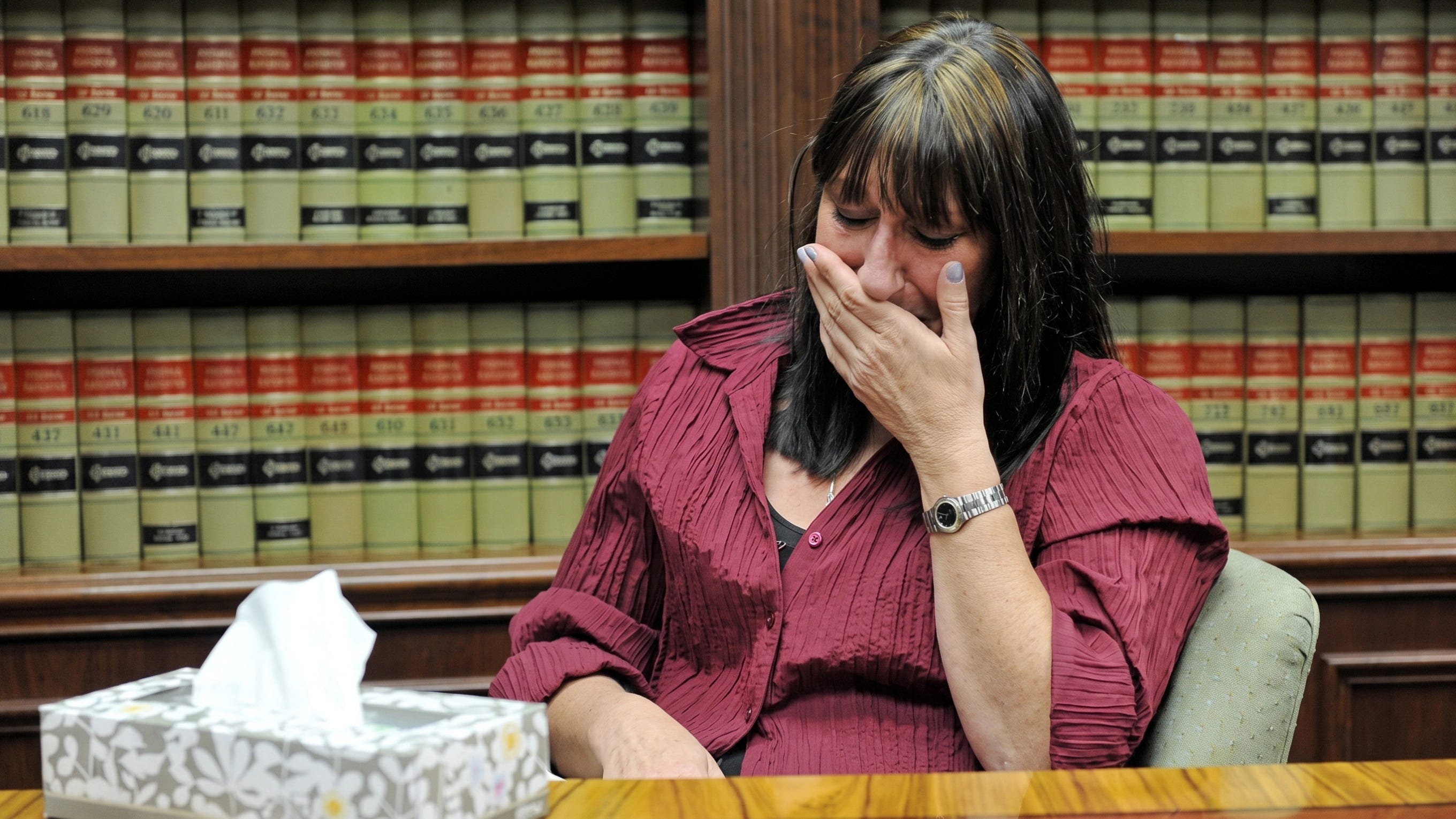
In 2011, a Long Island woman named Debbie Stevens made an extraordinary decision. She donated one of her kidneys so her boss could receive a life-saving transplant through a paired exchange program.
Less than a year later, she was fired.
The story, which has resurfaced virally in 2026, is often told in simplified rage-bait form. “She gave her boss a kidney and he fired her.” The reality is more complicated, but no less disturbing. It raises serious questions about workplace loyalty, disability discrimination, and what happens when an employee’s personal sacrifice collides with corporate self-interest.
The full chronology
Debbie Stevens, then 47, was a divorced mother of two from Hicksville, New York. She first started working as a clerical worker at Atlantic Automotive Group, a billion-dollar Long Island car dealership chain, in January 2009. Her supervisor was Jacqueline “Jackie” Brucia, a 61-year-old controller at the West Islip location.
In June 2010, Stevens left the company and moved to Florida. She returned to New York in September 2010 to visit her daughter and stopped by her old office to say hello. During that visit, Stevens learned that Brucia had been diagnosed with kidney disease and needed a transplant. Stevens offered her kidney on the spot.
Brucia’s reported response at the time was, “You never know, I may have to take you up on that offer one day.”
Shortly after, Stevens contacted Brucia about being rehired and was brought back to assist Brucia with clerical work.
In January 2011, Brucia called Stevens into her office. According to Stevens, Brucia said, “My donor was denied. Were you serious when you said that?” Stevens said yes.
The paired kidney exchange
Testing showed that Stevens was not a direct match for Brucia. Instead, doctors arranged a paired kidney exchange, also known as a kidney chain, through the National Kidney Registry.
On August 10, 2011, Stevens donated her kidney to a stranger in St. Louis, Missouri. That donation triggered a chain that allowed Brucia to receive a better-matched kidney from a donor in San Francisco.
Stevens said she did it purely out of compassion. “I did not do it for job security. I didn’t do it to get a raise. I did it because it’s who I am.”
She has also said she did not want Brucia to die. “She was my boss. I respected her.”

Complications and return to work
The donation was not without consequences for Stevens. She experienced post-surgical complications, including nerve damage in her leg that caused ongoing pain and digestive issues that required frequent bathroom breaks.
She took time off to recover and returned to work after roughly four weeks. According to Stevens and her attorney, that is when things changed dramatically.
Stevens alleged that Brucia became hostile and abusive toward her almost immediately. She claimed her boss screamed at her in front of coworkers, accused her of faking her symptoms, called her an “actress,” demoted her, transferred her to a dealership 50 miles away in a high-crime area she and her lawyer referred to as “Siberia,” removed her overtime and other privileges, and reprimanded her for frequent restroom use and for leaving work early when she was sick.
“She just started treating me horribly, viciously, inhumanly after the surgery,” Stevens told ABC News in 2012. “It was almost like she hired me just to get my kidney.”
In another widely quoted line, Stevens told The New York Post: “I decided to become a kidney donor to my boss, and she took my heart.”
She consulted a psychiatrist for the resulting mental anguish.
The firing and the lawsuit
In March 2012, Stevens’ attorney Lenard Leeds sent a letter to Atlantic Automotive Group documenting the alleged harassment. Within a week, Stevens was fired. The company’s stated reasons centered on performance issues.
In April 2012, Stevens filed a formal complaint with the New York State Human Rights Commission, alleging discrimination based on disability and retaliation. A federal lawsuit followed, filed in U.S. District Court in Central Islip, New York.
Brucia herself spoke briefly to CBS New York at the time. “She did a wonderful thing for me. I wish her the best.”
Atlantic Automotive Group issued a stronger statement defending itself. “It is unfortunate that one employee has used her own generous act to make up a groundless claim. Atlantic Auto treated her appropriately and acted honorably and fairly, at every turn.”
Brucia’s husband, James, told reporters that Stevens’ claims were “far from the truth” and insisted his wife “didn’t fire anybody,” but provided no further details.
The case never went to trial. Following several rounds of depositions and discovery, both parties agreed to settle on September 30, 2014. The exact terms were never made public, and Atlantic Automotive Group never admitted wrongdoing.

Fact check: what is accurate and what is simplified
The viral version of the story is mostly true but contains important nuances.
True: Stevens donated a kidney in a chain that directly benefited her boss, Brucia. She faced complications, took medical leave, and was fired months afterward.
True: Stevens alleged she was treated poorly upon return and fired because of issues related to her recovery.
Nuance: Stevens did not donate directly to Brucia, who was not a match. Stevens donated to a stranger in St. Louis, and Brucia received a kidney from a donor in San Francisco through the paired exchange chain.
Nuance: The company never publicly admitted that the firing was because of the kidney donation or recovery time. The discrimination claim was settled out of court without a judicial finding.
True: The story has been widely covered by ABC News, CBS New York, the New York Post, and legal blogs since 2012, and it continues to circulate because it taps into deep anxieties about corporate loyalty and exploitation.
The broader picture
This case sits at the uncomfortable intersection of organ donation, employment law, and human decency.
In the U.S., there are some legal protections for organ donors. The Family and Medical Leave Act can provide job-protected leave, and some states have additional safeguards against discrimination for donors. However, enforcement can be difficult, especially in at-will employment states, and proving that a firing was because of the donation rather than performance is challenging.
Stevens’ story became a cautionary tale. Even an act of profound generosity toward your employer does not guarantee loyalty in return. Many people online have reacted with variations of “never sacrifice your body for a corporation” and “corporate loyalty is a one-way street.”
It also highlights how vulnerable employees can be when they develop medical issues, even ones caused by helping their boss.
The bottom line
Stevens made a life-changing sacrifice for someone she worked for. Whether or not Brucia personally fired her, Stevens ended up jobless, dealing with ongoing health complications, and embroiled in a legal battle with the very company she had helped.
The story is not quite as cartoonishly evil as the shortest viral versions suggest, but it is still a brutal reminder that in many workplaces, your value is measured by what you can produce right now, not by what you have given up.
Stevens gave a piece of herself to keep someone alive. In return, she was treated as disposable.
Hat Tips:
ABC News (April 2012), original detailed reporting on Debbie Stevens’ formal complaint with the New York State Human Rights Commission
CBS New York, interview footage and Brucia’s “She did a wonderful thing for me” comment
The New York Post and Fox News, original reporting and Stevens’ “she took my heart” quote
Newsday and Patch, coverage of the federal lawsuit filing in Central Islip
Snopes, comprehensive fact-check of the viral claim and case timeline through the September 30, 2014 settlement
WTF Fun Fact and Medium, detailed retrospectives on the case timeline
Strom Law Firm and other legal commentary on Family and Medical Leave Act protections for organ donors