

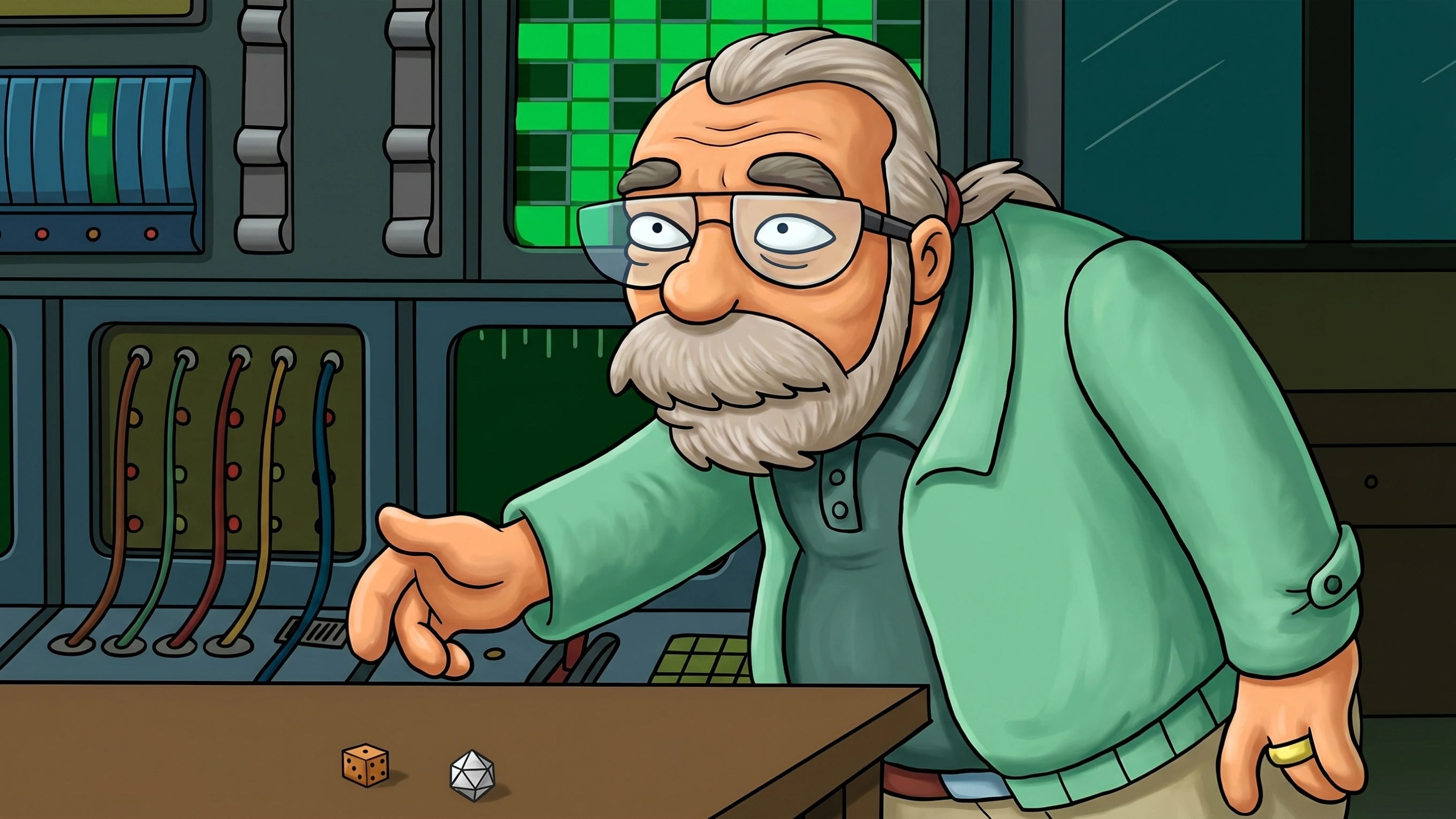
On May 17, 2026, the Los Angeles chapter of the Democratic Socialists of America held a Dungeons & Dragons fundraiser at the Fonda Theatre in Hollywood. Six DSA-endorsed candidates played an election-themed campaign in front of roughly 400 people, with celebrity game master Brennan Lee Mulligan running the table. The event raised approximately $30,000 for the candidates’ local campaigns.
Mulligan, who has been a member of the DSA since 2013, opened the evening with a direct connection between the game and the politics. “We are very lucky that we get to tell stories about heroes going and saving the world, and it makes it very special to be here with people that are saving this city,” he told the crowd, per Los Angeles Times coverage of the event.
It is the latest example of the far left fully embracing Dungeons & Dragons as both entertainment and a tool for community building and political messaging. But this adoption sits uncomfortably with the game’s actual origins, and the gaming community in 2026 already lives inside a hotly political environment that does not need another layer added on top.
The fundraiser was an explicit fantasy of progressive organizing
The six candidates onstage at the Fonda played characters that mirrored their real-world campaigns. Hugo Soto-Martinez, a labor organizer and city councilmember running for reelection in District 13, played a barbarian named “Hugo the Organizer” using his “righteous indignation” to organize workers. Estuardo Mazariegos, running to replace Curren Price in a South L.A. district, played and meowed throughout the game as a purple-striped humanoid cat named “Nine Lives E.” Marissa Roy, DSA’s pick for L.A. City Attorney, played a gavel-carrying paladin looking to uphold the law.
The full DSA-endorsed slate also included Eunisses Hernandez (LA City Council District 1), Faizah Malik (LA City Council District 11), and Dr. Rocio Rivas (LA Unified School Board, District 2).
The framing was deliberate. As DSA members told the LA Times, the event “tied in tightly with the leftist movement, fulfilling the ideological patterns of coming up with ways to save the world as a small group of individuals fighting powers bigger than themselves.” One member specifically noted that D&D players had faced ridicule for being outside expected norms for years before the game entered the mainstream, much like the DSA itself.
Brennan Lee Mulligan is uniquely positioned to bridge these worlds. The 38-year-old comedian and gamemaster is creator and host of Dropout‘s Dimension 20 actual play series. In October 2025, he took over from Matthew Mercer as Dungeon Master for the fourth campaign of Critical Role. He has run other D&D events for political purposes and starred in a DSA political ad highlighting the six candidates.
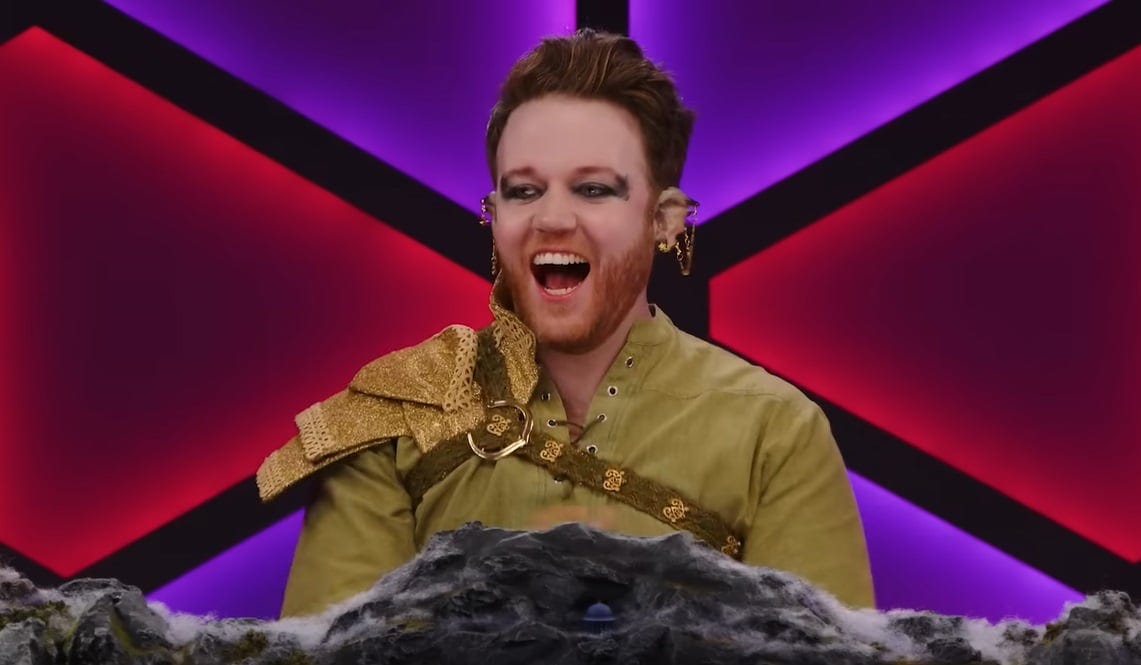
Gary Gygax was a Life Member of the Libertarian Party
Gary Gygax, co-creator of Dungeons & Dragons with Dave Arneson, was open about his political views on the Dragon’s Foot and ENWorld Q&A forums he used to interact directly with fans before his death in 2008.
In a verifiable post on Dragon’s Foot, Gygax wrote: “I am a Life Member of the Libertarian Party, not a liberal as defined by today’s standards, and very much concerned about Islamofascism, a threat I think worse than that of the Nazis and Imperial Japan in the 1930s and 40s. This latter view places me at extreme with the Libertarian position, which I view as extremely flawed.”
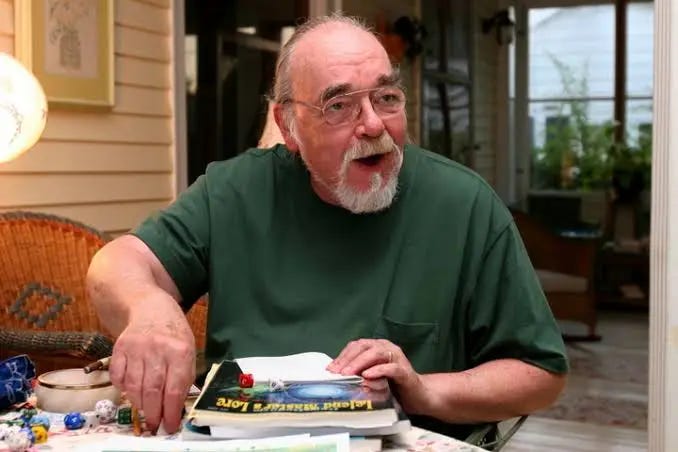
His political views had federal-level documentation as well. In 2017, Reason magazine reporter C.J. Ciaramella obtained the FBI’s file on TSR through a Freedom of Information Act request. A May 1995 FBI report flagged Gygax as “eccentric and frightening,” a man who carried a weapon and proudly answered every letter he received from a prisoner, with an alleged offshore holding company. The report concluded, “He is known to be a member of the Libertarian Party.”
That political philosophy is visible in the DNA of early Dungeons & Dragons. The original game rewarded personal initiative, clever problem-solving, and risk-taking. Characters gained power through their own actions and the luck of the dice, not through collective mandates or institutional approval. The game was built around exploration, treasure, and carving out your own space in a dangerous world, often in opposition to established authority.
Gygax himself made the point about individual creative agency directly. In the afterword to the original D&D manuals, he encouraged players to resist contacting him for clarification on rules and lore. “Why have us do any more of your imagining for you?”
The 1979 Dungeon Master’s Guide defined the “good” alignment in language pulled almost directly from the Declaration of Independence. “Basically stated, the tenets of good are human rights, or in the case of AD&D, creature rights. Each creature is entitled to life, relative freedom, and the prospect of happiness.”
That is not a socialist mission statement. It is recognizably American individualism applied to fantasy gaming.
The corporate effort to distance the game from its creators
Under Wizards of the Coast and Hasbro, there has been a sustained effort to soften or outright criticize the game’s origins, accelerating around the 2024 50th anniversary.
The official Making of Original Dungeons & Dragons 1970-1977 book, with a forward by Wizards of the Coast lead designer Jason Tondro, included commentary that critics characterized as accusing early D&D of sexism, of treating slavery as simple commerce rather than tragedy, and of other elements now considered problematic.
Robert J. Kuntz, one of the earliest and most important figures in the development of Dungeons & Dragons alongside Gygax, blasted Wizards of the Coast in a series of posts via his Three Line Studio X account.
“You know I have to take a break from posting. This whole attack upon Ole TSR has really tripped my trigger. A 50th year celebration and this is it: Of the original D&D authors and its supplements Gary, Dave, Jim Ward and Brian Blume are gone; and that leaves me alone as the last man standing, the last author. It really is a burden watching this slanderous episode unfold. And it was done without one bat of the eyelash, a WoTC fait accompli, done in such an assumptive manner as if they wield the holy articles on morality which they enact with their reprehensible judge, jury and executioner demeanor.”
Kuntz went further in subsequent posts. “Anyone who would wait until the majority of authors who created the game were gone to stick it to them in this manner is a vile snake; and just to complete the deed do it on the 50th, show their admirers who’s in charge.”
He also tied the criticism to ongoing changes in the product itself. “It’s not just Gary or Dave and us others. It’s also about wanting to wipe out that success and claim it as their own; and in order to do that the fandom must be attacked as well as that history. All of it must be purged and never again allowed to exist.”
(Watch our podcast interview with Robert J. Kuntz below.)
So is D&D actually a socialist game?
Technically, no. And the reasons are baked into the game’s design DNA, not into anyone’s partisan grievance.
Dungeons & Dragons was built by Gygax, a Life Member of the Libertarian Party, and Dave Arneson as an individualist sandbox. The mechanical structure rewards clever risk-takers making personal choices. Characters gain power through their own actions and the luck of the dice, not through collective mandates or institutional approval. Gygax’s afterword to the original manuals told players to stop bothering him with rules questions because “why have us do any more of your imagining for you?”
That is not a socialist mission statement. It is recognizably American individualism applied to fantasy gaming.
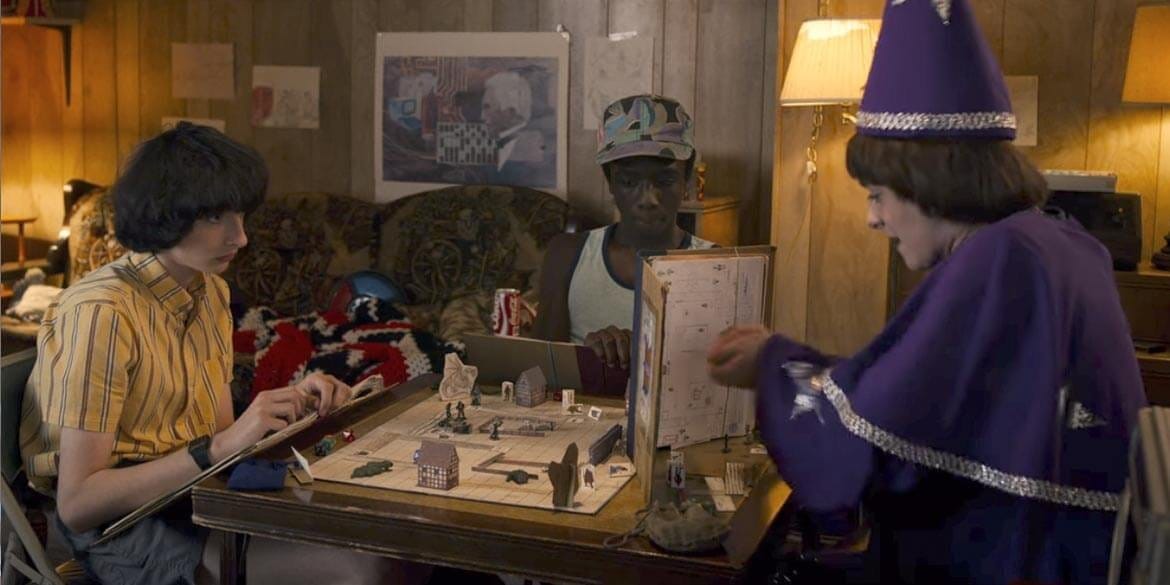
Can the game be played in a way that mirrors socialist organizing? Sure. Your table, your rules. That is part of why D&D has survived for fifty years. Evangelical Christian groups have used it for fellowship. Libertarians have used it for individualist roleplay. Therapy groups use it for emotional processing. Progressive activists use it for fundraising and political messaging. The flexibility of the system is the entire point. A small group of people sits down at a table and imagines something together, and what they imagine is up to them.
What the rules also do not do is endorse the framing. The fact that you can play D&D as a socialist organizing exercise does not mean the game itself is socialist any more than playing it as a Christian fellowship activity makes the game Christian. The system is neutral. The framing the DSA used is the framing the DSA brought to the table.
But the intent of the men who created it was not socialism
If the question is what the actual creators of Dungeons & Dragons intended the game to be, the answer is documented and unambiguous. Gygax was on record about his libertarianism in dozens of forum posts. The FBI flagged it in their TSR file. His writing about player agency, individual responsibility, and the dangers of letting institutions do your thinking for you is consistent across decades.
The one surviving original author has been even more direct about this. Robert J. Kuntz has spent the last several years objecting publicly to what he calls a “purge” of the game’s history. His objection is not just about the Wizards of the Coast 50th anniversary materials. It is a broader argument that D&D was built as a space for unbounded individual imagination, and that turning it into any kind of explicit political vehicle, from any direction, betrays the design philosophy of the people who actually made it.
Kuntz is not a hypothetical “they probably would have hated this.” He is the last man standing from the original author group, and he has been clear about it on his own X account, in interviews, and in conversations with the broader TTRPG community. The surviving original-era TSR staff he speaks for share that position.
Gygax made his thoughts on the matter even clearer through his game design choices. He gave players “alignment” as a tool for individual moral exploration, not for political messaging. He defined good in Jeffersonian terms. He told players to stop asking him for permission and figure out their own table dynamics. The man built a game whose entire animating principle was that nobody outside your group, not the publisher, not the platform, not the broader culture, gets to dictate what your story is about.
That is the opposite of a game designed for political activism.
The gaming community already does not need this
The other complication for the DSA framing is contextual. The gaming community in 2026 is already inside a sustained, exhausting political battle that has nothing to do with any one party’s organizing.
Game development has spent years dealing with consultancy controversies, DEI mandates from publishers, social media pile-ons over character designs, and an active culture-war proxy battle inside review scores.
Tabletop has not been spared.
Wizards of the Coast has fired staff over politics, walked back lore changes, apologized for older content, and rolled out new rules updates that frame the changes in explicit political terms.
Major actual play creators have publicly aligned themselves with one side or the other. Independent designers have been chased off platforms for posts unrelated to their games. Game stores have been forced to navigate which conventions they can attend without drawing political backlash from one direction or another.
Most working gamers, including a meaningful portion of D&D‘s actual player base, want the table to be the one place where this constant cultural pressure does not follow them. They want to roll dice, eat snacks, kill a dragon, and not have to think about whose political tribe they are signaling membership in by playing a paladin or a barbarian.
Adding a high-profile DSA fundraiser using D&D as an organizing metaphor, with celebrity actual play personalities openly endorsing the framing, does not de-escalate that environment. It escalates it. And it puts the pressure back on tables that just want to play the game.
The version Hasbro sells is no longer the game Gygax made
The Dungeons & Dragons that Wizards of the Coast and Hasbro publish today is a different product from what shipped in 1974. The 2024 rules updates renamed “races” to “species.” Background materials connecting certain races to slavery have been rewritten or removed. Player safety tools allow individual participants to stop a session at any point. The marketing of the game has gradually shifted toward whichever cultural conversation Hasbro’s strategy team finds most useful in a given quarter.
How players respond depends on what they want from the game. Many newer players, including millions who came to D&D through Stranger Things, Critical Role, Dimension 20, and the actual play boom of the last decade, welcome the changes as making the game more inclusive and easier to teach to new groups. Many longtime players, including Kuntz and a meaningful portion of the surviving original-era TSR staff, see the changes as a top-down corporate rebrand that has pulled the game away from its individualist roots.
Both readings are defensible. They reflect a real cultural shift that has divided the D&D community for several years.
The bottom line
The DSA candidates onstage at the Fonda raised $30,000 for their campaigns under the banner of a fantasy adventure game. They are allowed to do that. The format works because the system is genuinely flexible. Dimension 20 and Critical Role have proven that D&D can be a vehicle for almost any kind of storytelling, including overtly political storytelling.
But framing the game itself as ideologically aligned with democratic socialism, as if the design supports the politics, gets the history exactly backwards. The men who built Dungeons & Dragons believed in individual agency, personal responsibility, and a deep suspicion of institutional authority telling people what to imagine. The corporate stewards of the brand in 2026 have moved in a different direction, and the loudest cultural ambassadors of the current version come from a specific point on the political spectrum.
The result is a game whose original design philosophy, current corporate positioning, and most visible 2026 cultural use are all pulling in different directions, while the broader gaming community is already exhausted by political tribalism in spaces that used to be a refuge from it.
Your table, your rules. That part is true and worth defending. But if you want to know what the people who actually created the game believed it was for, the record is right there, and it was not socialism. It was a sandbox for individuals to imagine something dangerous, glorious, and entirely their own, free from anyone else, including the game’s publishers, telling them what their story was supposed to mean.
That is the version Gygax and Arneson built. It is the version Robert J. Kuntz is still fighting for. And it is the version that has the hardest time surviving when every party at the table comes pre-loaded with someone else’s politics.
Article compiled and edited by Derek Gibbs (entertainment editor) and the Clownfish TV newsroom.
D/REZZED is part of Clownfish TV. For more news, views, and rants on gaming and tech, visit clownfishtv.com. Watch the show on YouTube at @ClownfishTV where new episodes drop daily. Subscribe to the Clownfish TV podcast on Apple Podcasts, Spotify, iHeart, and wherever else you get your podcasts. Sign up for the free newsletter at more.clownfishtv.com.
Hat Tips:
Los Angeles Times and AOL republication, May 2026 coverage of the DSA-LA Dungeons & Dragons fundraiser at the Fonda Theatre, including the verified Brennan Lee Mulligan quote and the specific characters played by the six DSA-endorsed candidates
DSA-LA official event listing and AXS US event page, confirmed candidate slate including Eunisses Hernandez, Estuardo Mazariegos, Faizah Malik, Hugo Soto-Martínez, Marissa Roy, and Dr. Rocio Rivas
Reason magazine (June 2017), C.J. Ciaramella’s Freedom of Information Act request on the FBI’s TSR file and verified report language on Gygax’s Libertarian Party membership
Boing Boing and Brian Carnell (June 2017), follow-up coverage of the FBI file findings
Dragon’s Foot and RPGCodex archives, verified Gygax forum statement on his Libertarian Party Life Membership and his nuanced disagreement with the Libertarian Party position on foreign policy
Bounding Into Comics, and Fandom Pulse, 2024 coverage of the Robert J. Kuntz response to the Wizards of the Coast 50th anniversary materials and Jason Tondro’s forward in The Making of Original Dungeons & Dragons 1970-1977
Robert J. Kuntz’s official Three Line Studio X account, verified direct posts on the WotC controversy
Scientific American and Time Out New York, background on Brennan Lee Mulligan and the Dimension 20 and Critical Role actual play scene
EN World and Wikipedia, biographical context on Robert J. Kuntz and the early TSR development team