

Sony secretly built a DualShock with a full PS1 inside, then canceled it
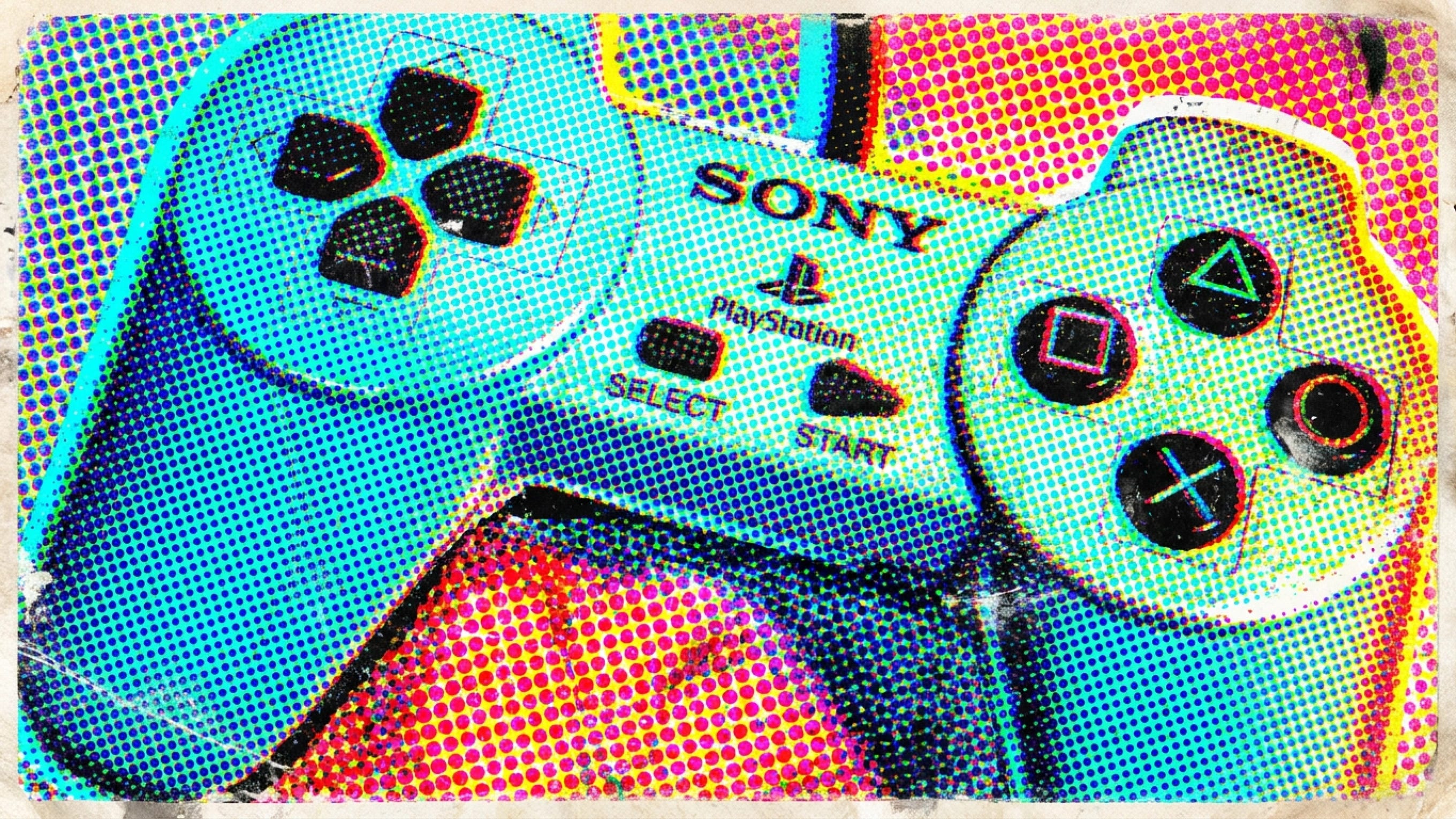
Sony secretly built a DualShock controller with a full PS1 crammed inside, a plug-and-play console you’d connect straight to your TV. It worked. Then Sony canceled it over a royalty dispute with itself. Here’s the wild story of the PlayStation PUGA, and why it stings this week.
Long before the disc-drive debates and streaming wars, Sony built something genuinely wild: a DualShock controller with an entire PlayStation 1 stuffed inside. No console needed, just plug the pad into your TV and play.
It’s a fascinating piece of lost PlayStation history that almost made it to store shelves. And the reason it didn’t is peak corporate absurdity. Here’s the story of the “PlayStation PUGA.”
What was the PlayStation PUGA?
Let’s start with the gadget itself, because it was ahead of its time.
The PlayStation PUGA was a prototype console shaped like a classic DualShock controller, but with a full PS1 experience built right in. Recently revealed by veteran developer Brian “Biscuit” Watson (who worked on it during his time at Sony) at the UK’s Retro Collective museum, the device was essentially a plug-and-play console you could hold in your hands.
The specs were genuinely impressive for its era:
It connected directly to a TV via a composite cable, no separate box required.
It ran on four AA batteries and lasted an astonishing 20 hours on a charge.
It came loaded with about 10 classic PS1 games stored on a 4GB memory card.
Under the hood, it used an ARM-based chip to emulate the PS1, rather than original console hardware.
As Watson put it: “Yes, it’s a PlayStation controller, but it’s a PlayStation controller with PS1 inside of it.” Basically, it was a PSP without a screen, years before the PlayStation Classic made the same plug-and-play idea official.
Why it was built for Brazil
Here’s the clever reason this thing existed at all.
The PUGA wasn’t meant for the whole world, it was designed specifically for the Brazilian market. At the time, Brazil had strict import regulations that made official consoles wildly expensive and hard to find, pushing most PlayStation hardware onto the grey and black markets.
Sony’s workaround was smart: by building a simple, cheap, plug-and-play device inside Brazil, they could sidestep those import restrictions and get real PlayStation games into players’ hands affordably. It’s a strategy with real history, Sega did the same thing with Samsung in South Korea to get around Japanese import bans decades earlier. The PUGA was a genuinely thoughtful solution to a real problem.
The absurd reason it died: Sony vs. Sony
Here’s the part that’ll make you laugh, and groan.
The prototype worked. Watson says it ran well, with its ten games and impressive battery life. So why did it never launch? Licensing. And not even a fight with outside companies, Sony essentially couldn’t stop arguing with itself.
Because the device was meant to be cheap, the budget for game royalties was tiny, reportedly leaving just about 10 cents per unit to split among the games. Third-party publishers balked at that. But the real killer was internal: a separate Sony division handling first-party games reportedly couldn’t agree on royalty terms with the team making the PUGA. In Watson’s words, “Sony licensing couldn’t get their act together about the royalty terms.”
Let that sink in. A finished, working product was scrapped because different departments within the same company couldn’t agree on how to split pennies. As one outlet perfectly put it, the PUGA was cancelled “due to royalty disputes with itself.”
It wasn’t a total loss
Here’s a small silver lining.
The work didn’t entirely vanish. According to Watson, the emulation software developed for the PUGA later found its way into the Sony Xperia Play, the 2011 “PlayStation Phone” that let Android users play PlayStation games with slide-out controls. Fittingly for this story, that device also flopped, but at least the PUGA’s tech got a second life.
Sadly, the surviving PUGA prototype no longer works today. It boots up, but Watson lacks the software needed to get it out of debug mode, so it sits as a tantalizing museum piece: a glimpse of a PlayStation that almost was.
Remember the PlayStation Classic? It kinda bombed
Here’s the relevant follow-up, because Sony did eventually try this idea for real.
The PUGA’s plug-and-play concept finally reached retail years later as the PlayStation Classic, Sony’s answer to Nintendo’s hugely popular NES and SNES Classic mini-consoles. Launched in 2018 at $99, it was... a disappointment.
Critics and fans dinged it for a lackluster 20-game lineup (including some slower PAL versions of games), a barebones presentation, and its use of a free, open-source emulator. Sales underwhelmed, and its price was slashed to $20-30 within months. Where Nintendo’s mini-consoles were beloved victory laps, Sony’s felt like a half-hearted effort, proof that even with a great idea, execution is everything.
Why this hits different in 2026
Here’s the bittersweet part, given where we are now.
There’s a real poignancy to this story surfacing right now. Both the cancelled PUGA and the flawed PlayStation Classic represent something we’re about to lose entirely: Sony making any effort to offer offline, own-it, hold-it-in-your-hands access to its classic games.
This is the same week Sony announced it’s ending physical disc production for PlayStation games in 2028, pushing fully into an all-digital, always-connected future. So a story about a scrappy little device designed to get real games into players’ hands, cheaply, offline, no internet required, feels like a relic from a different Sony. The PUGA was flawed and doomed, but it at least tried to solve access with something physical and permanent.
The PlayStation PUGA: a great idea Sony couldn’t get out of its own way
The PlayStation PUGA is one of gaming’s great “what if” stories: a genuinely clever, working device that would’ve put an entire PS1 in players’ hands, killed not by bad technology or lack of demand, but by a company that couldn’t negotiate royalties with itself over a matter of cents.
It’s a perfect, slightly sad little parable about how great ideas die in big companies, not with a bang, but with a bureaucratic shrug over ten cents a unit. And in a week when Sony is closing the door on physical PlayStation media for good, the PUGA is a bittersweet reminder of an era when the company was still tinkering with ways to hand you a game and just let you play it.
Sometimes the coolest console Sony ever made is the one it decided you couldn’t have.
Want More Clownfish TV?
This article was brought to you in part by The Reefers of more.clownfishtv.com. Free subscribers get articles like this one in their inbox. Paid subscribers get the full Clownfish TV podcast feed, livestreams, and members-only episodes that never hit YouTube.
D/REZZED is part of Clownfish TV. For more news, views, and rants on gaming, tech, and pop culture, watch @ClownfishTV on YouTube and find the podcast on Apple Podcasts, Spotify, and iHeart.
Article compiled and edited by Derek Gibbs (entertainment editor) and the Clownfish TV newsroom.
Hat Tips:
Time Extension and GamesRadar (July 2026), verified for the PlayStation PUGA reveal (Brian “Biscuit” Watson’s talk at The Retro Collective museum, the DualShock-with-a-PS1-inside design, the Brazilian-market purpose and import-restriction workaround, the composite-cable TV connection, the “PlayStation controller with PS1 inside of it” quote, and the “Sony licensing couldn’t get their act together about the royalty terms” cancellation)
Tom’s Hardware, VideoCardz, and VG Times (July 2026), verified for the technical specs (the TI OMAP 3530 ARM-based system-on-chip, emulation rather than original PS1 hardware, the four AA batteries lasting ~20 hours, the ~10 games on a 4GB card), the internal royalty dispute leaving ~10 cents per unit, the software later appearing in the Sony Xperia Play, and the non-working prototype stuck in debug mode
GamesRadar and general coverage (2018-2026), verified for the PlayStation Classic context (its 2018 launch at $99, the criticism over its 20-game lineup and PAL versions, the open-source emulator, the rapid price cuts, and its underwhelming reception versus Nintendo’s mini-consoles), and the connection to Sony’s July 2026 announcement ending physical disc production in 2028