

SpaceX goes public today: what to know before you buy SPCX
SpaceX priced the largest IPO in history at $135 a share and a $1.75 trillion valuation. Here’s what the company does, why Wall Street is excited, and why this isn’t Tesla 2010.
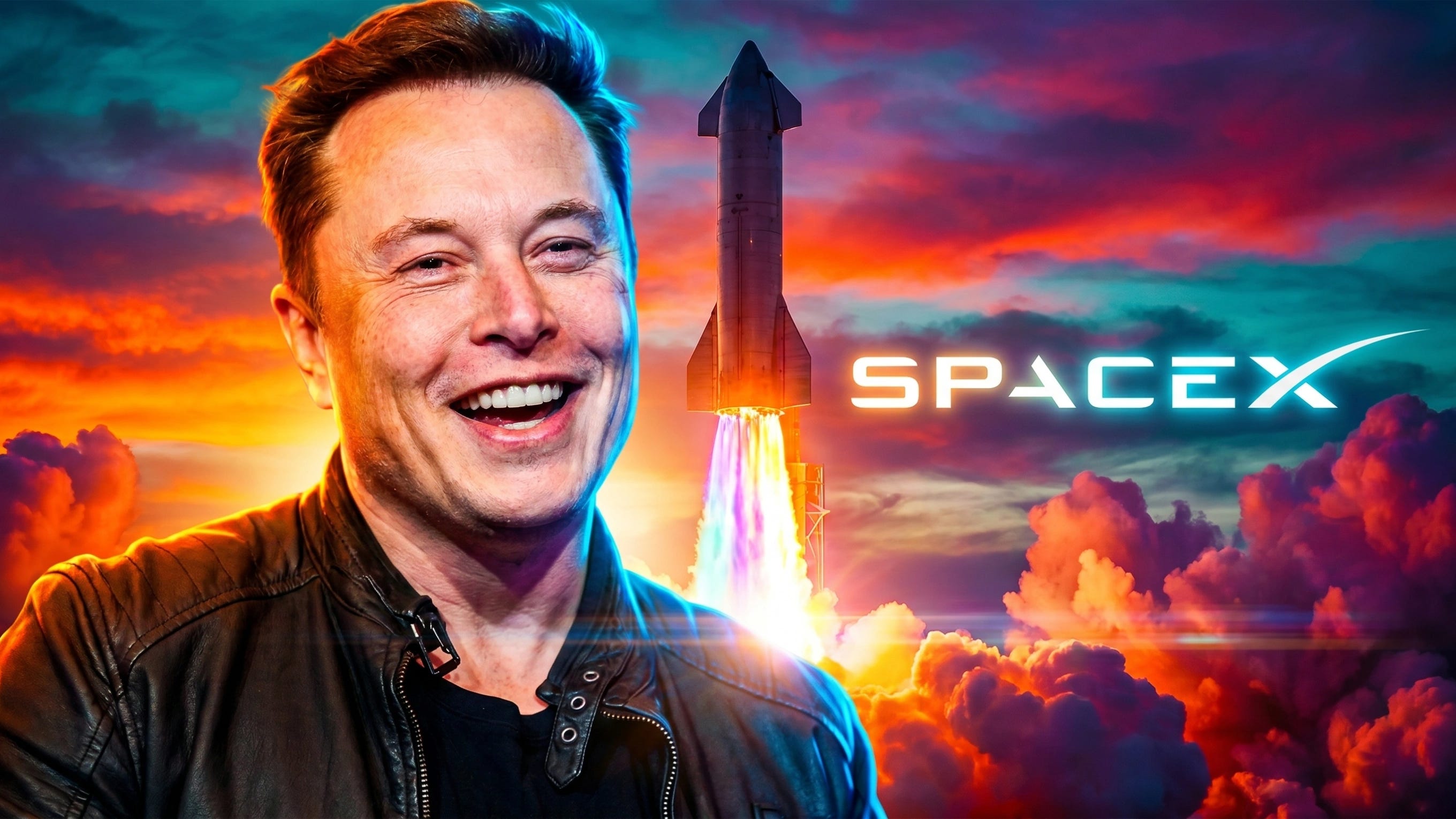
The most anticipated stock debut in a generation is happening right now.
SpaceX priced its initial public offering Thursday night at $135 per share and begins trading today, Friday, June 12, 2026, on the Nasdaq under the ticker SPCX. The company is selling 555,555,555 shares of Class A stock (yes, that exact number, because of course it is) to raise approximately $75 billion at a valuation between $1.75 and $1.8 trillion.
That makes it the largest IPO in stock market history, roughly three times the size of the previous record-holder, Saudi Aramco’s $25.6 billion offering in 2019. Reported demand exceeded $250 billion, with retail orders alone topping $100 billion.
So before you smash the buy button: here’s what you’re actually buying, why everyone’s excited, and some math worth doing first.
Want tech news without the hype attached? Subscribe free at more.clownfishtv.com.
What SpaceX actually does
For anyone who knows the rockets but not the business, the receipts.
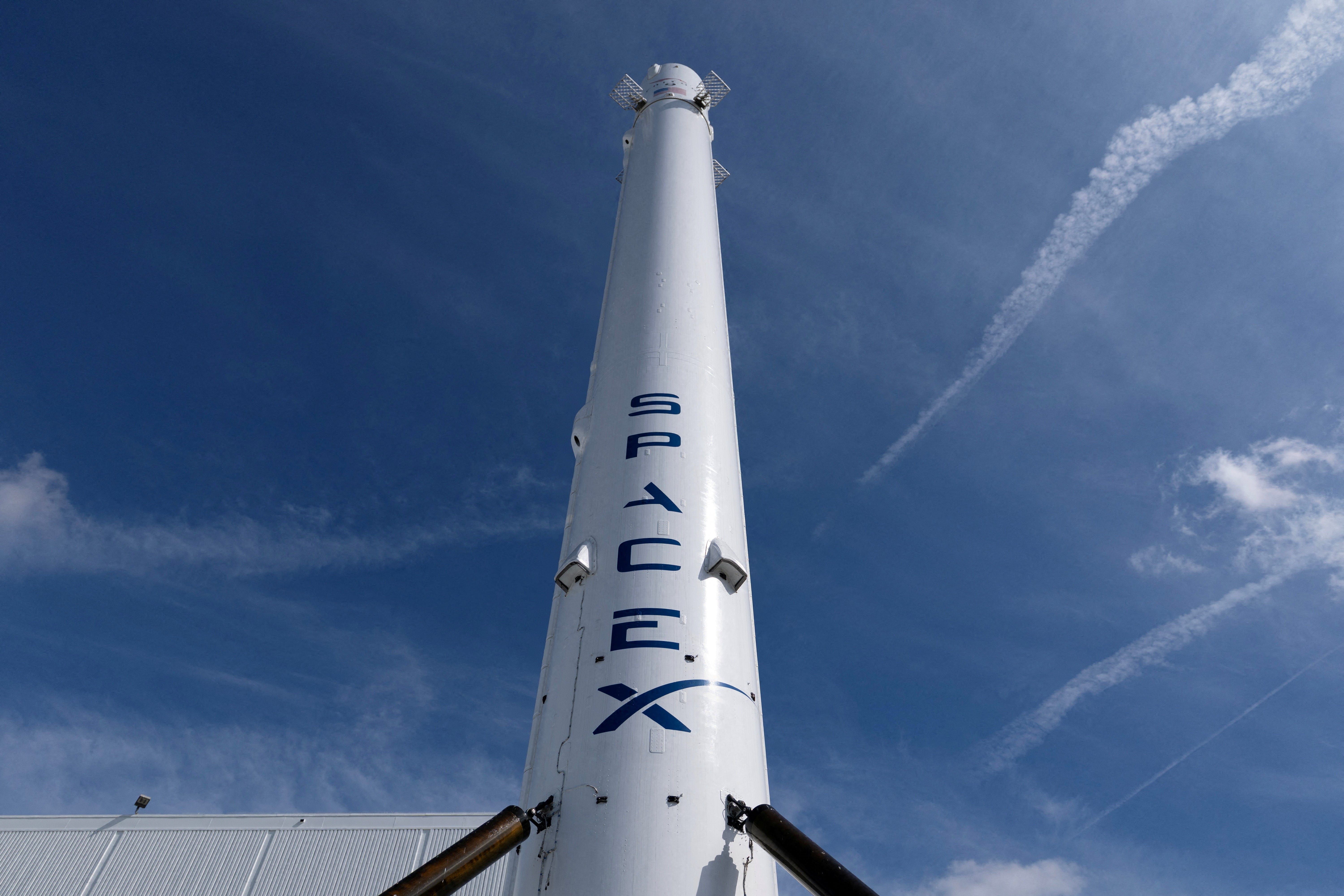
Falcon 9 is the reusable workhorse rocket that made SpaceX dominant. The company handles more than half of all orbital launches on Earth.
Starlink is the satellite internet constellation, now north of 8 million subscribers, and it’s the revenue engine. The majority of SpaceX’s money comes from Starlink, not rockets.
Dragon ferries astronauts and cargo to the International Space Station under NASA contracts.
Starship is the fully reusable mega-rocket built for the Moon and Mars. Still in development, still the long-term bet everything else funds.
Revenue ran about $15 billion in 2025 and is expected to hit $22-24 billion in 2026, per reporting ahead of the offering. The IPO proceeds are earmarked substantially for space-based data centers and computing hardware, which is SpaceX hitching its next decade to the AI infrastructure boom.
Why Wall Street and retail are this excited
A few structural things make this IPO genuinely unusual.
Retail actually gets a seat. SpaceX reserved roughly 30 percent of shares for individual investors, versus the typical 5-10 percent. Fidelity dropped its IPO participation minimum to $2,000 specifically for this offering. For years SpaceX was a trophy asset only VCs and institutions could touch. That exclusivity ending is half the frenzy by itself.
The index escalator is pre-installed. Nasdaq’s new fast-entry rules give SpaceX a path into the Nasdaq 100 within about 15 trading days, which forces index funds to buy regardless of their opinion about the price.
The fixed price was a flex. SpaceX set $135 before the roadshow even started and never offered a range. Normal IPOs price after gauging demand. Musk’s company told the market the price and dared it to blink. Thursday night’s “pricing” was a formality.
And the backdrop cooperated: the market ripped higher Thursday, with the Nasdaq up 2.5 percent. The runway got swept right before the landing.
The Tesla comparison everyone is making, and the math problem with it
Here’s the part to read slowly, because it’s the entire psychology of this IPO.
Tesla went public in June 2010 at $17 a share, raising about $226 million at a valuation around $1.7 billion. Everyone who held through the decade got generationally rich, and a lot of today’s retail buyers are hoping SPCX is that ticket again.
SpaceX is going public at $1.75 trillion. That’s roughly a thousand times Tesla’s starting line.
The thousand-x run already happened. It happened in private markets, over twenty years, and the people who got it were the venture funds and early employees. Public buyers today are purchasing the company after the rocket ride, at a price that assumes Starlink keeps compounding and the space data center business materializes more or less on schedule.
Could SPCX double from here? Sure, companies do. Could it ten-x to $17.5 trillion, which is what a Tesla-style outcome would require? That would be roughly four times the value of every other space, defense, and telecom company on the planet combined having a baby. Anything’s possible. That isn’t.
What you’re paying at $135
The arithmetic from the verified numbers.
At a $1.75 trillion valuation against $22-24 billion in expected 2026 revenue, you’re paying roughly 75 times sales. Per Investing.com’s listing data, trailing earnings per share are negative ($-2.94). The company is enormous, dominant, and not yet profitable on a trailing basis.
For contrast, one widely circulated analyst note ahead of the debut valued SpaceX at $780 billion, less than half the IPO price, while simultaneously predicting the stock would hold up anyway because of the small float, the index inclusion, and AI-adjacent investor appetite. Read that twice. The bull case from skeptics is that the mechanics will support the price even if the fundamentals don’t.
Other items for the back of your mind: insider lockups typically expire about six months out, releasing a wave of supply. Mega-IPOs have a history of messy first days (Facebook’s 2012 Nasdaq debut glitched at the open, and SPCX is three times bigger). And first-day pops have a long, well-documented habit of fading once the confetti settles.
Where Elon Musk fits in all this
Musk is SpaceX’s largest shareholder, and he confirmed the IPO reporting in his usual way: replying “As usual, Eric is accurate” to Ars Technica’s Eric Berger on X. He’d previously dismissed a reported $800 billion private valuation (at $420 per share, a number we assume he hated to walk away from) as inaccurate. He aimed considerably higher.
The standard Musk considerations transfer straight over from Tesla. He runs multiple companies simultaneously. His attention is a famously contested resource. His public statements move stock prices in both directions, sometimes the same afternoon. Tesla shareholders have lived with key-man risk and the Musk news cycle for sixteen years, and SPCX buyers are signing up for the same weather.
The difference: SpaceX’s customer base includes NASA and the Pentagon, which adds a stability layer Tesla never had, and a political sensitivity layer too.
Wrapping up the SpaceX IPO situation
Today the market takes over. Nasdaq’s market makers will spend the morning matching orders to find an opening price, and where SPCX opens and closes against $135 will write the day-one verdict. Prediction markets give slightly better than coin-flip odds it ends the day valued between $1.5 and $2 trillion.
SpaceX is a genuinely historic company. It rebuilt American spaceflight, owns more than half the launch market, and turned satellite internet into a real business. None of that is in dispute.
Whether all of it is worth $1.75 trillion today, with the get-in-early decades already banked by people who got in early, is the actual question on the table.
Maybe SPCX moons anyway. Maybe it spends two years digesting that valuation like a snake that swallowed a deer. We’re a pop culture site, not your financial advisor, and anyone who tells you they know is selling something.
But my armchair observation is that “the largest IPO in history” describes the size of the exit, and it’s fair to ask whose.
Article compiled and edited by Derek Gibbs (entertainment editor) and the Clownfish TV newsroom.
D/REZZED is part of Clownfish TV. For more news, views, and rants on gaming, tech, and pop culture, visit clownfishtv.com. Watch the show on YouTube at @ClownfishTV where new episodes drop daily. Subscribe to the Clownfish TV podcast on Apple Podcasts, Spotify, iHeart, and wherever else you get your podcasts. Sign up for the free newsletter at more.clownfishtv.com.
Hat Tips:
SpaceX updated IPO prospectus / pricing confirmation (June 11, 2026), primary source for the $135 fixed share price, the 555,555,555 Class A shares, the 83,333,333-share underwriter option, and the June 15 offering close
Reuters (June 3, 2026), the $75 billion raise target, the $1.75 trillion valuation, the Nasdaq SPCX listing details, and the June 11 pricing / June 12 debut timeline
Yahoo Finance / Pras Subramanian (June 12, 2026), the fixed-price mechanics including the price being set before the roadshow, the pricing-as-formality analysis, and the opening auction process
NBC News (June 12, 2026), the roughly 30 percent retail allocation versus the typical 10 percent, the Nasdaq 100 fast-entry path of approximately 15 trading days, the $780 billion analyst valuation note, the Facebook 2012 Nasdaq glitch precedent, and the three-times-Aramco scale context
Kiplinger live coverage (June 11-12, 2026), the pricing confirmation, the brokerage distribution details, the Thursday market close (Dow +1.9%, S&P 500 +1.8%, Nasdaq +2.5%), and the 2026 IPO market context (71 IPOs, $35.7 billion YTD)
Fast Company (June 12, 2026), the trading start mechanics and the offering close date
Investing.com SPCX listing data (June 12, 2026), the $1.77 trillion market capitalization, the negative trailing EPS of $2.94, and the 22,000 employee count
Capital.com IPO explainer (June 2026), the April 1 confidential SEC filing, the accelerated June 4 roadshow, and the ownership structure context
Bloomberg / Wall Street Journal (April-May 2026), the original confidential filing and Nasdaq listing reporting
Forbes via Eric Berger / Ars Technica exchange (December 2025), the Musk “As usual, Eric is accurate” confirmation and the dismissed $800 billion / $420-per-share secondary report
Benzinga (June 2026), the Polymarket prediction market data including the 51 percent probability of a first-day close between $1.5 and $2 trillion
Reuters via MarketScreener (December 2025), the Starlink revenue concentration, the 2026 revenue projections of $22-24 billion, the space-based data center proceeds allocation, and the Samuel Kerr / Mergermarket IPO market commentary