

Stop Killing Games just got stopped in California, and the ESA says Minecraft servers are illegal.

The Stop Killing Games movement’s California bill just stalled out, thanks in part to a game-industry lobby that told lawmakers community servers are “illegal.” That claim is drawing serious pushback, and it lands the same week Sony confirmed you’ll soon only be able to “license” its games. Here’s the whole picture.
The Stop Killing Games movement just hit a wall in California. A bill it backed, designed to stop paid games from becoming unplayable when publishers pull the plug, stalled out in the state Senate this week.
And the way it happened, plus a headline-grabbing claim from a game-industry lobbyist, has a lot of gamers fired up. It also lands at a very telling moment, the same week Sony confirmed the future of PlayStation is “license, don’t own.” Let’s break it all down.
What the bill would have done
First, let’s be clear about what was actually on the table, because it wasn’t as radical as opponents suggested.
The bill, AB 1921 (the “Protect Our Games Act”), authored by California Assemblymember Chris Ward and backed by Stop Killing Games, targeted server-dependent games sold after January 1, 2027. When a publisher decided to shut a game down, it would have to:
Give players at least 60 days’ notice
Then do one of three things: provide a playable version, release a patch that keeps it working, or issue a refund
Crucially, it did not require publishers to run servers forever, hand over source code, or expose their anti-cheat systems. It excluded free-to-play games, subscription titles, and games that already work offline. In short: if you sold someone a game, you couldn’t just brick it later with no recourse.
How it got stopped
Here’s exactly how the bill stalled.
AB 1921 had real momentum, it passed the full California State Assembly on May 27 by a lopsided 43-16 vote. But on June 29, it hit the State Senate’s Business, Professions and Economic Development Committee, and stalled.
The vote was 4 in favor, 3 against, with the remaining members abstaining. Because a bill needs a majority of the committee voting yes to advance, those abstentions were effectively as good as “no” votes. The committee later granted “reconsideration,” so the bill isn’t 100% dead, but it can’t move forward in this legislative session. For now, it’s stopped.
The claim that set gamers off
Here’s the moment that turned a dry committee vote into a viral controversy.
The Entertainment Software Association (the ESA), the trade group representing major game publishers, lobbied hard against the bill. At the hearing, ESA VP of State Government Affairs Jennifer Gibbons fielded questions from senators.
One of the bill’s off-ramps was letting community-run servers keep games alive, so Assemblymember Ward pointed out this already happens: “Minecraft is currently hosted by community servers. Call of Duty [has] community servers.”
Gibbons’ response: “They are illegal. And they are not in any way affiliated with Microsoft.”
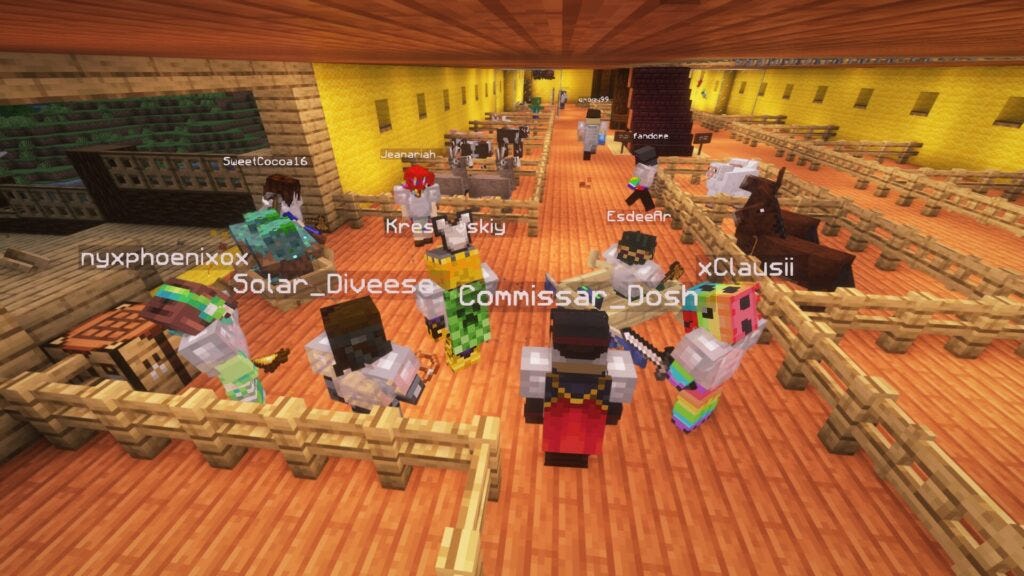
That claim raised a lot of eyebrows, because Minecraft‘s community server ecosystem is well-known, widely used, and openly supported by Microsoft, which owns Minecraft and even publishes its own server software.
Critics were quick to note that Gibbons isn’t a lawyer, and that lumping all community servers together as flatly “illegal” doesn’t match how many games (Minecraft very much included) actually operate today.
The ESA’s broader argument, and the pushback
To be fair, here’s the ESA’s fuller case, because it’s more than one soundbite.
The ESA’s written opposition rests on a few pillars worth laying out honestly:
IP rights: “Private servers infringe on the intellectual property (IP) rights of game publishers,” the ESA said, arguing publishers reserve the right to act against them, and that unofficial servers lack publisher oversight on “trust and safety.”
The ownership question: The ESA argues the bill “mischaracterizes digital ownership”, that consumers receive a license to play a game, not an ownership stake entitling them to indefinite access.
Cost: The group warned the bill could force developers to “spend limited time and resources keeping old systems running instead of creating new games.”
Stop Killing Games has rebuttals for each. The movement stresses the bill doesn’t require perpetual servers, source-code disclosure, or anti-cheat exposure, only one of three off-ramps when a game dies.
Its go-to analogy: “If your car’s GPS subscription ends, the provider shouldn’t get to remotely disable your car.”
On the IP point, supporters note the bill only asks publishers to let people keep making “ordinary use” of something they already paid for, not to seize the underlying copyright.
The Sony elephant in the room
Here’s the context that makes the timing almost poetic.
This all went down the same week Sony announced it will stop producing physical PlayStation discs for new games in 2028, going fully digital. And in explaining that shift, a Sony spokesperson confirmed the quiet part out loud: when you buy a digital game, you’re getting “a personal license,” not ownership.
That is exactly the concern Stop Killing Games has been raising from day one. As the industry moves all-digital, the thing you “buy” becomes a revocable license, one that can be switched off when a server shuts down or a storefront closes. So in the same news cycle, the biggest console maker on earth formalized the license-not-ownership model, while the industry’s lobby helped kill a bill that would’ve given consumers a safety net when that license gets pulled. Whatever side you’re on, the timing lays the core tension bare.
Is Stop Killing Games actually losing?
On paper, this is a real setback, stacked on top of the European Parliament declining to advance the related “Stop Destroying Videogames” initiative earlier this year (despite 1.2 million-plus verified signatures). Two big losses in one year is a genuine blow.
But the movement is framing it differently, and they have a point. Stop Killing Games argues that forcing one of entertainment’s most powerful lobbies to spend real money and effort fighting them, and to make claims as shaky as “Minecraft servers are illegal”, is itself proof the campaign has become a legitimate threat. Movement founder Ross Scott (aka Accursed Farms) suggested the ESA’s overreach actually helped by making the stakes clearer to the public. And the California bill got “reconsideration,” so it’s not fully buried.
Stop Killing Games in California: where the fight stands now
Stop Killing Games lost this round in California, AB 1921 is stalled, blocked in committee with an assist from ESA lobbying and a claim about community servers that a lot of people found hard to swallow. That part isn’t in dispute.
But the bigger picture is more interesting than a simple win or loss. The same week the bill stalled, Sony confirmed the exact future Stop Killing Games is warning about: a digital-only world where you license games rather than own them. That collision, an industry formalizing “you don’t own it” while lobbying against rules that would protect you when they take it away, is precisely why this movement isn’t going anywhere.
The bill got stopped. The underlying question, “if I paid for it, why can they delete it?”, absolutely did not. Expect this fight to be back, probably sooner than the ESA would like.
Want More Clownfish TV?
This article was brought to you in part by The Reefers of more.clownfishtv.com. Free subscribers get articles like this one in their inbox. Paid subscribers get the full Clownfish TV podcast feed, livestreams, and members-only episodes that never hit YouTube.
D/REZZED is part of Clownfish TV. For more news, views, and rants on gaming, tech, and pop culture, watch @ClownfishTV on YouTube and find the podcast on Apple Podcasts, Spotify, and iHeart.
Article compiled and edited by Derek Gibbs (entertainment editor) and the Clownfish TV newsroom.
Hat Tips:
This Week in Videogames and Dexerto (June-July 2026), verified for the June 29 Senate committee vote (4 yes / 3 no / abstentions, the reconsideration grant), the 43-16 Assembly passage, the ESA’s Jennifer Gibbons “they are illegal” exchange with Assemblymember Chris Ward over Minecraft/Call of Duty community servers, and the ESA’s “private servers infringe on IP rights” statement
California Assembly AB 1921 committee analysis and GamerMarkt (April-May 2026), verified for the bill’s actual provisions (60-day notice, the three off-ramps, the exclusions for F2P/subscription/offline games, no source-code or perpetual-server mandate), the ESA’s “mischaracterizes digital ownership” and cost-burden opposition, and Stop Killing Games’ point-by-point rebuttal including the “car GPS” analogy
TechPowerUp and PlayStation Blog reporting (June-July 2026), verified for the European “Stop Destroying Videogames” initiative context (1.2 million-plus signatures, not advanced), Ross Scott / Accursed Farms’ framing of the loss as a legitimacy boost, and Sony’s confirmation that digital PlayStation purchases constitute “a personal license” as it moves to end physical discs