

Supergirl director and James Gunn reportedly clashed behind the scenes
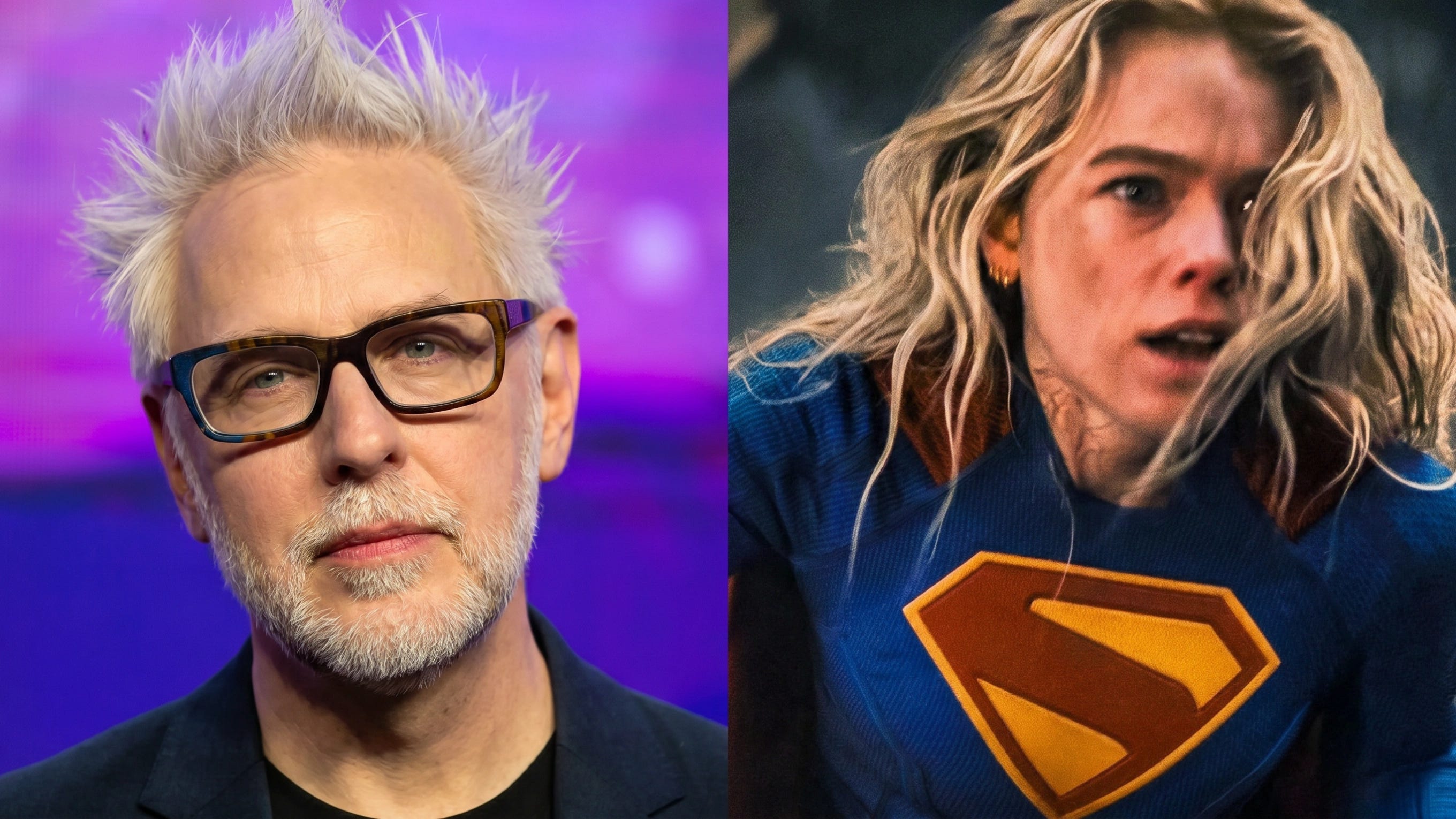
A new Hollywood Reporter exposé reveals Supergirl was quietly split into two competing cuts, one from director Craig Gillespie, one from the studio, after creative friction with James Gunn. Here’s what happened behind the scenes, and why the truth is messier than “Gunn took over.”
The story behind one of the year’s biggest box-office bombs just got a lot more interesting. A new report reveals that Supergirl was, for months, quietly split into two competing versions, one from its director, and one from the studio run by James Gunn.
It’s a fascinating, and complicated, look at how a highly anticipated superhero movie fell apart. Here’s what The Hollywood Reporter uncovered, and why the real story is more nuanced than the “Gunn interfered” headlines suggest.
The bombshell: two competing cuts
Let’s start with the most striking revelation.
According to a Hollywood Reporter exposé, DC Studios did something unusual with Supergirl: it held what insiders called a “bakeoff,” testing two different cuts of the movie against each other. One version was from director Craig Gillespie (of I, Tonya and Cruella fame). The other was from the studio, led by DC co-CEOs Gunn and Peter Safran.
The two cuts were meaningfully different. Gillespie’s version was reportedly about 11 minutes longer and gave significantly more screen time to the villain, Krem (played by Matthias Schoenaerts). When the competing cuts were tested, the studio’s version narrowly won, by just two points, and that’s the cut that went to theaters.
How it got to that point
Here’s the timeline of how things unraveled.
Per THR, the trouble started early. Supergirl wrapped filming in May 2025, and by that fall, both the filmmakers and the studio were questioning whether it was working. A December 2025 test screening reportedly landed as “just okay,” and the film’s test scores never climbed out of the 60s (out of 100), with a reported high of 70. For context, that’s similar to how the shelved Batgirl movie and the flop Shazam! Fury of the Gods tested.
From there, the studio took a more hands-on role in post-production. Gunn brought in writer Jeremy Slater (of Moon Knight) to help craft new scenes for roughly nine days of additional reshoots. And after the bakeoff, one source says Gillespie had to actively “advocate” for anything he wanted kept in the film, suggesting the version audiences saw wasn’t fully his.
Why “Gunn took over” is only half the story
Here’s the crucial context that a lot of hot takes are leaving out.
It’s tempting to read this as “James Gunn steamrolled a director and ruined the movie,” and some outlets are framing it exactly that way, noting it seems to contradict Gunn’s promise not to meddle in other DCU filmmakers’ projects. But THR’s own reporting is more balanced than that, and fairness demands including the other side.
Multiple sources pushed back on the “creative war” narrative. They described the Gunn-Gillespie friction as “the normal amount of healthy friction any filmmaker and studio have” as part of making a movie better. Sources also stressed that Gunn and Safran genuinely “respect the filmmaking chops of Gillespie”, this wasn’t a case of the studio thinking he was a hack. One insider said “’they were not creatively aligned’ is the polite way of describing things,” but others disputed that it ever got that heated. Notably, Gunn publicly praised the film both before and after release.
So the honest read isn’t “Gunn the villain.” It’s “a director and a studio with different visions couldn’t fully reconcile them”, which is messier, more human, and more common than a clean bad-guy story.
It wasn’t just the edit
Here’s another piece the “blame Gunn” framing misses.
According to THR, the problems ran deeper than the editing bay. The script itself reportedly had issues from the start. And even Gillespie’s longer cut didn’t test dramatically better, both versions scored in a similar, underwhelming range. In fact, when the two cuts were tested head-to-head, the scores actually dropped.
That’s an important detail: if there were a secret, brilliant “Gillespie Cut” that would’ve saved the movie, the test scores don’t clearly show it. This looks less like one great version being suppressed and more like a film that struggled to work in any configuration.
The music mystery
Here’s a fascinating specific that fans have latched onto.
One concrete point of difference was the music, particularly the song in the climactic fight scene. The theatrical cut used a cover of Jimmy Eat World’s “The Middle.” But earlier cuts reportedly used a cover of Cyndi Lauper’s “Girls Just Want to Have Fun”, a choice attributed to Gunn, before it was swapped out. It’s a small window into just how much back-and-forth went into shaping the final film, right down to the needle drops.
The “Release the Gillespie Cut” campaign
Here’s the fan reaction, and the reality check.
Predictably, the revelation that a different directorial cut exists has sparked a “Release the Gillespie Cut!” campaign online, an obvious echo of the successful push for Zack Snyder’s Justice League. Fans want to see the director’s untainted vision.
But temper those expectations. For one, by most accounts the two cuts weren’t dramatically different (11 minutes and a bit more villain isn’t a whole new movie). And these campaigns rarely succeed, David Ayer fought for years to release his Suicide Squad cut and never got a full theatrical version. The Snyder Cut was the exception, not the rule.
Supergirl’s box office and the creative clash behind it
Supergirl became one of the biggest superhero flops in recent memory, opening to just $37.1 million and facing a projected loss north of $100 million, and this THR report shows the seeds may have been planted long before release, in a post-production process where a director and a studio never fully got on the same page.
But the fairest takeaway isn’t that James Gunn sabotaged a masterpiece. It’s that Supergirl was a film in trouble from multiple angles, script, edit, and vision, and no single cut, song, or scapegoat fully explains it. As DC’s Peter Safran put it, the movie “didn’t meet our box office expectations,” but it’s “one component of a broader, long-term strategy.” Gunn and Safran are still steering the ship, with Clayface and Gunn’s own Man of Tomorrow next.
Sometimes a movie doesn’t fail because of one villain in the editing room. Sometimes it just never found its footing, and no cut can hide that.
Want More Clownfish TV?
This article was brought to you in part by The Reefers of more.clownfishtv.com. Free subscribers get articles like this one in their inbox. Paid subscribers get the full Clownfish TV podcast feed, livestreams, and members-only episodes that never hit YouTube.
D/REZZED is part of Clownfish TV. For more news, views, and rants on gaming, tech, and pop culture, watch @ClownfishTV on YouTube and find the podcast on Apple Podcasts, Spotify, and iHeart.
Article compiled and edited by Derek Gibbs (entertainment editor) and the Clownfish TV newsroom.
Hat Tips:
The Hollywood Reporter (Borys Kit and Aaron Couch) (July 2026), the originating exclusive, verified for the competing-cuts “bakeoff” (Gillespie’s cut vs. the studio’s, the studio winning by two points, Gillespie’s version being 11 minutes longer with more of villain Krem), the timeline (May 2025 wrap, the December 2025 “just okay” test screening, test scores never escaping the 60s with a high of 70), Jeremy Slater’s nine days of reshoots, and both the “not creatively aligned” and “normal, healthy friction / respect Gillespie’s chops” accounts
ScreenRant and ComicBook.com (July 2026), verified for the two-editor detail (Gillespie’s Tatiana Riegel and Gunn’s Fred Raskin), the confirmation that Gunn, Gillespie, DC Studios, and Warner Bros. Discovery have not officially commented, the script-stage issues, and the Justice League/Snyder Cut comparisons
CBR and THR (July 2026), verified for the music difference (the “Girls Just Want to Have Fun” to “The Middle” swap attributed to Gunn), the “Release the Gillespie Cut” fan campaign and why such campaigns rarely succeed (the David Ayer/Suicide Squad precedent), the $37.1 million opening and $100 million-plus projected loss, and Peter Safran’s “one component of a broader, long-term strategy” statement
Based on the reporting, Gunn/DC Studios interfered in the final form of Supergirl, and the released version bombed. What cannot be known is whether the movie would have performed better, worse, or the same had Gillespie’s preferred cut been released.
That’s the whole argument. Anything else is fandom, PR, or blame assignment dressed up as certainty.