

Tech oligarchs started buying Hollywood in 2001 when AOL bought Warner Bros.
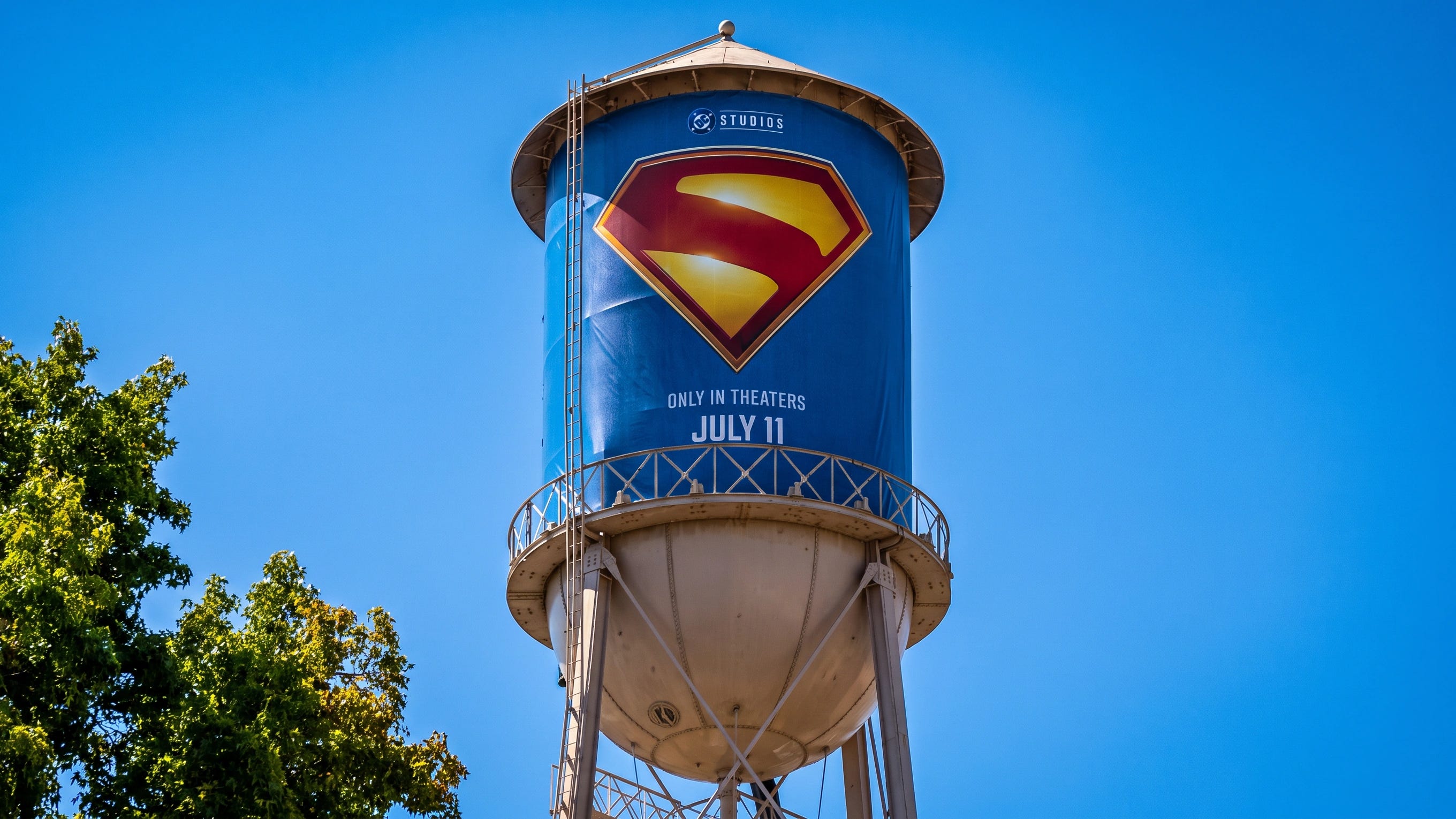
There’s a lot of chatter lately about tech oligarchs buying up Hollywood. Fair enough. But Warner Bros. has been owned by an internet company, a phone company, and a parking lot conglomerate that also ran funeral parlors. Most of Hollywood has been somebody’s side business since 1966.
The Ellisons are closing in on Warner Bros. Discovery, and the reaction has been loud. Tech money is buying Hollywood. Silicon Valley oligarchs are taking the studios. The barbarians are at the Burbank gate.
Sure. Here’s the ownership history nobody’s bringing up.
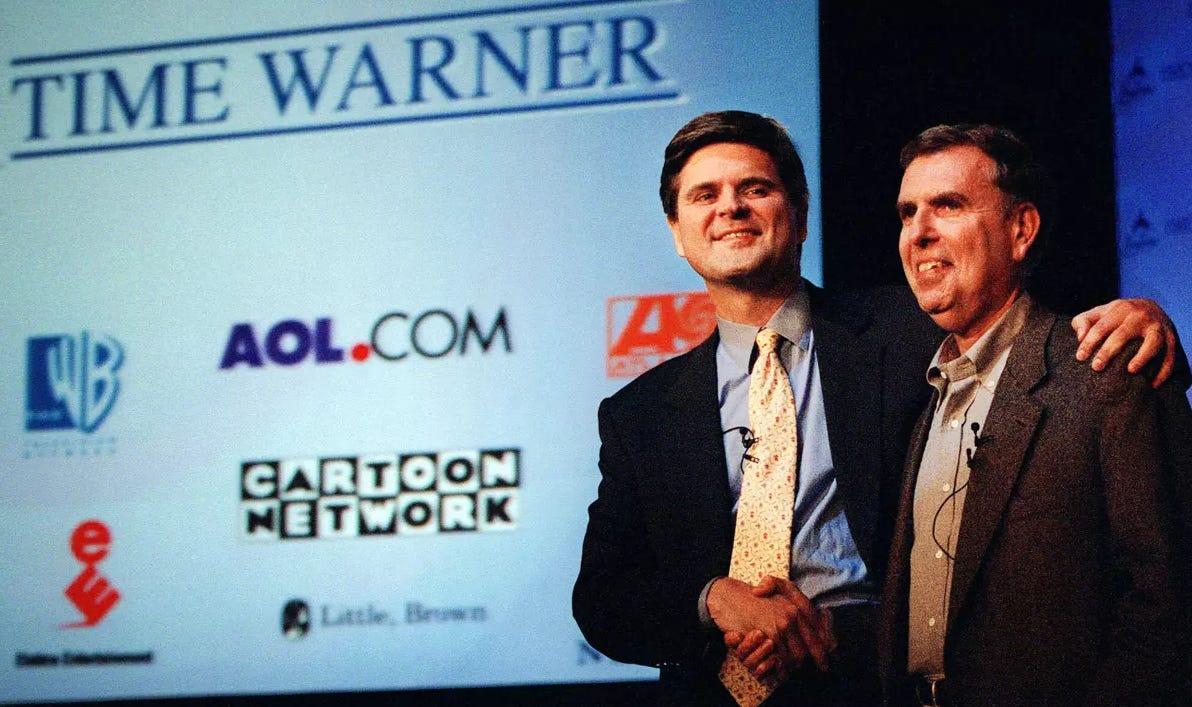
AOL, an internet company, owned Warner Bros. for eight years
In January 2001, AOL completed its purchase of Time Warner. That’s America Online, the dial-up company, the free-CD-in-your-mailbox company, the you’ve-got-mail company.
It was the biggest tech company on earth at the time, riding 30 million subscribers and an internet bubble that felt permanent. Under the terms, AOL shareholders owned 55% of the combined company. Time Warner shareholders got 45%, despite bringing most of the actual assets and revenue.
So a tech company didn’t just buy Warner Bros. A tech company bought Warner Bros. and got majority control of the whole thing.
It went catastrophically. The dot-com bubble popped, broadband killed dial-up, and in 2002 the company posted a $98.7 billion annual loss, which remains the worst in American corporate history. Ted Turner personally lost around $8 billion, roughly 80% of his net worth.
“AOL” came off the name in 2003. They spun it off entirely in 2009.
AT&T, a phone company, owned Warner Bros. from 2018 to 2022
AT&T bought Time Warner for $85 billion in 2018 and renamed it WarnerMedia. That’s the telephone company. Founded by Alexander Graham Bell’s people. Owned Bugs Bunny.
It lasted four years. AT&T spun the whole thing off in 2022 and merged it with Discovery, which is how we got the current Warner Bros. Discovery in the first place.
Nobody called AT&T a telecom oligarch buying Hollywood. They just did it, badly, and left.
In 1969, Warner Bros. was bought by a parking lot and funeral home company
This is the one.
Kinney National Company bought Warner Bros.-Seven Arts in 1969 for $64 million. Kinney’s business, at the time, was parking garages, funeral homes, rental cars, and office cleaning.
It was assembled from a four-way merger of a parking system, a memorial chapel chain, a car rental outfit, and a janitorial firm. Its CEO, Steve Ross, had spent the 1960s stapling those together.
That company bought Warner Bros. Then it bought DC Comics the same year. So Superman and Batman were, briefly and literally, owned by a funeral parlor operator with a sideline in valet parking.
And here’s the part that should stop you cold. Kinney was forced to sell off its talent agency to complete the deal, because antitrust law at the time prohibited a single company from owning both a film studio and a talent agency.
Anyway. Kinney eventually dumped the parking and funeral businesses and renamed itself after its most famous holding. That’s where “Warner Communications” comes from. The parking lot company took the studio’s name, not the other way around.
Coca-Cola owned Columbia. Gulf+Western owned Paramount.
Warner isn’t special here, which is sort of the point.
Coca-Cola bought Columbia Pictures in 1982 and ran it until 1989, when it sold to Sony, a Japanese electronics manufacturer. A soda company owned a major studio for seven years.
Gulf+Western took Paramount in 1966 for $125 million. G+W was a sprawling conglomerate with interests in sugar, zinc, auto parts, and mattresses. It was so notorious for swallowing companies that Mel Brooks parodied it in Silent Movie as “Engulf and Devour.”
Transamerica, an insurance and financial services company, bought United Artists in 1967. MGM went to Taft Broadcasting in 1966, then to financier Kirk Kerkorian in 1969.
Universal’s had the wildest ride of all. Over the years it’s been owned by a Japanese electronics firm, a Canadian liquor company, a French water utility, General Electric, and now Comcast, a cable provider.
A French water utility owned Universal Pictures. That happened.
Hollywood hasn’t been independent since roughly 1966
Add it up and a pattern falls out that has nothing to do with tech.
Every major studio except Disney lost its independence in a wave of conglomerate takeovers that started in the mid-1960s and never stopped. Since then the studios have been passed between soda companies, insurance companies, phone companies, liquor companies, utilities, electronics manufacturers, cable operators, and one memorable parking lot magnate.
The through-line isn’t Silicon Valley. It’s that the movie business, on its own, doesn’t throw off enough reliable cash to stand up by itself. It’s glamorous, it’s volatile, and it’s small. So it lives inside something bigger and duller that can absorb a bad year.
Studios have been somebody’s subsidized prestige division for sixty years. The Ellisons are just the current somebody.
What’s actually different about the Ellison era
That said, “nothing new under the sun” can be its own kind of lazy, so here’s the honest case that this time isn’t identical.
Scale is real. Gulf+Western was enormous for 1966, but it wasn’t Oracle money, and today’s tech balance sheets dwarf anything the old conglomerates could bring.
The bigger difference is what the owner wants. Coca-Cola wanted Columbia to make money, full stop. It was a financial holding. But a tech parent may want the content as fuel for something else entirely, subscriptions, engagement, an ads business, a device ecosystem, which changes what gets greenlit and why in ways a soda company never contemplated.
And vertical integration cuts deeper now. Kinney owned the studio. Amazon owns the studio, the storefront, the delivery pipe, the ad network, and the hardware in your living room. That’s a genuinely different shape of power, and the antitrust rules that once forced Kinney to sell a talent agency aren’t being applied the same way.
So the panic isn’t baseless. It’s just aimed at the wrong century.
The Ellisons are buying a studio that’s been sold a dozen times
None of this is a defense of the Paramount-Skydance deal, which shareholders approved in April and which California’s attorney general is reportedly preparing to fight.
It’s just context. The people worried that Warner Bros. is about to be owned by someone who doesn’t fundamentally care about movies should know that Warner Bros. was owned by a funeral home operator, a dial-up ISP, and a phone company, in that order.
The studio outlived all three. It’ll probably outlive this one.
Somewhere in Burbank there’s a lot with a hundred years of that on it, and the sign out front has changed more times than anybody remembers.
Want More Clownfish TV?
This article was brought to you in part by The Reefers of more.clownfishtv.com. Free subscribers get articles like this one in their inbox. Paid subscribers get the full Clownfish TV podcast feed, livestreams, and members-only episodes that never hit YouTube.
D/REZZED is part of Clownfish TV. For more news, views, and rants on gaming, tech, and pop culture, watch @ClownfishTV on YouTube and find the podcast on Apple Podcasts, Spotify, and iHeart.
Article compiled and edited by Derek Gibbs (entertainment editor) and the Clownfish TV newsroom.
Hat Tips:
Britannica, The Hollywood Reporter, and Wikipedia (2020-2026), verified the Warner ownership chain — AOL completing its Time Warner purchase in January 2001 with AOL shareholders holding 55% to Time Warner’s 45% despite Time Warner’s larger asset base, AOL’s roughly 30 million dial-up subscribers, the deal’s designation as “the worst merger in history,” the record $98.7 billion annual loss posted in 2002 and Ted Turner’s estimated $8 billion personal loss, the AOL name being dropped in 2003 and spun off in 2009, AT&T’s $85 billion acquisition in 2018 forming WarnerMedia and its 2022 spin-off and merger with Discovery, and the February 2026 Paramount Skydance agreement approved by shareholders in April 2026 pending regulatory review
Wikipedia, Encyclopedia.com, and Britannica (2026), verified the Kinney history — Kinney National Company acquiring Warner Bros.-Seven Arts in 1969 for more than $64 million under CEO Steve Ross, Kinney’s origins as a four-way merger of a parking system, Riverside Memorial Chapel funeral homes, a rental car company, and a cleaning contractor, its acquisition of National Periodical Publications (DC Comics) in 1969, its forced divestiture of the Ashley-Famous talent agency because antitrust law then prohibited owning both a studio and an agency, and its subsequent renaming to Warner Communications after abandoning the parking and funeral businesses
Wikipedia and industry histories (2026), verified the broader conglomerate era — Gulf+Western’s 1966 purchase of Paramount for $125 million, Transamerica’s 1967 acquisition of United Artists, Taft Broadcasting’s 1966 purchase of MGM and Kirk Kerkorian’s 1969 acquisition, Coca-Cola’s ownership of Columbia Pictures from 1982 until its 1989 sale to Sony, News Corp’s purchase of 20th Century Fox, and Universal’s successive owners including Matsushita, Seagram, Vivendi, General Electric, and Comcast