

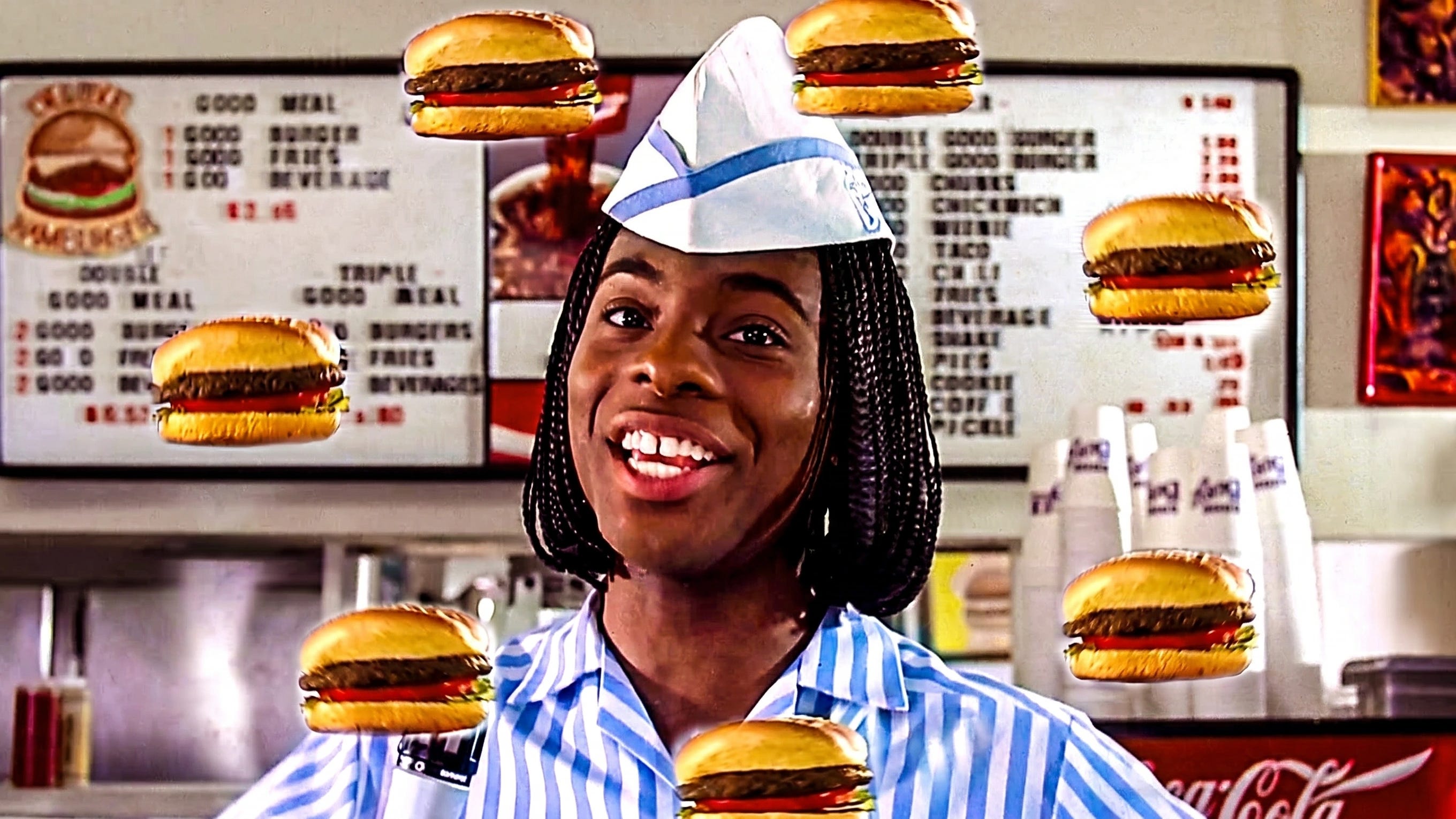
The phrase “put the fries in the bag” started as a Facebook insult in November 2022. By 2026, it has become an accidental career-advice slogan for a generation of laid-off white-collar workers. More than 142,000 tech jobs have been eliminated in 2026 alone, according to multiple industry trackers including Layoffs.fyi and TrueUp. Tech-sector unemployment has risen to 5.8%, the highest level since the dot-com bust of 2001 and 2002.
The promise that a computer science degree would guarantee a stable career is officially broken. And for some of the people on the wrong end of those layoffs, the next move is going to involve work they once thought was beneath them.
That is the bag. The fries are going in it.
Where the phrase actually comes from
The original post went up on Facebook on November 19, 2022, from a user named Andre Jamar Milburn. It read, in all caps: “I AIN’T SEEN YOU SINCE HIGHSCHOOL,” followed by the response, “JUST PUT THE KETCHUP IN MY BAG BRO.” The setup is that someone recognizes an old high school classmate working at a fast food restaurant and tries to catch up. The classmate, working the counter, does not want to talk. He just wants to finish the order.
The post collected over 6,000 reactions and 34,000 shares in two years. By 2023, screenshots had spread from Facebook to Instagram to Twitter to TikTok. Somewhere along the way, “ketchup” became “fries,” and the phrase became its own thing. By 2024, one TikTok user declared it “the worst insult you could get hit with in 2024.” It implies the person you are talking to has no real future and is stuck in a dead-end job. It is harsh, classist, and intentionally demeaning.
In 2026, it is being repurposed by some as a blunt reality check for white-collar workers who never expected to need a service or trade job. Sometimes it is being said by other people. Sometimes it is being said by the laid-off workers themselves.
The 2026 layoff numbers are brutal
Tech companies have been cutting aggressively this year.
Amazon has eliminated at least 30,000 positions since October 2025, roughly 10% of its corporate and tech workforce. Oracle began laying off 10,000 employees on April 1, with analysts expecting the total to reach 30,000, around 20% of its global workforce. The Oracle cuts came immediately after the company reported strong quarterly earnings. Meta announced 8,000 layoffs in April with cuts beginning May 20, plus 6,000 closed open positions, with internal guidance suggesting headcount could fall by 20% across the full year. Cisco is cutting around 4,000. Coinbase is cutting 14%. Intuit is laying off 17% of its global workforce in July.
Layoffs.fyi tracked over 113,000 tech layoffs across 179 companies as of May 18, 2026, an average of 825 people per day. The pace is 33% higher than the same period in 2025. TrueUp projects total tech layoffs in 2026 could reach 370,000 by year-end.
The median time it takes a laid-off tech worker to find a new role has stretched from 3.2 months in 2024 to 4.7 months in 2026. Stanford research shows software developer employment for workers under 26 has fallen nearly 20% since 2024.
That is not a slowdown. That is a structural change.
AI is the official reason. Most experts say it is more complicated.
About 48% of tracked layoffs have been explicitly attributed to AI by the companies making the cuts, per Layoffs.fyi data analyzed by industry trades.
That number is heavily disputed by economists.
Peter Cappelli, a management professor at the Wharton School, told industry reporters that companies are announcing layoffs by saying “we expect that AI will cover this work. Hadn’t done it. They’re just hoping.”
Babak Hodjat, the Chief AI Officer at consulting firm Cognizant, was even more direct in comments to Nikkei Asia. “Sometimes, you know, AI becomes the scapegoat from a financial perspective, like when a company hired too many, or they want to resize, and it gets blamed on AI.”
Oxford Economics concluded in a January 2026 report that firms “don’t appear to be replacing workers with AI on a significant scale.” The actual driver, according to most independent analysis, is a combination of three things. Companies overhired during the pandemic boom when interest rates were near zero and growth was easy to fake. Interest rates rose. Growth slowed. And the AI infrastructure build-out is consuming enormous amounts of cash that has to come from somewhere. The combined AI infrastructure spending across Meta, Amazon, Oracle, and a few other major players is projected to hit $700 billion in 2026.
In other words, the same tech industry that is laying off workers because of AI is paying for AI by laying off workers. The official reason and the actual reason are not always the same reason.
A college degree no longer guarantees anything
For years, the message to young people was simple. Go to college. Pick a “future-proof” major like computer science or engineering. You will be set for life.
That promise has taken serious damage in the last five years.
Tech is the most visible example, but it is not the only one. Hollywood has been in a slow-motion contraction since the 2023 writers’ and actors’ strikes. The industry-wide union IATSE represents 170,000 below-the-line workers from camera operators to costume designers. Many of them have been struggling to find consistent work since the strikes ended, with productions moving overseas for tax incentives or simply not getting greenlit.
Mario Colli, an IATSE lighting programmer with credits on WandaVision and One Night in Miami, told The Hollywood Reporter he and his wife sold their home during the strikes when they could not make mortgage payments.
Journalism has been hit even harder. Over 10,000 journalists have been laid off in the last three years, according to Bureau of Labor Statistics data, more than 1 in 10 working editors and reporters. The Washington Post cut over 300 journalists in early 2026. The Pittsburgh Post-Gazette closed entirely. One in five journalists has already made a career change due to economic conditions, according to a Muck Rack survey.
In all three industries, people with advanced degrees and years of experience are being forced to consider work outside their field. Some have made the jump to trades. Some have moved into logistics. Some are doing service work while they figure out what comes next.
The common thread is that almost nobody expected their education and experience to become this disposable this quickly.
The trades are the new safe haven
The most surprising part of the 2026 white-collar collapse is where the lifeboats are.
Jensen Huang, the CEO of Nvidia and one of the most influential figures in the AI industry, said in September 2025 that electricians and plumbers will be needed “by the hundreds of thousands” to build out the data centers and infrastructure his own products depend on. The same data centers that are partly responsible for the layoffs are creating a massive shortage of skilled trade workers.
Carrie Charles, the CEO of staffing firm Broadstaff, which works with Fortune 500 companies including Verizon and Oracle, told Business Insider in April 2026 that her firm has seen a surge in demand for skilled electricians and technicians. She described the roles as “almost like a white-collar trade job,” paying up to $300,000 with around 81,000 openings per year. “It’s a technical role, but you’re not sitting all day long.”
Major employers are putting real money behind the shift. BlackRock is spending $100 million to train plumbers, electricians, and HVAC technicians. Lowe’s is investing $250 million in trade training. Meta has launched a program with real estate firm CBRE called LevelUp to recruit and train data center technicians. Mike Rowe, the longtime host of Dirty Jobs, is offering $10 million in scholarships to people pursuing trade roles.
A 2025 FlexJobs survey found that 62% of white-collar workers would leave the office for a trade job if it meant better stability and pay. A separate survey from SupplyHouse found that roughly one in four Gen Z workers are seriously considering or actively pursuing a career in the trades instead of a white-collar job.
The math is changing. Five years ago, a software engineer made fundamentally more than an electrician. In 2026, the gap is closing fast, and the electrician is much less likely to be replaced by a chatbot.
People are already doing it
This is not theoretical.
Zen Stewart is a 34-year-old electrician working in Raleigh, North Carolina. She made roughly $43,000 in 2025 as an entry-level electrical worker. Before joining the International Brotherhood of Electrical Workers in August 2025, she had cycled through stints in retail, jewelry, sales, and telehealth. Her last office job was scheduling routes for health workers. She was laid off when new software replaced the need for human schedulers.
“The idea of becoming an electrician didn’t even hit my mind until I started getting, like, laid off from jobs that I thought were good jobs,” Stewart told CNBC. She started researching what careers “aren’t going to be replaced by AI anytime soon” and landed on the electrical trade.
The Reddit threads, LinkedIn posts, and industry forums are full of similar stories. Software engineers moving into trucking or electrical work. Former Hollywood crew members taking retail or warehouse jobs during slow periods. Journalists leaving newsrooms for corporate communications, teaching, or completely unrelated fields. Most are quiet about it. Some are loud. The sentiment is consistent. People are doing what they need to do to stay afloat.
It does not have to be forever
The uncomfortable truth is that careers are no longer linear. Industries rise and fall. Skills become outdated. Economic shifts happen faster than career advice can keep up with.
Putting the fries in the bag does not mean giving up. For most people, it is a bridge. A short-term move while they retrain, build new skills, or wait for their industry to stabilize. Some end up loving the trades and never going back. Some retrain in something new and come out the other side better off. Some genuinely just need a paycheck for a year while they figure things out.
The people who adapt fastest are usually the ones who drop the ego around what kind of work they are “supposed” to be doing. There is no “supposed to” anymore. There is only what pays the bills, what builds the future, and what keeps the lights on between those two things.
The new reality
The idea that a college degree automatically leads to a stable, well-paying career has been eroding for two decades. The 2026 tech layoffs are just the latest reminder that no industry is truly safe from disruption. Not even the ones that were supposed to be the safest bets. Tech. Entertainment. Journalism. All three industries told a generation of young people that their education would protect them. None of those industries is keeping the promise.
AI is accelerating the change, but AI did not create the underlying problem. Overhiring did. Interest rates did. Business model shifts did. AI is just making the existing problems more visible and harder to ignore.
The blunt practical message for white-collar workers in 2026 is that pride is expensive. Sometimes you really do just need to put the fries in the bag for a while. It is not a punishment. It is not a permanent identity. It is a paycheck, and it is your time, and it is whatever you need it to be while you figure out the next chapter.
The phrase was originally an insult. In 2026, it is also pretty good career advice.
Article compiled and edited by Derek Gibbs (entertainment editor) and the Clownfish TV newsroom.
Clownfish TV is your source for news, views, and rants on gaming, tech, and pop culture. Watch the show on YouTube at @ClownfishTV where new episodes drop daily. Subscribe to the Clownfish TV podcast on Apple Podcasts, Spotify, iHeart, and wherever else you get your podcasts. Sign up for the free newsletter at more.clownfishtv.com.
Hat Tips:
Layoffs.fyi, TrueUp, and TechTimes (May 2026), verified 2026 tech layoff totals including the 113,000+ figure as of May 18 and the 142,000 total cited by industry trackers
TechSpot and Tom’s Hardware (April-May 2026), confirmed layoff counts at Amazon, Oracle, Meta, Cisco, and Coinbase plus the AI attribution percentages from Nikkei Asia
Crunchbase News and Skillsyncer (May 2026), tech layoffs tracker including the Intuit and Snap cuts
Tom’s Hardware (April 2026), Cognizant Chief AI Officer Babak Hodjat’s verified “AI becomes the scapegoat” quote
TechTimes (May 2026), Wharton’s Peter Cappelli verified “they’re just hoping” quote and Oxford Economics January 2026 finding
Dot Daily and Dexerto (2024-2026), verified meme origin including the Andre Jamar Milburn November 19, 2022 Facebook post and the ketchup-to-fries evolution
Wiktionary and Know Your Meme, additional confirmation of meme spread Facebook → Instagram → Twitter → TikTok
Fortune and Business Insider (April 2026), Carrie Charles “white-collar trade job” verified quote and the 81,000 openings/$300K figure
CNBC (February 2026), Zen Stewart verified quotes on becoming an electrician after AI-related layoffs
FlexJobs 2025 survey (62% white-collar workers willing to switch to trades) and SupplyHouse survey (25% of Gen Z considering trades)
Fortune (September 2025), Jensen Huang verified comments on electrician and plumber demand
The Hollywood Reporter (February 2024), Mario Colli’s verified quotes on selling his home during the 2023 strikes
Columbia Journalism Review and Press Gazette (2024-2026), journalism layoff data including the 10,000-plus three-year total from Bureau of Labor Statistics and the 3,000+ 2025 journalism job cuts
Inside Radio and Challenger, Gray & Christmas (December 2025), entertainment industry layoff data showing 17,000+ media cuts in 2025
Stanford HAI research on software developer employment decline for under-26 workers
Nieman Reports (2025), Katherine Lewis and Institute of Independent Journalists analysis on journalism layoffs as “the new normal”