

The Mandalorian and Grogu opened millions lower than Disney thought
The Memorial Day debut is the lowest for any live-action Disney-era Star Wars film, but a $165 million budget gives it room to escape Solo’s fate.
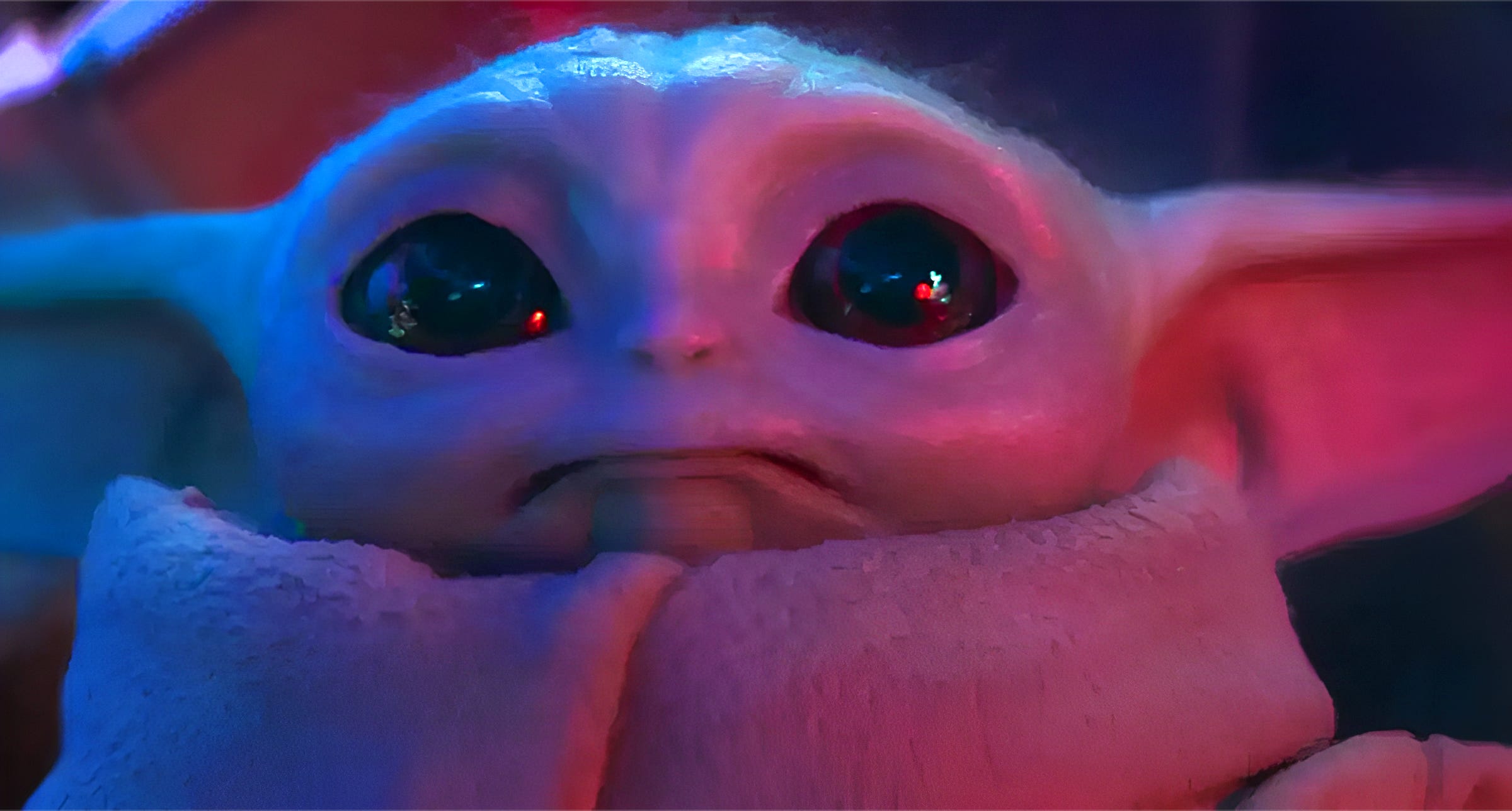
Disney and Lucasfilm‘s Star Wars: The Mandalorian and Grogu opened over the Memorial Day weekend to roughly $98 million domestically over the four-day holiday frame, coming in slightly below early Sunday estimates of around $102 million. The three-day weekend brought in approximately $82 million.
Internationally, the film added $63 million from 51 markets for a global opening of roughly $163 million, with South Korea the one major market that did not open simultaneously. While the film topped the box office, the numbers represent the weakest domestic debut for a live-action Star Wars film in the Disney era.
Where the numbers landed
The Jon Favreau-directed feature opened on 4,300 screens for a $19,060 per-screen average, according to BoxOffice Pro.
IMAX and other premium large-format screens accounted for 15% of all PLF ticket sales, generating $24.4 million over the four days, the third-best Memorial Day showing ever for premium large format. 41% of total tickets sold were premium large format, per EntTelligence data.
Audience reaction has been strong. The film posted an A CinemaScore and an 88% Rotten Tomatoes audience score. Critics have been more reserved at 61%, lower than Solo: A Star Wars Story‘s 69% critical reception in 2018.
The Solo comparison is unavoidable
The closest historical parallel is Solo, which opened over Memorial Day 2018 to $84.4 million for the three-day and $103 million for the four-day, plus $168 million globally. Solo went on to finish at $392.9 million worldwide and became the first Star Wars film ever to lose money in its theatrical run, with losses estimated at $70 to $100 million against a budget that climbed to $275 million or more following the Phil Lord and Chris Miller firing and Ron Howard‘s reshoots.
Where The Mandalorian and Grogu differs is in the budget math.
The film was made for a reported $165 million, roughly 45% less than Solo‘s final production cost. Marketing for a major franchise release like this typically adds another $100 to $150 million or more. Using standard Hollywood accounting, with theater splits of roughly 50% domestic and 40 to 50% international, the film needs to gross approximately $500 to $600 million worldwide to break even, although some industry observers put the theatrical break-even point closer to $350 to $400 million when using more conservative multipliers.
A $163 million global opening is slower than Star Wars fans hoped for. But with a smaller budget, the path to profitability is easier than Solo ever had.
Projections and expected dropoff
Early tracking had the film in the $100 to $115 million four-day domestic range. The actual result landed on the lower end of forecasts. Analysts expect a fairly steep second-weekend drop typical of holiday openers, potentially in the 50 to 60% range or worse depending on word-of-mouth.
If The Mandalorian and Grogu follows a trajectory similar to Solo, it could finish in the $350 to $450 million global range, which would make it one of the lower-grossing live-action Star Wars films. However, the lower budget gives it considerably more room to succeed than Solo had. A strong hold with positive audience reception could push it toward or past the $500 million mark, which is what Disney needs.
The film also got an unexpected complication from horror breakout Obsession, the Curry Barker-directed film from Focus Features that has been outperforming its tracking for two straight weekends. Obsession added $28 to $32 million in its second frame, an unheard-of 39% increase over its opening weekend, and is racing toward the $100 million mark while siphoning some attention from The Mandalorian and Grogu‘s weekday performance.
Where it lands in Star Wars history
Inflation-adjusted Star Wars rankings show just how dominant the original trilogy remains. According to FinanceBuzz data updated for 2026, three Star Wars films have crossed the $1 billion mark adjusted for inflation: Star Wars: Episode IV – A New Hope (over $2 billion in 2026 dollars, accounting for re-releases), Star Wars: Episode V – The Empire Strikes Back (just over $1 billion), and Star Wars: Episode VII – The Force Awakens (nearly $1.3 billion).
For comparison, Star Wars: Episode II – Attack of the Clones (2002), often cited as the lowest-grossing main saga entry, made roughly $656 million at the time of release, or about $1.2 billion in 2026 dollars per Yahoo Finance UK. Solo‘s $393 million unadjusted gross translates to approximately $516 million in 2026 dollars.
The 2026 opening for The Mandalorian and Grogu is the worst for any live-action Star Wars film since Disney‘s 2012 acquisition of Lucasfilm, narrowly behind Solo‘s four-day total of $103 million in unadjusted dollars and well behind the $108.4 million debut of Star Wars: Episode III – Revenge of the Sith in 2005.
What this means for Star Wars
The Mandalorian and Grogu arriving with the lowest opening for a Disney-era Star Wars film underscores the challenges Lucasfilm has faced in recent years. The franchise has struggled to recapture the theatrical dominance it once had, with several projects, including Solo and elements of the sequel trilogy, failing to meet sky-high expectations.
The lower budget on this film is a deliberate shift. A solid performance could still make it profitable in a way Solo never was. The opening also suggests that even popular Disney+ properties like The Mandalorian do not automatically translate into massive theatrical draws without significant additional marketing and cultural momentum.
Disney has already lined up its next theatrical Star Wars swing. Star Wars: Starfighter, an original adventure directed by Shawn Levy and starring Ryan Gosling, debuts over Memorial Day weekend 2027. Studio insiders reportedly believe that film could serve as a true fresh start for the franchise on the big screen, while The Mandalorian and Grogu serves more as a transitional piece between the Disney+ era and a new theatrical strategy.
With mixed-to-positive early reviews and strong audience scores so far, The Mandalorian and Grogu has a chance to hold better than Solo did. Whether it can climb high enough to justify future theatrical Star Wars spin-offs remains to be seen, but the budget discipline this time around gives Disney something it did not have eight years ago. Room to lose less.
Article compiled and edited by Derek Gibbs (entertainment editor) and the Pirates and Princesses newsroom.
For more Disney, theme parks, geek lifestyle, and family entertainment coverage, visit piratesandprincesses.net. Watch the show on YouTube at @Disney-podcast. Subscribe to the Pirates and Princesses podcast on Apple Podcasts, Spotify, iHeart, and wherever you get your podcasts.
Hat Tips:
The Hollywood Reporter, final Memorial Day box office reporting with the $98 million four-day domestic figure and Solo comparison data
Variety and Deadline, opening weekend reporting on The Mandalorian and Grogu including the $82 million three-day total, $163 million global figure, and 51 international markets breakdown
BoxOffice Pro, theater count, per-screen average, and 2026 Memorial Day weekend totals compared to prior years
Rotten Tomatoes Editorial, weekend box office summary including the Obsession counter-programming hold
Bleeding Cool, broader analysis of the Memorial Day weekend and upcoming threats
FinanceBuzz Star Wars Day 2026 inflation-adjusted box office data, including the verified figures for A New Hope, The Empire Strikes Back, and The Force Awakens in 2026 dollars
Yahoo Finance UK, inflation-adjusted Solo and Attack of the Clones figures in 2026 money
Variety, prior reporting on Star Wars: Starfighter and the franchise’s theatrical strategy through 2027