

The Munsters reboot movie flopped, but it looked way better in black and white
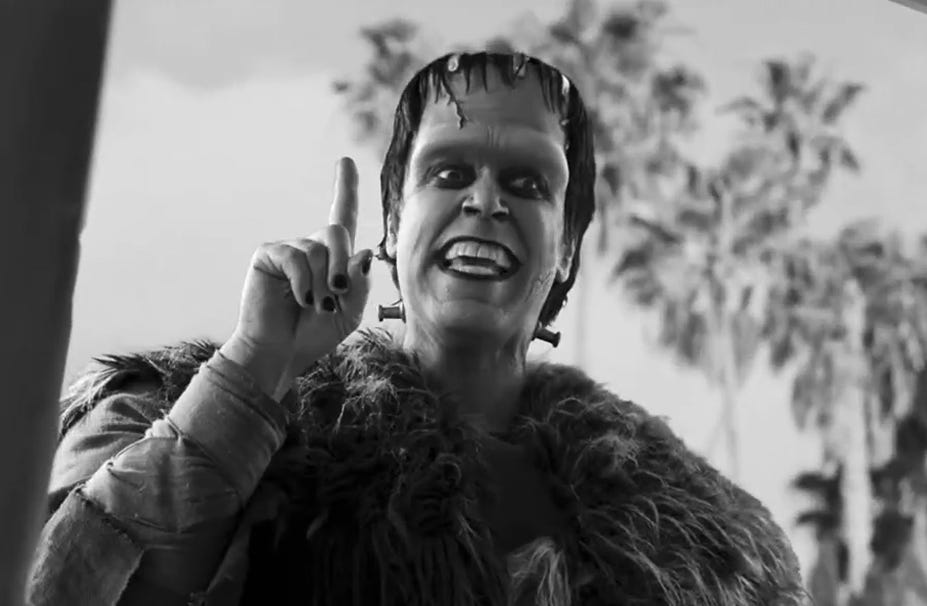
You probably forgot Rob Zombie even made a Munsters movie in 2022. Turns out the director wanted it in black-and-white, the studio said no, and fans who re-cut the trailer proved him right. Here’s the story, plus every other attempt to revive the monster family, and the new one on the way.
Quick, did you know Rob Zombie directed a Munsters movie? Don’t feel bad if you forgot, most people did. It came and went in 2022 with barely a ripple.
But here’s the fun twist: the movie has one genuinely fascinating story behind it, involving black-and-white film, a stubborn studio, and fans who quietly proved everyone wrong. Let’s dig into the Munsters movie you missed, and why the spooky family keeps clawing its way out of the grave.
The Munsters movie you forgot about
First, a refresher, because this one really did slip through the cracks.
In 2022, shock-rocker-turned-filmmaker Rob Zombie (a genuine, lifelong Munsters superfan, his hit “Dragula” is named after Grandpa’s coffin car) wrote and directed a Munsters movie for Universal. It was a prequel, an origin story showing how Herman and Lily first met and fell in love back in Transylvania, before the family moved to America.
And it was a big swing for Zombie. Known for gory, brutal horror like House of 1000 Corpses, he made his first-ever family-friendly, PG-rated movie. It landed on Netflix and… mostly vanished. The trailer got roasted online, reviews were mixed, and the whole thing quietly faded from memory.
The black-and-white bombshell
Here’s the detail that makes this story interesting, and it flips the whole narrative.
When that trailer dropped, the #1 complaint was the look. The original 1960s Munsters was a classic black-and-white show, and Zombie’s movie was the opposite: a loud, hyper-saturated explosion of color that a lot of fans found garish and cheap-looking.
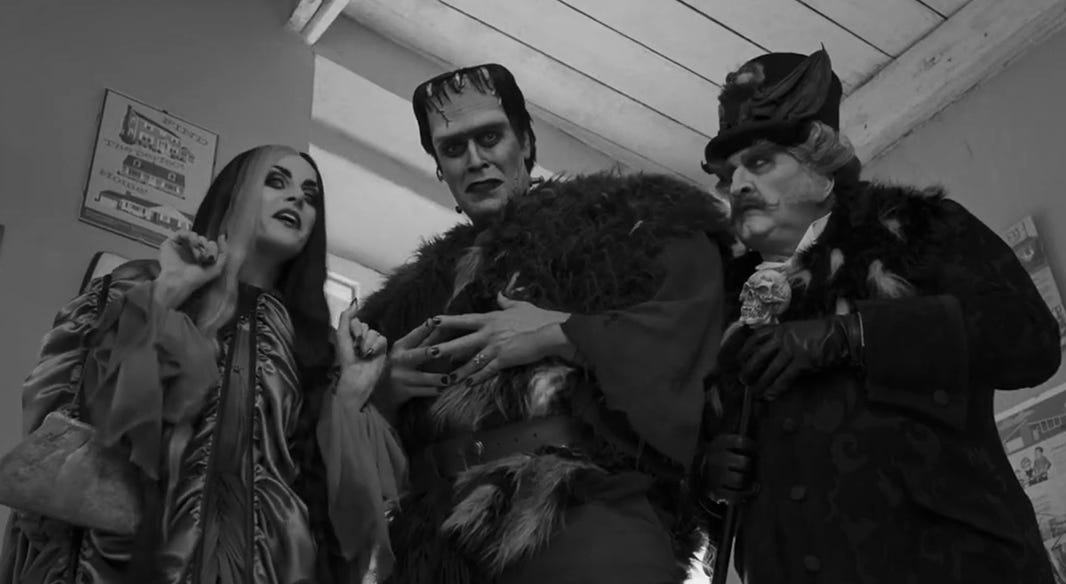
But here’s the kicker: Zombie wanted to shoot it in black-and-white. The studio wouldn’t let him. In an interview, Zombie revealed that Universal flat-out refused to make the movie unless it was in color. Why? They were worried audiences would be confused by black-and-white. As Zombie bluntly put it, the studio thought “if people see a black-and-white shot they’ll be confused,” to which his response was, “People aren’t that ... stupid.”
So the single most-criticized thing about the movie? Not his call. He fought for the exact thing fans wanted, and lost.
The fans “fixed” The Munsters themselves
This is the best part, and it proves the point completely.
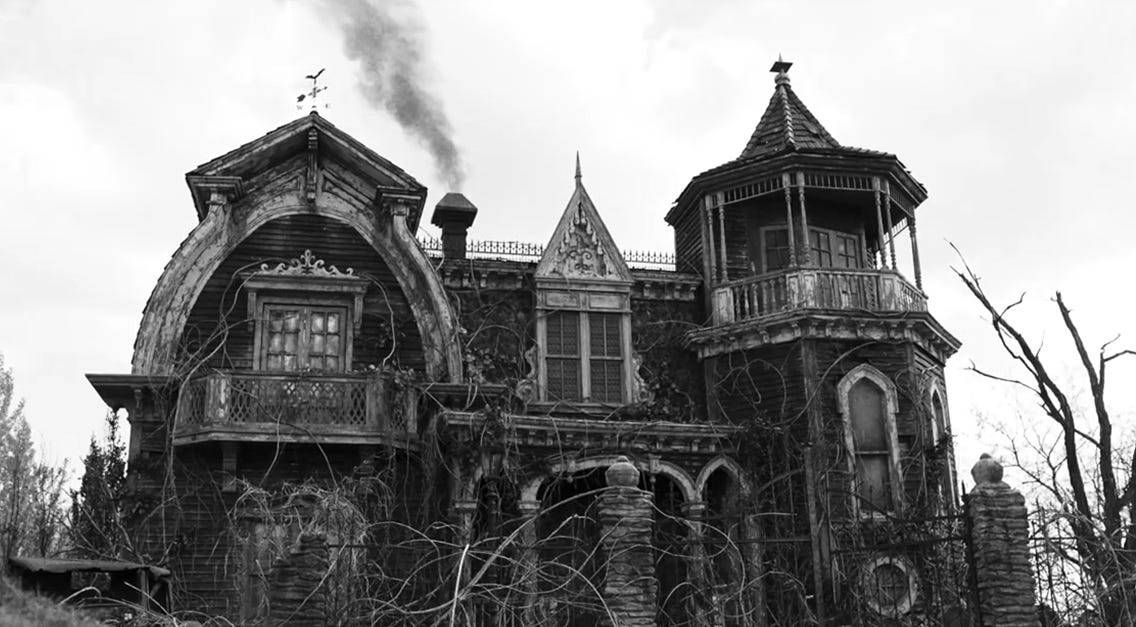
Just days after the divisive trailer dropped, a YouTube user (Anthony Scibelli) took matters into his own hands and re-edited the entire trailer in classic black-and-white. And the response was immediate: it looked dramatically better. Suddenly the “cheap” color palette that everyone mocked read as charming, spooky, and true to the original show.
Multiple outlets covered the fan edit and agreed, the black-and-white version was simply the better version. It turned out the trailer’s problems weren’t really about the sets or the acting; a huge chunk of it was just the color. Zombie knew it. The fans knew it. Only the studio didn’t.
(For what it’s worth, Zombie did manage to sneak one black-and-white sequence into the actual film, a loving recreation of the show’s opening credits, with the family walking through their doorway one by one.)
The Munsters just won’t stay dead
Here’s the bigger picture, and it’s genuinely wild how many times Hollywood has tried this.
The original Munsters only ran two seasons (1964-1966) on CBS, but thanks to decades of reruns, it became a pop-culture immortal, and studios have tried to revive the family over and over:
The Munsters Today (1988-1991): A syndicated reboot with an all-new cast, where a lab accident puts the family to sleep and they wake up in the 1980s. Fun fact: it actually ran longer than the original, 73 episodes to the original’s 70, yet almost nobody remembers it.
The ‘90s TV movies: A string of made-for-TV films like Here Come the Munsters and The Munsters’ Revenge kept trying new casts and new origin stories. None stuck.
Mockingbird Lane (2012): This is the great “what if.” Pushing Daisies and Hannibal creator Bryan Fuller made a slick, darkly funny NBC reboot pilot starring Jerry O’Connell as Herman and Eddie Izzard as a deliciously sinister Grandpa. It got decent reviews (60% on Rotten Tomatoes) but cost a reported $10 million for the pilot alone, and NBC got cold feet. It aired once as a Halloween special and died. Many fans still consider it the best modern take, and mourn the full series we never got.
So Zombie’s 2022 movie was just the latest body in a very long graveyard of Munsters revivals.
Will they try again? (Yes.)
Now for the question you’re actually asking: is this the end, or will the Munsters rise again?
For Rob Zombie’s version, it’s the end of the road. Zombie has said his movie won’t be getting a sequel, so that particular take is finished.
But the family itself? Oh, they’re coming back. Universal is developing a brand-new reboot series titled 1313 (after the Munsters’ famous address, 1313 Mockingbird Lane). And this one has real horror pedigree, it’s being produced by James Wan’s Atomic Monster (the mind behind The Conjuring and Saw), with showrunner Lindsey Anderson Beer (Pet Sematary: Bloodlines). The catch? It’s described as a horror series tied to Universal’s “Monsterverse,” which suggests these Munsters might be a lot less cuddly and a lot more genuinely scary than the lovable goofballs of the ‘60s.
Whether 1313 actually makes it to air is another question, plenty of Munsters reboots have died in development. But the intent is clear: Hollywood is not done with this family.
The bottom line
Rob Zombie’s Munsters movie is a genuine curiosity, a flop with a fascinating “what could’ve been” hiding inside it. The director fought for a black-and-white vision the studio killed, and fans proved he was right with a single re-edited trailer. If you’ve never seen it, go watch the fan-made black-and-white version on YouTube first, it’s a completely different, and better, experience.
And as for the Munsters themselves? They’re basically unkillable. Every generation gets its own attempt to revive Herman, Lily, and Grandpa, and even when those attempts flop, another one rises a few years later. With 1313 now shambling toward us, the pattern continues.
Like any good monster, the Munsters always come back, you just never know what they’ll look like next time. Hopefully, someone finally lets them be in black-and-white.
Want More Clownfish TV?
This article was brought to you in part by The Reefers of more.clownfishtv.com. Free subscribers get articles like this one in their inbox. Paid subscribers get the full Clownfish TV podcast feed, livestreams, and members-only episodes that never hit YouTube.
D/REZZED is part of Clownfish TV. For more news, views, and rants on gaming, tech, and pop culture, watch @ClownfishTV on YouTube and find the podcast on Apple Podcasts, Spotify, and iHeart.
Article compiled and edited by Derek Gibbs (entertainment editor) and the Clownfish TV newsroom.
Hat Tips:
Variety (September 2022), verified for Rob Zombie’s account that Universal refused to let him shoot in black-and-white, the “people aren’t that stupid” quote, the hyper-saturated aesthetic reasoning, the origin-story/Transylvania premise, and the single B&W opening-credits homage in the film
ScreenRant and Bloody Disgusting (July 2022), verified for the fan-made black-and-white trailer (YouTube user Anthony Scibelli), the divisive reaction to the original color trailer, and the widespread agreement that the B&W version looked better
TVLine, SYFY, and Collider (2024-2026), verified for the revival history (The Munsters Today’s 1988-1991 run and 73-episode count, the ‘90s TV movies, Bryan Fuller’s 2012 Mockingbird Lane pilot with Jerry O’Connell and Eddie Izzard, its 60% RT score and $10M cost)
CBR and Deadline (2024), verified for Rob Zombie confirming no sequel to his film, and the new 1313 reboot series in development (James Wan’s Atomic Monster, showrunner Lindsey Anderson Beer, the Universal Monsterverse horror-series framing)