

The original Star Wars made over $3 billion in today’s money
A New Hope opened on 32 screens in 1977. Adjusted for inflation, it is still the second-highest-grossing movie in U.S. history, and almost everything since has paled in comparison.
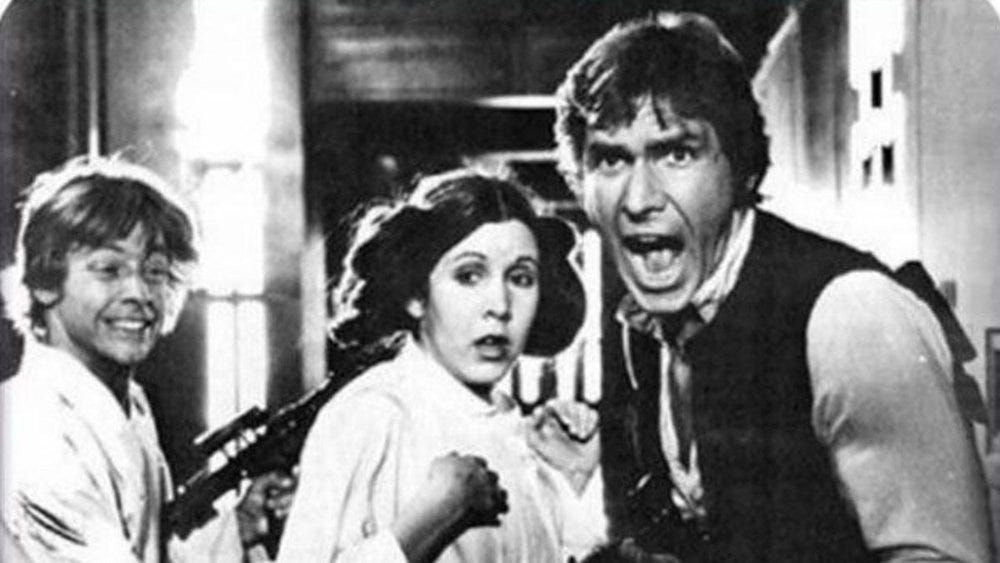
Forty-nine years after it opened on 32 movie screens in the United States, the original Star Wars is still the second-highest-grossing film in American history when adjusted for inflation. Estimates of its true worldwide impact in 2026 dollars range from $3 billion to over $4 billion, depending on which inflation calculator and which set of re-releases you include. And nothing Lucasfilm has done in the decades since has come close to matching what George Lucas’s original space opera pulled off in its initial theatrical run.
That gap between the original and everything since has never felt wider than it does this week, with The Mandalorian and Grogu opening to a Disney-era Star Wars low of $98 million domestically over the Memorial Day frame.
How Star Wars actually exploded in 1977
It is hard to overstate how unprepared everyone was for what happened on May 25, 1977.
Twentieth Century Fox opened the film on just 32 screens on a Wednesday, with 11 more theaters added Thursday and Friday for a total of 43 by the opening weekend. Pre-release marketing was minimal. Fox had so little confidence in Star Wars that the studio required theaters that wanted to screen its expected summer hit The Other Side of Midnight to also book Star Wars as part of the package. The Other Side of Midnight is now a trivia answer. Star Wars changed cinema.
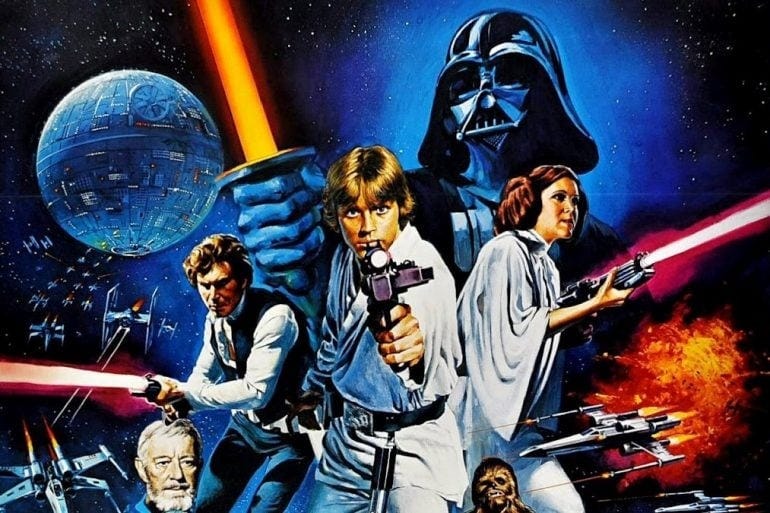
Opening day brought in $254,809 from those 32 theaters. The first six-day week pulled $493,774 with a remarkable $15,430 per-screen average. By the end of the second week the lines were wrapping around blocks. One California theater reportedly played the film continuously for 24 hours straight just to handle demand. Theater owners frantically called Fox demanding prints. By week 13 in mid-August, the film was still pulling $11.56 million per week on 1,074 theaters with a domestic gross past $107 million.
The film’s first theatrical run lasted nearly a full year, compared to the four-week average modern movies get today. The original 1977 domestic gross alone hit $307,263,857. By the time you add re-releases in 1979, 1981, 1982, and the 1997 Special Edition, the total domestic gross climbs past $460 million, with a worldwide total around $775 million, per FinanceBuzz data.
In current 2026 dollars, that $460 million-plus translates to over $2 billion in adjusted domestic gross. Worldwide adjusted figures push the total past $3 billion, and some inflation methodologies, including those used by Statista and the Guinness World Records for unadjusted-vs-adjusted comparisons, push that closer to $3.5 billion. The most aggressive estimate, factoring in foreign markets and a generous ticket-price multiplier, puts the original Star Wars at over $4 billion in current money.
The exact number depends on what you count. The conservative read is around $3 billion. Either way, it is staggering.
Star Wars movies ranked by inflation-adjusted worldwide box office
Per FinanceBuzz, Statista, and Yahoo Finance UK‘s 2026-adjusted figures, only three Star Wars films have crossed the $1 billion mark when adjusted for inflation.
Star Wars: Episode IV – A New Hope (1977) — over $2 billion domestic / $3 billion+ worldwide adjusted
Star Wars: Episode VII – The Force Awakens (2015) — roughly $1.3 billion adjusted ($2 billion+ unadjusted at the time)
Star Wars: Episode V – The Empire Strikes Back (1980) — just over $1 billion adjusted
Star Wars: Episode VI – Return of the Jedi (1983) — high hundreds of millions, just shy of the billion mark
Star Wars: Episode I – The Phantom Menace (1999) — roughly $1.7 billion worldwide adjusted per MovieWeb
Star Wars: Episode III – Revenge of the Sith (2005) — solid mid-tier performer
Rogue One: A Star Wars Story (2016) — over $1 billion unadjusted, solid adjusted figures
Star Wars: The Last Jedi (2017) — strong but below sequel-trilogy peer expectations
Star Wars: The Rise of Skywalker (2019) — $1 billion unadjusted, around $1.2 billion adjusted to 2026 dollars
Star Wars: Episode II – Attack of the Clones (2002) — roughly $1.2 billion adjusted, often cited as the weakest of the prequels
Solo: A Star Wars Story (2018) — $393 million unadjusted, $516 million in 2026 dollars per Yahoo Finance UK. The first Star Wars film to lose money theatrically.
The Mandalorian and Grogu (2026) — projected $350 to $500 million worldwide if it follows the Solo trajectory
The franchise as a whole has grossed roughly $9.9 billion domestically when all numbers are adjusted for inflation, per FinanceBuzz. The final three films on that list account for more than $4 billion of that total.
The top 10 highest-grossing films of all time, domestic, adjusted for inflation
For broader context, here is where the original Star Wars sits in the all-time inflation-adjusted U.S. domestic box office rankings, per Collider, MovieMaker, and the Box Office Mojo-derived consensus. These are domestic figures because reliable international data for pre-1970s films is genuinely hard to assemble.
Gone with the Wind (1939) — approximately $1.9 to $4.5 billion depending on methodology, undisputed all-time champion
Star Wars: Episode IV – A New Hope (1977) — roughly $1.7 to $2 billion domestic adjusted
The Sound of Music (1965) — approximately $1.5 billion adjusted
E.T. the Extra-Terrestrial (1982) — approximately $1.3 billion adjusted
Titanic (1997) — approximately $1.3 billion adjusted
The Ten Commandments (1956) — approximately $1.3 billion adjusted
Jaws (1975) — approximately $1.2 billion adjusted
Doctor Zhivago (1965) — approximately $1.1 billion adjusted
The Exorcist (1973) — approximately $1.0 billion adjusted
Snow White and the Seven Dwarfs (1937) — approximately $1.0 billion adjusted
Star Wars is the only modern science-fiction or fantasy film on the list other than E.T. The rest are historical epics, musicals, and one shark movie.
So how did A New Hope build to $3 billion-plus?
The honest answer is that the bulk of the inflation-adjusted total came from the original 1977 run, not the re-releases.
The breakdown of A New Hope’s domestic theatrical history:
1977 original release: $307,263,857 (the vast majority of the total)
1979 re-release: roughly $10 to $22 million depending on source
1981 re-release: similar mid-range numbers
1982 re-release: roughly $15.4 million (per MovieWeb)
1997 Special Edition re-release: roughly $138 million worldwide ($67 million domestic per Box Office Mojo)
Recent commemorative screenings: under $1 million combined
The 1977 original release adjusted for inflation alone equals roughly $1.5 billion in 2026 dollars. The 1997 Special Edition was a substantial second wind, but it added a fraction of what the original run pulled. The bulk of the adjusted total comes from the fact that ticket prices in 1977 averaged around $2.23 per ticket, and Star Wars sold an estimated 140 million tickets in its initial run alone in the U.S. and Canada. That is roughly 63% of the entire U.S. population at the time.
For comparison, The Force Awakens sold roughly 108 million tickets in its much shorter 2015 theatrical window, at an average ticket price around $8.50. The Mandalorian and Grogu will likely sell 9 to 14 million tickets domestically over its full theatrical run.
The original Star Wars did not just win at the box office. It rewired what a box office hit looked like, what summer blockbusters were, what merchandising could mean, and what science fiction could be commercially. That cultural footprint is built into the adjusted number in a way no modern release can replicate because the moviegoing pattern that produced it, with audiences seeing the same film 8 or 10 or 15 times in theaters, no longer exists.
How anemic the Mandalorian and Grogu opening really looks
Set against this history, The Mandalorian and Grogu‘s $98 million four-day Memorial Day opening looks worse than a single number can convey.
The original Star Wars opened on 32 screens and went on to dominate the world. The Mandalorian and Grogu opened on 4,300 screens, after seven years of franchise hype, with a built-in Disney+ audience of tens of millions, with the actor playing the title role as a current pop culture force, and with Jon Favreau behind the camera. And it pulled in less than Solo‘s 2018 four-day opening in unadjusted dollars, and substantially less when adjusted.
Put differently, on a per-screen basis the original Star Wars in 1977 averaged $50,000 per theater on its opening weekend. The Mandalorian and Grogu averaged $19,060 in 2026, with all the modern advantages of premium-large-format pricing, IMAX upcharges, and Memorial Day holiday traffic baked in. Even before inflation, the per-screen comparison is brutal.
The franchise still has Pedro Pascal. It still has new content in development. Star Wars: Starfighter with Ryan Gosling and Shawn Levy arrives Memorial Day 2027. Star Wars is not going away.
But the era when Star Wars was the biggest science fiction franchise on Earth, without competition, is over. The original was the cultural event that defined modern blockbusters. The current entries are competent franchise extensions playing in a market crowded with Marvel, DC, The Lord of the Rings, Dune, Avatar, and a dozen streaming-era equivalents. Disney bought Lucasfilm in 2012 expecting to keep producing Force Awakens-sized hits forever. Fourteen years and many billions of dollars later, the data show what actually happened.
Star Wars used to be the franchise. Now it is one of several. The $3 billion-plus that the original made, in any era’s money, is the high water mark. Everything since has been measured against it. Most things have come up short.
Article compiled and edited by Derek Gibbs (entertainment editor) and the Clownfish TV newsroom.
D/REZZED is part of Clownfish TV. For more news, views, and rants on gaming and tech, visit clownfishtv.com. Watch the show on YouTube at @ClownfishTV where new episodes drop daily. Subscribe to the Clownfish TV podcast on Apple Podcasts, Spotify, iHeart, and wherever else you get your podcasts. Sign up for the free newsletter at more.clownfishtv.com.
Hat Tips:
FinanceBuzz Star Wars Day 2026 deep dive, primary source for total adjusted franchise gross, A New Hope re-release breakdowns, and adjusted billion-dollar threshold rankings
Statista Star Wars box office charts, worldwide adjusted figures for the Skywalker saga
Yahoo Finance UK (May 2026), inflation-adjusted 2026 figures for Solo and Attack of the Clones
Box Office Mojo, week-by-week 1977 domestic box office data and historical re-release records
Collider, MovieMaker, and CBR, all-time domestic inflation-adjusted top 10 rankings
MovieWeb, detailed 1977, 1982, and 1997 A New Hope re-release breakdowns
Guinness World Records, Gone with the Wind and A New Hope historical context including the 1939 ticket sales data and global adjusted estimates
The Wrap (May 2026), comprehensive Star Wars box office crash course tied to The Mandalorian and Grogu‘s release
Episode Nothing: Star Wars in the 1970s blog and The Week In Nerd, original 1977 release theater list and historical anecdotes
Stephen Tracy on Medium, multi-year Star Wars franchise box office analysis with adjusted figures
TimeGenius, 1977 first-run anecdotes including the 24-hour California theater and weekend record details