

The Steam Machine is here, and it starts at $1,049
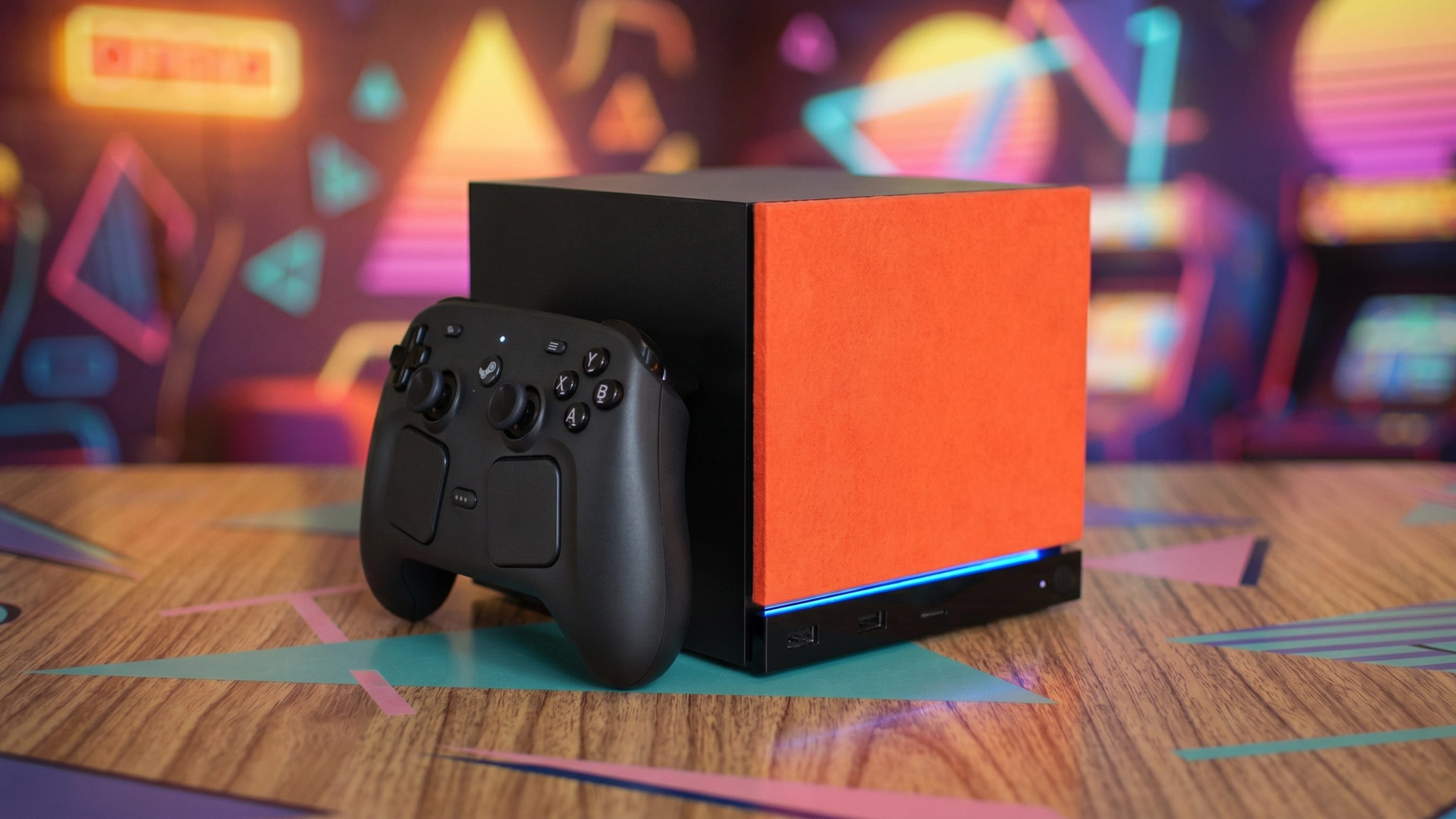
Valve finally priced its living-room PC, and the fourth digit is the headline. The base model is $1,049, a maxed-out bundle runs $1,428, and the reason it costs this much isn’t really Valve’s fault.
The age of $1,000 game consoles being the new normal is here.
Valve’s Steam Machine has a price at last, and it lands with a thud you can hear from the couch it was built for. The cheapest version starts at $1,049. The one reviewers are holding runs $1,428.
For a little box Valve spent a year pitching as the easy way to get PC gaming onto your TV, that’s a number that needs explaining. The explanation is more interesting than “Valve got greedy,” because Valve mostly didn’t.
What the tiers actually cost
There are four configurations, and the controller is the variable.
The base 512GB Steam Machine is $1,049. Add the new Steam Controller and it’s $1,128. Step up to the 2TB model and you’re at $1,349, or $1,428 with the controller bundled in. That top bundle also throws in two extra swappable faceplates, a red fabric one and a solid walnut one, on top of the standard black. The controller adds $79 at every tier, matching what Valve charges for it on its own.
It launches June 30, with reservations converting to purchase invitations by email from a queue.
What you’re actually getting for the money
Here’s where the price starts to sting, because the specs are mid-range, not monstrous.
Inside is a semi-custom AMD setup: a six-core Zen 4 CPU and an RDNA 3 GPU with 8GB of video memory, plus 16GB of system RAM. Digital Foundry, which got the early review unit, clocks real-world performance somewhere between a Radeon RX 6600 and an RX 7600. That’s solid 1080p-to-1440p gaming hardware. It is not, by any stretch, cutting edge in 2026.
Put plainly, a pre-built Windows gaming PC with comparable guts has been selling in the $900-to-$1,200 range for a while. So the Steam Machine isn’t a screaming deal on raw power. What you’re paying for is the small SteamOS box that drops into a living room without the usual PC hassle, which was always the pitch.
The real reason it costs this much
The number that matters here isn’t on the price tag. It’s the one for memory.
Valve announced the Steam Machine back in November 2025, right as a global memory shortage was kicking off. In the months since, DDR5 RAM prices reportedly quadrupled, the same crunch that already forced Valve to raise Steam Deck prices. Early analyst guesses, made before the crisis fully hit, had floated a 512GB model landing somewhere around $800, with the genuinely optimistic takes hoping Valve could sneak in under $1,000 entirely.
The memory market erased that. PC Gamer’s reviewer pointed straight at it, noting the delayed launch and inflated price were “brought on by the ongoing memory crisis crippling the consumer electronics market right now.” A machine designed and announced at one price point arrived at a much higher one because the parts inside it got dramatically more expensive between reveal and release. Valve didn’t redraw its margins. The component bill did.
Where that leaves it
So the Steam Machine arrives as a thing slightly out of step with its own mission.
It was conceived as the friendly, console-priced gateway to PC gaming in the living room. It launches as a $1,049-and-up enthusiast box with mid-range internals, priced where it is largely because of a RAM market nobody at Valve controls. The console crowd that might’ve jumped at a $500 SteamOS machine is looking at twice that. The PC crowd that wants the performance can build harder for similar money.
Valve’s selling it as a compact SteamOS PC rather than a subsidized console, which is the honest framing for a box that costs this much. Whether the people it was supposedly built for, the ones who just wanted to play their Steam library from the couch without becoming a PC technician, are willing to pay four digits for the privilege is the question June 30 starts to answer.
Want More Clownfish TV?
This article was brought to you in part by The Reefers of more.clownfishtv.com. Subscribers there get the full Clownfish TV podcast feed including livestreams and members-only episodes that don’t make it to the free side, plus articles like this one delivered to their inbox. Free subscribers get the articles. Paid subscribers get everything.
While you’re at it, subscribe to Clownfish TV on YouTube at @ClownfishTV, where new episodes drop daily, and catch the Clownfish TV podcast on Apple Podcasts, Spotify, and iHeart.
Article compiled and edited by Derek Gibbs (entertainment editor) and the Clownfish TV newsroom.
Hat Tips:
Dexerto and VideoCardz (June 22, 2026), verified for the four configurations and prices ($1,049 / $1,128 / $1,349 / $1,428), the $79 controller add-on, and the faceplate bundle
GameSpot (June 22, 2026), verified for the June 30 launch date and the tier pricing
PC Gamer / Digital Foundry (June 22, 2026), verified for the hands-on performance landing between an RX 6600 and RX 7600, the Zen 4 / RDNA 3 internals, and the memory-crisis explanation for the price
GameSpot and PCGamesN (2025–2026), verified for the earlier sub-$1,000 analyst price expectations and the November 2025 announcement timing
PCGamesN, verified for the comparison to $900–$1,200 pre-built Windows gaming PCs of similar spec