

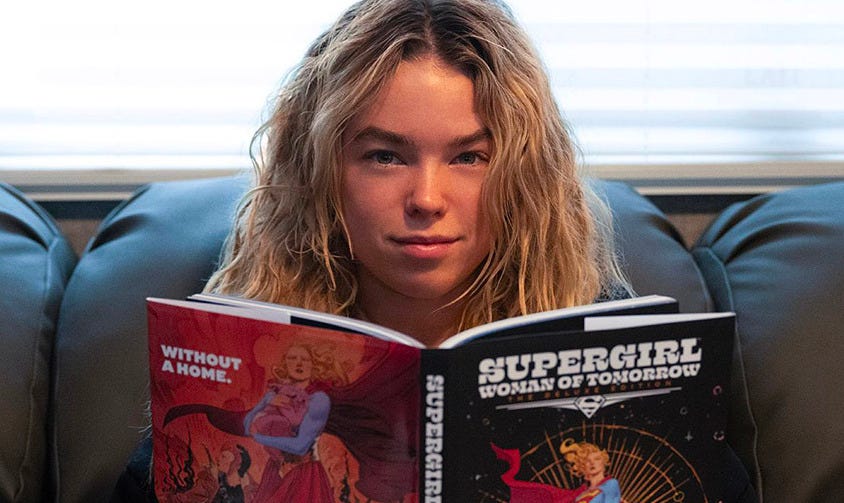
Supergirl: Woman of Tomorrow opens June 26, 2026, and the press tour for star Milly Alcock has spent the last several weeks generating exactly the kind of pre-release controversy that has sunk previous franchise tentpoles. The studio narrative has been that the backlash is coming from right-wing male critics and “Christian dads” hostile to a female-led superhero film.
Then on May 30, 2026, Grace Randolph, the longtime host of YouTube’s Beyond the Trailer and one of the most-followed female box office analysts in the entertainment commentary space, weighed in. And the studio narrative stopped working.
To understand why Randolph’s response landed so hard, you have to start with what Alcock actually said.
The Vanity Fair interview was sympathetic
In Vanity Fair, published in March 2026 alongside the Supergirl trailer, Alcock spoke about anticipating backlash for being a woman in a high-profile franchise role.
“It definitely made me aware that simply existing as a woman in that space is something that people comment on. We have become very comfortable having this weird ownership of women’s bodies,” Alcock said. “I can’t really stop them. I can only be myself.”
She added, “Of course I’m scared. Of course I want people to like me and the movie. But ultimately, it’s out of my control.”
The Vanity Fair comments drew some online pushback, but most of the criticism focused on the cycle the comments described rather than Alcock herself.
The Variety interview is what lit the fuse
The May 2026 Variety cover story shifted the tone significantly.
Asked about her preparation for Supergirl, Alcock revealed she had not watched Black Widow, Captain Marvel, or Wonder Woman before taking the role. “Which is probably not great,” she told Variety, jokingly adding, “I should just lie!”
She also pushed back at critics who had reacted to her Vanity Fair comments. “I didn’t even say ‘men’ — I said ‘people’! And they got so angry. I was like, ‘You’re proving my point. You’re proving my point!’”
Then came the line that drove the broader backlash. Asked about online critics, Alcock characterized them with a specific demographic shorthand.
“People whose profiles have no photo, who are burner accounts. Or someone’s name and then ‘Dad of four, Christian,’ which is hilarious to me. But I mean, whose opinion do you really care about? If you’re pissing the right kind of people off, you’re doing OK.”
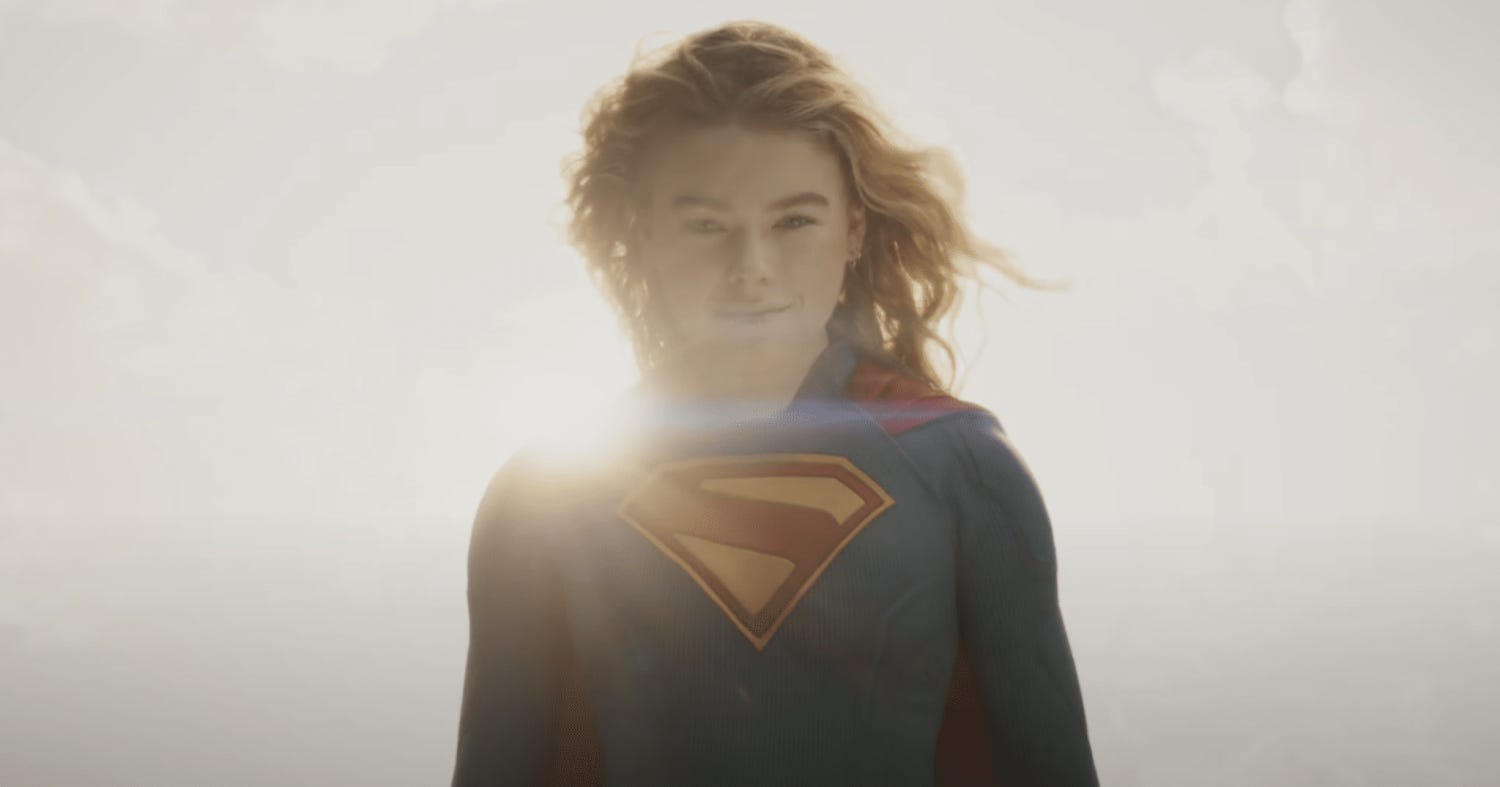
That comment landed differently than the Vanity Fair framing. Mocking the demographic profile of critics by their religion and family status is the kind of statement that travels fast and stays attached to the speaker.
Within days, the “Christian dads” reference was the dominant frame in coverage of the film, and the studio’s narrative that Supergirl skepticism was coming from a fringe of trolls became harder to sustain because Alcock herself had just defined her critics by their faith and their family role.
The full set of Variety comments gave critics across the political spectrum something concrete to react to. The “probably not great” admission about not watching the female-led films before her own female-led role read as dismissive of the women who built the genre.
The “Dad of four, Christian” line read as picking a fight with a specific demographic. And the broader tone landed as the same kind of confrontational press posture that Rachel Zegler used during her Snow White press tour, before that film underperformed badly.
Then Grace Randolph weighed in
This is where the studio’s narrative started failing.
Randolph posted a multi-part response to the Alcock interview on her Beyond the Trailer YouTube channel. She is not a conservative critic, not part of the anti-DCU crowd, and has spent over a decade championing female-led superhero films. She is the demographic the film was theoretically built to please.
She said most of the same things the right-leaning critics were saying.
“I couldn’t believe this,” Randolph said. “If I were a publicist, I’d be like, ‘Stop talking for the love of God.’”
She called the Variety interview “rough” and the comments “not good.” She explicitly compared the situation to Zegler’s Snow White press tour, noting that by 2026, stars and studios should know certain framings damage a film before it opens regardless of the merits of the film itself.
On Alcock not watching the previous female-led superhero films, Randolph was unsparing. She said those comments were “really bad” and argued Alcock should have done her research. “Support your fellow ladies,” Randolph said. She argued Alcock should have framed herself as honored to follow in the footsteps of Gal Gadot, Scarlett Johansson, and Brie Larson rather than admitting she had not watched any of their films.
She also brought up The Marvels, which leaned hard into “girl power” marketing before bombing to a $46 million opening in 2023. Randolph’s warning was that turning a superhero film into an ideological campaign rather than an adventure story is a documented loss pattern, and Supergirl‘s marketing has been drifting in the same direction.
On the visual presentation, Randolph extended the criticism. She wondered openly whether Alcock had read the Supergirl: Woman of Tomorrow comic she was photographed holding in promotional materials, calling that “concerning.” She compared the situation to Daisy Ridley and Kelly Marie Tran in Star Wars, who in her view “were not always presented the way they should have been.” Alcock has a full hair and makeup team, Randolph noted, and the character has always looked striking in the comics. She pointed to Patty Jenkins‘s 2017 Wonder Woman, with Zack Snyder‘s assistance, as the model.
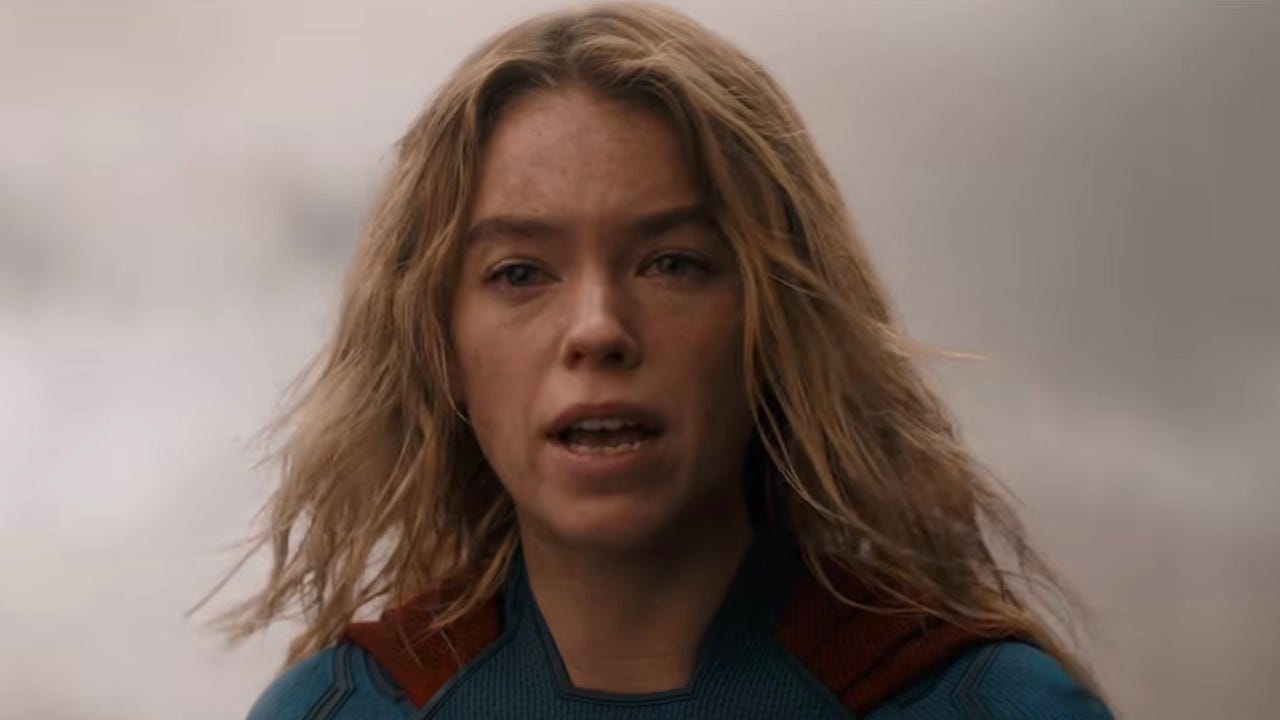
She also flagged Alcock’s revelation that she does not wear the Supergirl suit as much as fans might expect, saying that risks the film feeling “less like a Supergirl movie” and “more like a girl power movie rather than a Supergirl movie.” She questioned how James Gunn approved that direction, given that Gunn has positioned himself as the comic-respecting steward of the new DC Universe.
“How on earth does this movie not look like this comic if you’re not going to adapt this comic to look like what made it special?” Randolph asked. “Why do it?”
The audience problem
The most pointed structural argument Randolph made was about who the film is targeting.
Barbie and Wonder Woman both succeeded as female-led films at least partly because their filmmakers understood they still needed to bring the male audience along. Greta Gerwig on Barbie and Patty Jenkins on Wonder Woman both threaded that needle deliberately. Randolph said Supergirl feels like it has been “written for women in a way that could make the audience smaller,” and that the one image of Alcock in what fans dubbed the “tinfoil-style outfit” may resonate with women and LGBTQ fans without connecting with the core superhero audience the film also needs.
That observation hits a structural fact about the genre. Every female-led superhero film in the modern era has had a male-majority audience, with most female moviegoers skipping them in favor of other options. Marketing decisions that narrow the target audience narrow the box office too.
Why Randolph’s pushback matters
Randolph’s criticism matters because it does not fit the studio’s preferred narrative.
She is a high-profile female critic, a longtime supporter of female-led superhero films, and someone who openly wants Supergirl to succeed. When a critic in that position lines up with broader audience concerns, the “it’s just trolls and Christian dads” framing collapses. The conversation becomes harder for the studio to control because the people doing the talking now include exactly the demographic the film was theoretically built to please.
The pressure is real. Box Office Theory projections cited by industry trades have Supergirl tracking for a domestic opening of $47 million to $65 million, with a full domestic run forecast at $107 million to $181 million. For a film with a reported $170 million budget plus marketing, those numbers put profitability in serious question.
The competitive calendar is brutal. Toy Story 5 opens June 19, one week before Supergirl, with $130 to $160 million tracking. Minions & Monsters opens July 1. Disney‘s live-action Moana opens July 10. Supergirl ranks ninth in Fandango‘s 2026 summer survey behind multiple family films.
DC Studios co-chairman Peter Safran has continued to back Alcock publicly, telling Variety he called her after an earlier round of backlash. He has also framed audience concerns as “mediocre movie fatigue” rather than superhero fatigue, arguing the film’s originality will carry it.
The framing problem
The bigger issue for Warner Bros. and DC Studios is the narrative trap they walked into. By preemptively positioning Supergirl skepticism as a function of right-wing misogyny, they made it impossible to engage with the kinds of criticism Randolph is now making. The legitimate concerns about preparation, marketing, comic accuracy, and audience targeting got bundled with the body-shaming and harassment Alcock has documented receiving. When a progressive female critic shows up making the same structural arguments as the right-leaning critics, the bundling collapses.
Whether the film actually delivers on June 26 is the question that ultimately decides this. But heading into release, the studio has lost the ability to credibly tell critics that the pushback is coming from a single ideological direction. The “Christian dads” line gave Supergirl skeptics something concrete to attach the broader critique to. Grace Randolph just made it impossible to dismiss the whole conversation as a partisan attack.
Article compiled and edited by Derek Gibbs (entertainment editor) and the Clownfish TV newsroom.
D/REZZED is part of Clownfish TV. For more news, views, and rants on gaming and tech, visit clownfishtv.com. Watch the show on YouTube at @ClownfishTV where new episodes drop daily. Subscribe to the Clownfish TV podcast on Apple Podcasts, Spotify, iHeart, and wherever else you get your podcasts. Sign up for the free newsletter at more.clownfishtv.com.
Hat Tips:
Grace Randolph on her Beyond the Trailer YouTube channel (May 30, 2026), original multi-part response to the Milly Alcock Variety interview, including the verified “Stop talking for the love of God,” “Support your fellow ladies,” “girl power movie rather than a Supergirl movie,” and “How on earth does this movie not look like this comic” quotes
Variety (May 2026), Milly Alcock cover story including the verified “probably not great / I should just lie!” quote, the “I didn’t even say ‘men’ — I said ‘people’” follow-up, the “Dad of four, Christian” characterization of critics, and Peter Safran’s “mediocre movie fatigue” framing
Vanity Fair (March 2026), Milly Alcock interview tied to the Supergirl trailer release, including the verified “weird ownership of women’s bodies” quote and the “Of course I’m scared” follow-up
Box Office Theory projections cited by Washington Times, Dark Horizons, ComingSoon, GameRevolution, and Yahoo Entertainment, May 2026 tracking data on the $47-65 million domestic opening range and $107-181 million full domestic run
Washington Times (May 26, 2026), industry analyst commentary including the Peter Safran phone call to Alcock and the Puck-sourced $170 million budget estimate
Cosmic Book News (May 30, 2026), aggregated coverage of the Grace Randolph commentary as a secondary cross-reference
Fandango 2026 summer movie anticipation survey rankings
Variety and Warner Bros. press materials, Supergirl: Woman of Tomorrow cast, crew, plot, and June 26, 2026 release date