

Three sealed Pokémon Game Boy cartridges just sold for $2 million
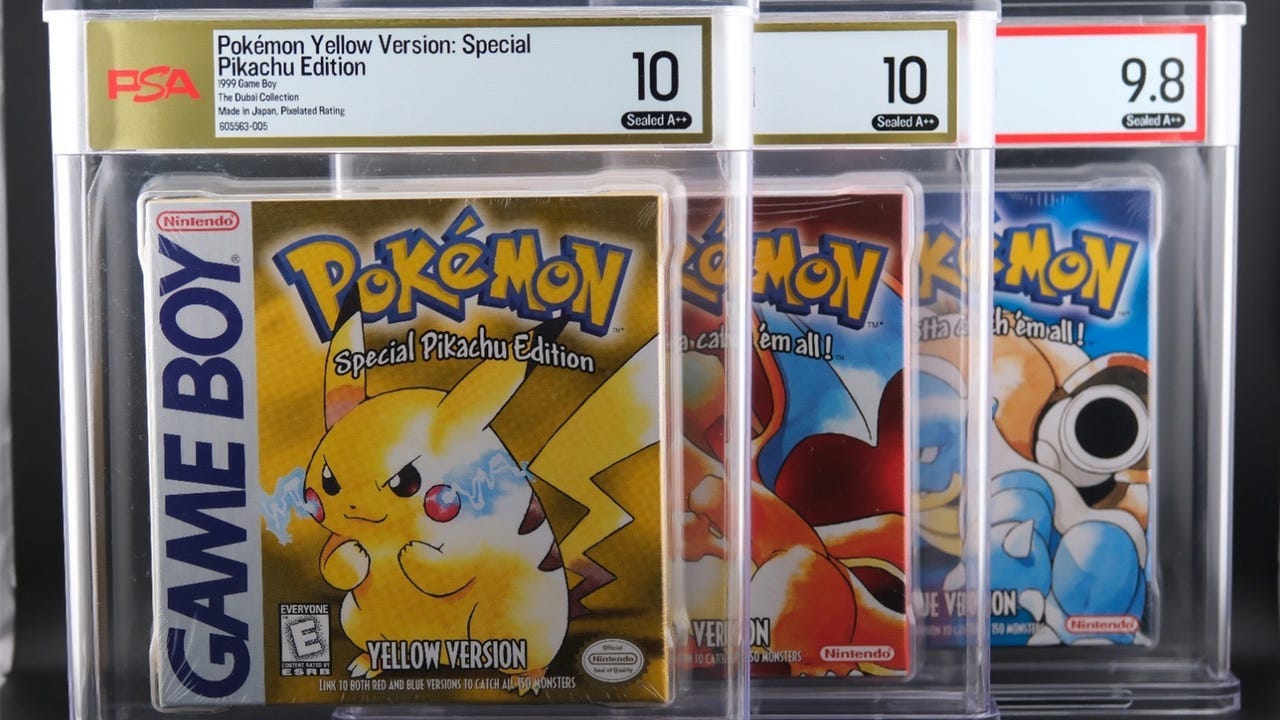
First-print, sealed copies of Pokémon Red, Blue, and Yellow sold together for $2 million to The Dubai Collection. Red and Yellow earned perfect PSA 10 grades. It’s tied for the second-most ever paid for video games at auction.
Three of the original Pokémon games just sold together for $2 million, and it’s all about the condition they’re in.
The sale covered first-print, still-sealed copies of Pokémon Red, Blue, and Yellow for the Game Boy. They went to The Dubai Collection, one of the largest and most valuable collections of games and trading cards in the world.
For context, loose copies of these same games sell for about $20 to $40. Nearly all of that $2 million is condition.
Why these three cartridges are worth so much
The grades explain the price.
Each copy was graded and sealed by PSA, a major third-party grader. Red and Yellow both earned perfect 10s. Blue came in at 9.8. Two perfect 10s on games this old is close to unheard of, which makes these almost certainly the most pristine surviving copies of all three, 30 years after release.
PSA’s head of video games has described the grading bar as looking for perfection, and noted that manufacturing quirks like injection-molding lines usually leave even great copies with tiny flaws. These barely had any.
How the sale ranks
$2 million is enormous, though not quite the record.
It ties as the second-most ever paid for video games at auction, matching a $2 million copy of Super Mario Bros. The current record is a different sealed Super Mario Bros. that went for $3 million earlier this year. The transaction was handled by Nathan Howerton of the collectibles brokerage Nostalgix.
For a franchise built on cartridges kids played to death, threw the boxes out, and peeled the labels off, a factory-sealed, perfectly graded survivor is genuinely rare, and that scarcity is what collectors are paying for.
Why sealed games keep breaking records
This sale fits a bigger, slightly ironic trend.
Interest in owning pristine physical games is climbing exactly as the industry sprints toward digital-only. Sony is ending physical PlayStation discs in 2028. Capcom just shrugged that roughly 90% of its sales are already digital. As new games stop coming on physical media, the old sealed ones become the last artifacts of an era, and prices follow.
There’s a collision underneath it, too. The same Pokémon collecting frenzy driving these auction numbers is the one forcing anti-scalping measures elsewhere, like Japan now requiring a government ID to buy Pokémon cards. When a sealed Game Boy cartridge clears $2 million, the incentive to hoard, flip, and speculate on anything Pokémon only intensifies.
Three cartridges, two million dollars, and not one of them will ever be played. That’s collecting at the very top, where the seal is the whole point and the game inside is almost beside it.
Article compiled and edited by Derek Gibbs (entertainment editor) and the Clownfish TV newsroom.
D/REZZED is part of Clownfish TV. For more news, views, and rants on gaming, tech, and pop culture, visit clownfishtv.com. Watch the show on YouTube at @ClownfishTV where new episodes drop daily. Subscribe to the Clownfish TV podcast on Apple Podcasts, Spotify, iHeart, and wherever else you get your podcasts. Sign up for the free newsletter at more.clownfishtv.com.
Hat Tips:
TheGamer (August 6, 2026), verified for the three sealed first-print copies, the PSA 10/10/9.8 grades for Red/Yellow/Blue, the $2 million price, the second-highest-ever ranking tied with Super Mario Bros., the $3 million Super Mario Bros. record, and The Dubai Collection as buyer
108GAME / IGN (August 6, 2026), verified for the specific titles (Blue, Red, Yellow: Special Pikachu Edition), the intact original seals, the highest-graded first-print collection claim, Nostalgix’s Nathan Howerton facilitating the sale, and PSA’s Claire Shelton on the grading standard
GoNintendo (August 6, 2026), verified for the PSA grades and the auction total
Polkastarter collectibles guide (July 2026), verified for loose copies of the games selling for roughly $20 to $40 and condition being the primary value driver