

Toei Animation copyright strikes its own Dragon Ball clip on X
The self-strike on the official Toei account fits a long pattern of aggressive enforcement against creators.
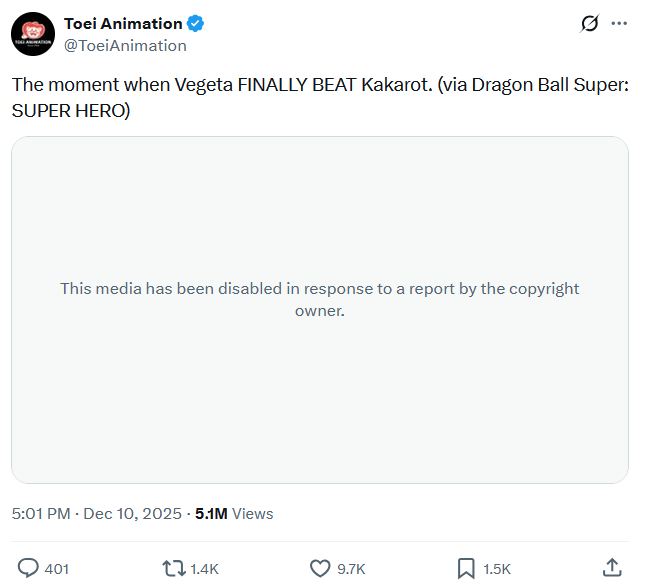
Toei Animation‘s hyper-aggressive copyright enforcement made headlines again this month when the studio’s official X account received a takedown notice for posting its own clip from Dragon Ball Super: Super Hero. The ironic self-strike, which quickly went viral, underscores years of complaints from creators who say the Japanese animation giant has turned fair-use content into collateral damage.
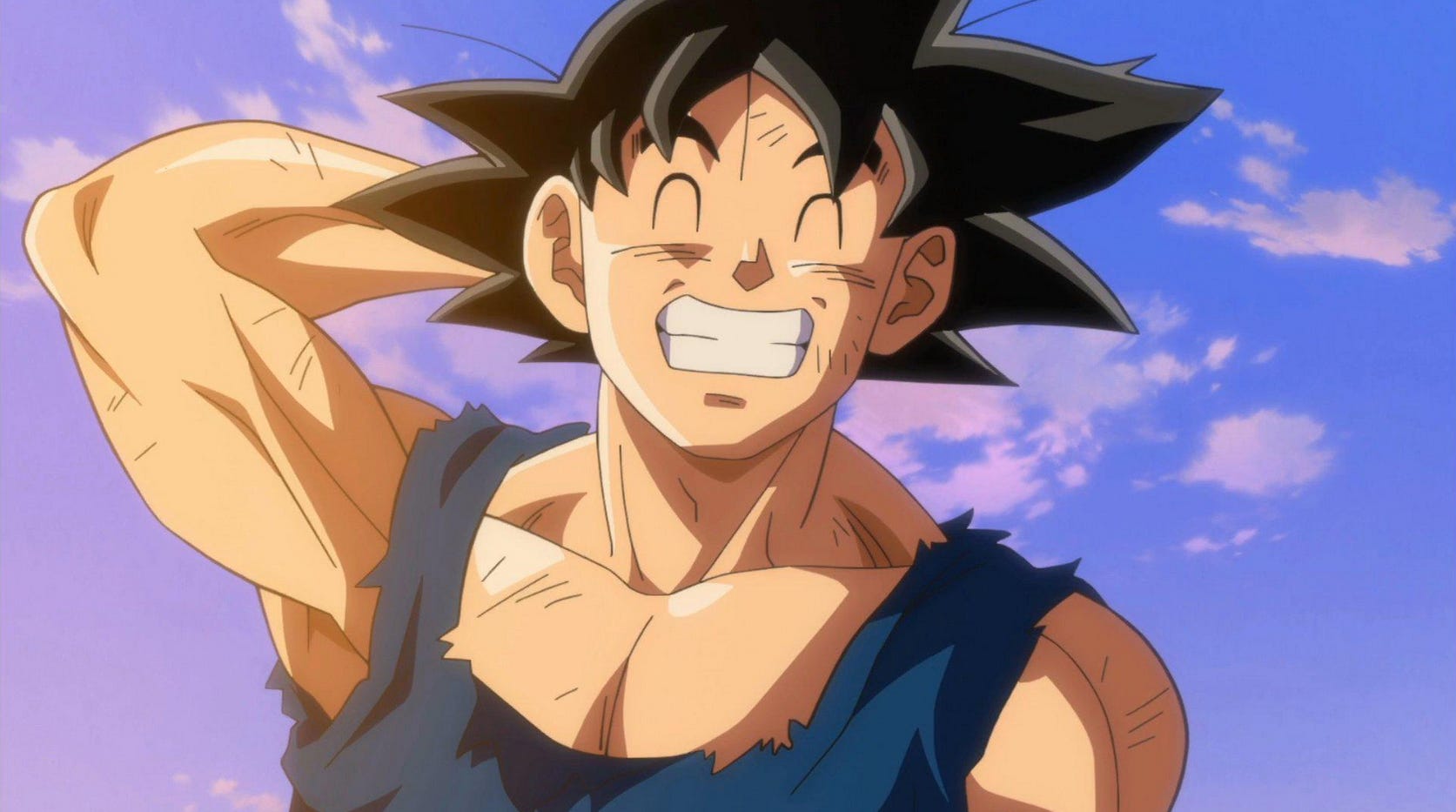
The latest incident unfolded in mid-May 2026 when Toei’s marketing team posted a hype clip of Vegeta finally defeating Goku from the 2022 film Dragon Ball Super: Super Hero. The post, originally uploaded on December 10, 2025 by the official @ToeiAnimation account, read: “The moment when Vegeta FINALLY BEAT Kakarot. (via Dragon Ball Super: SUPER HERO).”
Almost immediately after it resurfaced in recent discussions, Toei’s own copyright system flagged and disabled the post, prompting widespread memes and commentary across anime forums and social media.
Toei controls Dragon Ball, One Piece, Sailor Moon, and major tokusatsu IP
Toei Animation, the studio behind franchises like Dragon Ball, One Piece, Sailor Moon, and many tokusatsu series, has built a reputation as one of the most aggressive enforcers of anime copyrights online. The company routinely monitors YouTube, X, TikTok, and other platforms for any unauthorized use of clips, even short fair-use segments in reviews or reactions.
Totally Not Mark hit with 150 strikes in December 2021
The most high-profile example came in December 2021. Popular anime reviewer Mark Fitzpatrick, known online as Totally Not Mark, woke up to more than 150 of his long-form Dragon Ball and One Piece analysis videos being hit with copyright claims filed directly by Toei. Many videos that had been up for years were removed.
After a lengthy appeal process and public backlash, YouTube ruled in Fitzpatrick’s favor on nearly every claim and reportedly introduced a new policy allowing region-specific blocks for content that might qualify as fair use in some markets but not others.
Uncle Roger lost a One Piece reaction with millions of views
Toei’s approach has not softened. In recent months the studio targeted comedian Nigel Ng, better known as Uncle Roger, over a reaction video reviewing Sanji’s Japanese curry recipe from a One Piece episode. The video had already racked up millions of views before it was taken down.
Similar complaints continue to surface from smaller reaction channels, AMV creators, and even casual clip accounts that use brief scenes for commentary or humor.
Toei has struck its own uploads before
This is not the first time Toei’s system has turned on itself. Several years ago, shortly after launching an official international YouTube channel for English-subbed tokusatsu content, the studio’s automated tools flagged and claimed some of its own uploads. The current X self-strike follows the same bureaucratic pattern: marketing posts a clip without clearing it through the IP enforcement team, and the bot does what it is programmed to do.
Japanese copyright law allows narrower fair use than the US
Toei Animation controls some of Japan’s most valuable entertainment properties, and Japanese copyright law provides narrower fair-use protections than U.S. law. Company representatives have not publicly commented on individual cases, but the pattern suggests a deliberate strategy to maintain tight control over how fans interact with Dragon Ball, One Piece, and other flagship series.
Supporters argue it protects official licensing and streaming revenue on platforms like Crunchyroll. Critics counter that the blanket approach stifles organic promotion and community engagement that could actually grow the audience.
The latest self-own on X has the anime internet laughing, but it also serves as a reminder of how automated and manual copyright systems can create absurd outcomes. While Toei continues to defend its intellectual property with the same intensity it has shown for years, creators and fans are left navigating an unpredictable landscape where even the studio itself is not immune to its own rules.
Whether the company will ease up or double down remains to be seen, but the conversation about balanced copyright enforcement in anime is far from over.
Article compiled and edited by Derek Gibbs (entertainment editor) and the Clownfish TV newsroom.
D/REZZED is part of Clownfish TV. For more news, views, and rants on gaming and tech, visit clownfishtv.com. Watch the show on YouTube at @ClownfishTV where new episodes drop daily. Subscribe to the Clownfish TV podcast on Apple Podcasts, Spotify, iHeart, and wherever else you get your podcasts. Sign up for the free newsletter at more.clownfishtv.com.
Hat Tips:
Clownfish TV YouTube Short, “Toei Animation Copyright Strikes Itself on X?!” (May 18, 2026)
Original Toei Animation X post, self-struck (December 10, 2025)
Kotaku, “YouTuber Hit With Ungodly Number Of Anime Copyright Claims From Toei Animation” (January 27, 2022)
Dexerto, “YouTuber celebrates landmark victory over Toei Animation after 150 copyright strikes” (January 26, 2022)
Anime Corner and various reports, Uncle Roger One Piece reaction video strike (2023–2026)
Inven Global, coverage of Totally Not Mark vs. Toei appeals process (January 2022)
The Japan Times, “YouTuber gets hit with copyright claims, but is it Toei who’s out of line?” (December 19, 2021)