

Transformers: The Movie had a shocking body count for a kids' movie
Hasbro is on a 40th anniversary “Apology Tour,” but the 1986 film killed far more characters than most fans remember, including a cut Red Alert death and a hotly debated Cyclonus reformat.
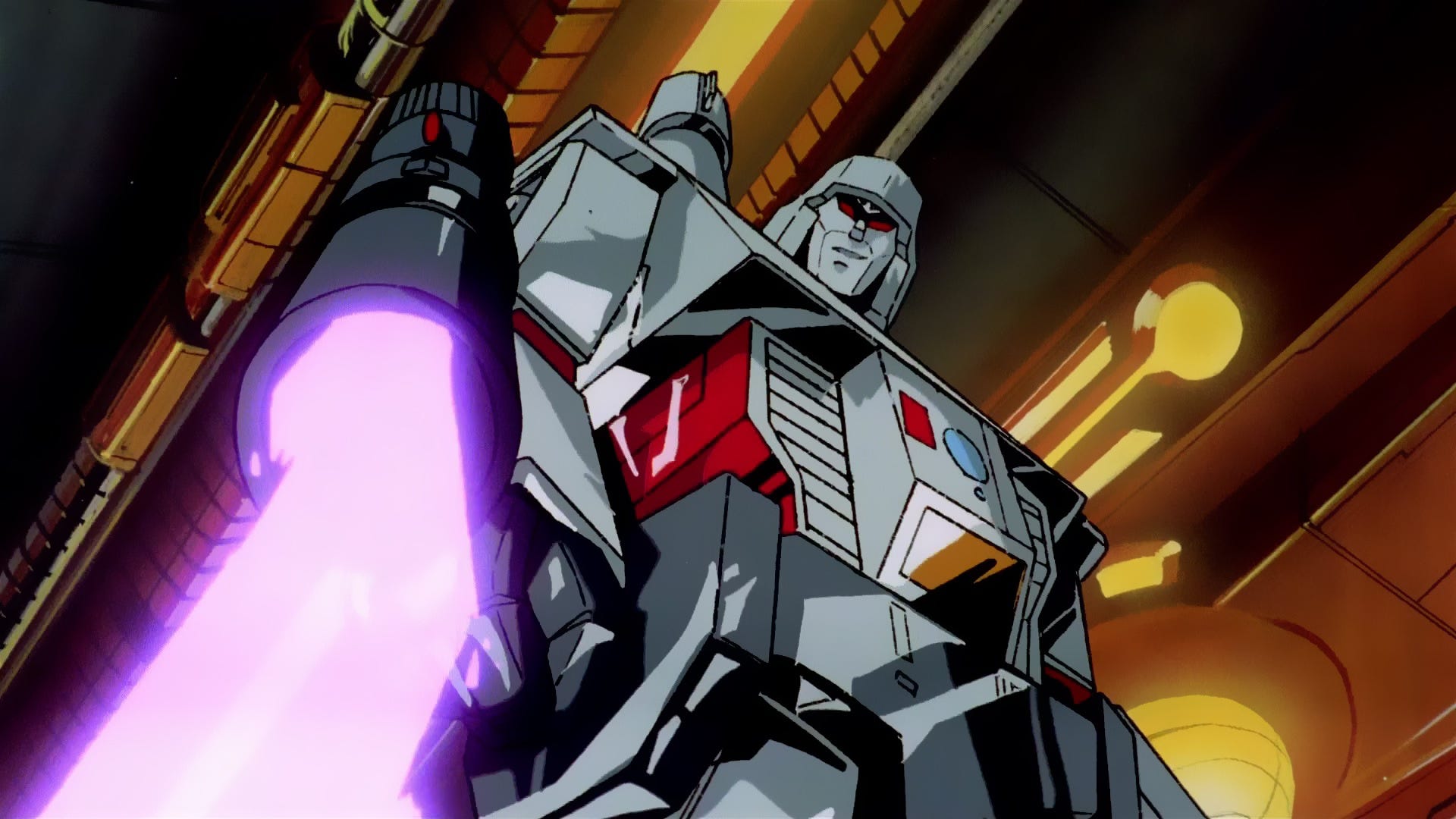
Forty years later, Hasbro is still apologizing.
In 2026, as part of the official “1986 Apology Tour” marking the 40th anniversary of The Transformers: The Movie, the company has been leaning hard into the film’s reputation as the one that emotionally traumatized an entire generation of kids. Theatrical re-releases, new figures, and public acknowledgments of “yeah, we kind of broke you” have turned the movie’s legacy into something almost celebratory. But let’s be honest about what actually happened on screen.
This was not just a kids’ movie that killed the main character. It was a kids’ movie that executed a shockingly large percentage of its established cast, often in graphic, memorable ways, to clear shelf space for new toys.
The Pokémon comparison, yes really
Imagine if the first Pokémon movie, Mewtwo Strikes Back, had opened with Ash, Pikachu, Misty, Brock, and half the Kanto gym leaders getting brutally murdered so the franchise could introduce a brand-new set of protagonists and sell fresh merchandise.
That is essentially what Transformers: The Movie did.
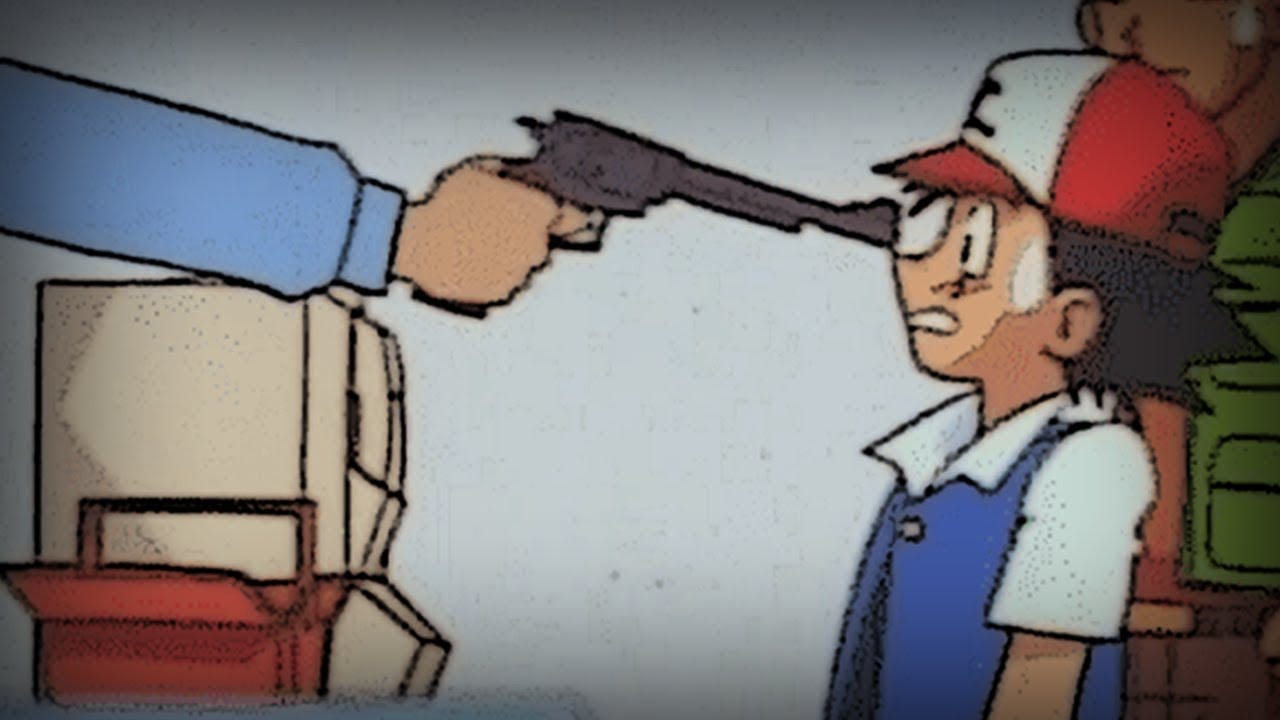
The 1986 film did not just move the story forward. It committed a near-genocide of the 1984 to 1985 toyline to make room for Hot Rod, Springer, Arcee, Ultra Magnus, the new Decepticon seekers, and the upcoming 1986 characters. In one 84-minute film, Hasbro wiped out a huge chunk of the characters kids had been playing with for two years.
Confirmed on-screen Autobot deaths
Here is the Autobot body count that actually happens on screen or is unambiguously shown.
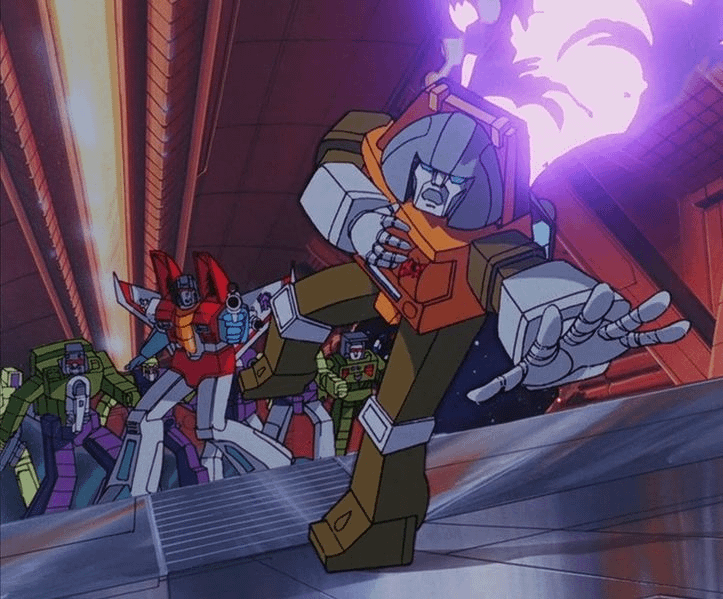
Brawn is shot in the shoulder by Megatron, in gun mode, aboard the Autobot shuttle. One of the first major deaths, establishing immediately that no one was safe.
Prowl is shot in the chest by Scavenger during the assault on Autobot City. His death is one of the most graphic in the film, with eyes glowing and thick black smoke pouring from his mouth as he collapses. It is genuinely disturbing for a kids’ movie.
Ratchet is shot repeatedly in the chest by Megatron while trying to help the wounded Ironhide. He dies a medic’s death, still trying to save someone.
Ironhide is the most infamous Autobot death besides Prime. After being mortally wounded, he crawls toward Megatron in a last act of defiance. Megatron looks down and delivers the legendary line, “Such heroic nonsense.” Then he executes Ironhide at point-blank range with his fusion cannon.
Wheeljack and Windcharger are both shown dead in Autobot City, with their bodies clearly visible among the fallen during the battle’s aftermath. Huffer is later confirmed dead in the Season 3 episode “Dark Awakening,” when Daniel specifically names him among the lost.
Ultra Magnus is dismembered when the Sweeps open fire on him on the planet of junk, causing energy buildup that makes his limbs pop off one by one in front of Galvatron in one of the darkest pieces of black comedy in the film. He is later rebuilt by the Junkions, but the sequence is genuinely shocking.
Optimus Prime is the big one. Shot multiple times by Megatron in their final duel, mortally wounded, passes the Matrix of Leadership to Hot Rod, gives the “Till all are one” speech, and dies in a dramatic, glowing, musical number of a death scene that reduced countless children to tears.
Confirmed on-screen Decepticon deaths
Megatron himself is mortally wounded by Optimus Prime, then jettisoned into space by Astrotrain along with the other wounded Decepticons. He is found drifting by Unicron and rebuilt as Galvatron.
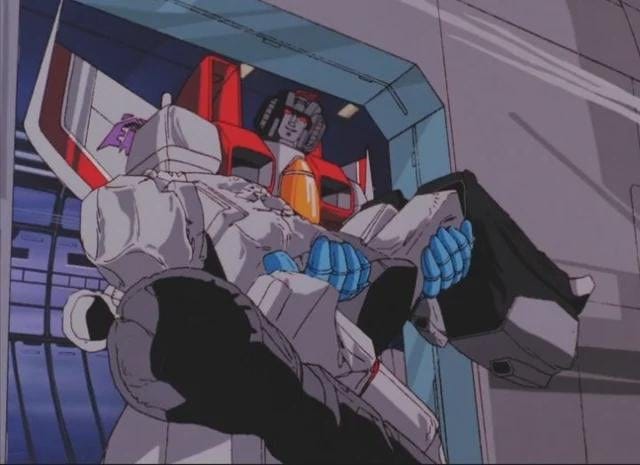
Starscream is executed on screen by the newly created Galvatron with a fusion cannon blast to the chest during his coronation as Decepticon leader. His smoking corpse is shown on the ground afterward. This one felt especially brutal because he had just become leader.
Thundercracker, Skywarp, Bombshell, Kickback, and Shrapnel are all jettisoned with Megatron when Astrotrain demands the wounded be dumped to lighten the load. Unicron finds them drifting in space and reformats them.
Dirge, Thrust, and Ramjet, the three Coneheads, all fly directly into Unicron’s mouth during the assault on Cybertron and are consumed. They were later retconned as surviving in Season 3, but the movie itself clearly shows them being destroyed.
Shockwave‘s death is heavily implied during Unicron’s attack on Cybertron, though it is never explicitly depicted on screen. The original storyboards reportedly included a scene of Shockwave being eaten by Unicron, but it was cut.
The cut Red Alert death scene most fans never knew about
Here is a deep-cut piece of Transformers: The Movie lore that most casual fans have never seen.
In an early version of the script, Ultra Magnus deploys a small strike team during the Battle of Autobot City consisting of himself, Tracks, Sideswipe, and Red Alert, all chosen because they have rocket launchers, to attack Devastator. The team succeeds in actually tearing the Constructicon combiner apart, but during the fleeing shootout afterward, Red Alert is killed.
(See the AI fan-made reconstruction below.)
It exists in very late production notes, music was written to accompany it, and the storyboards have appeared on some DVD releases of the film. Director Nelson Shin ultimately cut it because he felt it broke the flow of Optimus Prime’s heroic attack leading up to the duel with Megatron. The scene was also supposed to set up what Megatron was looking at when Prime found him.
The cut explains a longstanding fandom mystery. Tracks, Sideswipe, and Red Alert essentially vanish from the post-movie continuity, with only fleeting Season 3 references. If the Devastator strike-team scene had stayed in the final cut, Red Alert’s on-screen death would have been canon, and the fates of Tracks and Sideswipe would have been more clearly addressed.
Ultra Magnus’s death scene was also originally far more barbaric. The original storyboards had the Sweeps physically drawing and quartering him, and the sequence is rumored to have been fully animated before being trimmed back to the more darkly comedic limb-pop version that made the final film. Negative test screening reactions are widely believed to have driven the change. The US Marvel Transformers comic adaptation kept the original drawn-and-quartered version because the comic was based on an earlier draft of the script.
Other cut deaths included Mirage being sniped by Megatron and Gears dying in a bombing run. Neither character meaningfully appears in the G1 continuity after the film, suggesting both were originally meant to die on screen.
The reformatting debate that still divides fans
Here is where it gets autistic. The exact identities of which Decepticons became which Galvatron-era characters has been one of the most contested debates in Transformers fandom for 40 years.
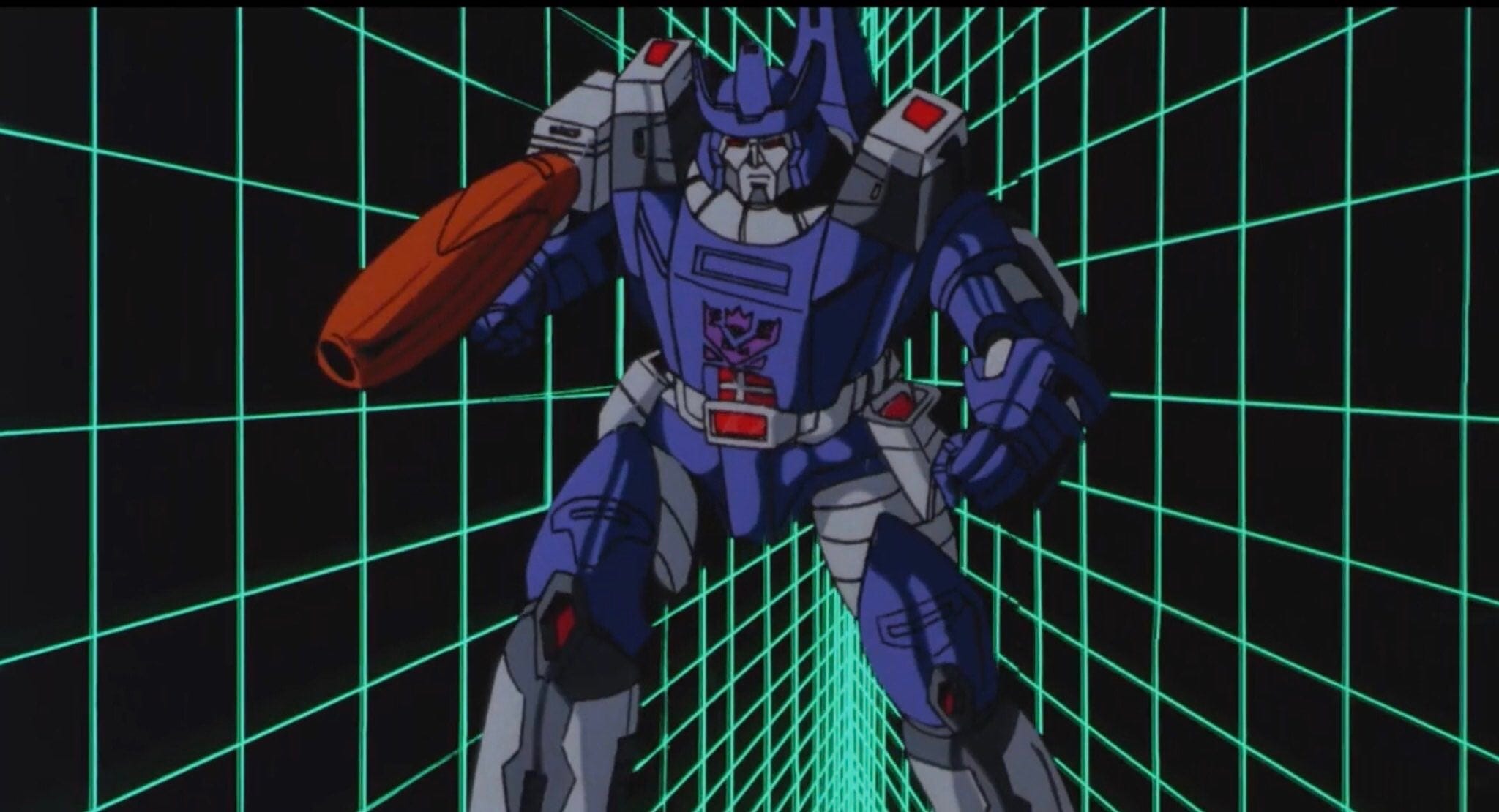
The on-screen evidence breaks down like this.
Thundercracker became Scourge. This is the only uncontested reformat besides Megatron-to-Galvatron. He is in the middle of the scene, the color matches, and the script confirms it. The 1986 Hasbro cross-sell catalog explicitly replaced Thundercracker and Skywarp with Cyclonus and Scourge in the Decepticon Planes section, which is the strongest piece of period evidence.
Kickback and Shrapnel became two of the Sweeps. Also uncontested. You can see the Insecticon details in their reformatted bodies.
Cyclonus is the contested one. The animation shows two figures being reformatted into Cyclonus-style robots. Bombshell is in the foreground, Skywarp is in the background. Unicron then refers to the pair as “Cyclonus and his armada.”
The script, written by Ron Friedman, originally called for Cyclonus to have an “armada” of identical duplicates, similar to how Scourge has the Sweeps. The idea was dropped almost immediately. By the time the new Decepticons board their ship moments later, the second Cyclonus has already been replaced with a third Sweep, and Cyclonus’s armada is never mentioned again.
The Skywarp-to-Cyclonus theory is supported by the 1986 Hasbro cross-sell catalog, the fact that a black-and-purple jet logically reformatting into a purple Cybertronian craft makes visual sense, and the fact that Cyclonus’s loyal warrior code fits better with Skywarp’s persona than with treacherous Bombshell.
The Bombshell-to-Cyclonus theory is supported by Bombshell being in the foreground of the reformat shot, the Transformers Universe comic and a 2003 video game both explicitly stating Bombshell became Cyclonus, and the fact that the Insecticons’ cloning ability thematically fits the Sweeps’ inexplicably endless ranks.
The honest answer is that the movie’s animation is ambiguous on purpose, and both interpretations have decades of fan support. Hasbro itself has never officially resolved it.
Other casualties worth noting
Beyond the named Transformers, the film racks up a serious additional body count.
Kranix is eaten alive by Sharkticons on the planet Quintessa in one of the film’s most visceral scenes. Arblus, his fellow Lithone refugee, dies trying to escape Unicron. Countless Lithone civilians and an unnamed Lithone scientist are all destroyed when Unicron consumes their planet at the start of the film.
Unicron himself, the planet-eating ancient evil voiced by Orson Welles in his final film role, is destroyed when Rodimus Prime uses the Matrix of Leadership from inside him. Only his head survives, becoming a recurring threat in Season 3.
The real reason everyone died
Here is the cold, capitalist truth behind the bloodbath.
Hasbro needed to clear out the old 1984 to 1985 toys to make room for the new 1986 line, including Hot Rod, Springer, the new seekers, and the rest. Killing characters on screen was the most dramatic way to justify removing them from shelves. It was not subtle, and it was not kind, but it was effective.
This was standard toy industry practice at the time, but Transformers: The Movie executed it with a level of on-screen violence and emotional weight that was unprecedented for a film aimed at children.
The lasting impact and why Hasbro is still apologizing
The backlash was immediate and intense. Parents complained. Kids were devastated. The death of Optimus Prime in particular became legendary, not just as a plot point, but as a cultural moment of childhood trauma.
Hasbro learned two very important lessons.
First, never kill your evergreen characters without a plan to bring them back. After 1986, Optimus Prime and Megatron essentially became immortal in the toyline. They might get killed or reformatted, but they always returned. They became the franchise’s north star characters.
Second, tone it down for the other Hasbro properties. When G.I. Joe: The Movie (1987) was in production, Duke was originally going to die at the hands of Serpentor. After seeing the reaction to Optimus Prime’s death, Hasbro had the scene changed at the last minute so Duke merely falls into a coma, with some very obvious last-minute dubbing to fix the dialogue. The original death scene has since been restored in some releases, but the change was a direct reaction to Transformers.
The 2026 Apology Tour is Hasbro finally leaning into the bit four decades later, acknowledging that yes, they kind of broke everyone, but also that the movie was ambitious, iconic, and with the benefit of hindsight kind of awesome.
It was brutal. It was messy. It was deeply 1980s. And it remains one of the boldest, most consequential swings any toy-based franchise has ever taken on the big screen.
Forty years later, it still hits like a truck. And Hasbro is still saying sorry.
Article compiled and edited by Derek Gibbs (entertainment editor) and the Clownfish TV newsroom.
D/REZZED is part of Clownfish TV. For more news, views, and rants on gaming and tech, visit clownfishtv.com. Watch the show on YouTube at @ClownfishTV where new episodes drop daily. Subscribe to the Clownfish TV podcast on Apple Podcasts, Spotify, iHeart, and wherever else you get your podcasts. Sign up for the free newsletter at more.clownfishtv.com.
Hat Tips:
TFWiki and Teletraan I, comprehensive coverage of the 1986 film’s characters, deaths, and Battle of Autobot City
List of Deaths Wiki on Fandom, full casualty list for Transformers: The Movie
IMDb FAQ for The Transformers: The Movie (1986), confirmed casualties list
Seibertron, Lost Media Wiki, Lost Media Archive, and TFW2005, deleted scene coverage including the Devastator strike-team sequence with Red Alert’s death and Ultra Magnus’s original drawn-and-quartered death scene
The Spacebridge Facebook page and storyboard animation reconstructions from production-used materials
The Transformers Multiverse and Transformers Multiverse blog, the many deaths of Ultra Magnus across continuities
The Source Report, Heroic Decepticon, Big Angry Trev, and Wikipedia Talk pages, the decades-long debate over which Decepticon became Cyclonus
Fantasy Action Figures, character biographies on Thrust, Dirge, and Ramjet
Ron Friedman’s original script for The Transformers: The Movie
1986 Hasbro cross-sell toy catalogs, the Decepticon Planes section evidence for Thundercracker-to-Scourge and Skywarp-to-Cyclonus
Marvel UK and US Marvel Transformers comic adaptations of the 1986 film, which preserve elements from earlier scripts
Historical coverage of G.I. Joe: The Movie (1987) production changes following Transformers backlash