

Ultima creator may finally reclaim the legendary RPG series from EA in 2027
Ultima invented things modern games still copy, then EA let it gather dust for 25 years. Now creator Richard “Lord British” Garriott says he can take it back using a copyright loophole. Here’s the history of a franchise that mattered enormously, and what “getting it back” actually means.
Richard Garriott, the creator of Ultima, says he’s about to do something he’s wanted to do for decades: take his legendary RPG series back from EA.
If you’re under 35, you may have never played an Ultima game. But you’ve absolutely played games that exist because of it. Here’s the story of a franchise that helped invent modern gaming, how it died, and what Garriott’s comeback plan really means.
The news: a copyright loophole
First, the actual development, because the details matter a lot here.
Garriott, who famously goes by the gamer name “Lord British,” revealed to the outlet Inside Games that he intends to reclaim Ultima starting in 2027. He’s not buying it back. Instead, he’s using an obscure piece of US copyright law that lets a creator reclaim the rights to their work 35 years after they signed them away.
Garriott sold his studio, Origin Systems, to EA in 1992. Do the math, and 35 years later lands in 2027. “And so, I have been waiting… finally, the time has come,” Garriott said. He’d reportedly tried to revive Ultima with EA “every decade or so,” only for talks to fizzle each time.
The big catch: copyright isn’t trademark
Here’s the crucial detail a lot of excited headlines gloss over.
Garriott would reclaim the copyright to his original Ultima work, but NOT the trademark. EA keeps that. In plain terms: Garriott can make a game using his old Ultima creations, but he can’t release something simply called “Ultima,” because EA still owns the name.
His workaround is to brand it differently. His plan, by his own account, is something like “Lord British’s Ultima.” As he put it, that project “will regain all the copyrights of my original work. What it will become is the next challenge.” So this isn’t quite “Ultima is coming back”, it’s “the guy who made Ultima can make Ultima-style games again, under a new banner.”
So what was Ultima, and why does it matter?
For younger readers, it’s hard to overstate how important this series was. Let’s rewind.
Ultima debuted in 1981, when Garriott was a young programmer who’d go on to become a gaming legend (and, later, a literal astronaut who paid his way to space). It was one of the very first computer role-playing games, and across the ‘80s and ‘90s it set the template the entire genre still follows.
Ultima pioneered the open world. Its games dropped you into a huge, living land you could explore freely, with towns, dungeons, and characters going about their lives. Ultima IV, released in 1985, did something radical: instead of “kill the bad guy,” it built the whole game around your character’s morality and virtues, making you a better person, not just a stronger fighter. That focus on player choice and ethics influenced decades of RPGs to come.
The franchise that taught everyone else
The series’ fingerprints are all over games you’ve played, even recent ones.
Ultima Underworld (1992) was a 3D first-person dungeon crawler so far ahead of its time it helped invent the “immersive sim,” the genre behind games like System Shock, Deus Ex, and BioShock. And Ultima VII was so influential that Larian Studios has openly cited it as a major inspiration for Divinity: Original Sin and the blockbuster Baldur’s Gate 3. A game from 1992 helped shape the biggest RPG of the modern era.
When people say Ultima is foundational, this is what they mean. Strip it out of history, and a huge chunk of modern gaming looks different.
Ultima Online: one of the first true MMORPGs
There’s one more giant piece of the legacy, and it might be the most important.
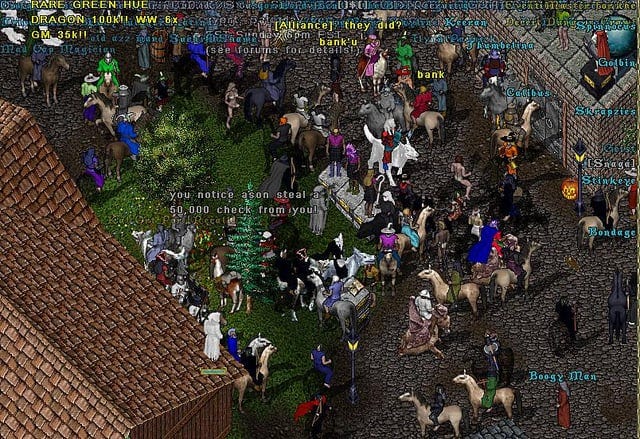
In 1997, the series launched Ultima Online, one of the first massively multiplayer online RPGs to find a real audience. It put thousands of players into a single persistent fantasy world together, where they could fight, trade, build, and live, years before World of Warcraft made the genre a global phenomenon.
Ultima Online proved the concept that an online world could be a place people actually inhabit. Nearly every MMO that followed, including WoW itself, owes a debt to what it pioneered. Remarkably, it’s still running today, almost 30 years later.
How it all went quiet
So how does a series this important just… stop? In a word: EA.
After buying Origin in 1992, EA kept Ultima going for a while, Ultima Online being the big success. But the last main single-player entry, Ultima IX, came out in 1999. Origin Systems was eventually shut down, and the franchise was left to gather dust.
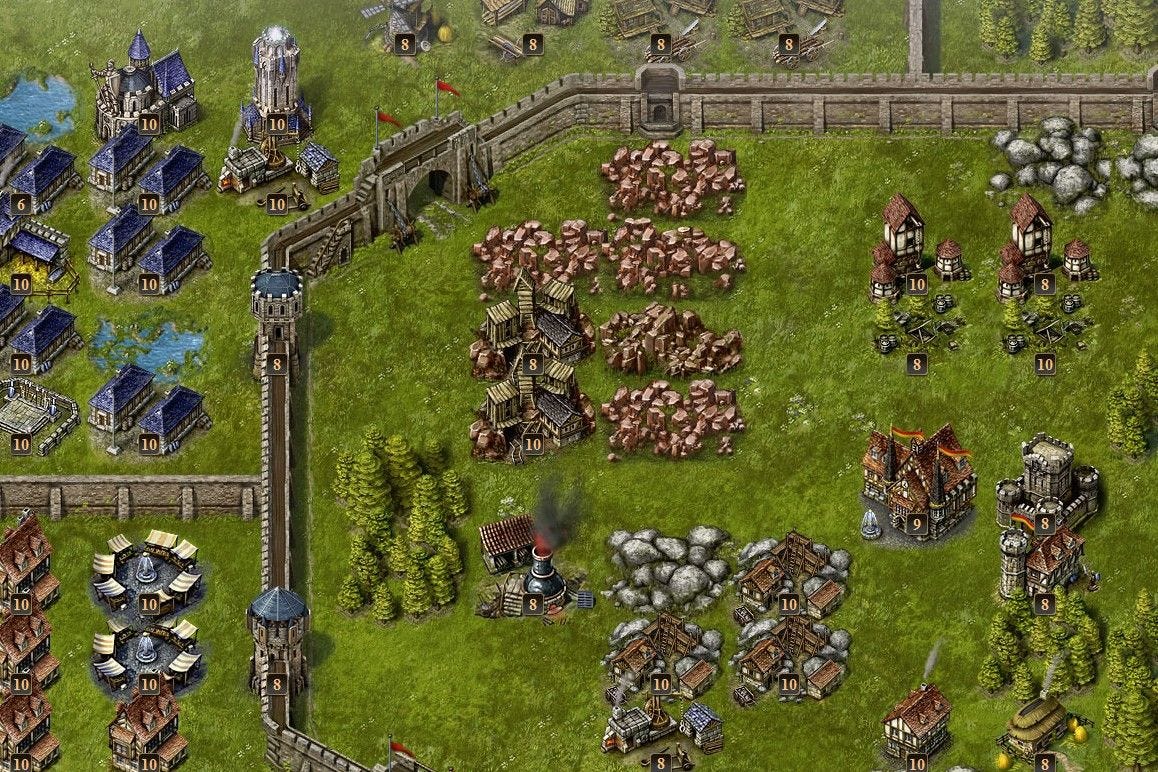
EA made a couple of half-hearted attempts to use the name, a browser strategy game called Lord of Ultima in 2010, and a mobile title called Ultima Forever in 2013, but both were poorly received and shut down. For a quarter century, one of gaming’s most important franchises has basically sat in a drawer, which is exactly what frustrates Garriott.
Should fans get excited?
Here’s the honest reality check, because there are two sides to this.
On one hand, the timing is perfect. Big, detailed RPGs are booming again thanks to Baldur’s Gate 3 and others, and there’s clearly an audience hungry for exactly the kind of deep world Ultima does best. A genuine Ultima revival from its original creator sounds like a dream.
On the other hand, fans have reasons for caution. Garriott’s recent track record is rocky, his big crowdfunded “spiritual successor,” Shroud of the Avatar, landed with a thud, and he later dabbled in blockchain gaming, which soured a lot of longtime fans. Some worry that getting the rights back is the easy part, and that making a great modern Ultima is a much taller order.
There’s also the reality that reclaiming copyright can get legally messy, these termination rules are notoriously tricky, and EA may not go quietly.
What comes next
So where does this leave one of gaming’s founding franchises?
Garriott says he may share more at Dragon Con, where he hopes to have “more thoughts together” about what reclaiming Ultima will mean. For now, it’s a statement of intent, a beloved creator planting a flag to take back the series that made his name, using a clever legal trick to do it.
Whatever you make of Garriott’s recent projects, there’s something fitting about the man who helped invent the RPG getting one more shot at the world he built. Ultima taught the whole industry how to make living worlds, moral choices, and online realms. If Lord British can remind people why it mattered, even under a slightly different name, it’d be one of gaming history’s great comebacks. The time, as he says, has finally come. Now he just has to prove the magic’s still there.
Want More Clownfish TV?
This article was brought to you in part by The Reefers of more.clownfishtv.com. Free subscribers get articles like this one in their inbox. Paid subscribers get the full Clownfish TV podcast feed, livestreams, and members-only episodes that never hit YouTube.
D/REZZED is part of Clownfish TV. For more news, views, and rants on gaming, tech, and pop culture, watch @ClownfishTV on YouTube and find the podcast on Apple Podcasts, Spotify, and iHeart.
Article compiled and edited by Derek Gibbs (entertainment editor) and the Clownfish TV newsroom.
Hat Tips:
Inside Games (Brian Gaar), via PC Gamer and Time Extension (June 20, 2026), verified for Garriott’s reclamation plan, the 35-year copyright rule, the 2027 timing, the “finally, the time has come” quote, the copyright-not-trademark catch, the “Lord British’s Ultima” branding plan, and the EA-trademark-filing trigger
Kotaku and Yahoo Tech (June 2026), verified for the 1992 Origin Systems sale (~$30M), the “every decade or so” revival-talks quote, the 1999 last-mainline-entry detail, and the Lord of Ultima (2010) / Ultima Forever (2013) failed experiments
PC Gamer and Massively Overpowered (June 2026), verified for the Ultima legacy (open-world RPGs, immersive sims via Ultima Underworld, the Larian/Divinity/Baldur’s Gate 3 influence), Ultima Online’s MMO-pioneer status, and the Dragon Con plans
ResetEra and NeoGAF community discussion (June 2026), verified for the fan skepticism around Shroud of the Avatar and Garriott’s blockchain ventures, and the legal-messiness caveat around copyright termination