

Video games are becoming a hobby for the rich.
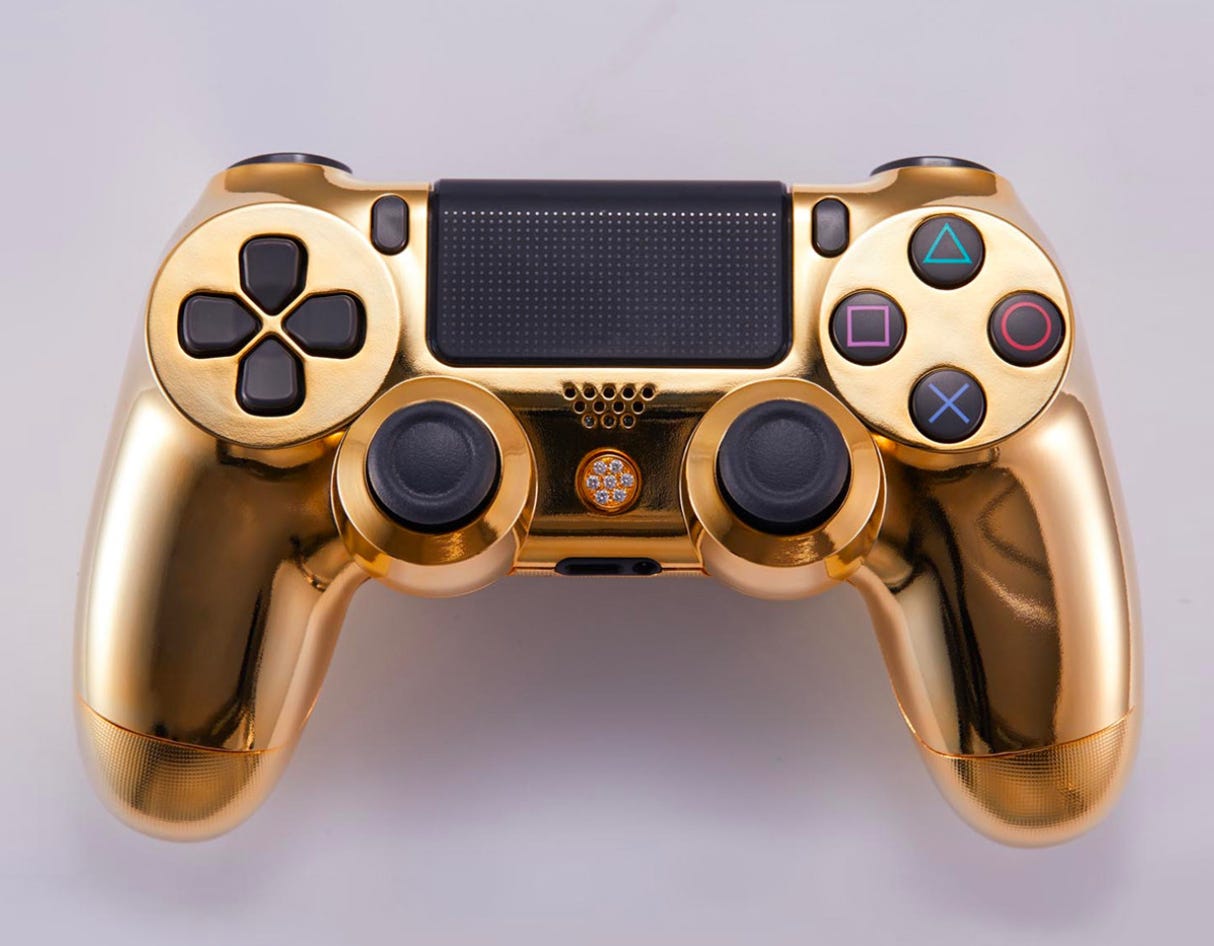
A base PS5 now costs $600, the next Xbox is rumored at up to $1,200, and $80 games are circling. Sony’s console sales just dropped 46% in a year. The hobby is splitting into people who can afford it and people playing free games on the phone they already own.
Remember when the smart move was to wait?
You’d skip a console at launch, let the price drop, then scoop it up cheap two years later with a fat library already waiting. Sony’s PS4 launched at $400 in 2013 and was selling in $250 game bundles before its fifth birthday.
That logic is dead. In 2026, consoles get more expensive the longer they sit on the shelf.
A base PlayStation 5 now starts at $600, a $100 hike from its 2020 launch price. The Nintendo Switch 2 jumps to $500 in September, up $50 from a price it launched at barely a year ago. Valve’s Steam Deck went from $549 to $789.
The machines are appreciating like real estate. That is not a thing consoles are supposed to do.
And the generation that’s coming is the one that turns “expensive hobby” into “luxury good” outright.
How much the next Xbox and PS6 will actually cost
The next-gen rumors are staggering, and one company isn’t even being coy about it.
Multiple hardware leakers peg Microsoft’s next Xbox, reportedly codenamed Project Helix and due around 2027, somewhere between $800 and $1,200. Xbox president Sarah Bond told Mashable the next console will be “a very premium, very high-end, curated experience.“
That’s corporate for “start saving.”
The thing is reportedly a full Windows gaming PC wearing an Xbox costume, able to run Steam and the Epic store, which helps explain the PC-tier price tag.
The Valve Steam Machine pricing was recently unveiled, and it starts at $1,049.
Sony’s PS6 is rumored cheaper, around $600, with leakers describing a possible three-device lineup from a budget box up to a roughly $1,000 handheld. “Cheaper” is doing a lot of lifting when the floor is six hundred bucks.
For context on how we got here: Microsoft already raised the current Xbox Series X to $649.99 in September, with a 2TB special edition at $799.99. The internet took the $1,200 leak about how you’d think. As one user put it, “call it the Ex-box now.“
Why $80 games are coming whether you like it or not
The hardware is only half the bill.
Game prices are climbing toward $80 a copy, and the dance Microsoft did this year tells you everything. The company announced an $80 price for its holiday games, ate a wave of backlash, and retreated to $70 for titles like The Outer Worlds 2.
Retreated, not surrendered. The $80 trial balloon went up, got shot down, and will go up again.
Grand Theft Auto VI, the most anticipated game in a decade, is widely expected to land in the $70 to $80 range. And whatever Rockstar charges becomes the number every other publisher points to as permission.
Then there’s the subscription creep. Xbox Game Pass prices jumped 50% in a recent round of hikes. Even the “just rent everything” escape hatch is getting pricier.
Add it up for a family. A $600-plus console, $70-to-$80 games, a subscription that costs half again what it used to, controllers at $75 a pop. The on-ramp to “real” gaming now runs past what a lot of people pay for a car payment.
Why component shortages and tariffs are driving prices up
This isn’t pure corporate greed, and it’s worth being straight about that.
Northeastern experts pointed to three big drivers: computer component shortages fueled by the AI boom gobbling up chips and memory, global tariffs, and disruptions at the Strait of Hormuz, the Middle Eastern shipping route critical to global trade.
The same memory-price spike has reportedly left Microsoft worried about having enough Xbox stock for the GTA VI window. When AI data centers and game consoles fight over the same chips, the data centers win. They’re the ones spending trillions.
So some of this is genuinely outside the console makers’ control. The response, though, charging more and bundling less, is a choice. And it’s the same choice every legacy entertainment business is making right now.
Were old consoles actually cheaper? Not even close
Here’s the honest counterweight, and it matters.
Gaming hardware used to be more expensive, not less, once you adjust for inflation.
The Atari 2600 launched in 1977 at $199, which lands somewhere between $1,000 and $1,050 in today’s money depending on whose inflation math you use. The Mattel Intellivision hit $299 in 1979, about $940 now. The Atari 5200 matched it at roughly a grand. And the all-time gut-punch, the Neo Geo, debuted in 1990 at a price equal to around $1,500 today.
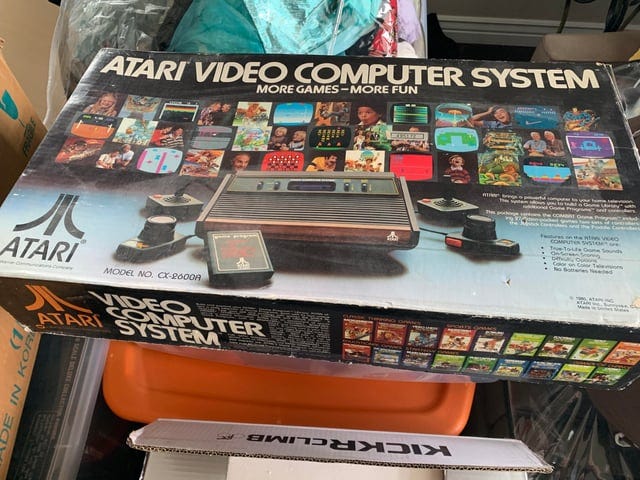
So the $1,200 Xbox rumor isn’t unprecedented. It’s a throwback.
Electronics were luxury goods in the ‘70s and ‘80s, full stop. A VCR cost a paycheck. A console was a genuine splurge that families saved up for and felt.
But there’s a catch that wrecks the cozy “it was always like this” version of the story. The consoles that actually won their generations were almost always the affordable ones.
The NES, SNES, PlayStation, PS2, Wii, and Switch all launched near the $200-to-$300 range in nominal dollars. The systems that blew past $400, the 3DO at about $950 adjusted, the Saturn, the PS3, mostly got their teeth kicked in early.
The PS1 undercut the Saturn and won. The Wii undercut the PS3 and won. The PS4 undercut the Xbox One and won. For thirty years the lesson didn’t change: the cheaper box with the better library takes the crown.
Which is exactly why Xbox chasing the title of most expensive console ever should scare Microsoft more than it seems to.
Why retro games stopped being the cheap way to play
For years the move for a broke gamer was obvious. Skip the new stuff, go retro. Old consoles and carts were cheap, everywhere, and just as fun.
That door is closing too.
Retro gaming got swallowed by a speculative collector market, and prices have gone vertical. A game that ran $30 in 1995 routinely fetches $200 loose today.
The real insanity is at the graded, sealed end, where the hobby copied the comic-book and trading-card grading model wholesale. A loose copy of Super Metroid might be $50. A factory-sealed, professionally graded copy of the same game can clear $3,000.
At the trophy level the numbers stop meaning anything. A sealed Super Mario Bros. reportedly crossed $2 million at auction. Sealed copies of the original The Legend of Zelda and Super Mario 64 have pulled six and seven figures.
Grading houses like Wata, founded in 2018, turned condition into an asset class. Investors who never intend to plug the thing in started bidding up cartridges like baseball cards.
The knock-on effect lands on regular players, not just the whales. When coverage of million-dollar sales pulls speculators into the market, the floor rises under everything.
Loose carts that were $20 a decade ago became $60-to-$80 staples. Complete-in-box copies run into the hundreds. And the supply is fixed forever, because Nintendo and Sega aren’t out there pressing new 1989 cartridges.
So the escape hatch got repriced too. The cheap way to play isn’t cheap anymore, because somebody figured out the old games were worth more as investments than as games.
Is gaming becoming a luxury hobby? The numbers say it’s splitting
Here’s the part that should worry the console makers more than any leaked price. People are already walking.
In May, Sony reported a 46% year-over-year drop in PS5 sales. Northeastern’s Mark Sivak put the threshold plainly: “If you’re paying $1,000 to get a console and a handful of controllers and a couple of games, then clearly it’s a luxury good.“
Console gamers were never the high-end market. That was always PC. The pricing is dragging them into that bracket whether they wanted in or not.
What’s actually happening is a split. On one side, the premium console-and-PC crowd, paying ever more to stay in. On the other, the free-to-play world, Fortnite, Roblox, League, played on the phone or tablet you already own, which now accounts for over 85% of all gaming revenue.
The middle is the part that’s dying. The kid who saves up for one $400 box and a few $50 games is getting squeezed out of a hobby that used to have room for him.
Gaming isn’t dying, to be clear. It’s bifurcating, into people who can drop four figures on a hobby and people who play for free on hardware they bought for something else. The shared middle that defined console gaming for thirty years, where a working family could buy in once and join the same culture as everyone else, is the piece going extinct.
It’s the Disney World problem with a controller. The thing that used to be for everybody is getting quietly repriced for the people who can comfortably afford it, and everybody else gets told to wait, or settle, or play something free, or pony up collector money for the old stuff that used to be the bargain.
Press start. If you can spot it the $1,200.
Article compiled and edited by Derek Gibbs (entertainment editor) and the Clownfish TV newsroom.
D/REZZED is part of Clownfish TV. For more news, views, and rants on gaming, tech, and pop culture, visit clownfishtv.com. Watch the show on YouTube at @ClownfishTV where new episodes drop daily. Subscribe to the Clownfish TV podcast on Apple Podcasts, Spotify, iHeart, and wherever else you get your podcasts. Sign up for the free newsletter at more.clownfishtv.com.
Hat Tips:
Northeastern Global News (June 12, 2026), Cesareo Contreras reporting, verified for the PS5/Switch 2/Steam Deck pricing, the Sivak and To expert quotes, the 46% PS5 sales drop, and the 85% free-to-play revenue figure
IGN via Yahoo (2025-2026), Wesley Yin-Poole reporting, verified for the Sarah Bond “premium” quote, the $80-to-$70 game price retreat, and the Xbox Series X price increases
Yahoo Tech and TechRadar (October 2025), verified for the $800-$1,200 next-Xbox leak, the Project Helix details, and the PS6 device-lineup rumors
Video Game Console Library and Money Digest (2025-2026), verified for the inflation-adjusted historical console launch prices and the affordability-wins-generations pattern
Medium (New Player Ready) and AOL (2025-2026), verified for the retro resale price increases, the loose-versus-graded multiples, and the record sealed-game auction sales
Notebookcheck (May 2026), verified for the memory-shortage impact on Xbox GTA VI stock
Visual Capitalist via Northeastern (2026), verified for the free-to-play 85%-of-revenue industry figure