

Wikipedia’s banned co-founder says a secret cabal of 62 editors really runs the site
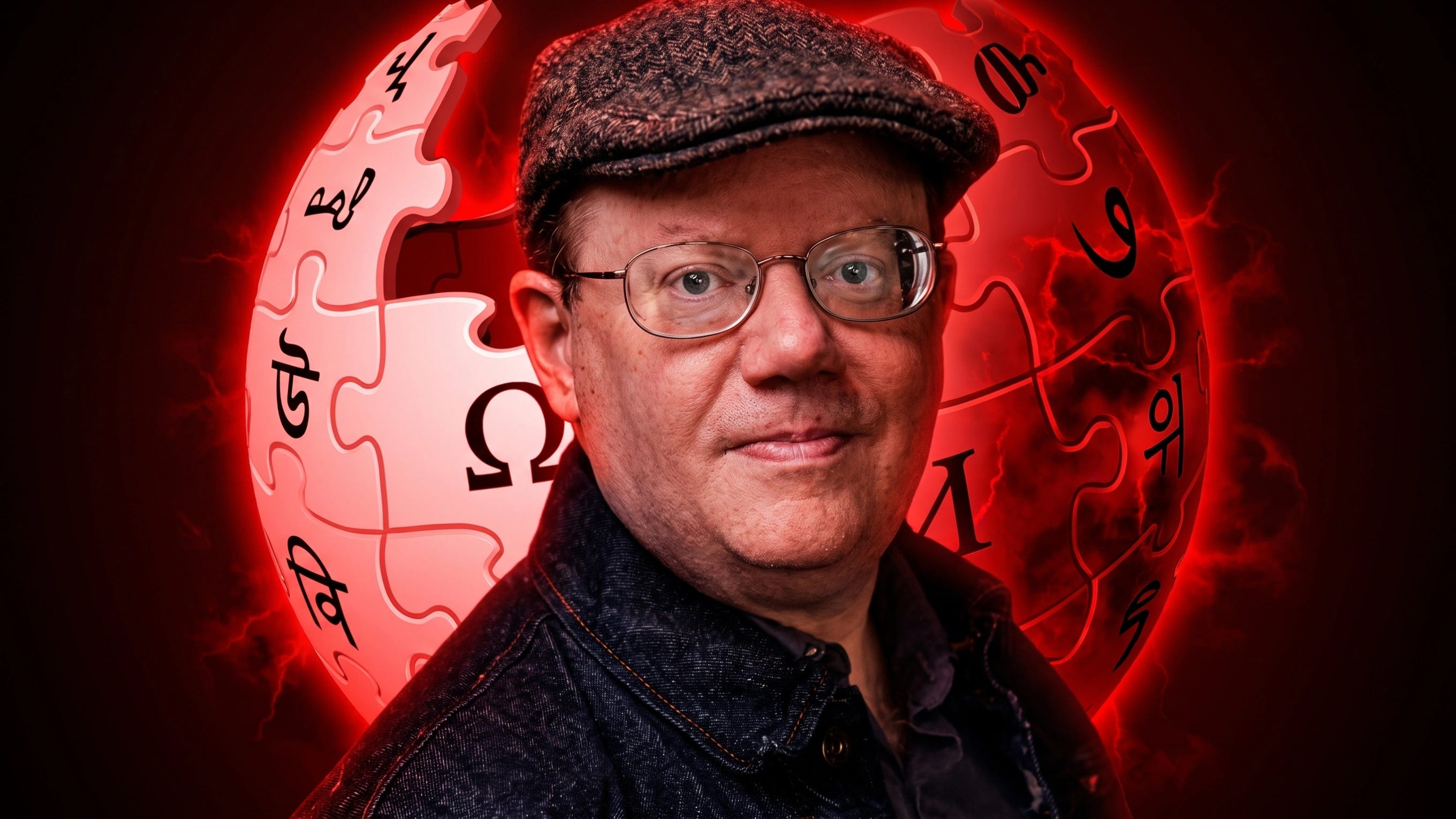
Larry Sanger isn’t backing down after his ban. In new interviews, he claims a hidden “Power 62”, a small group of mostly anonymous accounts, actually controls Wikipedia, and says that’s the real problem. Here’s his case, Wikipedia’s response, and why Congress is now involved.
Larry Sanger, the Wikipedia co-founder who was permanently banned from the site last week, is escalating his fight, and his central claim is a striking one.
Sanger says Wikipedia isn’t really run by its hundreds of thousands of volunteers. Instead, he argues, a small, mostly anonymous group of 62 accounts, what he calls the “Power 62”, holds the real control.
Here’s his case, what Wikipedia says back, and why lawmakers are suddenly paying attention.
The “Power 62” claim
This is the heart of Sanger’s new argument, so let’s lay it out clearly.
Sanger contends that despite Wikipedia’s image as a site anyone can edit, actual power over English Wikipedia is concentrated in a tiny circle of highly influential accounts he’s dubbed the “Power 62.” His most pointed, specific claim: by his count, about 85% of those most-influential accounts are anonymous, meaning no one publicly knows who the people behind them are.
“Wikipedia’s leaders wield immense influence while hiding behind anonymous handles,” Sanger wrote. “Great power demands accountability.” His demand is that Wikipedia require its most powerful editors to “operate out in the open” rather than act under pseudonyms.
He’s gone further, publishing material on his own website that he says identifies this group, and claiming Wikipedia “didn’t want the handles listed publicly.” It’s important to note this is Sanger’s analysis and framing, the “Power 62” is his term and his count, not an official Wikipedia designation.
Why he says it matters
Sanger’s argument is that anonymity plus power equals a problem.
His concern is that a small group of unaccountable, unnamed people can shape what the world reads on the most-used reference site on earth, and face no real consequences. He’s argued these accounts “can libel people with impunity,” because there’s little legal recourse against an anonymous editor.
For Sanger, this connects to his decades-long complaint that Wikipedia abandoned the strict neutrality he helped write into its founding rules. If a small, hidden group sets the tone, he argues, then the site’s claim to be a neutral, crowd-sourced encyclopedia doesn’t hold up.
How he describes the ban
Sanger is just as blunt about his own removal, which he calls deeply unfair.
In an interview with the New York Post, he said he was “flabbergasted” by the ban and described Wikipedia’s governance as a “mob or a blob,” where editors follow group consensus instead of consistent rules. He’s said his judges were “self-selected” people who “hated me,” with “no due process, no prosecutor, no dispassionate judge, no jury.”
He also rejected the idea that his reform project was a right-wing operation. The claim that his WikiProject Intellectual Diversity was “aligned with the radical right wing,” he told the Post, is “absolutely absurd.” He says he was simply trying to bring in underrepresented voices, including conservatives and religious groups.
What actually got him banned
Here’s the official reason, to be fair and clear.
Wikipedia editors banned Sanger for “canvassing,” the rule against recruiting outside people to sway an internal decision. The trigger was a post to his roughly 91,000 followers on X, alerting them to an internal debate over his WikiProject. Editors ruled that mobilizing an outside audience broke the rules and reached a “clear consensus” to ban him.
So Wikipedia’s position is that this was about process, not punishing his politics, the rule applies to anyone who tries to summon an outside crowd, founder or not.
There’s a real wrinkle, though: Sanger says co-founder Jimmy Wales briefly defended him, and he was even unblocked for a short time on June 23 before being re-banned indefinitely. If the site’s most famous co-founder didn’t see a clear violation, it complicates the “obvious rule-breaking” story.
Wikipedia’s side
Wikipedia’s defenders say the whole site runs on open, consensus-based discussion among volunteers, and pointing tens of thousands of outside followers at a live vote can flood and distort that process.
The closing editor wrote that there was agreement Sanger was “not here to constructively build the encyclopedia,” and raised concerns his actions amounted to “outing” other editors, ironically, given his Power 62 campaign to unmask anonymous accounts.
Defenders also argue that editor anonymity exists for good reasons: it protects volunteers from harassment and retaliation, especially those who work on contentious topics. What Sanger calls a hidden cabal, they’d call ordinary volunteers who don’t want their real names attached to a hobby that can attract angry attention.
Now Congress is involved
Here’s the development that’s raised the stakes.
The controversy lands as the House Oversight Committee has opened an inquiry into allegations of bias and manipulation on Wikipedia. Sanger himself offered a measured take on that, saying he’s genuinely uneasy about government getting involved in a website’s editorial decisions, but that he finds the congressional interest understandable given how serious he considers the problems.
That’s a notable bit of restraint from Sanger, he’s not cheering on a government crackdown, even as his own complaints help fuel the political attention.
The bottom line
So where does this leave things?
Sanger’s “Power 62” claim is a serious, specific allegation: that a small, mostly anonymous group really controls the world’s encyclopedia. It’s also, importantly, his characterization, built on his own analysis, and Wikipedia and its defenders dispute both the framing and the conclusion. We’re not here to declare whether a secret cabal runs Wikipedia or doesn’t, the honest truth is that it’s a contested claim, and reasonable people read the same facts differently.
What’s not in dispute is that the fight is escalating, not fading. A co-founder has been permanently banned, he’s now publicly campaigning to unmask the site’s most powerful editors, the other co-founder reportedly had reservations, and Congress is circling. Whatever you make of Sanger’s politics or his Power 62 theory, the questions he’s forcing, about who really controls Wikipedia, and whether they should have to say who they are, aren’t going away.
And in an age where Wikipedia quietly trains the AI chatbots millions rely on, the answer matters more than ever.
Want More Clownfish TV?
This article was brought to you in part by The Reefers of more.clownfishtv.com. Free subscribers get articles like this one in their inbox. Paid subscribers get the full Clownfish TV podcast feed, livestreams, and members-only episodes that never hit YouTube.
D/REZZED is part of Clownfish TV. For more news, views, and rants on gaming, tech, and pop culture, watch @ClownfishTV on YouTube and find the podcast on Apple Podcasts, Spotify, and iHeart.
Article compiled and edited by Derek Gibbs (entertainment editor) and the Clownfish TV newsroom.
Hat Tips:
New York Post, via Primetimer and iHeart (June 22-23, 2026), verified for Sanger’s “flabbergasted,” “mob or a blob,” “absolutely absurd,” and 62-accounts-control-the-site claims, and the due-process criticisms
Larry Sanger’s public statements on X and larrysanger.org (2026), verified for the “Power 62” term, the 85%-anonymous figure, the “wield immense influence while hiding behind anonymous handles” quote, and the cut-appendix claim
404 Media and Dexerto (June 2026), verified for the canvassing ban, the “clear consensus” editor note, the “outing” concern, the 91,000-follower X post, and the Jimmy Wales brief-defense/unblock-then-reblock sequence
iHeart, citing the New York Post and Straight Arrow News (June 2026), verified for the House Oversight Committee inquiry, Sanger’s measured response to government involvement, the source-rating criticisms, and the Nine Theses reforms