

Wizards’ new D&D advisory group can’t paper over the AI subscription future
Wizards of the Coast named 12 people to a new D&D Community Advisory Group on June 2. The lineup mixes veteran designers and store owners with sensitivity consultants and accessibility advocates.
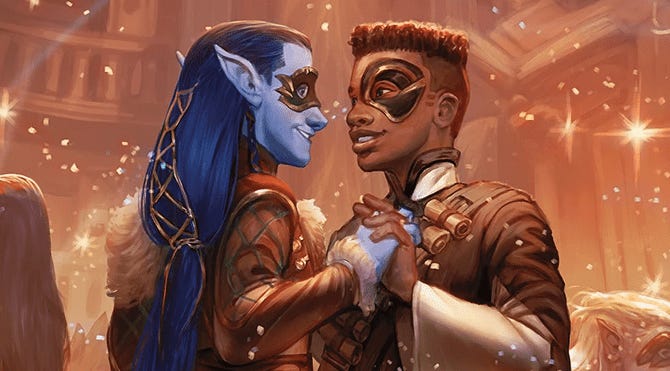
On June 2, 2026, Wizards of the Coast unveiled the 12 members of its D&D Community Advisory Group. The group, first announced by Dan Ayoub, the company’s VP of D&D Franchise, in July 2025, has been meeting privately with the D&D Beyond team since December 2025.
The roster includes real industry talent. Teos Abadía, a Colombian-American designer who co-wrote the Acquisitions Incorporated sourcebook and co-hosts the Mastering Dungeons podcast. David Christ, the founder of Baldman Games and the organizer of Legends of Greyhawk. Scott DeBoard, owner of Silver Dragon Games in Arizona and the 2026 GAMA Retailer of the Year. Zac Clay, a professional Dungeon Master who runs D&D youth programs in the Bay Area. Kelly Lynne D’Angelo, a writer who has worked on The Legend of Vox Machina and Final Space.
The roster also includes figures from a different professional lane. Jennifer Kretchmer, an award-winning game designer who works as a disability consultant and founded Accessibility in Gaming Resources.
The remaining members include further accessibility advocates, sensitivity consultants, and creator-economy influencers.
Wizards of the Coast picked both groups. On purpose.
(Wizards of the Coast also introduced each member with their respective pronouns, which is already not landing well with some oldschool fans.)
The composition is a compromise designed to address two very different audiences at once: the veteran D&D community that has been demanding institutional respect, and the newer creator-and-advocacy ecosystem that has been steering the brand’s editorial direction for the past several years. Whether the compromise actually fixes anything is the question worth asking.
The Greyhawk olive branch and the Tondro contradiction
The Advisory Group reveal arrives in the middle of a broader Wizards charm offensive aimed at the older D&D fanbase. That community is generally called grognards, a term borrowed from Napoleonic-era veteran soldiers, used by tabletop gamers since the 1970s to describe long-tenured hobby veterans.
The grognards have not been happy with Wizards for years.
On March 19, 2026, Dan Ayoub stood on the main stage at Gary Con XVIII in Lake Geneva, Wisconsin, alongside Luke Gygax, son of D&D co-creator Gary Gygax. The pair announced Melf’s Guide to Greyhawk: The Shield Lands, an official D&D sourcebook Luke is writing for the brand. Ayoub described the collaboration as an effort to “mend the rift between family and franchise.”
Luke’s character Melf, the elven archmage behind Melf’s Acid Arrow and Melf’s Minute Meteors, was one of the first player characters created in his father’s original Greyhawk campaign.
A Gygax writing an official D&D book for the company that has owned the franchise for nearly three decades is genuinely significant. The gesture is real.
It also sits awkwardly next to the fact that Jason Tondro, the designer who wrote the foreword to Wizards’ 2024 release The Making of Original Dungeons & Dragons, is still working at the company.
Tondro’s foreword warned readers that the original D&D materials contained “a virtual catalog of insensitive and derogatory language“ and framed specific creative choices by Gary Gygax as deliberate misogyny. When the backlash came from longtime fans, Tondro responded on Facebook with the line that has since defined his public profile. He and his editors had expected criticism “from progressives and people from underrepresented groups.” They had not anticipated the grognard pushback. He then called the grognards “not worth listening to.”
The combination of inviting Luke Gygax to write a Greyhawk book while keeping Jason Tondro employed is the position Wizards has chosen. Former Wizards executive Kyle Brink, who publicly suggested that white people could not leave the hobby fast enough, has since left the company. Tondro has not.
The Advisory Group is supposed to help thread this needle. Whether it can is a different question.
Why grognards are still angry
To understand the depth of the alienation, look at what’s happened over the past three years.
In January 2023, Wizards tried to revise the Open Game License, the agreement that lets third-party companies make D&D-compatible content. Third-party publishers panicked. Fans revolted. The company eventually backed down, but the trust was gone.
In 2024, Wizards released the new D&D 2024 rulebooks, now officially renamed 5.5e. Some legacy products got content disclaimers attached. Editorial decisions reframed early D&D creators as cautionary tales rather than founding figures. Longtime players took it personally.
Then came the Brink and Tondro public comments. Each individual flashpoint became part of a pattern. The pattern produced what observers across the political spectrum increasingly describe as a generational split in the D&D fanbase.
The older players who built the hobby in the 1970s and 1980s feel actively unwelcome at the company that owns the brand they helped create. The younger players who arrived through Stranger Things, Critical Role, and pandemic streaming have no particular loyalty to the legacy framework and are generally satisfied with where the game is now.
Neither group has been entirely served by how Wizards has handled the transition. The Advisory Group is supposed to ensure both perspectives shape future products. In practice, the group has only existed for six months, the membership skews toward the newer generation, and the most visible legacy outreach is a single Luke Gygax book rather than a structural editorial change.
What the 5.5e sales actually look like
The clearest measure of whether the alienation has produced real damage is in the sales picture for D&D 2024.
When the 2024 Player’s Handbook launched, Wizards announced it was the fastest-selling D&D product in the franchise’s 50-year history. The qualifier the company buried was that the new PHB outsold the original 2014 5e PHB by 3x in its first week after Wizards had printed 3x as many copies. Same conversion rate. Three times the inventory.
A subsequent BookScan analysis from Stephen Glicker of the Roll for Combat YouTube channel suggested that only 3,773 copies sold through tracked retail in the first week. ICv2 disputed the number based on independent retailer reports indicating significantly stronger sales. Wizards has declined to release exact figures.
What is verifiable from Hasbro‘s public Q3 2025 earnings:
Wizards of the Coast and Digital Gaming segment revenue was up 42 percent to $572 million.
Magic: The Gathering revenue was up 55 percent, driven mostly by the Spider-Man and Final Fantasy crossover sets.
D&D specifically had “its strongest start ever“ per Hasbro, but no isolated revenue figures were released.
D&D Beyond weekly traffic jumped nearly 50 percent after the new virtual tabletop tool launched in September 2025.
The honest summary: Magic: The Gathering is carrying the Wizards segment. D&D is performing, but Hasbro is being careful with how it frames the performance. Independent industry analysts, including the Optional Rule blog covering the earnings calls, have characterized the 5.5e launch as appearing to have underperformed relative to the marketing hype.
5.5e is doing fine. It is not the breakout commercial event the launch implied.
The bigger picture is the AI subscription future
The most important data point in the Hasbro earnings calls is not the 5.5e number. It is the D&D Beyond weekly traffic growth.
D&D Beyond is no longer just a digital companion to the physical books. It is becoming the primary platform for playing D&D. The new virtual tabletop tool, often called a VTT, lets groups play remotely with native tools, automated rules enforcement, and integrated character sheets. The platform is being built for a future in which the books are a brand-loyalty product rather than the actual gameplay product.
That future has obvious implications.
The most likely D&D product trajectory, based on the public corporate signals, looks like this:
D&D Beyond becomes a tiered subscription service. Partially true already.
The virtual tabletop becomes the primary play surface for new and remote players.
AI-assisted Dungeon Master tools get integrated into the platform. Automated encounter design. AI-generated NPC voices. Adaptive storytelling support.
AI Dungeon Master mode lets solo players and small groups play without a human DM.
The physical books become optional, retained primarily as nostalgia products and gift-market items.
The TTRPG experience becomes a subscription service that competes with video games on convenience and content.
Hasbro has not announced this trajectory in those exact words. But the corporate logic points in this direction. The 2023 OGL fight was about controlling third-party content. The D&D Beyond acquisition was about owning the digital play layer. The VTT launch is about owning the play surface. The “Universes Beyond” Magic crossovers demonstrate that Wizards is willing to license aggressively.
The Community Advisory Group, in this context, is partly a real feedback tool and partly a public relations move. It provides community cover for product decisions Wizards was probably going to make anyway. It can also potentially temper the kind of public statements from designers that have created the worst recent flashpoints.
It cannot reverse the platform pivot. The pivot is happening either way.
What this actually means for D&D players
For the legacy player base, the Advisory Group is unlikely to deliver the editorial reset many have been asking for. The structural direction of the company is locked. The 5.5e ruleset is locked. The D&D Beyond subscription model is locked. The VTT is locked. The AI integration is coming.
What the group can do is influence the framing of future products, push back on the worst editorial overreach, and provide community cover during the transition. That is not nothing.
What it cannot do is reverse the trajectory. D&D is becoming primarily a digital product, and the printed books will gradually become legacy artifacts.
For the newer generation of D&D players, this is fine. Many came to the game through streaming and digital play and never built strong attachments to the original printed format. The new D&D is built for them.
For the legacy generation, this is the end of an era. The game they have been playing for decades is becoming something structurally different, owned by a company that has shown limited interest in their concerns and significant interest in monetizing the platform their nostalgia is being used to market.
For Hasbro, the strategy makes financial sense. D&D Beyond subscriptions, VTT licensing, and AI integration all produce recurring revenue. Book sales produce one-time revenue. Wall Street will pay a higher stock price for predictable recurring revenue. The platform strategy wins.
For the broader tabletop industry, the Wizards trajectory is both a cautionary tale and a road map. Smaller publishers including Free League, Paizo, Modiphius, and the OSR (Old-School Renaissance) community are positioning themselves explicitly as alternatives for legacy-leaning players. Paizo specifically, with Pathfinder 2e and the Open RPG Creative License, has been actively building the audience Wizards has been alienating.
If Wizards continues its current trajectory, the next ten years of D&D will see the player base split into a digital-first Wizards mainstream audience and a legacy-loyal third-party publisher ecosystem. The Advisory Group is not going to stop that split. It might slow it down.
Where this leaves things
The Advisory Group is real. The membership is qualified. The internal feedback loop is probably useful. The community symbolism is mixed at best.
The Luke Gygax book is real. The Jason Tondro contradiction is also real. Both can be true at the same time, and the tension is the actual story.
The 5.5e sales are mixed. The marketing claims are stronger than the actual numbers suggest. Magic: The Gathering is carrying the company.
The biggest fact in the room is the AI subscription future. D&D is becoming a software product owned by a public company with mandatory shareholder growth expectations. The books are the legacy artifacts of the previous version of the franchise.
The grognards see this clearly. They have been arguing it for years. The newer players are mostly fine with it. The Advisory Group, the Luke Gygax book, and the 2026 product slate are the tactical moves Wizards is making to manage the transition without losing too much of either audience.
Whether the strategy works is a question that will be answered in the Q3 2027 earnings call, not in the comment section under the Advisory Group announcement.
Until then, Wizards is going to keep trying to have its cake and eat it too. The cake is real. The eating is going to take a while. The grognards are still going to be unhappy. The new players are still going to subscribe.
That is D&D in 2026. Roll for initiative.
Article compiled and edited by Derek Gibbs (entertainment editor) and the Clownfish TV newsroom.
D/REZZED is part of Clownfish TV. For more news, views, and rants on gaming, tech, and pop culture, visit clownfishtv.com. Watch the show on YouTube at @ClownfishTV where new episodes drop daily. Subscribe to the Clownfish TV podcast on Apple Podcasts, Spotify, iHeart, and wherever else you get your podcasts. Sign up for the free newsletter at more.clownfishtv.com.
Hat Tips:
D&D Beyond / Wizards of the Coast (June 2, 2026), Dan Ayoub blog post “Introducing the D&D Community Advisory Group”
Dungeons and Dragons Fan (June 2, 2026), verified full Advisory Group member list
Bell of Lost Souls (June 2, 2026), additional verified Advisory Group coverage and the verified advisor statement
Geek Native (April 2026), verified Gygax controversies reporting including the March 19, 2026 Gary Con XVIII announcement
EN World (2024-2026), verified Gygax sexism context and D&D 2024 PHB launch coverage including the 5.5e renaming
Wikipedia “Dungeons & Dragons controversies”, verified franchise history
Optional Rule (October 2024), verified Hasbro Q3 2024 analysis
Gaming Nexus (September 24, 2024), verified WotC 2024 PHB launch claim including the 3x copies printed context
ICv2 / Scott Thorne (September 30, 2024), verified BookScan dispute including Stephen Glicker’s 3,773 first-week copy estimate
Finviz / Zacks Equity Research (October 24, 2025), verified Hasbro Q3 2025 earnings including the 42% segment revenue increase, the 55% Magic: The Gathering growth, and the 50% D&D Beyond weekly traffic gain
Grimoire Manor Substack (November 2024), verified academic critique of the D&D 2024 launch
Hasbro corporate earnings calls (2024-2025), verified WotC and Digital Gaming segment financials
TTRPGFans (March 3, 2026), verified D&D 2026 roadmap including the Ravenloft: The Horrors Within (June 16, 2026) and Arcana Unleashed (September 16, 2026) releases
Prism News (March 26, 2026), verified Winter 2026 D&D Community Survey context