

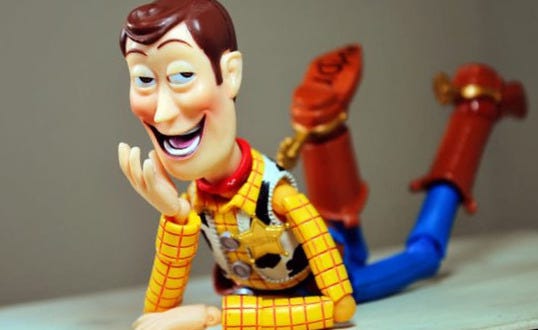
When Pixar announced Toy Story 5, the assumption was that Woody and Buzz Lightyear would be back at the center of the story. They have been the franchise’s heart since 1995. According to co-director and co-writer Andrew Stanton, that was not always the plan.
Stanton recently revealed to CinemaBlend that he wrote the entire first draft of Toy Story 5 with no Woody at all. He was running a test. He wanted to see if the franchise could survive without the cowboy who built it.
The fact that he tested this matters more than the trivia value suggests. Disney has a recent and expensive track record of franchise extensions that stripped out their core dynamic and got punished by audiences. Toy Story 5 was one rewrite away from joining the list.
Why Woody was left out of the first draft
At the end of Toy Story 4, Woody makes a major life choice. After helping Gabby Gabby find a child and reuniting with Bo Peep, he decides to stay behind at the carnival, gives up his voice box, and chooses to live as a lost toy. It was a poignant ending that felt like a true send-off.
When it came time to write Toy Story 5, Stanton was not immediately sure how to bring Woody back organically.
“I do admit that I didn’t know how to bring him back at first, and so I just, ‘cause I know it’s gonna take so many drafts to get the movie right, I just wrote the first one without him just to see if I missed him. And, I did.”
Stanton explained his writing philosophy this way. “My rule is if you take something out, especially a character, would the story be able to happen with or without them? And if it can’t, that means good, that they had to be essential no matter how much, it may not be obvious that they’re the role they’re playing in the movie.”
His conclusion was unambiguous. “Now I can’t imagine it any other way.”
In an interview with the Associated Press, Stanton said he had been initially skeptical about even doing a fifth film. “I cautiously said, let me write the crappy first draft, because I always write a crappy first draft, but at least I’ll figure out myself where I’d like to see it go just as a fan, let alone somebody that’s been behind the camera with it.”
Producer Lindsay Collins has been candid about how rocky the initial response was when Pixar first revealed Woody would return. “I just loved after our first teaser, like how much hate we were getting about, like, I thought Woody was gone, and then the second trailer we showed, everybody’s like, ‘Oh, I get it. He needed to come back.’”
The data on what happens when you skip that test is brutal.
Lightyear is the cautionary tale sitting on the shelf
In 2022, Pixar released Lightyear, the spin-off positioned as “the movie that inspired the Buzz Lightyear toy.” It featured no Woody, no Jessie, and none of the toy-room dynamic that defines the Toy Story franchise. Chris Evans voiced Buzz, Angus MacLane directed, and Disney spent $200 million producing it plus another estimated $100 million-plus on marketing.
The film was projected to open between $70 and $80 million domestically. It opened to $51 million, the kind of debut Pixar had not seen since the days before computer animation made the studio a household name. It topped out at $226.4 million worldwide and lost Pixar an estimated $106 million.
Critics gave it mixed but generally positive reviews. The visuals were lovely. The action was capable. The problem was that it was a sci-fi adventure starring a character audiences only recognized in the context of being a toy. Without the toy-room context, Buzz Lightyear is just a generic space ranger in a generic space adventure. The thing that made Buzz Buzz was Woody calling him a “Mrs. Nesbitt looking” lunatic in 1995. Lightyear did not have that. It had a space cat.
The audience reaction matched the box office. Online discussion of Lightyear in the months after release coalesced around a simple complaint. Buzz Lightyear without Woody is not really Buzz Lightyear. Stripping out the core dynamic stripped out the brand.
Disney has run this play badly more than once
Lightyear is not the only franchise extension Disney has shipped without its core dynamic in recent years. It is just the most expensive Pixar example.
Solo: A Star Wars Story (2018) tried to tell a Han Solo origin without the Leia, Luke, or established Chewie-Han buddy dynamic that made the character iconic. It cost $275 million after Phil Lord and Chris Miller were fired and Ron Howard redid the film. It grossed $393 million worldwide and lost Disney an estimated $70 to $100 million, becoming the first Star Wars film ever to lose money theatrically.
The Marvels (2023) tried to extend the Marvel Cinematic Universe with a team-up movie pulled from three different streaming and theatrical contexts without the central MCU ensemble dynamic. It cost $274 million to produce. It grossed $206 million worldwide and lost an estimated $237 million, the largest single bomb in the MCU’s history.
The Mandalorian and Grogu (2026) just opened to $98 million over its Memorial Day four-day, the lowest Disney-era Star Wars debut. The film is now projected to drop 65 to 70% in its second weekend, losing daily box office to the $1 million horror film Obsession and getting roughly doubled by the $10 million A24 horror release Backrooms. The criticism from much of the fan base is the same one Lightyear received. Without the broader Star Wars ensemble context, The Mandalorian is a Disney+ TV show on a movie screen.
The pattern is consistent. Strip the core dynamic out of a franchise, and the audience notices. They might still show up. They probably will not love it. The studio almost certainly loses money.
Pixar’s recent originals have struggled even harder
Stanton’s stress test also reflects a broader reality at Pixar. The studio’s recent track record on anything that is not a major-franchise sequel has been rough.
Onward (2020) was disrupted by the pandemic and ended at $142 million worldwide. Strange World (2022) bombed catastrophically, grossing roughly $73 million against a $180 million-plus budget. Elemental (2023) opened to a Pixar-low $48.5 million before legs eventually carried it to $496 million worldwide. Elio (2025) flopped on release.
The pattern Pixar leadership noticed is the same one Disney noticed across its broader portfolio. Originals and spin-offs without core franchise DNA are underperforming. Sequels with the dynamic intact are still cleaning up. Inside Out 2 opened to $154 million in 2024 and went on to gross $1.69 billion worldwide, the biggest animated release in history.
Pixar has publicly acknowledged the tension. Speaking ahead of the studio’s upcoming original feature Hoppers, Pixar leadership has emphasized that the studio knows originals have to keep existing alongside the franchise plays, even as the box office data keeps pushing it back toward sequels. Stanton himself has echoed this in interviews around the Toy Story 5 press cycle.
Toy Story 5’s plot brings Woody back through a modern crisis
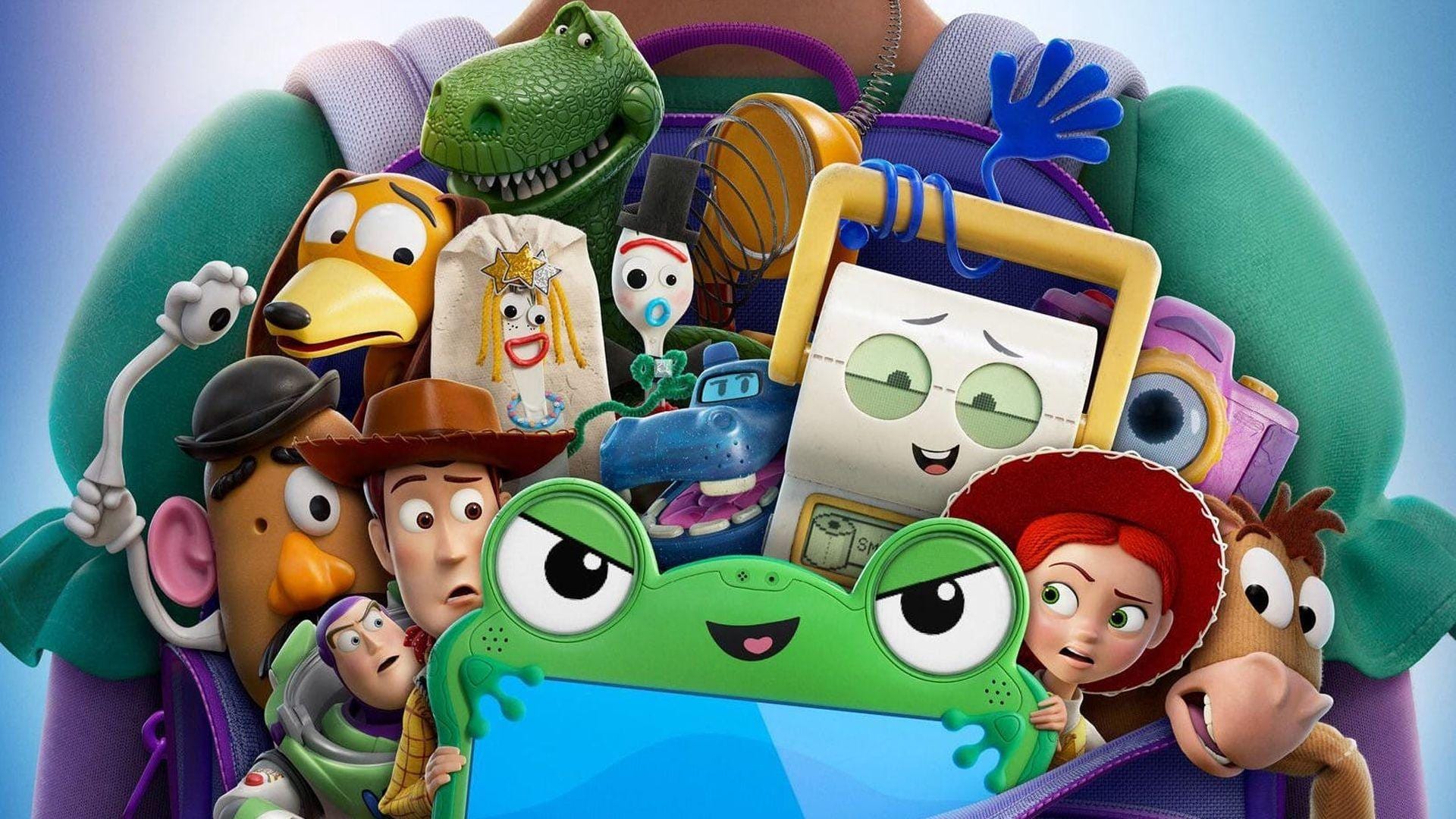
Toy Story 5 is set for release on June 19, 2026 and introduces a deliberately modern complication. Bonnie receives a tablet device named Lilypad, and the screen’s glow soon monopolizes the child’s attention. The neglected toys grow increasingly anxious.
Jessie, voiced again by Joan Cusack, is now leading the room and contacts Woody to come back and help. Tom Hanks, 68, returns as Woody, now sporting a noticeable bald spot that has been a major topic of fan discussion since the trailers dropped. Tim Allen, 71, returns as Buzz.
“I can tell you that it’s a lot about Jessie. Tom and I do, Woody and I, do realign. And there’s an unbelievable opening scene with Buzz Lightyear,” Allen told WIVB.
Stanton first teased the Toy Story 5 concept at the D23 Expo in August 2024. “This time around, it’s toy meets tech. It’s going to be fun, and we can’t wait for you all to see it in the summer of 2026.”
The Woody-Buzz reunion sits at the center of the story. The toy-room dynamic stays intact. The thing Lightyear tried to do without is back in place.
So did Disney actually dodge another flop?
Maybe. The early signs for Toy Story 5 are stronger than they were for any of the recent franchise misfires. The last two Toy Story films, Toy Story 3 and Toy Story 4, each crossed $1 billion at the global box office. The trailers have driven real anticipation. Stanton’s creative process explicitly tested for the failure mode that sunk Lightyear. The June 19 release window is essentially clear of major competition, since Star Wars, Masters of the Universe, and Scary Movie are all opening or already in theaters in the weeks ahead of it.
But this is the same studio that thought Lightyear, Solo, The Marvels, and Strange World would work. The thing all four of those films had in common was leadership convinced that brand recognition plus high-quality filmmaking could carry a movie even when the core dynamic was missing.
The honest answer to the question in the headline is that Disney appears to have learned the lesson on Toy Story 5, at least at the script-development level. Whether the actual film honors what Stanton found in his rewrite, and whether the audience rewards the discipline at the box office, is what the June 19 opening will actually tell us.
For now, the fact that Toy Story 5 even seriously considered going out without Woody, and pulled back when the math did not work, is the story. Most of Disney’s recent franchise extensions did not run that test, or ran it and ignored the result. The box office wreckage is sitting right there.
Stanton ran the test. Pixar listened to the answer. Whether that is enough to deliver another billion-dollar Toy Story opening or just enough to avoid a Lightyear-sized loss, June 19 will decide.
Article compiled and edited by Derek Gibbs (entertainment editor) and the Clownfish TV newsroom.
D/REZZED is part of Clownfish TV. For more news, views, and rants on gaming and tech, visit clownfishtv.com. Watch the show on YouTube at @ClownfishTV where new episodes drop daily. Subscribe to the Clownfish TV podcast on Apple Podcasts, Spotify, iHeart, and wherever else you get your podcasts. Sign up for the free newsletter at more.clownfishtv.com.
Hat Tips:
CinemaBlend, Andrew Stanton’s full interview discussing the first-draft Woody experiment and his rule on character necessity
Associated Press and Washington Times, Stanton’s broader career retrospective and “crappy first draft” comments
ScreenRant, ComingSoon, SuperHeroHype, and Yahoo Entertainment, follow-up coverage of Stanton’s CinemaBlend quotes
People and WIVB, Tim Allen’s “lot about Jessie” comments on Toy Story 5
Pixar and Disney D23 Expo 2024 official footage, Stanton’s “toy meets tech” reveal
The Hollywood Reporter, MovieWeb, SlashFilm, and ScreenRant, comprehensive coverage of Lightyear‘s $51 million opening, $226.4 million worldwide gross, and estimated $100 million-plus loss
Yahoo Entertainment and Variety, coverage of Pixar’s broader 2020-2025 box office pattern including Onward, Strange World, Elemental, and Elio
The Wrap and box office analyst Shawn Robbins, Pixar’s struggle to event-ize non-IP releases
Box Office Mojo and The Numbers, verified franchise totals including the Toy Story series’ $3 billion lifetime gross
Industry reporting on Solo: A Star Wars Story and The Marvels losses as recent Disney franchise extension comparisons
Deadline and World of Reel, current week-two projections for The Mandalorian and Grogu